How to do the Downward Dog
Primary: Shoulders · also works Hamstrings, Calves, Upper Back, Glutes, Lower Back.
The Downward Dog, also known as Adho Mukha Svanasana in yoga, is a foundational pose in many yoga practices. It is revered for its ability to stretch the entire body, mainly targeting the shoulders, hamstrings, calves, and spine. Practicing this pose helps improve flexibility and strength while providing a relaxing effect on the mind. It's often used as a transition pose in yoga sequences and can serve as a resting position.
Step by step
- 1
Start on your hands and knees in a tabletop position. Your wrists should be directly under your shoulders, and your knees should be under your hips.
- 2
Spread your fingers wide and press firmly through your palms and knuckles.
- 3
Tuck your toes under and slowly lift your hips towards the ceiling, straightening your legs as much as possible without locking your knees. Your body will form an inverted V-shape.
- 4
Keep your head between your upper arms, ears aligned with your upper arms, and gaze towards your navel.
- 5
Hold the pose, breathing deeply, for at least 30 seconds to one minute.
Coaching cues
- Press your heels towards the floor to feel more stretch in your hamstrings and calves.
- Keep your spine straight by lifting your hips high and engaging your core.
- Ensure your weight is evenly distributed between your hands and feet to maintain balance.
Sets, reps and where it fits
Muscle
3–4 × 30–60 sec
rest 60–90 s
Strength
not a strength lift
use for assistance
Fat loss
3 × 30–60 sec
rest 45–60 s
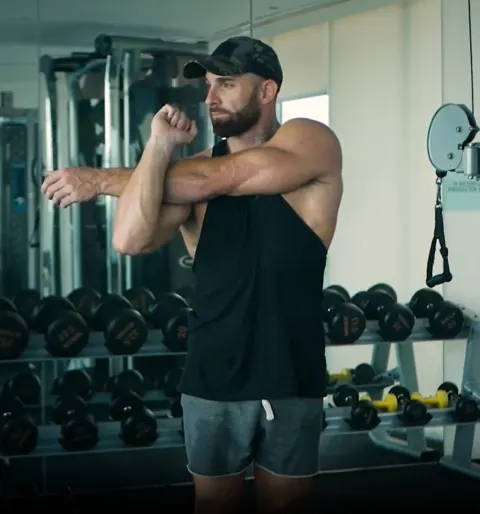
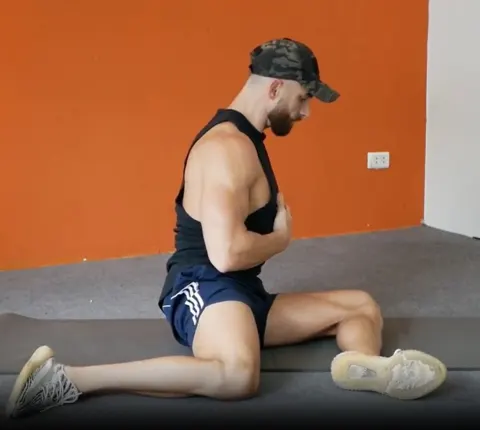
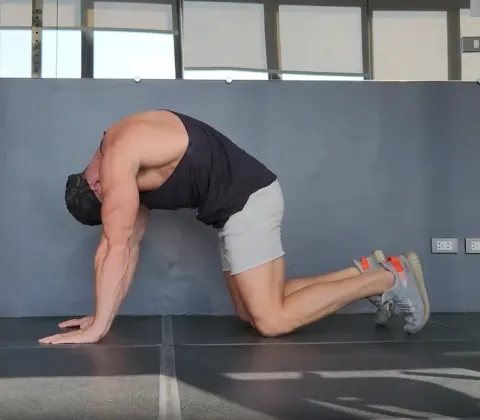
Downward Dog alternatives
Same movement pattern, different equipment or difficulty. Swap one-for-one in any plan.
Frequently asked questions
What muscles does the Downward Dog work?
Primary: Shoulders. Secondary: Shoulders, Hamstrings, Calves, Upper Back, Glutes, Lower Back
How many sets and reps of Downward Dog should I do?
Hold or work for 30–60 seconds per set, 3–4 sets, resting 45–60 seconds between them. Add time before adding load.
What can I do instead of the Downward Dog?
Same movement pattern, different equipment: Doorway Chest Stretch, Wall Angel, Across Chest Shoulder Stretch, 90/90 Hip Stretch, Cat-Cow, Deep Squat Hold.
Is the Downward Dog good for beginners?
Yes. It is a beginner-friendly movement; start light, master the steps above and add load gradually.