How Many Days a Week Should You Work Out?
How many days a week should you work out? 2, 3, 4 or 5 days compared by goal and experience, with the best split for each schedule.
Most people get the best results training 3 or 4 days a week. Two days is the minimum that still builds strength, five or six days only pays off once you have a couple of years of training behind you and recover well. The right number is the one you can hit every week for a year, not the one that looks best on paper.
The short answer by goal and experience
| You are… | Days per week | Best structure |
|---|---|---|
| A complete beginner | 2–3 | Full body every session |
| Intermediate, want muscle | 3–4 | Full body or upper/lower |
| Intermediate, want strength | 3–4 | Full body or upper/lower, heavy compounds first |
| Fat loss is the goal | 3–4 lifting + daily walking | Full body, moderate reps |
| Advanced, lots of time | 5–6 | Push/pull/legs or PPL + upper/lower |
| Busy, inconsistent schedule | 2 | Full body, 2-day split |
If you are unsure, pick 3. It is the most forgiving option: miss one session and you still trained twice.
Why frequency matters less than you think
Your muscles do not care how many days you show up. They respond to two things: how many hard sets they get per week, and whether you add weight or reps over time. Research on training frequency keeps showing the same thing: when weekly sets are equal, 2, 3, 4 or 6 days produce very similar muscle growth.
What frequency changes is how those sets are distributed. Twelve sets of chest work in one session is brutal and the last sets are junk. The same twelve sets across three sessions are four quality sets each time. More days means fresher sets, shorter workouts and less soreness per session. Fewer days means longer workouts but more rest days.
So the real question is not “how many days” but “how many days can I recover from and actually keep up?”
2 days a week
Two full-body sessions a week is a legitimate program, not a compromise. You hit every major muscle twice, which is enough to build strength and muscle for a beginner and to maintain it for anyone.
A 2-day session needs to be efficient. Six exercises, one per movement pattern, 3 sets each:
- Goblet squat – 3 × 8–12
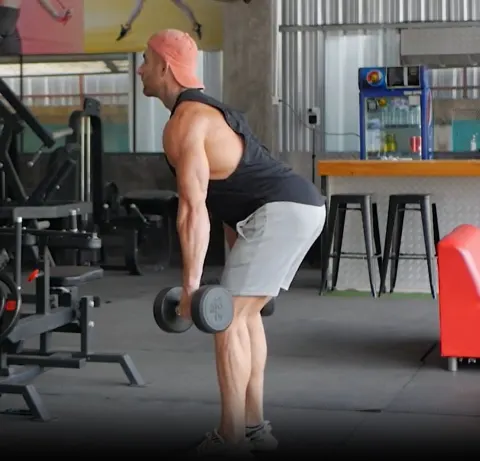
- Dumbbell Romanian deadlift – 3 × 8–12
- Push-up or dumbbell bench press – 3 × 8–12
- Dumbbell row – 3 × 8–12
- Dumbbell shoulder press – 2 × 10
- Plank – 3 × 30–45 seconds
Leave at least two days between sessions, for example Monday and Thursday. The 2-day no-equipment plan for beginners follows this structure with bodyweight exercises.
Best for: beginners, parents of small children, shift workers, anyone coming back after a long break.
3 days a week
Three days is the most popular frequency for a reason. Every muscle gets trained three times, each session is 45 to 60 minutes, and you still have four rest days. The classic schedule is Monday, Wednesday, Friday.
With three days you can stay full-body or run a 3-day push/pull/legs. Full body is the better choice for most people because each muscle gets hit three times instead of once. See full body vs split for the detailed comparison.
Typical weekly volume on a 3-day full-body plan: 9 to 15 sets per muscle group, which lands right in the range that builds muscle efficiently. The 3-day dumbbell plan for muscle gain is a good example of how it looks in practice.
Best for: almost everyone from beginner to intermediate, regardless of goal.
4 days a week
At four days, splitting the body in half starts to make sense. The upper/lower split trains upper body twice and lower body twice, each muscle gets 2 sessions a week, and workouts stay under an hour because you only cover half the body.
Typical layout: Monday upper, Tuesday lower, Thursday upper, Friday lower. Wednesday and the weekend are off.
Four days also fits a 4-day full-body plan if you prefer shorter sessions with fewer exercises each. Both work; upper/lower is easier to recover from because legs only get hammered twice.
Best for: intermediates who want more volume than 3 days allows, lifters who like shorter sessions. The 4-day gym plan for muscle gain is built on upper/lower.
5 and 6 days a week
Five or six days lets you push weekly volume to 15 to 20 sets per muscle and spend more time on isolation work. The cost is recovery. Sleep, food and stress management need to be in order or the extra days just add fatigue.
Common structures:
- 5 days: PPL + upper/lower or the classic bro split (one muscle group per day).
- 6 days: push/pull/legs twice through, each muscle twice a week.
The bro split is popular but each muscle only gets trained once a week, which is less effective than hitting it twice. If you have five days, the PPL + upper/lower hybrid is the stronger choice. The 5-day gym plan for men uses this structure.
Best for: intermediate and advanced lifters with 1.5+ years of training, good sleep and no problem recovering. Not for beginners, who grow just as fast on 3 days.
Working out every day
Training hard every single day is a bad idea. Lifting creates damage that needs 48 to 72 hours to repair; without rest days you accumulate fatigue faster than you adapt and the weights stop going up.
Moving every day is a great idea. Walk 30 to 60 minutes on rest days, do mobility work, ride a bike. Use the walking calories tool to see how much daily steps add up over a week. The split that works for most busy people: 3–4 lifting days, daily walking.
Fat loss: do more days help?
Fat loss is driven by a calorie deficit, not by workout count. A fourth or fifth day of lifting burns maybe 250 to 400 extra calories, which one extra snack erases. More valuable: keep lifting 3 to 4 days to protect muscle, walk every day, and set your calories with the calorie deficit calculator.
If you want to add cardio, do it on rest days or after lifting, 20 to 30 minutes, easy to moderate. See what actually matters for weight loss workouts for the full picture.
How to choose your number
Ask yourself these in order:
- How many days can I guarantee, even in a bad week? That is your number. Not your ideal week, your worst week.
- How do I recover? Under 7 hours of sleep, high stress, or a physical job all argue for fewer days.
- How long have I been training? Under a year: 3 days is plenty. Over two years with stalled progress: a fourth day may help.
- Do I enjoy long or short workouts? Fewer days means longer sessions. More days means 40-minute sessions.
The plan generator takes your days, equipment and goal and builds the matching schedule, so you can start with 3 days and bump it to 4 later without rewriting anything.
Changing your frequency over time
Your number is not permanent. A common path: start at 2–3 days, move to 4 after six months when you want more volume, drop back to 3 during busy periods. Every 6 to 8 weeks of hard training, take a deload week regardless of frequency. Consistency across months beats intensity across weeks every time.
Ready plans for this guide


Exercises mentioned



Frequently asked questions
Is working out 3 days a week enough to build muscle?
Yes. Three full-body sessions a week hit every muscle three times and give most people 10 to 15 hard sets per muscle group. That is enough for steady muscle growth for years, not just for beginners.
Is it bad to work out every day?
Lifting hard seven days a week leaves no time for recovery and progress stalls. Daily movement is fine if most of it is walking, mobility or easy cardio, while hard lifting stays at 3 to 5 days.
Is 2 days a week worth it?
Absolutely. Two full-body sessions build strength and maintain muscle, and they are far better than an ambitious 5-day plan you abandon after three weeks.
Should I train more days to lose weight faster?
Not necessarily. Fat loss comes mostly from your calorie deficit. Extra training days help only if you recover from them and they do not make you hungrier than the calories they burn.