Strength Training After 40: What Changes and How to Train
Strength training after 40 works just as well with a few adjustments: longer warm-ups, smarter exercise choices and better recovery. Here's how to train.
Strength training after 40 works. Your muscles respond to hard, progressive training the same way they did at 25; the differences are in recovery, joint tolerance and how much life you have competing for your energy. Adjust for those three things and you can get stronger through your 40s and well beyond.
This guide covers what actually changes, which exercises are worth favouring, and a weekly structure that fits a full calendar.
What actually changes after 40
Less than the internet suggests, but a few things are real:
- Recovery slows a little. Sleep quality often drops, stress is higher, and hard sessions take an extra day to bounce back from. This is the biggest factor, and it’s mostly about life, not biology.
- Connective tissue adapts more slowly than muscle. Tendons and joints need a longer warm-up and don’t tolerate sudden jumps in load as well.
- Muscle loss starts if you don’t train. From your mid-30s you lose roughly 3–5% of muscle per decade without resistance training. With training, that number is close to zero.
- Hormones shift. Testosterone in men and oestrogen in women decline gradually. The effect on training is real but modest; it doesn’t stop progress.
What doesn’t change: muscles grow from tension and progression, strength is built in the 5–12 rep range, and you need protein and sleep to recover. If you’re new to lifting, the beginner’s guide applies at 42 exactly as it does at 22.
The three adjustments that matter
1. Warm up properly
At 25 you could walk in and squat. At 45 you’ll get more out of the session, and avoid most tweaks, with 6–10 minutes of preparation: a couple of minutes of easy movement, cat-cow, the world’s greatest stretch, band pull-aparts, then two or three ramp-up sets of your first exercise. The warm-up guide gives the full routine.
2. Favour joint-friendly variations
You can lift heavy; just pick the version of each movement your joints like.
| Pattern | Instead of | Try |
|---|---|---|
| Horizontal press | Flat barbell bench | Dumbbell bench press, incline dumbbell press |
| Vertical press | Behind-the-neck press | Seated dumbbell press |
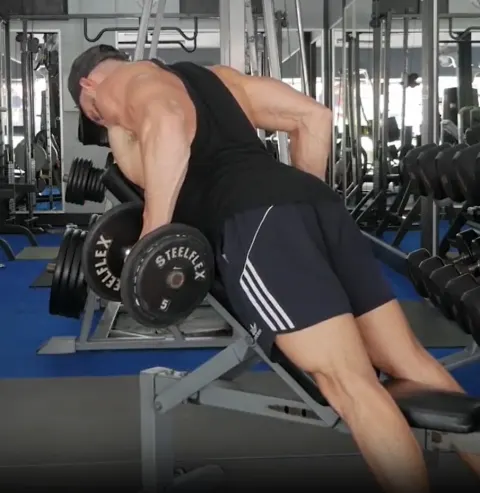
| Row | Heavy bent-over barbell row | Chest-supported row |
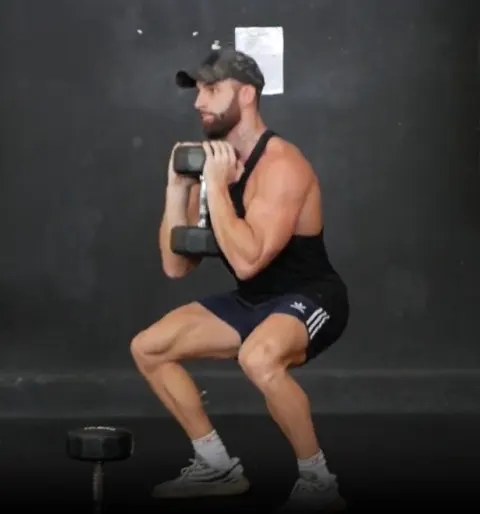
| Squat | Low-bar back squat only | Goblet squat, front squat, split squat |
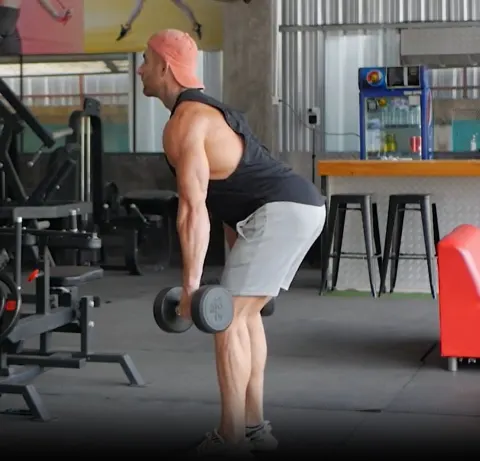
| Hinge | Deadlift from the floor every week | Dumbbell Romanian deadlift, trap-bar deadlift |
| Pull-up | Kipping pull-ups | Chin-up, lat pulldown |
None of the “instead of” exercises are banned. Barbell bench and back squat are excellent. The point is that you have options, and the option your shoulder tolerates is better than the one it doesn’t.
3. Leave a rep or two in the tank
Grinding reps to failure stresses joints and extends recovery. Stop most sets 1–2 reps short of failure. You’ll get the same muscle growth with less wear, and you’ll be able to train again in 48 hours. Use the one-rep max calculator to estimate your max from a set of 5 instead of testing it.
Sets, reps and loading
| Goal | Reps | Sets per exercise | Weekly sets per muscle |
|---|---|---|---|
| Strength | 5–8 | 3–4 | 8–12 |
| Muscle | 8–12 | 3–4 | 10–15 |
| General fitness | 8–15 | 2–3 | 8–12 |
Keep a core of heavy compound work in the 5–8 range: it maintains bone density and the kind of strength that makes everyday life easy. Fill the rest with 8–12s. Rest 90–120 seconds on heavy sets, 60–90 on the rest.
Progress with double progression: hit the top of the rep range on all sets, then add weight and drop back to the bottom. The double progression guide walks through it. Expect to add weight every 2–3 weeks on main lifts, not every session.
Weekly structure: three or four days
Three full-body days is the default. It gives each muscle three hits per week with a rest day between sessions, and it survives a busy week better than a 5-day split.
3-day full body (Mon/Wed/Fri)
| Exercise | Sets × reps |
|---|---|
| Goblet or front squat | 3 × 6–10 |
| Dumbbell bench press | 3 × 8–12 |
| Chest-supported row | 3 × 8–12 |
| Dumbbell Romanian deadlift | 3 × 8–12 |
| Seated dumbbell press | 2 × 8–12 |
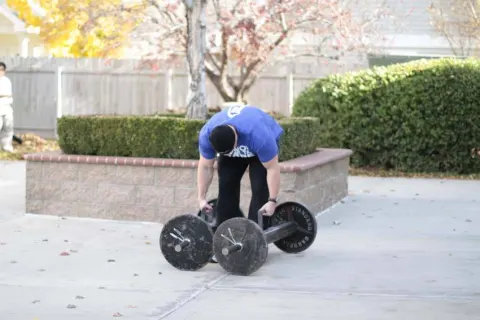
| Farmer’s carry | 3 × 30 m |
Alternate lower-body emphasis (squat heavier on Monday and Friday, hinge heavier on Wednesday) to spread the fatigue. The 3-day gym plan for strength and the 3-day dumbbell plan for muscle gain both follow this shape.
4-day upper/lower suits you if you have the time and recover well. Two upper days, two lower days, 45–60 minutes each; see the upper/lower split guide or the 4-day gym plan for general fitness. If your schedule changes week to week, the plan generator can match the days you actually have.
Recovery: the part that decides everything
- Sleep 7–8 hours. This is the single biggest lever after 40. Short sleep lowers strength, raises injury risk and blunts muscle gain.
- Protein 1.6–2 g per kg per day. Spread across 3–4 meals. Ageing muscle needs a bit more protein per meal to trigger growth, so 30–40 g per meal is a good target.
- Deload every 6–8 weeks. A planned light week prevents the slow accumulation of aches that turns into a layoff. The deload guide explains how.
- Walk daily. Low-intensity movement helps recovery, blood pressure and body composition without costing anything.
Common mistakes after 40
- Training like you’re 22. Six days a week, failure on everything, no warm-up. This works for about three weeks.
- Avoiding heavy weights entirely. Light weights for high reps won’t preserve bone density or strength. Keep some sets of 5–8.
- Skipping legs because of knees. Train around the problem instead; the bad knees guide shows how.
- Chasing soreness. Soreness isn’t progress. Strength on your log is.
- Starting too fast after a break. Returning after years off, take 4–6 weeks at easy loads before pushing.
If pain shows up
Some stiffness the next day is normal. Sharp pain during an exercise, or pain that lingers for more than a few days, means change the exercise, not stop training. Swap flat bench for incline dumbbells, back squat for split squats, barbell row for chest-supported row, and keep going. If pain persists for a couple of weeks despite swapping, see a doctor or physio.
The bottom line
Lift three or four days a week. Warm up properly, choose the variations your joints like, keep a rep or two in reserve, and progress slowly with a log. Eat protein, sleep, deload every couple of months. Done this way, your 40s can be the strongest decade you’ve had, and the habits carry straight into the training after 50 and 60 stage with almost no changes.
Ready plans for this guide


Exercises mentioned
 video
beginner
 video
beginner
 video
beginner
 video
beginner
 beginner
Frequently asked questions
Can you still build muscle after 40?
Yes. Muscle gain in your 40s is only slightly slower than in your 20s if you train hard, eat enough protein and sleep. Most people who struggle after 40 are limited by recovery habits, not by age itself.
How many days a week should I lift after 40?
Three full-body sessions or a 4-day upper/lower split suits most people. Frequency matters less than consistency; the extra day is only worth it if you can recover from it.
Should I avoid heavy lifting after 40?
No. Heavy sets of 5–8 reps are the best way to keep strength and bone density. What changes is the warm-up and the volume at the very top end: fewer grinding singles, more quality sets in the 5–12 range.
How do I protect my joints while lifting after 40?
Warm up for 6–10 minutes, choose joint-friendly variations such as dumbbell presses and chest-supported rows, and stop sets 1–2 reps short of failure. Pain that lasts more than a couple of days means swap the exercise, not quit training.