How to Start Working Out: A Beginner's First 8 Weeks
A simple 8-week plan for how to start working out as a beginner: which exercises to do, how many days, how hard to push and how to progress.
Start with two or three full-body workouts a week, five or six basic exercises, two or three sets each, and add a little weight or a rep every week. That is the whole method. The first 8 weeks are about learning the movements and building a habit you can keep, not about chasing exhaustion.
Before your first workout: three decisions
You do not need a perfect plan. You need a plan you will follow for two months. Decide these three things today:
- Which days. Pick two or three fixed days with at least one rest day between them, for example Monday, Wednesday and Friday. Fixed days beat “when I have time” every single time.
- Where. Home with no equipment, home with a pair of dumbbells, or a gym. All three work for a beginner. The best choice is the one with the fewest excuses attached.
- What you want. “Get stronger and look better” is a fine goal. Pick one direction (muscle, fat loss, general fitness) so your plan and your eating point the same way.
If you want this done for you, the plan generator builds a beginner schedule from your days, equipment and goal in about a minute.
The six movements every beginner needs
Almost every good beginner program is built on the same six movement patterns. Learn one exercise per pattern and you cover the whole body.
| Pattern | No equipment | Dumbbells | Gym |
|---|---|---|---|
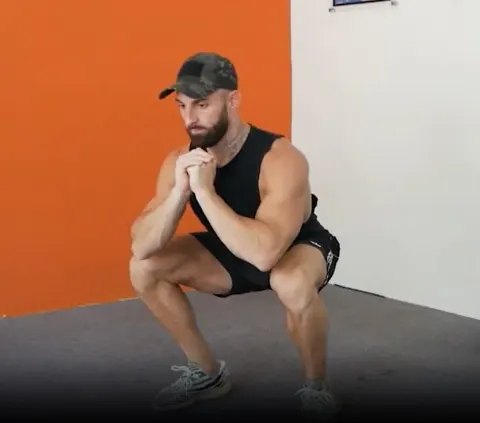
| Squat | Bodyweight squat | Goblet squat | Back squat |
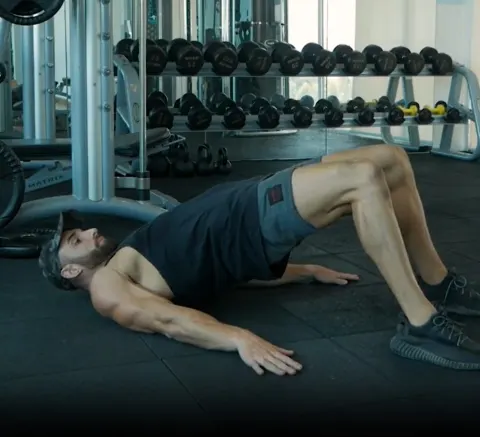
| Hinge | Glute bridge | Dumbbell Romanian deadlift | Trap bar deadlift |
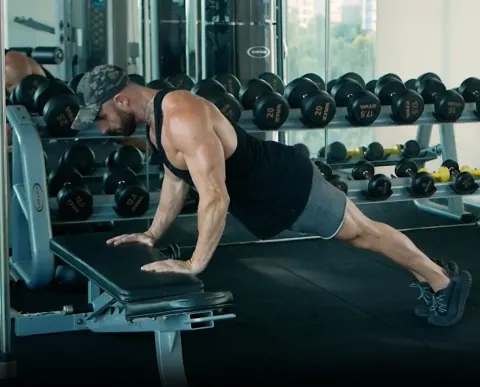
| Push | Incline push-up | Dumbbell bench press | Barbell bench press |
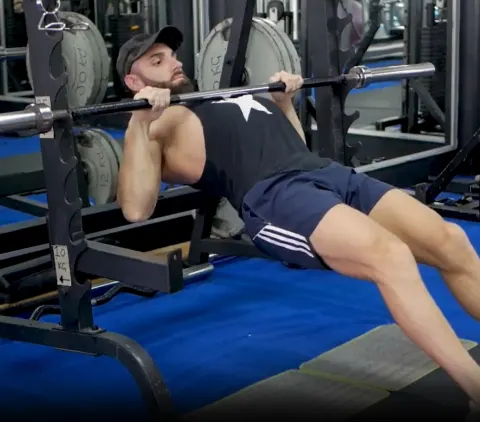
| Pull | Inverted row | Dumbbell row | Lat pulldown |
| Single leg | Reverse lunge | Split squat | Step-up |
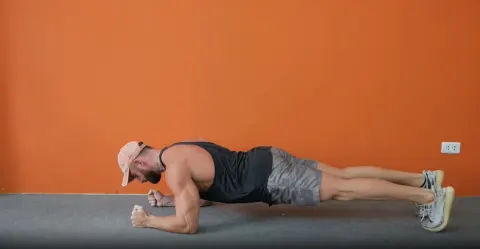
| Core | Plank | Farmer’s carry | Pallof press |
Pick one column and stay in it for 8 weeks. Switching exercises every session feels productive but stops you from getting better at anything.
The 8-week schedule
Here is how the volume and effort should ramp. The first two weeks are deliberately easy. Your joints, tendons and nervous system adapt slower than your motivation does.
| Weeks | Sessions per week | Sets per exercise | Reps | How hard |
|---|---|---|---|---|
| 1–2 | 2–3 | 2 | 10–12 | Easy. Stop with 4–5 reps left in you. Learn the form. |
| 3–4 | 3 | 2–3 | 10–12 | Moderate. Stop with 3 reps left. |
| 5–6 | 3 | 3 | 8–12 | Moderate-hard. Stop with 2 reps left. |
| 7–8 | 3 | 3 | 8–12 | Hard. Stop with 1–2 reps left on the last set only. |
Each session should take 35 to 50 minutes including a short warm-up. If it takes longer, you are resting too long or doing too much.
A sample beginner session
At home with no equipment
- Bodyweight squat – 3 × 12
- Incline push-up (hands on a table or counter) – 3 × 10
- Doorway row or inverted row – 3 × 10
- Glute bridge – 3 × 15
- Reverse lunge – 2 × 8 per leg
- Plank – 3 × 20–40 seconds
Rest 60 to 90 seconds between sets. The 3-day no-equipment plan for beginners spreads this across the week with slight variations each day.
With a pair of dumbbells
- Goblet squat – 3 × 10
- Dumbbell bench press (floor press if you have no bench) – 3 × 10
- Dumbbell row – 3 × 10 per side
- Dumbbell Romanian deadlift – 3 × 10
- Dumbbell shoulder press – 2 × 10
- Farmer’s carry – 3 × 30 meters
Adjustable dumbbells or a set of 5, 8 and 12 kg covers you for months. The 3-day dumbbell plan for beginners is built around these movements.
How hard should it feel?
Beginners usually make one of two mistakes: training so light nothing changes, or training to failure on day one and limping for a week. Use the “reps in reserve” rule instead. After every set, ask how many more reps you honestly could have done. In weeks 1–2 the answer should be 4 or 5. By week 7 it should be 1 or 2 on the last set.
A set is working when the last two reps slow down but your form stays the same. If your back rounds or your knees cave, the weight is too heavy regardless of how many reps you got.
How to progress week to week
Progress is what separates exercise from training. Use the simplest rule there is: when you hit the top of the rep range on all sets with good form, add weight next time. With dumbbells that means moving up 2 to 2.5 kg. With bodyweight it means a harder variation, for example from incline push-ups to regular push-ups, or adding reps.
Write every session down: exercise, weight, reps. A notes app is enough. Within four weeks you will see numbers go up, and that is what keeps people training once the initial motivation fades. The full method is in our double progression guide.
Warm-up, rest and eating
Warm-up. Five minutes is plenty: two minutes of brisk walking or jumping jacks, then one light set of your first exercise. Our warm-up guide has a full routine.
Rest between sets. 60 to 90 seconds for most exercises, up to 2 minutes for squats and deadlifts. Longer rests mean better sets, and better sets mean more progress.
Rest between sessions. At least one full day. Muscles grow during recovery, not during the workout. Soreness that lasts more than three days means you did too much, not that it worked.
Eating. You do not need a special diet to start. Aim for a palm-sized portion of protein at every meal (roughly 1.6 g per kg of bodyweight across the day) and drink water. If fat loss is the goal, the calorie deficit calculator shows a realistic target.
Five beginner mistakes to avoid
- Doing too much in week one. Enthusiasm fades, soreness does not. Start lighter than you think you need.
- Skipping legs. Squats and hinges are half the program for a reason. They move the most muscle and burn the most energy.
- Changing programs every two weeks. Give any plan 8 weeks before you judge it.
- Only doing cardio. Walking and running are great for health, but strength training is what changes how you look and move. The walking calories tool shows that a 30-minute walk burns far less than most people assume.
- Comparing yourself to people who started years ago. Your only competition is your own logbook.
What 8 weeks realistically gets you
Expect your squat and press numbers to climb 30 to 50 percent, mostly from technique and nervous-system learning. Expect to look a little tighter and feel noticeably stronger carrying groceries and climbing stairs. Expect the workouts to feel like a normal part of your week rather than an event.
After 8 weeks, you have two options: keep adding weight on the same plan, or move to a slightly bigger program. If you can train a fourth day, the upper/lower split is the natural next step. If three days is still the limit, stay full-body and keep pushing the numbers. Either way, read how many days a week you should work out before you decide.
Ready plans for this guide


Exercises mentioned
Frequently asked questions
How many days a week should a beginner work out?
Two or three full-body sessions a week is the sweet spot. It is enough to build strength and muscle, and leaves a rest day between sessions so you recover and actually show up next time.
Should I start at home or at the gym?
Whichever you will actually do. Bodyweight and dumbbell training at home builds real muscle for the first 6 to 12 months. The gym gives you more loading options later, but it is not required to start.
How long before I see results?
Strength goes up within 2 to 3 weeks because your nervous system learns the movements. Visible muscle changes usually take 8 to 12 weeks of consistent training and decent eating.
Is it normal to be very sore after the first workouts?
Yes, especially in the legs. Soreness peaks 24 to 48 hours after a session and fades over the first two weeks as your body adapts. Keep the first sessions light so soreness does not stop you from training again.