Sets and Reps Explained: How Many for Strength, Muscle, Fat Loss
Sets and reps explained simply: how many sets and reps to do for strength, muscle growth and fat loss, how to read 3x8-12, and how many sets per week.
Do 3 to 5 sets of 1 to 5 reps for maximal strength, 3 to 4 sets of 6 to 12 reps for muscle growth, and 2 to 3 sets of 12 to 20 reps for endurance or when joints need lighter loads. Fat loss uses the same muscle-building ranges, because the goal of lifting in a deficit is to keep muscle. Across the week, aim for 10 to 20 hard sets per muscle group.
Reading a workout plan: what 3 × 8–12 means
A rep (repetition) is one complete movement: one squat down and up. A set is a group of reps done back to back before resting. “3 × 8–12” means three sets, each of 8 to 12 reps.
The range is not a suggestion to do whatever you feel like. It is an instruction about weight: choose a load that lets you do at least 8 reps but not more than 12 with good form. If you can do 15, it is too light. If you fail at 6, it is too heavy. When all three sets reach 12, add weight and drop back to 8. That is double progression, and it is how almost every rep range in a plan is meant to be used.
Rep ranges and what they train
Different rep counts shift the balance between strength, muscle size and endurance, but the lines are blurry, not walls.
| Reps per set | Weight (% of max) | Primary effect | Best for |
|---|---|---|---|
| 1–5 | 85–100 % | Maximal strength, skill with heavy loads | Barbell compounds, strength goals |
| 6–12 | 65–85 % | Muscle growth, moderate strength | Most exercises, most people |
| 12–20 | 50–65 % | Muscle growth, endurance, joint-friendly | Isolation, bodyweight, bad joints |
| 20+ | under 50 % | Endurance, conditioning | Circuits, finishers |
Two things the table hides. First, muscle grows at every rep count from about 5 to 30 as long as the set is hard, meaning you end within 1 to 3 reps of failure. Second, strength is specific: you get strongest at the rep range you practise. Someone who only does sets of 12 will be decent at 12 and surprisingly weak at 3.
How many sets per exercise
For most exercises, 3 sets is the right default. Two sets is enough for a beginner or a second exercise for the same muscle. Four or five sets suits your main lift of the day when you are more experienced.
A useful rule: fewer sets of the first, heaviest exercise take the most out of you, so let them count more. A session might look like this:
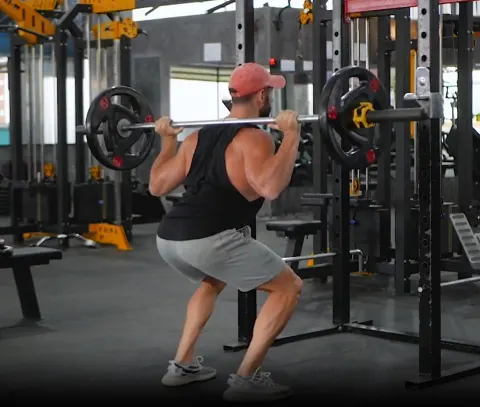
- Main lift (back squat): 4 × 5–8
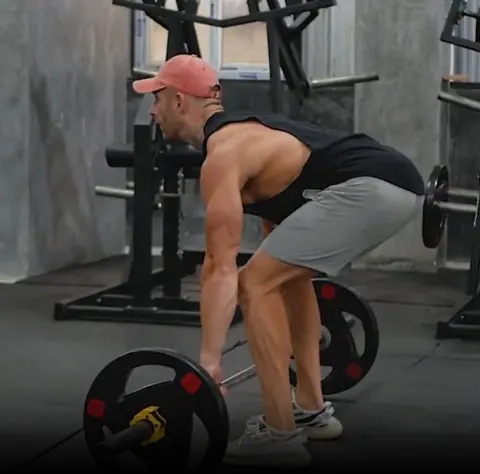
- Second compound (dumbbell Romanian deadlift): 3 × 8–12
- Upper-body compound (lat pulldown): 3 × 8–12
- Isolation (dumbbell curl, face pull): 2–3 × 12–15
Warm-up sets do not count. Only the sets you take within a few reps of failure are “working sets”, and those are what you tally for weekly volume.
How many sets per muscle per week
Weekly volume is a better predictor of growth than any single session. The research-backed range is roughly 10 to 20 hard sets per muscle group per week.
| Experience | Sets per muscle per week | How it looks |
|---|---|---|
| Beginner (0–1 year) | 8–12 | 3 full-body days, 3 sets of one exercise per muscle |
| Intermediate (1–3 years) | 12–16 | 3–4 days, 2 exercises per muscle |
| Advanced (3+ years) | 16–20 | 4–6 days, split routine |
Compound exercises count towards several muscles. A set of barbell rows is a set for the upper back, the lats and the biceps. A set of bench press is a set for chest, front shoulders and triceps. That is why a 3-day full-body plan with six exercises still gives every muscle 9 to 15 sets a week.
More is not automatically better. Above 20 sets most people recover worse, not grow more. If progress stalls, check sleep and effort before adding sets.
Sets and reps for strength
If your goal is a heavier squat, bench and deadlift, most of your work should be in the 3 to 6 rep range at 80 to 90 percent of your max, with 3 to 5 sets and 3 to 5 minutes of rest. The classic formats are 5 × 5, 4 × 6 and 3 × 3 to 5.
Keep the heavy work to two or three barbell lifts per session and add 2 to 3 supporting exercises in the 6 to 12 range for muscle and joint health. Example strength day:
- Conventional deadlift – 4 × 4–6
- Barbell bench press – 4 × 4–6
- Chest-supported row – 3 × 8–10
- Split squat – 2 × 8–10 per leg
- Plank – 3 × 30–45 s
Estimate your working weights from a recent set with the one rep max calculator, and check where you stand on the strength standards page. The 3-day gym strength plan for beginners uses exactly this structure.
Sets and reps for muscle growth
For size, keep most sets between 6 and 12 reps, with isolation work drifting up to 15 or 20. Three to four sets per exercise, 10 to 20 sets per muscle per week, every set ending 1 to 2 reps short of failure.
The practical reason to stay in 6–12 rather than 20–30: both build muscle, but 25-rep sets are miserable, take forever and make it hard to judge whether you were actually close to failure. Heavy-ish sets of 8 give the same growth with far less guesswork.
A good hypertrophy day with dumbbells:
- Goblet squat – 3 × 8–12
- Dumbbell bench press – 3 × 8–12
- Dumbbell row – 3 × 8–12
- Dumbbell shoulder press – 3 × 8–12
- Dumbbell lateral raise – 3 × 12–15
- Hammer curl – 2 × 10–15
The 4-day dumbbell plan for muscle gain spreads this volume across an upper/lower week.
Sets and reps for fat loss
Here is the mistake to avoid: switching to 20-rep sets with pink dumbbells “to tone”. Lifting burns few calories whatever the rep count. During a diet, lifting has one job, to keep the muscle you have, and that requires real weight in the 6 to 15 range.
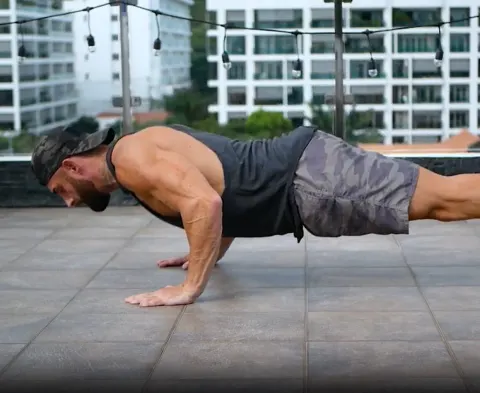
Keep your sets and reps where they were, accept that you may add weight more slowly, and get the fat loss from the kitchen and from daily steps. The calorie deficit calculator will give you a target. If you want a conditioning element, add an 8-minute finisher of kettlebell swings or push-ups at the end rather than turning every exercise into a high-rep circuit. See the 3-day dumbbell plan for weight loss for the full layout.
Sets and reps for beginners
Your first three months: 2 to 3 sets of 8 to 12 on everything, including barbell lifts. The weights are too light to need 5-rep sets, and the extra reps teach the movement. Add sets before you add exercises, and add weight before you add sets.
After three to six months, move your main barbell lift into the 5 to 8 range if strength is the goal, and keep everything else at 8 to 12.
Common mistakes
- Treating a range as a target for the easy end. 3 × 8–12 at a weight where 12 is easy is really 3 × 20 done badly. Pick a weight where 12 is hard.
- Counting every set as a working set. Warm-ups and sets stopped 6 reps short of failure do not build much. Make the counted sets count.
- Adding sets when you should add weight. If you have been at 3 × 12 for two weeks, you need a heavier dumbbell, not a fourth set.
- Changing ranges every week. Stay with a range for 6 to 8 weeks so you can actually measure progress.
- Resting too little. Short rests cut your reps and make it look like you are failing at a rep range you could easily handle. See how long to rest between sets.
Quick reference
| Goal | Sets per exercise | Reps | Rest | Sets per muscle per week |
|---|---|---|---|---|
| Strength | 3–5 | 3–6 | 3–5 min | 10–15 |
| Muscle | 3–4 | 6–12 (isolation 12–15) | 1.5–3 min | 10–20 |
| Fat loss | 3 | 6–15 | 1.5–2 min | 10–15 |
| Beginner, any goal | 2–3 | 8–12 | 1.5–2 min | 8–12 |
The plan generator applies these numbers automatically based on your goal and experience, so every exercise comes with the right sets, reps and rest already filled in. Pick your days with the training frequency guide, then let the plan handle the arithmetic.
Ready plans for this guide


Exercises mentioned


Frequently asked questions
What does 3x8-12 mean?
Three sets of 8 to 12 repetitions. You pick a weight that lets you do at least 8 reps but no more than 12 with good form, rest, and repeat three times. When you can do 12 on every set, add weight.
How many reps build muscle?
Anything from about 5 to 30 reps per set builds muscle if the set is taken close to failure. 6 to 12 is the practical sweet spot because it is heavy enough to be efficient and light enough to be safe and repeatable.
How many sets per muscle group per week?
10 to 20 hard sets per muscle per week for growth. Beginners do well at the low end, 8 to 12 sets. More than 20 rarely helps unless you are advanced and recover very well.
Are high reps better for fat loss?
No. Fat loss comes from a calorie deficit, and the job of lifting during a diet is to keep muscle. Keep training in the 6 to 15 range with real weight; add cardio separately if you want to burn more.