How to do the Dumbbell Lateral Lunge
Primary: Quads · also works Glutes, Hamstrings, Adductors, Calves.
The Dumbbell Lateral Lunge is a strength exercise that targets the quadriceps, glutes, and hamstrings. It's a compound movement that also engages the adductors, abductors, and calves. This exercise is performed with dumbbells to increase resistance, making it an excellent choice for building lower body strength and stability. It's particularly useful for athletes looking to improve their lateral movement and balance.
Step by step
- 1
Hold a pair of dumbbells at your sides, with your feet hip-width apart.
- 2
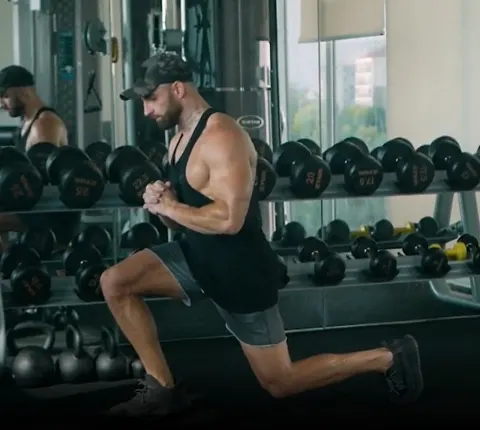
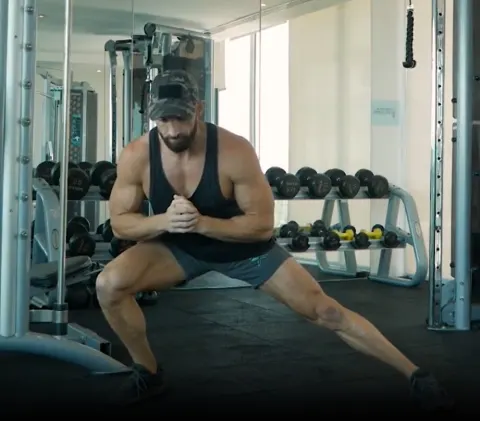
Step out to the side with your right foot, bending your right knee and pushing your hips back as you lunge.
- 3
Keep your left leg straight and your chest up as you lower into the lunge.
- 4
Push through your right foot to return to the starting position.
- 5
Repeat the movement on the other side, stepping out with your left foot.
Coaching cues
- Keep your core engaged throughout the exercise to maintain balance.
- Ensure your knee does not extend past your toes to prevent injury.
- Focus on a slow and controlled movement, especially when returning to the starting position.
Sets, reps and where it fits
Muscle
3–4 × 8–12
rest 60–90 s
Strength
4–5 × 4–6
rest 2–3 min
Fat loss
3 × 10–15
rest 45–60 s
Dumbbell Lateral Lunge alternatives
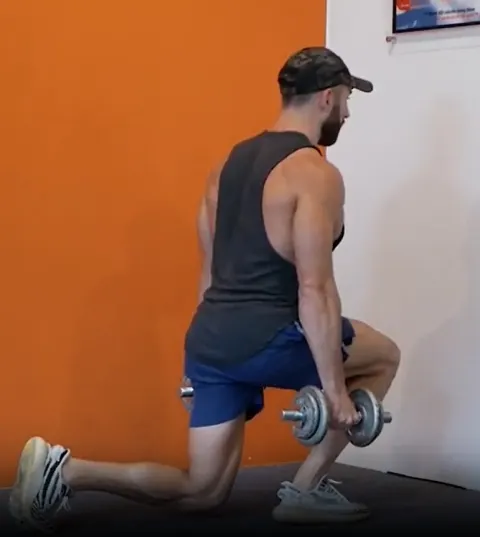
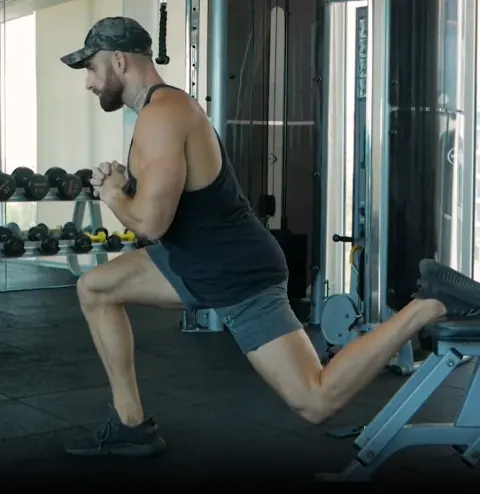
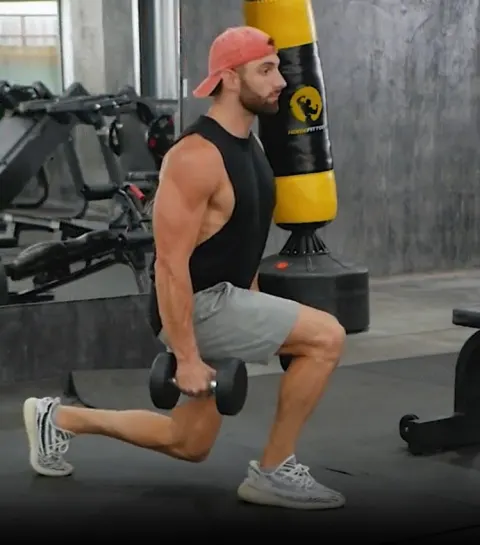
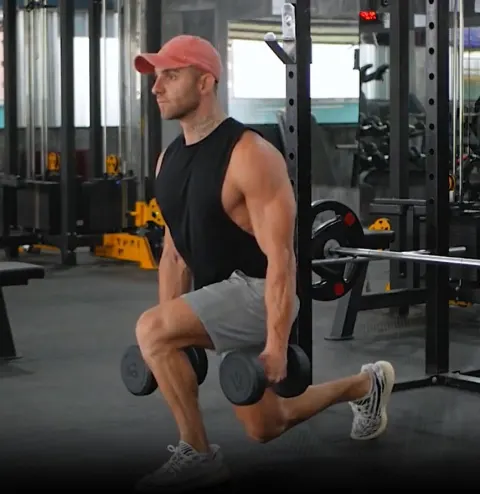
Same movement pattern, different equipment or difficulty. Swap one-for-one in any plan.
Frequently asked questions
What muscles does the Dumbbell Lateral Lunge work?
Primary: Quads. Secondary: Quads, Glutes, Hamstrings, Adductors, Calves
How many sets and reps of Dumbbell Lateral Lunge should I do?
For muscle: 3–4 sets of 8–12 reps. For strength on compound lifts: 4–5 sets of 4–6. Rest 60–120 seconds between sets.
What can I do instead of the Dumbbell Lateral Lunge?
Same movement pattern, different equipment: Dumbbell Reverse Lunge, Bulgarian Split Squat, Dumbbell Lunges, Single Leg Dumbbell Lunges, Forward Lunge, Lateral Lunge.
Is the Dumbbell Lateral Lunge good for beginners?
With some training experience, yes. Beginners should start with one of the easier alternatives listed and progress to it.