How to do the Pull-Up
Primary: Lats, Upper Back · also works Biceps, Forearms, Core, Rear Delts. Also called: overhand pull up, wide grip pull up.
Step by step
- 1
Grip the bar with your palms facing away, slightly wider than shoulder-width.
- 2
Hang with straight arms, then pull your shoulder blades down to start the movement.
- 3
Pull your chest toward the bar by driving your elbows down and back.
- 4
Finish with your chin over the bar, then lower under control to a full hang.
Coaching cues
- Think of pulling the bar down to you
- Keep your legs still and core braced
- Lower slowly to build strength
Common mistakes
- Kipping or swinging the legs
- Not starting from a full hang
- Shrugging the shoulders into the ears at the top
Sets, reps and where it fits
Muscle
3–4 × 4–10
rest 60–90 s
Strength
4–5 × 4–6
rest 2–3 min
Fat loss
3 × 10–15
rest 45–60 s
Pull-Up alternatives
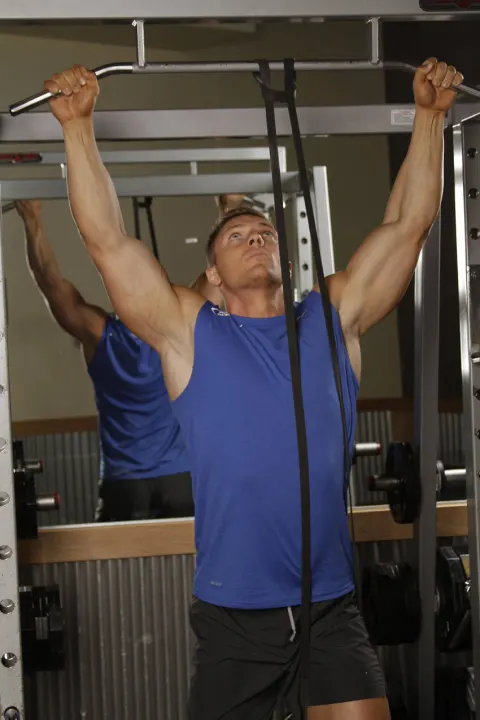
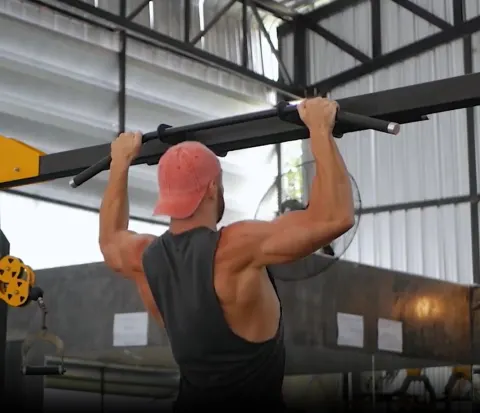
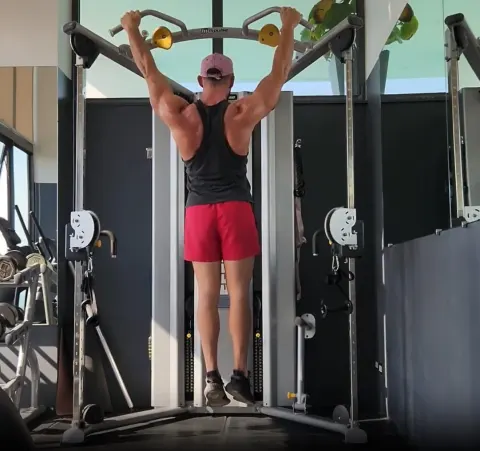
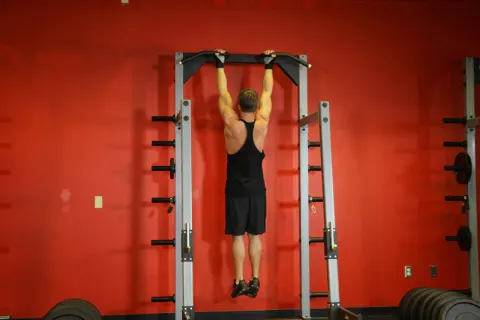
Same movement pattern, different equipment or difficulty. Swap one-for-one in any plan.

Frequently asked questions
What muscles does the Pull-Up work?
Primary: Lats, Upper Back. Secondary: Lats, Upper Back, Biceps, Forearms, Core, Rear Delts
How many sets and reps of Pull-Up should I do?
For muscle: 3–4 sets of 4–10 reps. For strength on compound lifts: 4–5 sets of 4–6. Rest 60–120 seconds between sets.
What can I do instead of the Pull-Up?
Same movement pattern, different equipment: Lat Pulldown, Assisted Pull-Up, Negative Pull-Up, Band Lat Pulldown, Scapular Pull-Up, Chin-Up.
Is the Pull-Up good for beginners?
With some training experience, yes. Beginners should start with one of the easier alternatives listed and progress to it.