How to do the Seated Rear Delt Raise
Primary: Rear Delts · also works Upper Back, Traps.
The Seated Rear Delt Raise primarily targets the rear deltoids, which are part of the shoulder muscle group. This exercise helps in building shoulder strength and improving posture by engaging the upper back. It is performed sitting on a bench with dumbbells and involves raising the arms to the sides while keeping the torso bent forward. The movement is isolated to ensure maximum engagement of the rear deltoids.
Step by step
- 1
Sit on a bench with your feet flat on the floor, holding a dumbbell in each hand.
- 2
Lean forward at the hips, keeping your back straight and your chest up.
- 3
With a slight bend in your elbows, lift the dumbbells out to the sides until your upper arms are parallel to the floor, then slowly lower them back to the starting position.
Coaching cues
- Keep your movements controlled and avoid using momentum to lift the weights.
- Keep your chest up to maintain proper posture and avoid rounding your back.
- Focus on squeezing your shoulder blades together at the top of the movement to maximize rear delt engagement.
Sets, reps and where it fits
Muscle
3–4 × 8–12
rest 60–90 s
Strength
not a strength lift
use for assistance
Fat loss
3 × 10–15
rest 45–60 s
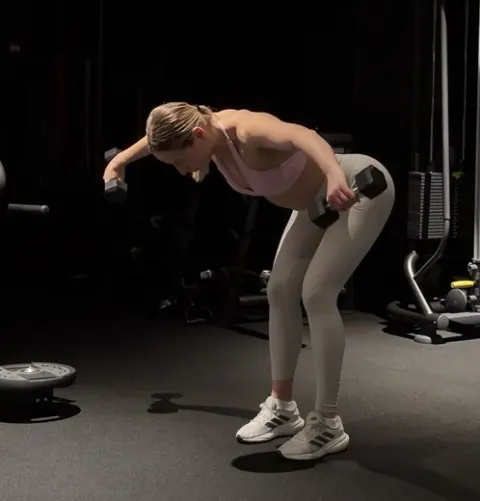
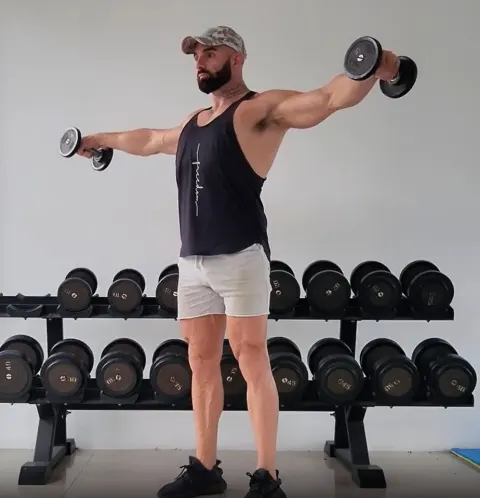
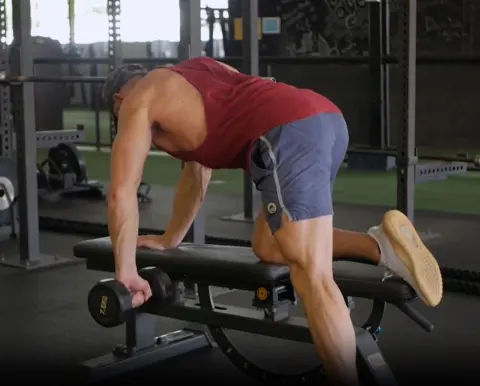
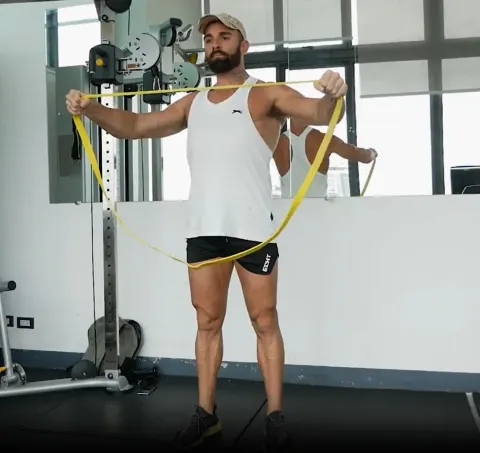
Seated Rear Delt Raise alternatives
Same movement pattern, different equipment or difficulty. Swap one-for-one in any plan.
Frequently asked questions
What muscles does the Seated Rear Delt Raise work?
Primary: Rear Delts. Secondary: Rear Delts, Upper Back, Traps
How many sets and reps of Seated Rear Delt Raise should I do?
For muscle: 3–4 sets of 8–12 reps. For strength on compound lifts: 4–5 sets of 4–6. Rest 60–120 seconds between sets.
What can I do instead of the Seated Rear Delt Raise?
Same movement pattern, different equipment: Rear Delt Fly, Dumbbell Front Raise with Rear Delt Fly, Rear Delt Dumbbell Row with Bench, Band Face Pull, Band Pull-Apart, Face Pull.
Is the Seated Rear Delt Raise good for beginners?
With some training experience, yes. Beginners should start with one of the easier alternatives listed and progress to it.