How to do the Kettlebell Triceps Extension
Primary: Triceps · also works Core, Front Delts. Also called: overhead kettlebell extension, kettlebell french press.
Step by step
- 1
Hold the kettlebell upside down by the horns and press it overhead so the bell rests against the backs of your wrists.
- 2
Keeping the elbows pointing forward and close to your head, lower the bell behind your head by bending the elbows.
- 3
Stop when you feel a stretch in the triceps, usually with the forearms past parallel.
- 4
Extend the elbows to press the bell back up without moving the upper arms.
- 5
Brace your abs so the ribs do not flare.
Coaching cues
- Elbows point to the ceiling the whole time
- Ribs down, glutes tight
- Full extension at the top, no bounce at the bottom
Common mistakes
- Flaring the elbows out
- Arching the lower back
- Letting the bell drift forward
Sets, reps and where it fits
Muscle
3–4 × 10–15
rest 60–90 s
Strength
not a strength lift
use for assistance
Fat loss
3 × 10–15
rest 45–60 s
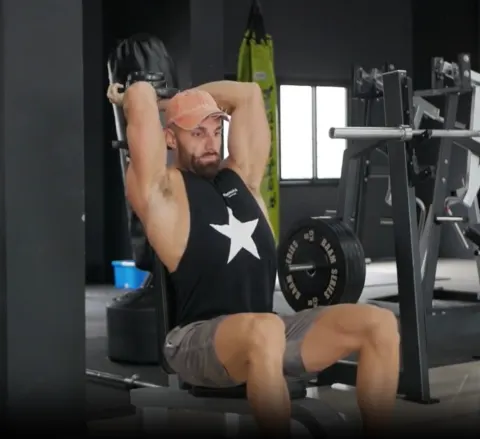
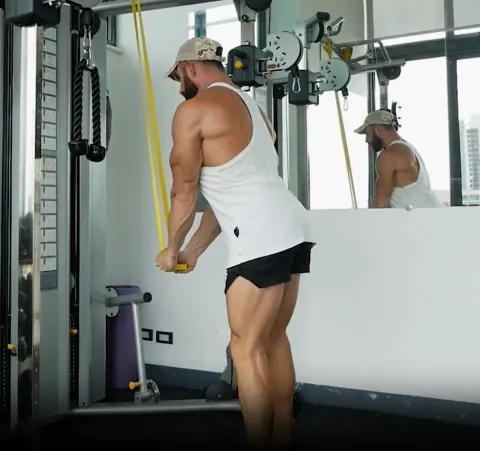
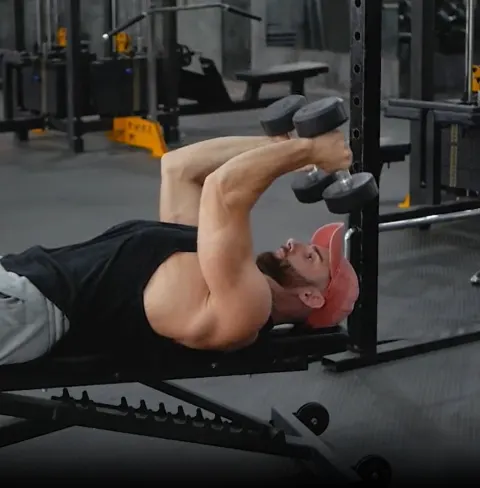
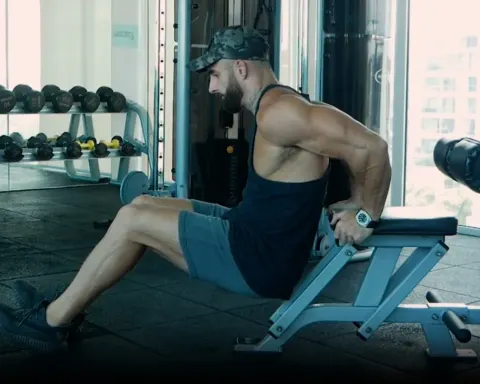
Kettlebell Triceps Extension alternatives
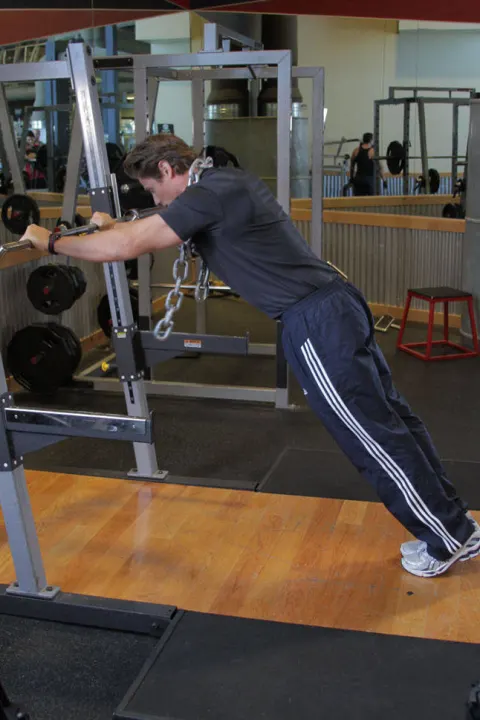
Same movement pattern, different equipment or difficulty. Swap one-for-one in any plan.
Frequently asked questions
What muscles does the Kettlebell Triceps Extension work?
Primary: Triceps. Secondary: Triceps, Core, Front Delts
How many sets and reps of Kettlebell Triceps Extension should I do?
For muscle: 3–4 sets of 10–15 reps. For strength on compound lifts: 4–5 sets of 4–6. Rest 60–120 seconds between sets.
What can I do instead of the Kettlebell Triceps Extension?
Same movement pattern, different equipment: Overhead Triceps Extension, Band Triceps Extension, Skull Crusher, Bench Dip, Band Triceps Kickback, Bodyweight Triceps Extension.
Is the Kettlebell Triceps Extension good for beginners?
Yes. It is a beginner-friendly movement; start light, master the steps above and add load gradually.