How to do the Reverse Hyperextension with bench
Primary: Glutes · also works Hamstrings, Lower Back.
The Reverse Hyperextension with bench is a glute-focused exercise that also engages the hamstrings and lower back. This exercise is performed by lying face-down on a bench, with the hips positioned just off the edge, and lifting the legs upwards. It is particularly useful for individuals looking to strengthen the posterior chain, improve hip extension, and develop core stability.
Step by step
- 1
Lie face down on a bench with your hips just beyond the edge and your hands gripping the sides of the bench for support.
- 2
Keep your legs straight and lift them upwards, squeezing your glutes at the top of the movement.
- 3
Slowly lower your legs back to the starting position, making sure to control the descent.
Coaching cues
- Engage your core throughout the exercise to maintain stability.
- Keep your movements slow and controlled to maximize muscle engagement.
- Avoid using momentum to lift your legs; focus on using your glutes and hamstrings.
Sets, reps and where it fits
Muscle
3–4 × 10–15
rest 60–90 s
Strength
not a strength lift
use for assistance
Fat loss
3 × 10–15
rest 45–60 s
Reverse Hyperextension with bench alternatives
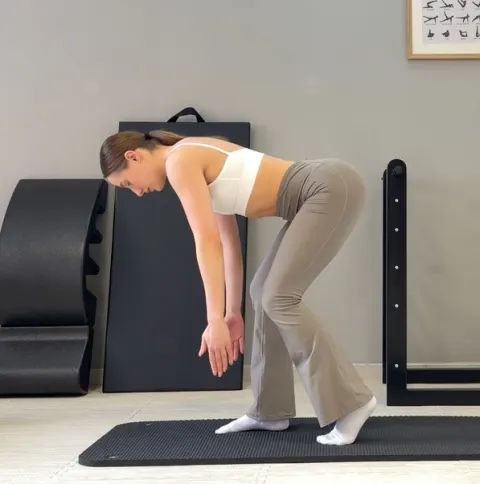
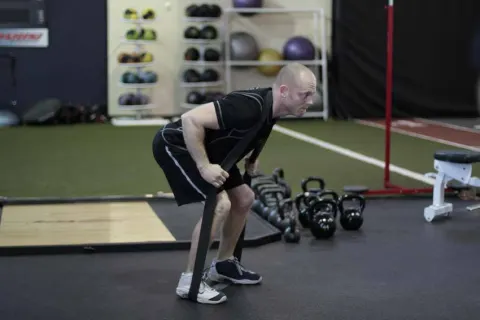
Same movement pattern, different equipment or difficulty. Swap one-for-one in any plan.

Frequently asked questions
What muscles does the Reverse Hyperextension with bench work?
Primary: Glutes. Secondary: Glutes, Hamstrings, Lower Back
How many sets and reps of Reverse Hyperextension with bench should I do?
For muscle: 3–4 sets of 10–15 reps. For strength on compound lifts: 4–5 sets of 4–6. Rest 60–120 seconds between sets.
What can I do instead of the Reverse Hyperextension with bench?
Same movement pattern, different equipment: Bodyweight Good Morning, Bodyweight Hip Hinge, Single-Leg Hip Hinge, Single-Leg Romanian Deadlift (Balance), Banded Good Morning, Cable Pull-Through.
Is the Reverse Hyperextension with bench good for beginners?
Yes. It is a beginner-friendly movement; start light, master the steps above and add load gradually.