How to do the Motion Side Plank
Primary: Obliques · also works Core, Shoulders, Glutes.
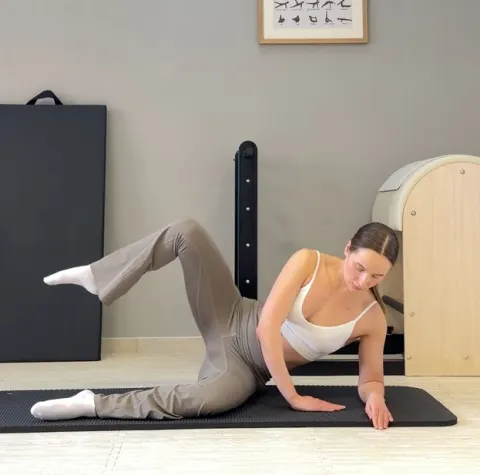
The Motion Side Plank is a dynamic variation of the traditional side plank aimed at increasing core stability, especially in the obliques, while also engaging the lower back, shoulders, and glutes. This exercise is excellent for improving balance and overall core strength. Moreover, it offers a static to dynamic transition, making it beneficial for enhancing functional strength.
Step by step
- 1
Lie on your side with your legs straight and one foot stacked on the other.
- 2
Lift your body onto your forearm and the side of your foot, creating a straight line from your head to feet.
- 3
Slowly dip your hips towards the ground without touching and lift them back to the starting position.
Coaching cues
- Keep your core tight throughout the exercise.
- Ensure your body remains in a straight line without sagging.
- Control your movements to maintain balance and maximize muscle engagement.
Sets, reps and where it fits
Muscle
3–4 × 30–60 sec
rest 60–90 s
Strength
not a strength lift
use for assistance
Fat loss
3 × 30–60 sec
rest 45–60 s
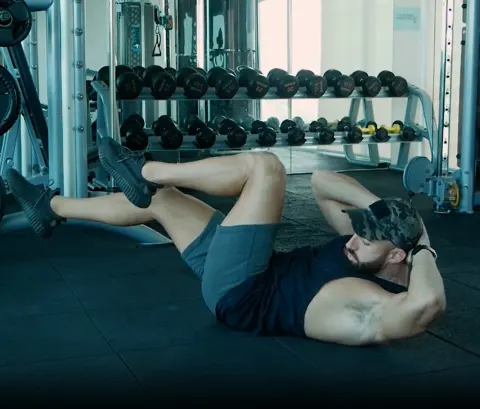
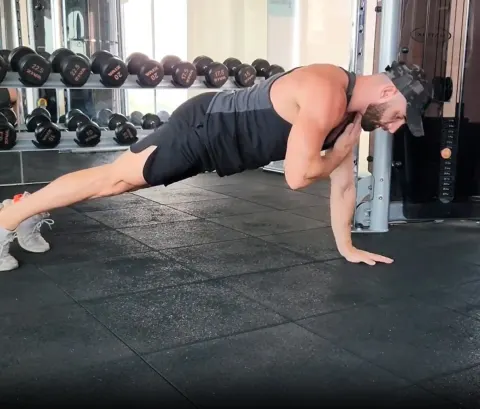
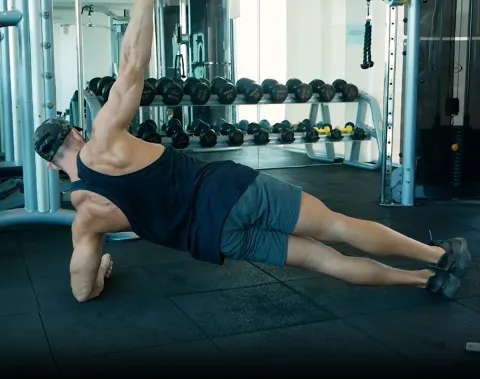
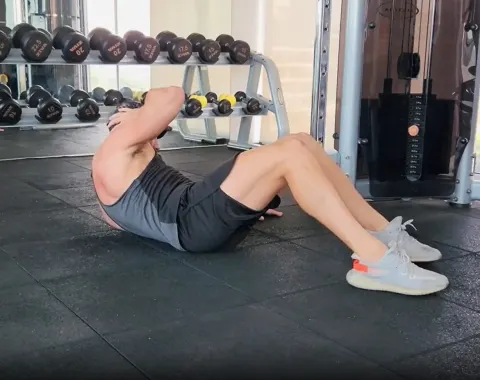
Motion Side Plank alternatives
Same movement pattern, different equipment or difficulty. Swap one-for-one in any plan.

Frequently asked questions
What muscles does the Motion Side Plank work?
Primary: Obliques. Secondary: Obliques, Core, Shoulders, Glutes
How many sets and reps of Motion Side Plank should I do?
Hold or work for 30–60 seconds per set, 3–4 sets, resting 45–60 seconds between them. Add time before adding load.
What can I do instead of the Motion Side Plank?
Same movement pattern, different equipment: Bicycle Crunch, Plank Shoulder Tap, Russian Twist, Side Plank, Alternate Oblique Crunch, Bent-Knee Drive to Shoulder (From Back Position).
Is the Motion Side Plank good for beginners?
With some training experience, yes. Beginners should start with one of the easier alternatives listed and progress to it.