How to do the Crunches Raised Legs
Primary: Core.
Crunches with raised legs are a variation of the standard crunch that focuses on the abdominal muscles. By raising your legs, you engage your lower abs more effectively while also activating the hip flexors to keep your legs in position. This exercise is beneficial for building core strength and enhancing overall abdominal definition.
Step by step
- 1
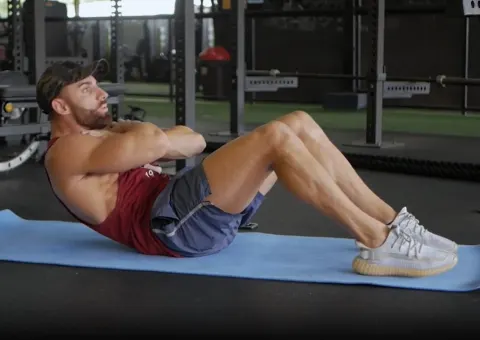
Lie on your back with your legs raised and bent at a 90-degree angle, with your calves parallel to the ground.
- 2
Place your hands behind your head, with your elbows wide apart.
- 3
Engage your core and lift your upper body towards your knees, while keeping your lower back pressed to the floor. Hold the position briefly, then slowly lower back down to the starting position.
Coaching cues
- Ensure that your lower back remains pressed against the floor to avoid strain.
- Keep your movements slow and controlled to maximize muscle engagement.
- Exhale as you lift your upper body and inhale as you lower it back down.
Sets, reps and where it fits
Muscle
3–4 × 10–15
rest 60–90 s
Strength
not a strength lift
use for assistance
Fat loss
3 × 10–15
rest 45–60 s
Crunches Raised Legs alternatives
Same movement pattern, different equipment or difficulty. Swap one-for-one in any plan.
Frequently asked questions
What muscles does the Crunches Raised Legs work?
Primary: Core.
How many sets and reps of Crunches Raised Legs should I do?
For muscle: 3–4 sets of 10–15 reps. For strength on compound lifts: 4–5 sets of 4–6. Rest 60–120 seconds between sets.
What can I do instead of the Crunches Raised Legs?
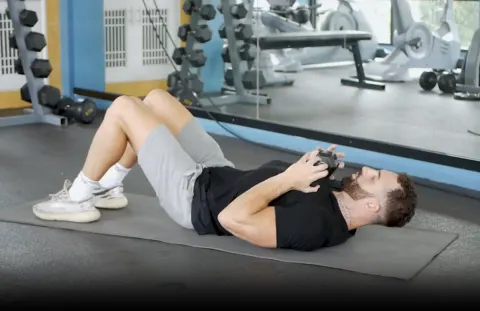
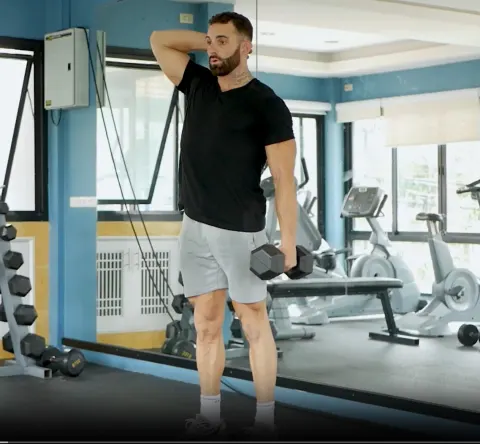
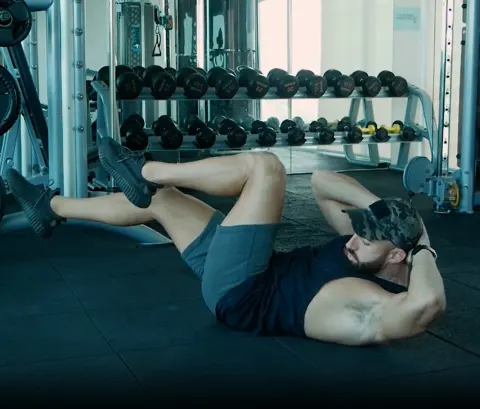
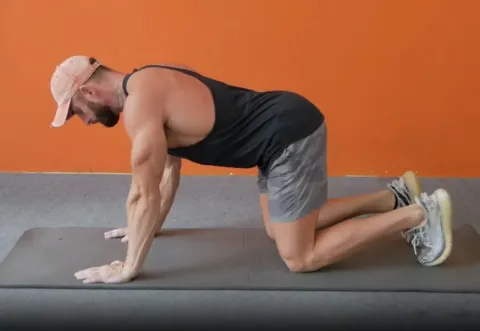
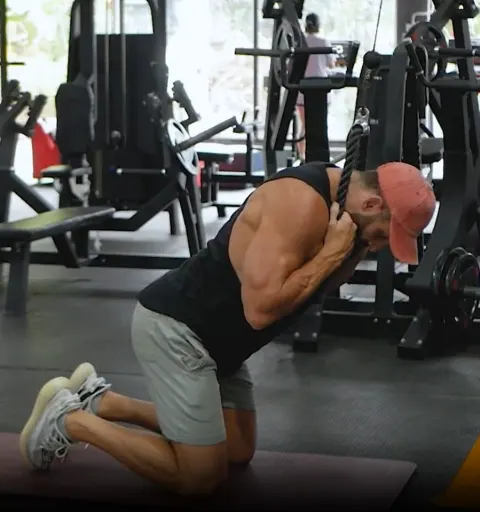
Same movement pattern, different equipment: Weighted Crunch, Weighted Side Crunch, Bicycle Crunch, Bird Dog, Cable Crunch, Crunch.
Is the Crunches Raised Legs good for beginners?
Yes. It is a beginner-friendly movement; start light, master the steps above and add load gradually.