How Long to Rest Between Sets (Strength, Muscle, Fat Loss)
How long to rest between sets: 2–5 minutes for strength, 1–3 for muscle, 30–90 seconds for conditioning. Rest times by exercise and goal, with a table.
Rest 2 to 5 minutes between heavy strength sets, 1.5 to 3 minutes between muscle-building sets of compound exercises, 60 to 90 seconds for isolation work, and 30 to 60 seconds only when conditioning is the goal. Rest less than that on a big lift and your next set gets weaker, which means less total work and less progress.
Rest time by goal: the quick table
| Goal | Rep range | Compound lifts | Isolation lifts |
|---|---|---|---|
| Maximal strength | 1–5 | 3–5 min | 2 min |
| Muscle growth | 6–12 | 2–3 min | 60–90 s |
| Muscle growth, higher reps | 12–20 | 90 s–2 min | 60 s |
| Fat loss (lifting part) | 8–15 | 90 s–2 min | 60 s |
| Conditioning / circuits | 10–20 | 30–60 s | 30 s |
These are starting points. The honest rule: rest until you can give the next set a real effort. On a heavy squat that is longer than you want. On a lateral raise it is shorter than you think.
Why rest length changes your results
A set stops when your muscles run out of the fast energy stored in them. Refilling that store takes time: about 50 percent comes back in 30 seconds, 90 percent in 2 to 3 minutes, close to 100 percent in 4 to 5. Your nervous system recovers on a similar timeline.
Cut rest short and the next set starts half-empty. You get fewer reps, so you either drop the weight or grind out worse reps. Either way, total volume for the session falls, and volume is what drives muscle growth. Studies comparing 1-minute and 3-minute rest with the same programme consistently find more growth and strength with the longer rest, because people simply lift more.
The one place short rest wins is time efficiency and conditioning. If your goal is to get a full-body session done in 30 minutes or to improve work capacity, shorter rest with lighter weights does that job.
Rest for strength (1–5 reps)
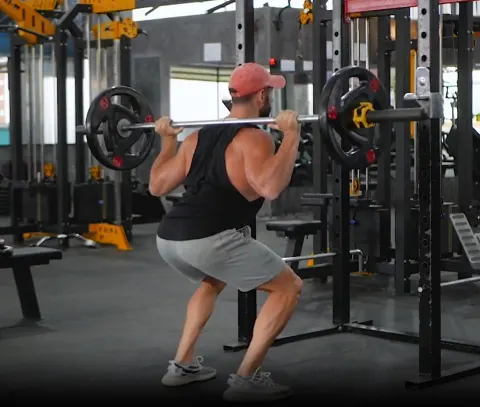
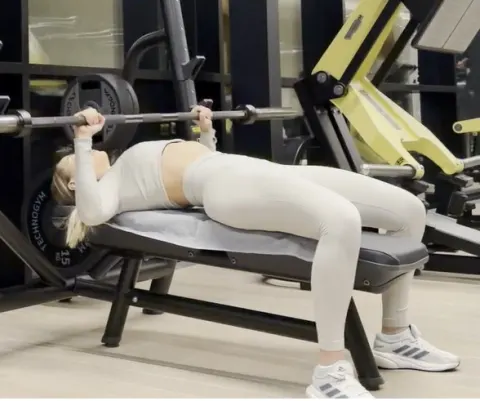
Heavy sets of back squats, barbell bench press or conventional deadlifts tax the nervous system as much as the muscles. Take 3 to 5 minutes. Yes, that feels long. A 5 × 5 squat session with 4-minute rests is 20 minutes of resting for 5 minutes of lifting, and that is exactly how it should be.
Use the rest productively: log the set, add the plates, do a few shoulder or hip circles, then stand still for the last 30 seconds and focus. If you want to shorten total session time, pair two non-competing exercises (bench press and rows, for example) and alternate them with 90 seconds between, so each lift still gets 3+ minutes.
The 3-day gym strength plan is built around this kind of rest: few exercises, heavy sets, long breaks.
Rest for muscle growth (6–12 reps)
For hypertrophy, 2 to 3 minutes on compounds and 60 to 90 seconds on isolation exercises is the sweet spot. That is enough to keep reps high across sets without the session dragging to two hours.
Rough guide by exercise type:
- Barbell compounds (squat, barbell row, overhead press): 2–3 minutes
- Dumbbell compounds (dumbbell bench press, dumbbell row, goblet squat): 90 seconds–2 minutes
- Machine compounds (lat pulldown, seated cable row, leg extension): 90 seconds
- Isolation (dumbbell lateral raise, dumbbell curl, rope pushdown): 60–90 seconds
Notice the pattern: the more muscle an exercise uses and the heavier it is, the longer the rest. A 4-day upper/lower plan for muscle gain typically runs 55 to 70 minutes with these rest times, which is where most people’s focus and energy hold up.
Rest for fat loss
When you are cutting calories, the job of lifting is to keep the muscle you have. That means lifting roughly as heavy as before, which means resting almost as long: 90 seconds to 2 minutes on compounds, 60 seconds on isolation.
The temptation is to shrink rest to “burn more”. It barely works. A lifting session burns 200 to 400 calories whether you rest 1 minute or 2; the difference is maybe 50 calories, and you pay for it with worse sets. Cardio and daily walking are far more efficient ways to add energy expenditure. Check the calories burned calculator to compare.
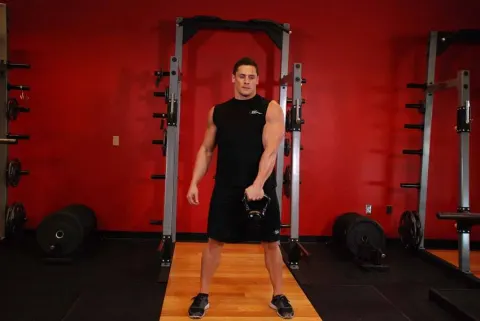
Where shorter rest does make sense in a fat-loss plan is in a dedicated finisher: 8 to 10 minutes of kettlebell swings, mountain climbers or step jacks with 30-second rests at the end of a session. Lift properly first, then condition. The 3-day dumbbell plan for weight loss follows this order.
Rest for beginners
If you are in your first few months, rest 90 seconds to 2 minutes on everything. You are not lifting heavy enough yet to need 4 minutes, and 60 seconds will leave you gasping and sloppy. As the weights climb over the next year, let the rest on compound lifts climb with them.
Beginners also tend to rest inconsistently: 40 seconds when they feel good, 4 minutes when they are chatting. Set a timer. Consistent rest makes your logbook meaningful, so that an extra rep next week actually means you got stronger.
Supersets and circuits: how rest changes
Pairing exercises changes the picture. Three common formats:
| Format | How it works | Rest |
|---|---|---|
| Antagonist superset | Push then pull, e.g. bench press then row | 60 s between exercises, 90–120 s after the pair |
| Upper/lower superset | e.g. split squat then dumbbell shoulder press | 45–60 s between, 90 s after the pair |
| Circuit | 4–6 exercises back to back | 15–30 s between, 2 min after the round |
Supersets of non-competing muscles are the best way to shorten a session without losing performance: while your chest rests, your back works. Circuits are a conditioning tool; do not expect strength or size gains to match a straight-set programme.
Signs you are resting wrong
Too short:
- Reps drop by 3 or more from set 1 to set 2 at the same weight
- Heart rate is still pounding when you start the next set
- Form gets worse set by set
Too long:
- Sessions run past 90 minutes
- You feel cold or stiff starting the next set
- You lose focus and skip exercises at the end
If you are stalling on a lift while following double progression, the first thing to check is whether rest has quietly shrunk from 2 minutes to 75 seconds. It is the most common hidden reason for “I can’t add reps”.
Putting it together
Rest is a training variable like sets and reps, and it should match the goal of the exercise. Heavy and compound: long. Light and isolated: short. Conditioning: shorter still, but only after the real lifting is done. Any plan from the plan generator lists a rest time next to each exercise so you do not have to decide mid-session; pair that with a timer and the sets and reps guide and your workouts will finally be as consistent as your schedule.
Ready plans for this guide


Exercises mentioned

Frequently asked questions
Is 60 seconds of rest enough to build muscle?
For small isolation exercises, yes. For compound lifts like squats, rows and presses, 60 seconds is too short: you lose reps on every following set and total volume drops. Rest 2 to 3 minutes on compounds.
Does resting longer burn less fat?
The calories burned during a lifting session are small either way. Fat loss comes from your diet and total weekly activity. Rest long enough to lift well, because keeping muscle is what matters most in a deficit.
Should I time my rest periods?
Yes, at least for a few weeks. Most people rest much less than they think on hard sets and far more than they think on easy ones. A timer on your phone fixes both.
What should I do during rest?
Stand or walk slowly, breathe, log your set and get the next weight ready. Avoid sitting on your phone for 5 minutes: you will cool down and lose track of time.