Strength Training After 50 and 60: A Safe, Effective Approach
Strength training after 50 and 60 is the best thing you can do for your independence. Which exercises, how heavy, how often, and how to start safely.
Strength training after 50 and 60 is the single most effective thing you can do for your long-term independence. It rebuilds muscle that sedentary ageing strips away, strengthens bone, improves balance, and makes stairs, groceries and getting off the floor easy again. It also works at any starting point: people who start at 65 build muscle and strength just as reliably as people who start at 35.
This guide covers what to train, how heavy to go, how often, and how to begin safely if you’re starting from zero.
Why strength matters more now, not less
After 50, two things accelerate: muscle loss (sarcopenia) and bone loss. Without resistance training, adults lose roughly 1% of muscle and up to 1–2% of bone per year. The practical results are weaker legs, worse balance, a higher risk of falls and fractures, and a slow narrowing of what you can do without help.
Strength training reverses this. Not slows: reverses. Studies on adults in their 60s, 70s and 80s show meaningful muscle gain and double-digit strength increases within three months of starting a sensible program. Bone responds too, especially to loaded squats, hinges and carries.
The training after 40 guide covers the earlier adjustments; this one goes further on exercise selection, starting loads and balance.
The six movements that matter
You don’t need a long exercise list. Six patterns cover everything, and each has a version for any fitness level.
| Pattern | Why it matters | Start with | Progress to |
|---|---|---|---|
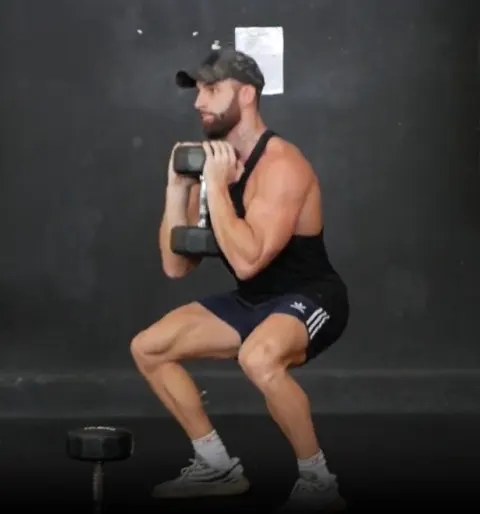
| Squat | Getting out of chairs, stairs | Sit-to-stand, bodyweight squat | Goblet squat |
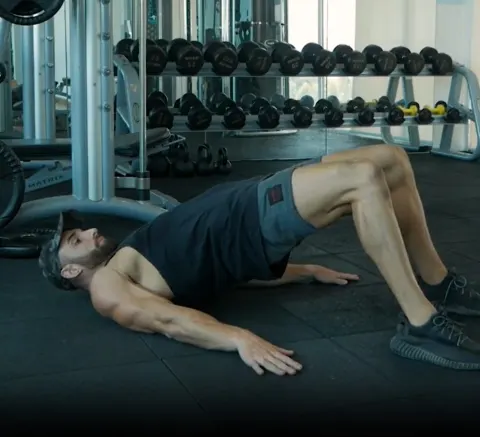
| Hinge | Picking things up, back health | Glute bridge | Dumbbell Romanian deadlift |
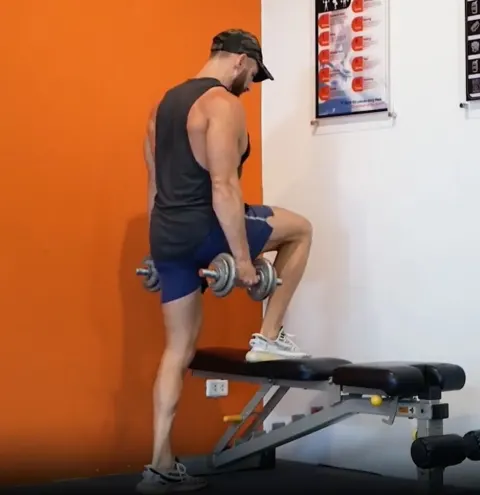
| Step / single leg | Balance, stairs, fall prevention | Step-up to a low step | Step-up with dumbbells, reverse lunge |
| Push | Pushing doors, getting off the floor | Incline push-up | Dumbbell bench press |
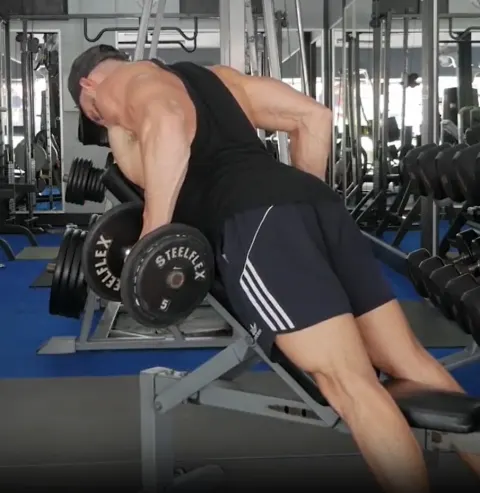
| Pull | Posture, shoulder health | Band row | Chest-supported row |
| Carry | Groceries, grip, core | Walk with one light dumbbell | Farmer’s carry with two |
The squat and the step-up are the two you should never skip. Leg strength predicts independence better than any other single measure.
How heavy, and how to get there
Light weights for many reps feel safe, but they don’t build bone or much strength. The target is sets of 6–12 reps where the last two are clearly hard. That’s heavy enough to stimulate muscle and bone, and comfortably far from any maximum.
Get there in stages:
- Weeks 1–2: learn the movements with bodyweight or the lightest dumbbell. 2 sets of 10–12. Focus on control.
- Weeks 3–4: add light load. 2–3 sets of 10–12 where the last rep feels like work.
- Weeks 5–8: move to 3 sets of 8–12 with weights that make the last 2 reps hard. Add weight when all sets reach 12.
- After week 8: keep adding reps, then weight, in small steps. The double progression guide explains the method.
Rest 90 seconds between sets. Never hold your breath and strain; breathe out on the effort. If you can’t talk after a set, you rested too little or lifted too heavy for now.
Weekly schedule
Two or three sessions a week with at least one rest day between them.
Two days (Mon/Thu): good for beginners and anyone with a lot going on
| Exercise | Sets × reps |
|---|---|
| Goblet squat (or sit-to-stand) | 3 × 8–12 |
| Chest-supported row (or band row) | 3 × 8–12 |
| Incline push-up or dumbbell press | 3 × 8–12 |
| Glute bridge or Romanian deadlift | 3 × 10–12 |
| Step-up | 2 × 8 per leg |
| Farmer’s carry | 3 × 20–30 m |
The 2-day no-equipment plan for over-50s is this template with bodyweight versions. With a pair of dumbbells, the 3-day dumbbell plan for over-50s adds a third day and more loading.
Three days lets you alternate two slightly different sessions and add a bit more lower-body volume. If you have gym access and want to push strength, the 3-day gym plan for strength over 50 is built for that. Whatever your equipment, the plan generator can produce a version matched to your days and gear.
Each session: 5–8 minutes of warm-up, 30–40 minutes of lifting, done. Walk on the other days.
Balance and fall prevention
Strength training alone improves balance, because weak legs are the main reason people fall. Add two specific pieces:
- Single-leg work. Step-ups, split squats and the single-leg hip hinge, holding a wall or rail at first.
- Standing on one foot. 30 seconds per side while brushing your teeth. Progress by closing your eyes or standing on a folded towel.
Both cost almost nothing and pay back enormously.
Joints: train around them, not through them
Knees, hips, shoulders and backs that have 60 years on them often have an opinion about certain exercises. That’s fine. Every pattern has a variation that most joints tolerate:
- Knees: box squats to a high seat, wall sits, step-ups to a low step. The bad knees guide has the full approach.
- Shoulders: dumbbells instead of barbells, incline press instead of flat, rows with the chest supported. See training with shoulder pain.
- Back: glute bridges and Romanian deadlifts with a light dumbbell before any floor deadlift. See training with a bad back.
Mild muscle soreness for a day or two is normal and fades after the first couple of weeks. Sharp pain during an exercise means stop and change the exercise. Pain that persists beyond a couple of weeks means see a doctor or physiotherapist.
Protein and recovery
Older muscle needs a stronger protein signal to grow. Aim for 1.6–2 g of protein per kg of body weight per day, with 30–40 g per meal. For a 70 kg person that’s about 115–140 g daily: eggs and yoghurt at breakfast, fish or chicken at lunch and dinner, and a protein-rich snack covers it.
Sleep 7–8 hours. Walk every day. Take a light week every 6–8 weeks, especially if aches are accumulating.
What to expect
- Weeks 1–4: movements feel awkward, then natural. Soreness fades.
- Weeks 4–12: strength jumps 20–40% as your nervous system learns. Stairs and chairs feel different.
- Months 3–6: visible muscle, better posture, improved balance. Lifts keep climbing slowly.
- Beyond: progress slows but never stops. Two years in, most people are far stronger than they were at 45 without training.
The hardest part is the first month. Pick two days, pick six exercises, and show up. If you need a starting framework, the beginner’s guide covers the basics that apply at any age.
Ready plans for this guide


Exercises mentioned
Frequently asked questions
Is it too late to start strength training at 60?
No. People who start lifting in their 60s and 70s gain muscle and strength at rates comparable to much younger beginners. The first 12 weeks typically bring 20–40% strength increases, mostly from your nervous system learning the movements.
How heavy should I lift after 50?
Heavy enough that the last 2 reps of a set are hard, in the 6–12 rep range. Light weights for 20+ reps don't build bone or strength effectively. Build up to that over 4–6 weeks of practice at easier loads.
How many times a week should someone over 50 lift weights?
Two or three sessions a week, 30–45 minutes each, with a rest day between. Two is enough to make steady progress; three is better if you recover well. More than that rarely helps.
Should I get a doctor's clearance before starting?
If you have heart disease, uncontrolled blood pressure, a recent surgery or a joint condition you haven't had assessed, yes. Otherwise, starting with bodyweight and light dumbbells is safe for most people. Stop and get checked if any exercise causes chest pain, dizziness or sharp joint pain.