Leg Training With Bad Knees: What to Do and What to Skip
Bad knees don't mean no leg training. Which exercises sore knees tolerate, which to skip for now, how to set up squats, and a knee-friendly leg workout.
Bad knees are a reason to change your leg training, not to stop it. The muscles around the knee, especially the quads, glutes and hamstrings, are what protect the joint, and letting them weaken is one of the fastest ways to make a sore knee worse. Most people with knee pain can train legs hard using hip-dominant movements, controlled ranges and a pain scale that tells them when to back off.
This guide covers which exercises to favour, which to park for now, how to set up the ones you keep, and a leg workout you can run this week.
First: the pain rule
You need one simple rule to make decisions with. Use a 0–10 pain scale:
- 0–3 during the exercise, no worse the next morning: fine. Keep going and progress normally.
- 4–5 during, or a slightly worse knee next morning: reduce range of motion or load by 20–30%.
- 6+ during, sharp, or clearly worse the next day: stop that exercise, swap for an alternative from the list below.
Mild discomfort that fades as you warm up is normal with cranky knees. Sharp, catching or locking pain is not; if that persists for more than two or three weeks despite modifying your training, see a doctor or physiotherapist.
Why hip-dominant movements are your friends
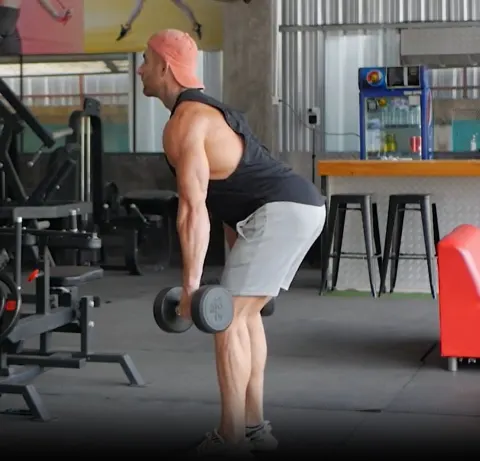
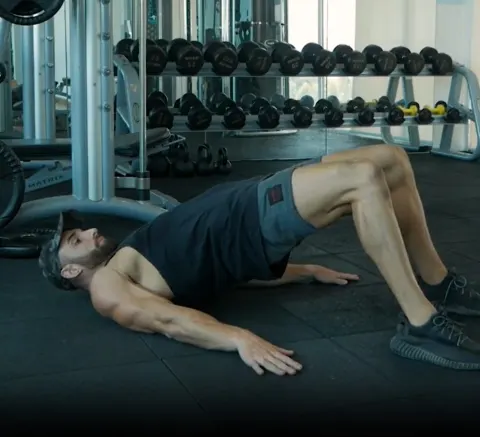
Leg exercises sit on a spectrum. Knee-dominant movements (deep squats, lunges, leg extensions) put a lot of the load through the knee joint, especially at deeper angles. Hip-dominant movements (Romanian deadlifts, hip thrusts, glute bridges) load the glutes and hamstrings with the knee only slightly bent.
With knee pain, the plan is simple: build most of your volume from hip-dominant work, keep some knee-dominant work in a comfortable range, and expand that range as the knee allows.
Exercises most bad knees tolerate
| Exercise | Why it works | Sets × reps |
|---|---|---|
| Dumbbell Romanian deadlift | Heavy glute and hamstring load, knee barely bends | 3 × 8–12 |
| Glute bridge / barbell hip thrust | Full glute work, knee at a fixed, comfortable angle | 3 × 10–15 |
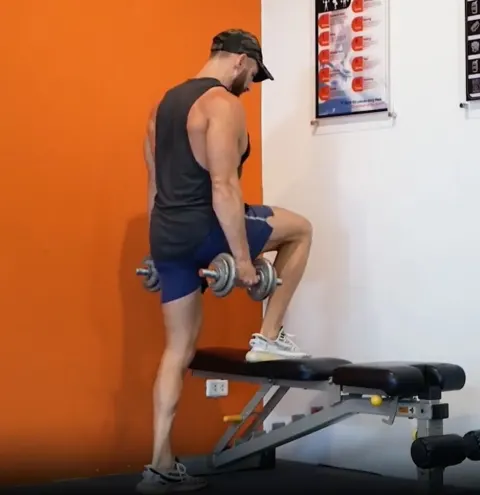
| Step-up to a low step | Controlled quad work; you choose the height | 3 × 8–10 per leg |
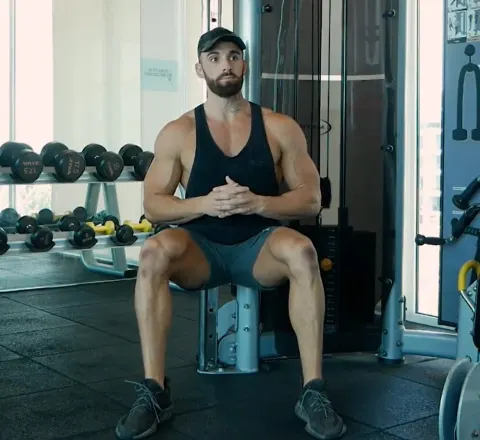
| Wall sit | Isometric quad strength at an angle you choose | 3 × 20–45 s |
| Seated leg curl or band hamstring curl | Hamstrings with no joint compression | 3 × 10–15 |
| Standing calf raise | Calves support the knee from below | 3 × 12–15 |
| Single-leg hip hinge | Balance and hip control | 2 × 8 per leg |
| Banded lateral walk | Hip abductors, which control knee tracking | 2 × 12 steps each way |
Together these give you a leg session that builds real strength and muscle while keeping the knee quiet.
Knee-dominant exercises: keep them, modify them
Don’t abandon squats and lunges. Modify them so they stay in your 0–3 zone and extend the range over time.
Squats
- Box squat. Set a bench or box at a height where you feel no pain at the bottom. Sit back to it, pause briefly, stand. Lower the box over weeks as tolerated.
- Goblet squat. The goblet squat front load encourages an upright torso and keeps shins closer to vertical, which many knees prefer over back squats. Stop at the depth that’s comfortable.
- Tempo. A 3-second lowering phase builds strength with less load, which is kinder to the joint.
- Stance. Slightly wider stance with toes turned out 15–30° shifts load toward hips. Experiment.
Lunges and split squats
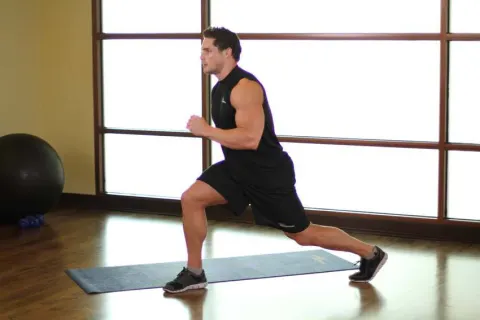
- Start with the split squat: stationary, controlled, no stepping. Shorter range at first.
- Reverse lunges are usually more tolerable than forward lunges because the front shin stays more vertical.
- Keep the front knee tracking over the second toe. A loop band above the knees during warm-up helps you feel this.
Leg extensions
The leg extension gets an unfair reputation. For many people with knee pain it’s a good way to load the quads with no balance demand. Use a moderate weight, a slow tempo, and avoid the last 20° of extension if that’s where it hurts. If it’s painful at any range, skip it.
What to skip for now
Not forever. For now, while the knee is irritable:
- Deep squats with heavy load. Return to depth gradually once pain-free in a shorter range.
- Jumping and plyometrics. Box jumps, jump squats and burpees produce high landing forces. Add them back last.
- Forward lunges with long steps. The forward shin travel and braking load irritates most sore knees.
- Running as your cardio. Switch to cycling, walking or the rower while the knee settles.
- Pushing through sharp pain. Discomfort you can work through; sharp pain you can’t.
A knee-friendly leg workout
Two leg sessions a week, 40 minutes each, within a full-body or upper/lower structure. Warm up first with glute bridges, bodyweight squats to a comfortable depth and a minute of cycling; the warm-up guide has the full routine.
Session A
| Exercise | Sets × reps |
|---|---|
| Box or goblet squat (comfortable depth) | 3 × 8–10 |
| Dumbbell Romanian deadlift | 3 × 8–12 |
| Step-up (low step) | 3 × 8 per leg |
| Seated or band leg curl | 3 × 12–15 |
| Standing calf raise | 3 × 12–15 |
Session B
| Exercise | Sets × reps |
|---|---|
| Barbell hip thrust or glute bridge | 4 × 10–12 |
| Split squat (short range) | 3 × 8 per leg |
| Single-leg hip hinge | 2 × 8 per leg |
| Wall sit | 3 × 30 s |
| Banded lateral walk | 2 × 12 steps each way |
Progress with reps first, then load, then range of motion; the double progression guide explains how. The 3-day dumbbell plan for general fitness is a good full-body base to slot these into, and if you’re new to training, the 2-day beginner no-equipment plan uses bodyweight versions of the same patterns. The plan generator can build a version around your equipment and days.
Habits that help
- Strengthen the hips. Weak glutes and hip abductors let the knee drift inward under load. Lateral walks and single-leg work fix this over a couple of months.
- Warm up longer. Sore knees need 5 minutes of easy cycling or walking plus glute bridges before anything loaded.
- Keep bodyweight in check. Every extra kilo of bodyweight is several extra kilos of force through the knee on stairs. The weight loss guide covers the sane way to do that.
- Walk daily. Low-load movement keeps the joint lubricated and the surrounding muscles active.
- Don’t baby it. Weeks of rest make knees weaker. Movement in the pain-free range is the treatment, not the risk.
When to see someone
Training around pain works for the common, nagging kinds of knee trouble. See a doctor or physio if you have: swelling that doesn’t go down in a day or two, locking or catching, instability (the knee giving way), pain at night, or pain that hasn’t improved after three weeks of modified training. Those need a diagnosis, not a workaround.
For everything else: hip-dominant volume, controlled knee-dominant work in your comfortable range, two sessions a week, and patience. Most irritable knees get noticeably better in six to eight weeks of this, and stronger legs are the best protection against the next flare-up. If your back is also an issue, the bad back guide uses the same approach.
Ready plans for this guide


Exercises mentioned
Frequently asked questions
Should I stop training legs if my knees hurt?
Usually no. Stopping makes the muscles around the knee weaker, which tends to make the knee worse. Train the hip-dominant movements that don't provoke pain, keep knee-dominant work in a comfortable range, and build back up gradually.
Are squats bad for your knees?
Not in themselves. Squats done to a depth and with a load your knee tolerates strengthen it. Problems come from going too deep too soon, too heavy, or letting the knees collapse inward. Box squats and goblet squats are the easiest versions to control.
What leg exercises are safe with bad knees?
Romanian deadlifts, glute bridges, hip thrusts, step-ups to a low step, wall sits and hamstring curls are tolerated by most people with knee pain. They load the glutes and hamstrings heavily while keeping knee bend and shear low.
How do I know if an exercise is okay for my knee?
Use a pain scale: 0–3 out of 10 during the exercise and no increase the next morning is fine. 4+ during, or a worse knee the next day, means reduce range, reduce load or swap the exercise. Pain that persists for weeks needs a doctor or physio.