Strength Training With a Bad Back: Safe Movements and Setup
You can strength train with a bad back. Which movements most backs tolerate, how to set up squats and hinges, what to skip, and a back-friendly program.
You can strength train with a bad back, and for the common kind of recurring low back pain you probably should: a stronger back, hips and core is one of the most reliable long-term fixes there is. The approach is simple. Keep the spine in a neutral position under load, build the hinge pattern patiently, train the core for stiffness rather than movement, and use a pain rule to decide when to push and when to swap.
This guide covers the movements most backs tolerate, how to set them up, what to park for now, and a program to run.
First, know what kind of back pain you have
Most back pain is “non-specific”: it hurts, it flares and settles, scans show nothing dramatic, and movement and strength make it better over months. That’s the kind this guide is written for.
See a doctor before training if you have any of these: pain with numbness or tingling down a leg, weakness in a foot or leg, pain following a fall or accident, pain that wakes you at night, or any change in bladder or bowel control. Those need a diagnosis, not a workout.
For everything else, use this rule: 0–3 out of 10 pain during an exercise and no worse the next morning is fine. More than that means reduce range, reduce load or swap the exercise.
The three principles
- Neutral spine under load. Your lower back should hold roughly the same gentle curve throughout a rep. Rounding or over-arching under load is what most backs object to. Bracing (a big breath into your belly, held and tightened) keeps it there.
- Hinge at the hips, not the spine. Bending forward comes from pushing your hips back. This single skill fixes most lifting-related back pain and must be learned before any deadlift.
- Core stiffness over core flexion. You want a trunk that resists movement, not one that creates it. That means planks and dead bugs, not sit-ups.
Learn the hinge before anything else
The hip hinge is the foundation. Spend two or three sessions on it before loading.
- Bodyweight hip hinge: stand tall, place a broomstick along your spine touching head, upper back and tailbone. Push hips back and let your torso tip forward while keeping all three contact points. Stop when your hamstrings tighten. Stand by driving hips forward. 3 × 10.
- Glute bridge: teaches hip extension with the spine supported. 3 × 12.
- Dumbbell Romanian deadlift: the first loaded hinge. Light dumbbells, 3 × 10, stopping at mid-shin or wherever your back stays neutral.
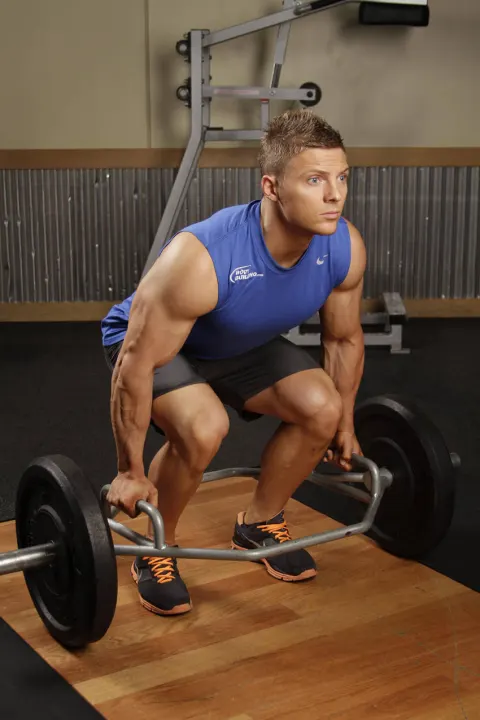
Once a Romanian deadlift with moderate weight is pain-free, the trap bar deadlift is the best next step: the handles sit beside you, so the load is closer to your centre and the torso stays more upright than with a straight bar. The kettlebell deadlift does the same job at home.
Exercises most bad backs tolerate
| Pattern | Exercise | Why it works |
|---|---|---|
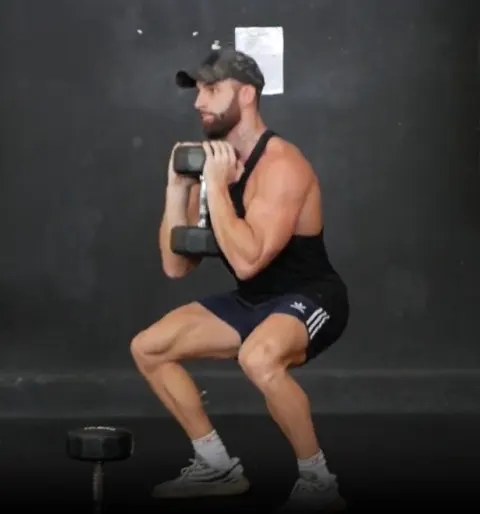
| Squat | Goblet squat | Front load keeps the torso upright; easy to control depth |
| Squat | Box squat | Fixed depth, no chance of collapsing at the bottom |
| Hinge | Romanian deadlift, trap bar deadlift | Hip-dominant, neutral spine, load stays close |
| Hinge | Barbell hip thrust | Glutes loaded with the back supported on a bench |
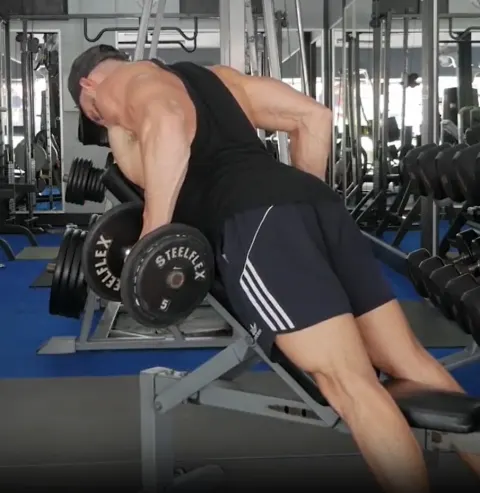
| Pull | Chest-supported row | All the back muscle work, none of the spinal load of a bent-over row |
| Pull | Lat pulldown, band row | Seated or standing, no hinge required |
| Push | Dumbbell bench press, push-up | Back is supported or the body stays in a plank |
| Push | Seated dumbbell press | Backrest supports the spine; avoids the arch of standing overhead work |
| Single leg | Split squat, step-up | Light on the spine, heavy on the legs |
| Carry | Farmer’s carry | Teaches bracing and upright posture under load |
Core: stiffness work
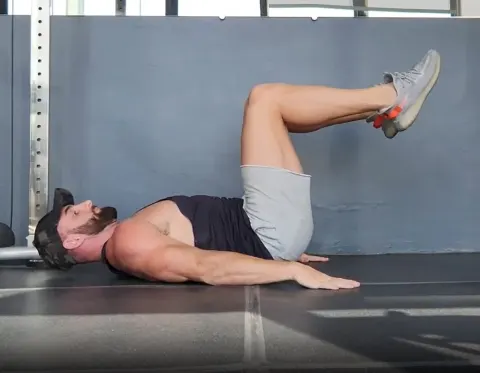
- Dead bug: 3 × 8 per side, slow, lower back pressed gently into the floor.
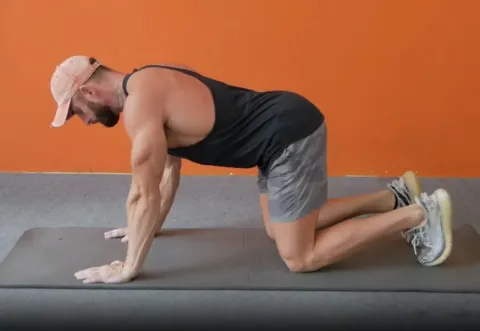
- Bird dog: 3 × 8 per side, 2-second hold, no rotation of the hips.
- Plank and side plank: 3 × 20–40 seconds. Quality over duration.
- Pallof press: 3 × 10 per side. Resisting rotation is exactly what a back needs.
Do two or three of these in every session, either in the warm-up or at the end.
What to skip for now
- Sit-ups and crunches. Repeated spinal flexion under load is what irritated backs like least.
- Heavy bent-over barbell rows. The hinge position held for a full set is demanding. Chest-supported rows do the same job.
- Good mornings and back extensions to end range. Fine later; not while the back is reactive.
- Behind-the-neck or heavily arched standing presses. Seated with a backrest instead.
- Deadlifting from the floor on day one. Earn it through the hinge progression.
- Anything that leaves you stiffer the next morning. That’s the test.
None of these are permanently banned. They come back when the back has been calm for a few weeks and the hinge is solid.
Setup details that matter
- Brace before every rep. Breath into the belly, tighten as if someone’s about to poke you. Exhale slowly through the hardest part.
- Keep the load close. Dumbbells at your sides, trap bar, goblet position. Load that drifts away from your body multiplies the demand on your back.
- Stop sets 2 reps short of failure. Form breaks down on grinding reps, and your back is where it breaks first.
- Warm up with purpose. 2 minutes of walking, cat-cow × 10, glute bridges × 10, bird dogs × 6 per side, then ramp-up sets. The warm-up guide has the full version.
- Set up the bench properly. For dumbbell presses, feet flat, lower back in light contact with the bench.
A back-friendly 3-day program
Full body, three days a week, non-consecutive. 40–45 minutes.
| Exercise | Sets × reps |
|---|---|
| Goblet squat (or box squat) | 3 × 8–10 |
| Chest-supported row | 3 × 8–12 |
| Dumbbell bench press or push-up | 3 × 8–12 |
| Romanian deadlift (dumbbell or trap bar) | 3 × 8–10 |
| Split squat | 2 × 8 per leg |
| Farmer’s carry | 3 × 30 m |
| Dead bug + bird dog | 2 × 8 per side each |
Progress reps first, then weight, in small steps; the double progression guide walks through it. Add weight to the Romanian deadlift slower than to anything else.
The 3-day dumbbell plan for general fitness is a good base, and the 3-day gym strength plan for beginners works if you swap bent-over rows for chest-supported and deadlifts for the trap bar. If you’re starting from nothing, the 2-day no-equipment plan uses bodyweight versions. The plan generator will build a variation around your equipment and schedule.
Outside the gym
- Walk every day. Walking is one of the best-evidenced things for recurring back pain. 20–30 minutes.
- Change position often. Sitting isn’t bad; sitting for 3 hours without moving is. Stand or walk every 30–45 minutes.
- Sleep. Poor sleep and back pain feed each other.
- Don’t fear movement. Backs get stiffer and more painful when protected. Movement within your pain rule is the treatment.
When flare-ups happen
They will, occasionally. When a flare hits: drop to bodyweight for a few days, keep walking, keep the dead bugs and bird dogs, and return to light loads as soon as the 0–3 rule allows. Most flares settle in a week or two. If pain persists for several weeks despite modifying training, see a doctor or physio.
A stronger back is a more resilient back. Train the hinge, keep the spine neutral, build stiffness in the core, and progress slowly. In three months the difference is usually obvious. If knees or shoulders are also in the picture, the bad knees guide and the shoulder pain guide follow the same logic.
Ready plans for this guide


Exercises mentioned
Frequently asked questions
Should I lift weights if I have lower back pain?
For the common, non-specific kind of back pain, yes. Strength training is one of the best-supported treatments for recurring low back pain. Start with movements that don't provoke symptoms, keep the spine neutral, and progress gradually. Pain with numbness, weakness in the legs or loss of bladder control needs a doctor first.
Is deadlifting bad for your back?
No, when the hinge is learned and the load is appropriate. The deadlift strengthens the exact muscles that protect your spine. Start with a trap bar or a Romanian deadlift with dumbbells, master the hip hinge, and only then consider pulling heavy from the floor.
What exercises should I avoid with a bad back?
While your back is irritable: sit-ups and crunches, heavy good mornings, loaded back extensions to end range, behind-the-neck presses, and any exercise that lets your spine round under load. Most of these can return later once the back is calmer and stronger.
How do I strengthen my core for back pain?
Train stiffness, not flexion. Dead bugs, bird dogs, planks, side planks and Pallof presses teach your core to hold the spine steady under load, which is exactly what it needs to do during squats, carries and everyday lifting.