Dumbbell-Only Training: A Complete Guide to Building Muscle
Dumbbell only training guide: what dumbbells to buy, the best dumbbell exercises for every muscle, a 3-day routine and how to keep progressing at home.
A pair of adjustable dumbbells and a bench is enough to build muscle for years. Dumbbells load every movement pattern, work each side independently and let you train at home without a spotter. The structure of a dumbbell program is identical to a gym program: 3 or 4 days a week, 5 to 7 exercises per session, a rep range for each, and a progression rule. Only the exercise choices change.
What to buy
You need less than you think.
| Item | Why | Priority |
|---|---|---|
| Adjustable dumbbells, 2–24 kg or 2–32 kg each | One pair replaces a rack. 24 kg is enough for most upper-body work for years; 32 kg extends legs and rows | Essential |
| Flat or adjustable bench | Adds presses, chest-supported rows, Bulgarian split squats, step-ups | Strongly recommended |
| Fractional plates or 1 kg micro-increments | Lets you add 1 kg instead of 2.5 kg, which matters on shoulder press and curls | Nice to have |
If adjustable dumbbells are out of budget, start with fixed pairs of 8, 12 and 16 kg. You will outgrow the 8s within three months, but by then you will know you are going to keep training.
Dumbbells can go heavy enough that form matters. Review every lift on the dumbbell exercise pages before adding weight.
The best dumbbell exercises by muscle
| Muscle | Primary | Secondary |
|---|---|---|
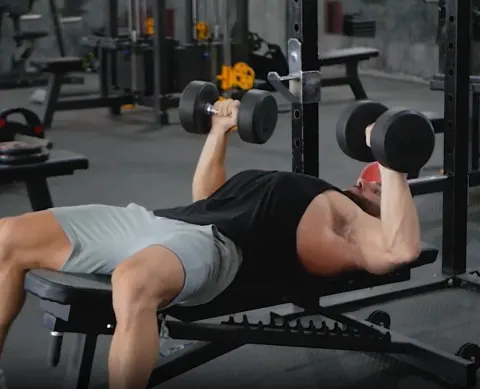
| Chest | Dumbbell bench press | Incline dumbbell press, dumbbell fly |
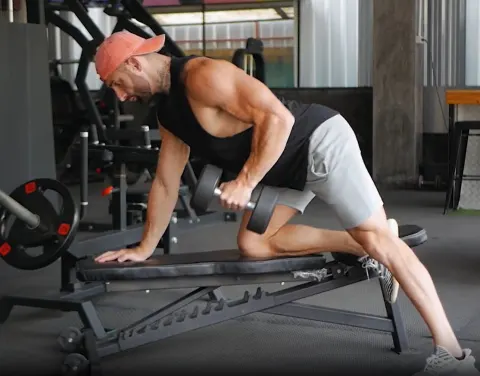
| Back | Dumbbell row | Chest-supported row, rear delt fly |
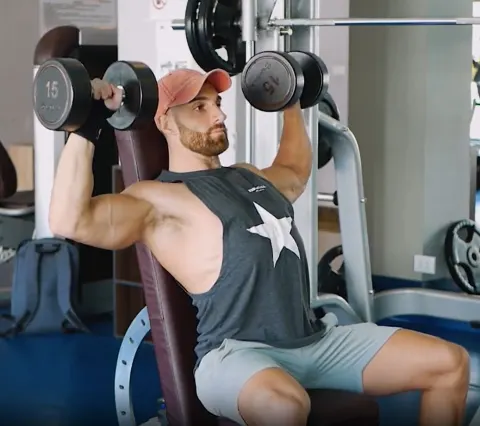
| Shoulders | Dumbbell shoulder press | Dumbbell lateral raise, seated dumbbell press |
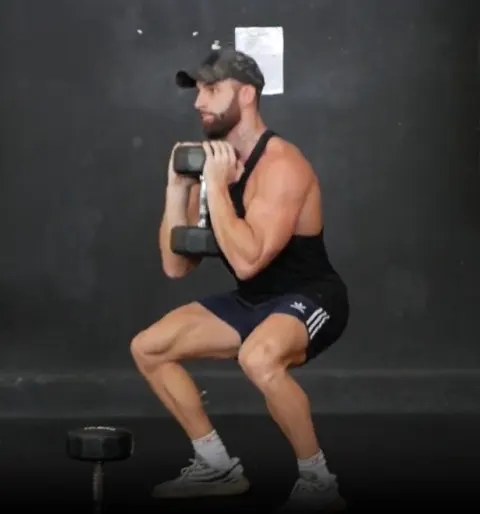
| Quads | Goblet squat | Dumbbell squat, Bulgarian split squat |
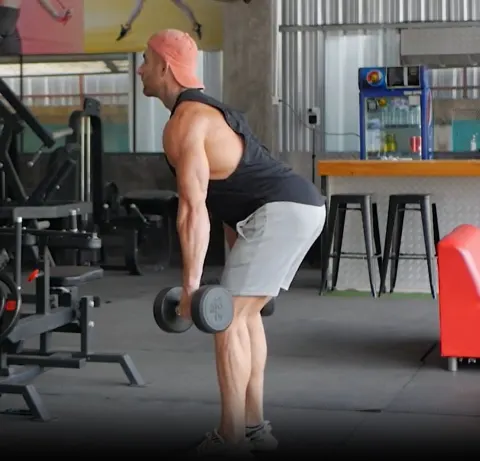
| Hamstrings and glutes | Dumbbell Romanian deadlift | Dumbbell deadlift, single-leg Romanian deadlift |
| Biceps | Dumbbell curl | Hammer curl |
| Triceps | Overhead triceps extension | Skull crusher with dumbbells |
| Core and grip | Farmer’s carry | Plank, dead bug |
If you do not have a bench, swap the bench press for a floor press, chest-supported rows for standard dumbbell rows, and Bulgarian split squats for reverse lunges holding dumbbells.
The 3-day full-body dumbbell routine
Three sessions a week with a day between each, for example Monday, Wednesday and Friday. Rest 90 seconds to 2 minutes between sets. Run every exercise with double progression: add reps inside the range, and when all sets hit the top, add weight and drop back to the bottom.
Day A
- Goblet squat – 3 × 8–12
- Dumbbell bench press – 3 × 8–12
- Dumbbell row – 3 × 8–12 per side
- Dumbbell Romanian deadlift – 3 × 10–12
- Dumbbell lateral raise – 2 × 12–15
- Plank – 3 × 30–45 s
Day B
- Dumbbell deadlift – 3 × 6–10
- Dumbbell shoulder press – 3 × 8–12
- Chest-supported row – 3 × 10–12
- Reverse lunge – 3 × 8–10 per leg
- Hammer curl – 2 × 10–12
- Farmer’s carry – 3 × 30–40 m
Day C
- Bulgarian split squat – 3 × 8–10 per leg
- Incline dumbbell press – 3 × 8–12
- Dumbbell row – 3 × 10–12 per side
- Single-leg Romanian deadlift – 3 × 8–10 per leg
- Overhead triceps extension – 2 × 10–15
- Dead bug – 3 × 10 per side
Each session is about 45 to 55 minutes. Weekly volume comes out at 9 to 12 sets per major muscle group, which is where beginners and early intermediates grow best. The 3-day dumbbell plan for muscle gain builds this with substitutions for your available weights, and there is a lighter 3-day dumbbell plan for general fitness over 50 with the same backbone.
Moving to 4 days: dumbbell upper/lower
Once you have 6 to 12 months of training and want more volume, split the body:
- Lower A: goblet squat, dumbbell RDL, Bulgarian split squat, glute bridge with a dumbbell, standing calf raise
- Upper A: dumbbell bench press, dumbbell row, dumbbell shoulder press, chest-supported row, lateral raise, curl
- Lower B: dumbbell deadlift, dumbbell squat, reverse lunge, single-leg RDL, step-up
- Upper B: incline dumbbell press, dumbbell row (heavier), seated dumbbell press, rear delt fly, overhead triceps extension, hammer curl
The 4-day dumbbell plan for muscle gain follows this layout. Our upper/lower split guide covers the scheduling and the reasoning.
The dumbbell progression problem, and how to solve it
Dumbbells have one real weakness: the jumps are big and the top end is limited. Going from a 10 kg to a 12.5 kg shoulder press is a 25 percent increase. And once you can goblet squat a 32 kg dumbbell for 15 reps, the exercise stops being a leg builder.
Solve it in this order:
- Widen the rep range on upper-body lifts. Use 8–15 instead of 8–12 so a 2.5 kg jump has room to settle.
- Go unilateral on legs. Bulgarian split squats, single-leg RDLs and step-ups put the whole load on one leg, effectively doubling the resistance of your heaviest dumbbell.
- Slow the tempo. A 3-second lowering phase makes a 20 kg dumbbell feel like 25.
- Add sets before weight. When the weight jump is too big, go from 3 to 4 sets at the current weight for two weeks first.
- Use pauses and 1.5 reps. Pause at the bottom of a squat or press for two seconds.
- Buy heavier dumbbells or a second pair. Two 20 kg dumbbells in a goblet position, or one in each hand in a front-rack, extends squats by another year.
When your dumbbell bench press passes about 30 kg per hand for 10 reps and your goblet squat is maxed out, you have built a strong base. Compare your lifts on the strength standards page; many people at that stage add a barbell or join a gym, and the dumbbell work remains the backbone of their upper-body training.
Dumbbells for fat loss
The lifting side of a fat-loss plan does not change: same exercises, same rep ranges, same effort, because the goal is to keep muscle while calories are low. Add conditioning as a 6 to 10 minute finisher, for example kettlebell-style swings with a dumbbell or farmer’s carries with short rests, and get the deficit from food using the calorie deficit calculator. The 3-day dumbbell plan for weight loss is built this way.
Common dumbbell mistakes
- Buying too light. A 2–10 kg set is a waste after two months. Go to at least 24 kg adjustable.
- Only doing arms and shoulders. Legs and back are where the muscle is. Half your sets should be squats, hinges and rows.
- No bench. A bench adds presses with a full range of motion and the best back exercise available at home, the chest-supported row. It costs less than a month of gym membership.
- Rushing rest. Dumbbell compounds still need 90 seconds to 2 minutes. See how long to rest between sets.
- Not logging. With fixed increments, the log is the only way to see that you went from 3 × 8 to 3 × 11 at the same weight, which is real progress.
Getting started
Pick the 3-day routine above, use weights that leave 2 reps in reserve on every set in week one, and write everything down. Add reps every session, weight every two to three weeks, and by month three you will be lifting dumbbells you could not pick up when you started. If you came from bodyweight training, our no-equipment guide explains which exercises carry over directly. The plan generator can build the dumbbell version of any plan for your days and goal, with sets, reps and rest filled in.
Ready plans for this guide


Exercises mentioned
 video
beginner
 video
beginner
 video
beginner
 video
beginner
 video
beginner
Frequently asked questions
Can you build muscle with only dumbbells?
Yes. Dumbbells load every major muscle group, and a pair of adjustable dumbbells up to 24 or 32 kg covers most people for years. The upper body progresses exactly as it would in a gym; legs eventually need single-leg work to stay challenging.
What weight dumbbells should I buy?
Adjustable dumbbells that go to at least 24 kg each. Fixed pairs of 8, 12 and 16 kg work for a start, but you will outgrow the lighter ones within months. A flat or adjustable bench roughly doubles the exercises you can do.
How many days a week should I train with dumbbells?
Three full-body days for beginners and most intermediates. Four days as upper/lower once you want more volume. The structure is the same as in a gym; only the equipment changes.
Are dumbbells better than a barbell?
Neither is better. Barbells let you lift heavier on squats and deadlifts. Dumbbells are safer to train alone, work each side independently and need almost no space. For home training, dumbbells are the more practical choice.