Push Pull Legs Split: The Complete Guide (3 and 6 Days)
The push pull legs split explained: how it works, full 3-day and 6-day PPL routines with exercises, sets and reps, and who should run each version.
Push/pull/legs splits your training into three sessions: pushing muscles (chest, shoulders, triceps), pulling muscles (back, biceps, rear shoulders) and legs. Run it once a week on 3 days or twice a week on 6 days. The 6-day version is one of the best muscle-building setups for intermediates; the 3-day version is a reasonable option, but most people on three days grow faster with full body.
How push/pull/legs works
The split groups muscles by function so that each session trains muscles that work together and leaves the others to recover.
| Day | Muscles | Typical exercises |
|---|---|---|
| Push | Chest, front and side shoulders, triceps | Bench press, overhead press, dips, lateral raises, triceps extensions |
| Pull | Lats, upper back, rear shoulders, biceps | Rows, pulldowns, pull-ups, face pulls, curls |
| Legs | Quads, hamstrings, glutes, calves, core | Squats, deadlifts, lunges, leg curls, calf raises |
The logic is clean: when you bench press, your triceps and front shoulders assist, so training them the same day avoids hitting them again 24 hours later. Rows already work the biceps, so curls go on pull day. Nothing gets trained hard two days in a row.
3 days vs 6 days
6-day PPL (push, pull, legs, push, pull, legs, rest) trains each muscle twice a week with 6 to 10 sets per session, landing at 12 to 20 sets per muscle per week. That is the sweet spot for growth, and sessions stay around 50 to 60 minutes because you only cover a third of the body.
3-day PPL (push Monday, pull Wednesday, legs Friday) trains each muscle once a week. To get enough weekly volume you need 12 to 16 sets per muscle in that single session, which means the last sets are done tired. For most people on three days, a full-body routine delivers more growth by hitting each muscle three times with fresher sets.
| 3-day PPL | 6-day PPL | |
|---|---|---|
| Frequency per muscle | 1×/week | 2×/week |
| Sets per muscle per week | 10–16 | 12–20 |
| Session length | 60–75 min | 45–60 min |
| Recovery demand | Low | High |
| Best for | Intermediates who prefer focused sessions | Intermediates and advanced with good recovery |
The 6-day push/pull/legs routine
Each exercise is run with double progression: add reps within the range, then add weight. Rest 2 to 3 minutes on compounds, 60 to 90 seconds on isolation.
Push A (Monday)
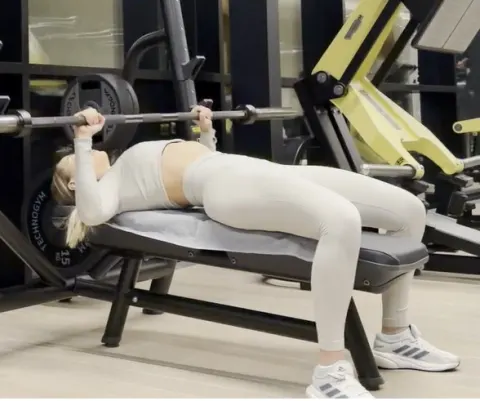
- Barbell bench press – 4 × 6–8
- Seated dumbbell press – 3 × 8–12
- Incline dumbbell press – 3 × 8–12
- Dumbbell lateral raise – 3 × 12–15
- Rope pushdown – 3 × 10–15
Pull A (Tuesday)
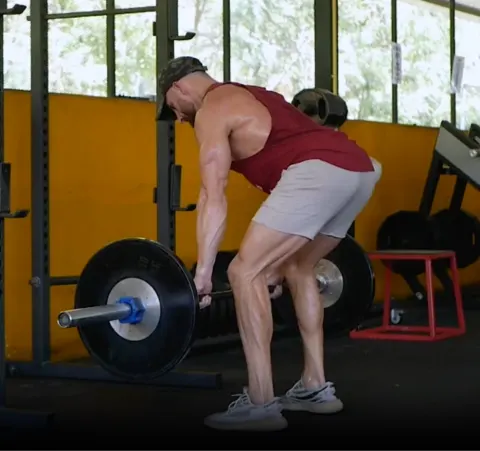
- Barbell row – 4 × 6–8
- Lat pulldown – 3 × 8–12
- Seated cable row – 3 × 10–12
- Face pull – 3 × 15
- Dumbbell curl – 3 × 10–12
Legs A (Wednesday)
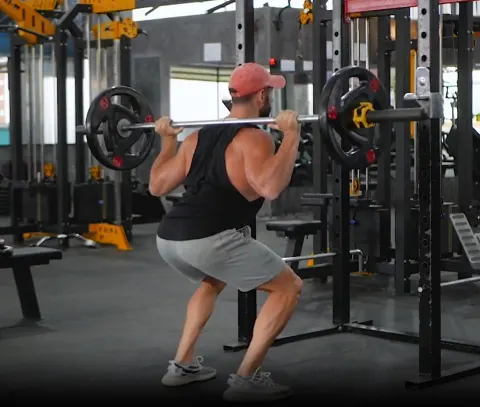
- Back squat – 4 × 6–8
- Dumbbell Romanian deadlift – 3 × 8–12
- Walking lunge – 3 × 10 per leg
- Seated leg curl – 3 × 12–15
- Standing calf raise – 4 × 12–15
Push B (Thursday)
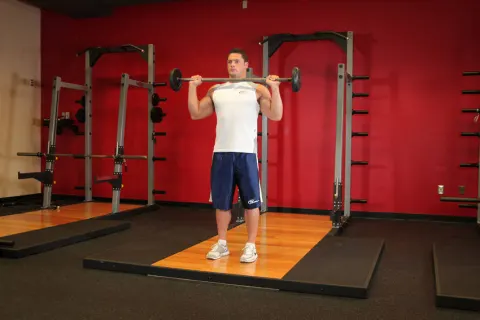
- Overhead press – 4 × 6–8
- Dumbbell bench press – 3 × 8–12
- Dumbbell fly – 3 × 12–15
- Band lateral raise or dumbbell – 3 × 15–20
- Overhead triceps extension – 3 × 10–12
Pull B (Friday)
- Pull-up or assisted pull-up – 4 × 6–10
- Chest-supported row – 3 × 8–12
- Dumbbell row – 3 × 10–12
- Rear delt fly – 3 × 15
- Hammer curl – 3 × 10–12
Legs B (Saturday)
- Trap bar deadlift or conventional deadlift – 4 × 5–6
- Front squat or goblet squat – 3 × 8–10
- Bulgarian split squat – 3 × 8–10 per leg
- Leg extension – 3 × 12–15
- Hanging leg raise – 3 × 10–15
Sunday off. The A and B days use different main lifts so the heavy barbell work alternates: squat Wednesday, deadlift Saturday, bench Monday, overhead press Thursday. The 6-day gym plan for muscle gain follows this structure.
The 3-day push/pull/legs routine
With one session per muscle per week, each day carries more sets. Six exercises, 3 to 4 sets each, 60 to 75 minutes.
| Day | Exercises |
|---|---|
| Push (Mon) | Bench press 4 × 6–8, overhead press 3 × 8–10, incline dumbbell press 3 × 10–12, lateral raise 3 × 15, rope pushdown 3 × 12, bench dip 2 × 12 |
| Pull (Wed) | Barbell row 4 × 6–8, lat pulldown 3 × 8–12, seated cable row 3 × 10–12, face pull 3 × 15, dumbbell curl 3 × 10, hammer curl 2 × 12 |
| Legs (Fri) | Back squat 4 × 6–8, Romanian deadlift 3 × 8–10, walking lunge 3 × 10/leg, leg curl 3 × 12, calf raise 4 × 15, plank 3 × 45 s |
The 3-day gym plan for muscle gain can be generated in this layout. Before committing, read how many days a week to work out: if 3 is your maximum, full body is likely the better pick.
PPL on 4 or 5 days
4 days: run push, pull, legs, push one week, then pull, legs, push, pull the next. Every muscle gets 4 sessions every 3 weeks. It works but the rotating schedule annoys people who like Monday to be the same every week.
5 days: the PPL + upper/lower hybrid is the cleanest: Monday push, Tuesday pull, Wednesday legs, Friday upper, Saturday lower. Every muscle twice a week, two full rest days.
Push/pull/legs with dumbbells only
PPL does not require a gym. Swap the barbell lifts for dumbbell versions: dumbbell bench press and shoulder press on push day, dumbbell rows and band lat pulldowns on pull day, goblet squats and dumbbell Romanian deadlifts on legs. The 3-day dumbbell plan for muscle gain shows the structure; our dumbbell-only training guide covers how to keep progressing when the heaviest dumbbell stops being heavy.
Common PPL mistakes
- Running 6 days with poor sleep. Twelve hard leg sets twice a week plus five hours of sleep is a recipe for stalled lifts and nagging knees. If recovery is shaky, drop to 5 or 4 days.
- Unbalanced push and pull. Most people press more than they pull. Match pull sets to push sets at minimum; slightly more pulling is fine for shoulder health.
- Treating legs as optional. A 6-day plan where leg day gets skipped twice a month is a 4-day upper body plan.
- Too many exercises. Five per session is plenty. Eight exercises with 3 sets each is 24 sets for one muscle group, and the last 10 are junk.
- No deloads. On high frequency, fatigue builds. Take a deload week every 6 to 8 weeks.
Who should run PPL
- Beginners: no. Start with 3 days full body for 6 to 12 months.
- Intermediates with 3 days: probably full body, PPL if you strongly prefer focused sessions.
- Intermediates with 4 days: the upper/lower split is simpler and equally effective.
- Intermediates and advanced with 5 or 6 days: this is where PPL is the best choice available.
The plan generator will build a push/pull/legs structure automatically when you select 6 days, or 3 days with a split preference, with sets, reps and rest times filled in for your equipment.
Ready plans for this guide


Exercises mentioned

Frequently asked questions
Is push pull legs good for beginners?
The 6-day version is too much for a beginner. The 3-day version works but trains each muscle only once a week, so a 3-day full-body plan usually gives a beginner better results. PPL shines from the intermediate stage on.
Can I do push pull legs 4 or 5 days a week?
Yes. On 4 days, rotate push, pull, legs continuously so the sequence rolls over weeks. On 5 days, use a PPL plus upper/lower hybrid, which trains everything twice without six sessions.
Which day should come first: push, pull or legs?
Any order works, but legs before push lets you press fresh after a rest day, and most people put the day they most want to skip earliest in the week. A common order is pull, push, legs.
Where do abs and arms go in PPL?
Biceps go on pull day, triceps on push day, since they already work there. Abs and calves fit at the end of leg day or any day with time left.