Gym Machines for Beginners: 10 to Know and How to Use Them
Gym machines for beginners: the 10 machines worth learning, what each one trains, how to set the seat and weight, and a first-day full-body machine circuit.
The best gym machines for beginners are the leg press, chest press, lat pulldown, seated row and shoulder press, because together they train every major muscle with a guided path that is easy to learn. Add the leg curl, leg extension and a cable station and you have a complete routine. Adjust the seat so the handles or pads line up with the joint doing the work, start light, and aim for 2 to 3 sets of 10 to 15 reps.
Why machines are a good place to start
- The path is fixed. You can focus on effort instead of balance.
- Setup is printed on the machine. Most have a diagram showing the movement and the muscles used.
- Changing weight takes a second. Move the pin, done.
- You can train hard alone. If you cannot finish a rep, you simply let the stack down.
Machines are not “easy mode”. A set of leg presses taken close to failure is as real as any barbell lift.
The 10 machines worth knowing
| Machine | Trains | Key setup point |
|---|---|---|
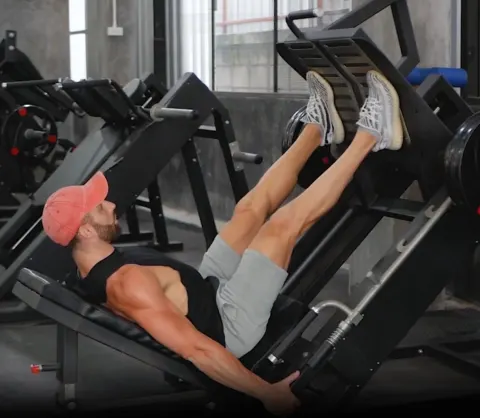
| Leg press | Quads, glutes, hamstrings | Feet shoulder width, mid-platform; lower back stays on the pad |
| Chest press | Chest, front shoulders, triceps | Handles level with mid-chest |
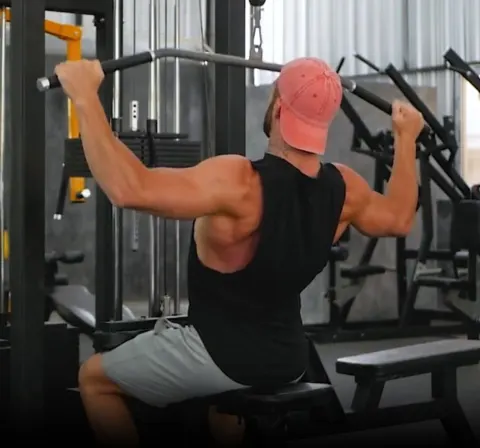
| Lat pulldown | Lats, upper back, biceps | Thigh pad snug; pull the bar to the upper chest |
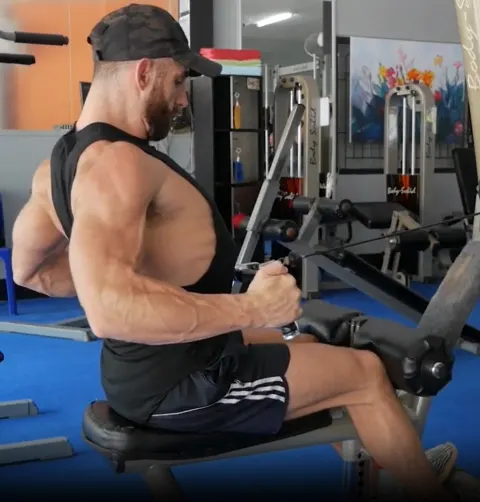
| Seated cable row | Mid back, lats, biceps | Sit tall, slight knee bend, no rocking |
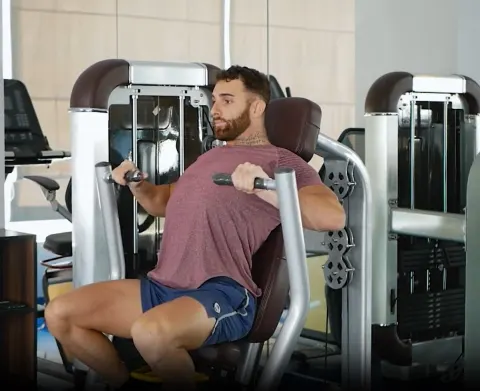
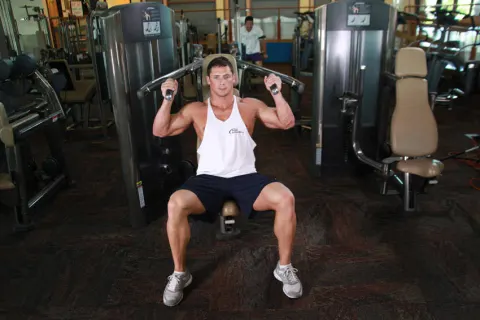
| Shoulder press | Shoulders, triceps | Handles start at about ear height |
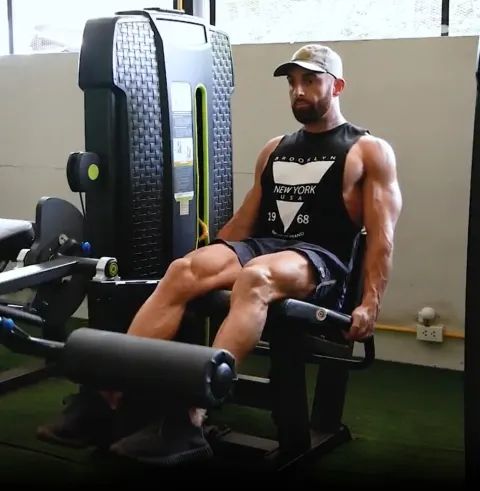
| Leg extension | Quads | Knee lined up with the machine’s pivot; pad on lower shin |
| Seated leg curl | Hamstrings | Knee at the pivot; thigh pad locked down |
| Cable station (pushdowns, curls) | Triceps, biceps and much more | Pulley high for pushdowns, low for curls |
| Hip abduction and adduction | Outer hips and inner thighs | Back against the pad, slow return |
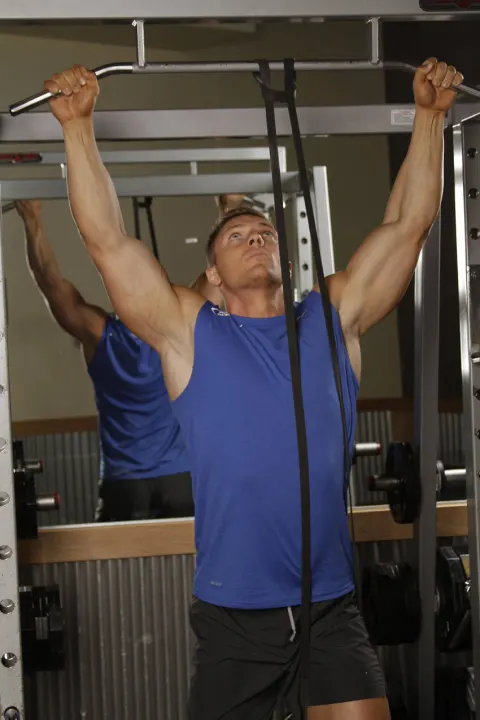
| Assisted pull-up and dip | Back and biceps, or chest and triceps | More weight on the stack means more help |
How to set up any machine
The same five steps work everywhere.
- Read the placard. It shows start and end positions.
- Adjust the seat. The joint that moves should line up with the machine’s pivot point, usually marked with a coloured dot. On presses, handles should be level with the muscle you are training.
- Set the range. Many machines have a second lever for the starting position. Choose one that gives a comfortable stretch, not a strained one.
- Pick the weight. Start with a light plate, do 12 reps and judge from there.
- Do a test rep. If anything pinches or a pad sits in the wrong place, readjust before you start.
Yellow or red levers and pins are the adjustable parts. If one will not move, take the weight off it first. Note your seat settings in your phone so the next session takes seconds.
Technique that applies to every machine
- Control the weight both ways. About one second to lift, two to lower. Do not let the stack crash.
- Use full range. A complete stretch and a complete squeeze, without locking joints hard.
- Keep contact. Back, hips and head stay against the pads.
- Breathe. Out as you push or pull, in as you return.
- Stop one to three reps before failure on most sets. The last reps should be slow, not sloppy.
First-day machine circuit
Do one exercise after another, resting 60–90 seconds between sets. Two rounds on day one, three from week two.
| Order | Machine | Sets × reps | Notes |
|---|---|---|---|
| 1 | Leg press | 2–3 × 12 | Do not let your hips roll off the pad at the bottom |
| 2 | Chest press | 2–3 × 12 | Shoulders down, do not shrug |
| 3 | Lat pulldown | 2–3 × 12 | Lean back slightly, elbows to your sides |
| 4 | Seated leg curl | 2–3 × 12 | Slow return |
| 5 | Shoulder press | 2–3 × 10 | Lower to about chin level |
| 6 | Seated cable row | 2–3 × 12 | Squeeze shoulder blades at the end |
| 7 | Leg extension | 2 × 12–15 | Pause briefly at the top |
| 8 | Cable triceps pushdown | 2 × 12–15 | Elbows pinned to your sides |
Before you start, spend five minutes on a treadmill, bike or cross-trainer, then do one light set of the first two machines. The warm-up guide has a fuller routine.
Do this circuit two or three times a week on non-consecutive days. It is a full-body session built mostly on compound exercises, the ones that work several muscles at once.
How to progress
Stay with the same machines for at least six weeks. Use a simple rule:
- When you reach the top of the rep range on every set, move the pin down one plate next time.
- If the jump is too big, use the small add-on weight many stacks have, or add a rep per set before adding load.
- Write down seat settings, weight and reps.
The sets and reps guide covers the reasoning. Expect to add weight most weeks for the first two months.
Machines, cables and free weights
A reasonable path for a beginner:
- Weeks 1–4: the machine circuit above.
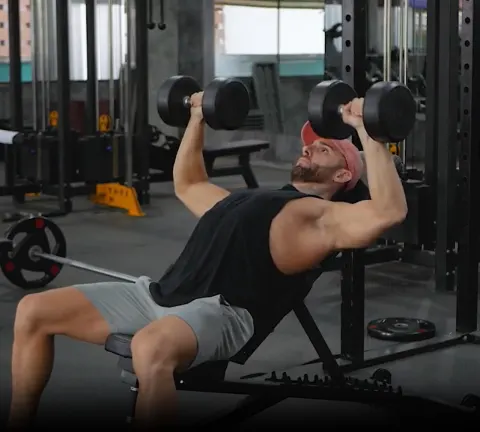
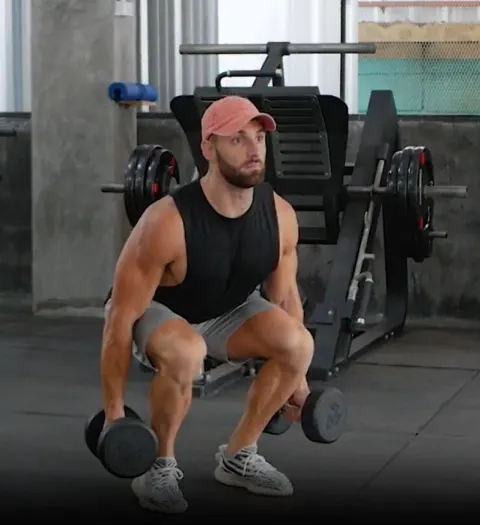
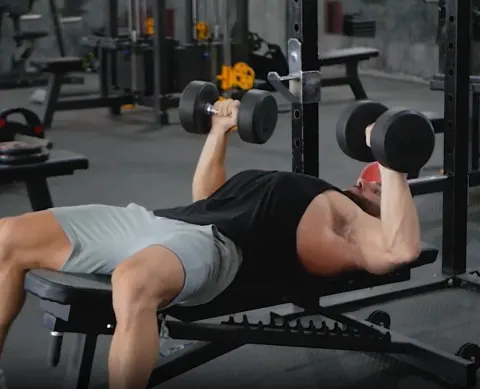
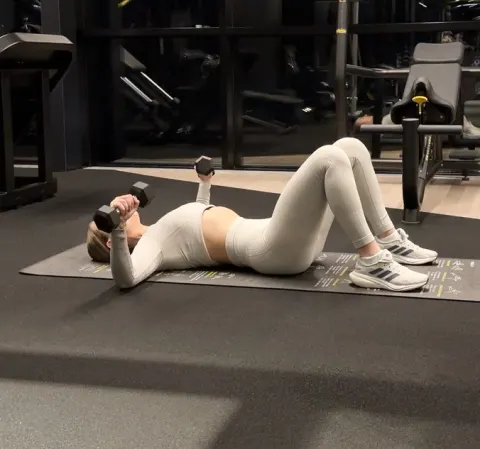
- Weeks 5–8: swap one or two machines for dumbbell versions, such as a goblet squat or dumbbell bench press.
- Week 9 onwards: keep the machines you like and add barbell lifts if they interest you.
You never have to leave machines behind. If one is always busy, or does not fit your frame, the exercise substitutes tool lists alternatives for the same muscle. The gym workout plan for beginners mixes machines and free weights across a three-day week, and the full-body workout at the gym is a single session you can follow straight away.
Gym etiquette in one minute
- Wipe pads and handles after use.
- Do not rest on a machine while scrolling. Step off if someone is waiting, or offer to share sets.
- Return the pin to a light weight if the gym asks you to.
- Ask staff to show you a machine. That is part of their job, and nobody minds.
Common beginner mistakes
- Skipping the seat adjustment. A machine set for someone 20 cm taller loads your joints, not your muscles.
- Too much weight, half the range. Lower the pin and move through the full path.
- Racing through reps. Momentum does the work your muscles should be doing.
- Only training the muscles you can see. For every push, include a pull. Do not skip legs.
- Changing the routine every visit. Progress comes from repeating and adding.
New to training altogether? Read how to start working out first. If you have a joint injury, a heart condition or you are pregnant, check with a doctor before starting, and tell the gym staff so they can suggest suitable machines.
Ready plans for this guide
Exercises mentioned
video
beginner
 video
beginner
 video
beginner
 video
beginner
 beginner
 video
beginner
Frequently asked questions
Are machines or free weights better for beginners?
Both build muscle and strength. Machines are easier to learn, need less balance and let you push hard safely on day one, which makes them a good starting point. Free weights train coordination and stabilising muscles more. Many beginners start mostly on machines and add dumbbell or barbell lifts over the first few months.
How much weight should I start with on gym machines?
Pick a weight you can move for 12 controlled reps with two or three still in reserve. For most beginners that is one of the lightest three or four plates on the stack. If 15 reps feel easy, go up one plate next set. Starting too light costs nothing; starting too heavy teaches bad habits.
How many machines should I use in one workout?
Six to eight is plenty for a full-body session: two for legs, two pushing, two pulling and optionally one or two for arms or core. That takes 40 to 50 minutes with two or three sets each. Using every machine in the room adds fatigue without adding results.
Can you build muscle using only machines?
Yes. Muscles respond to tension and effort, not to the type of equipment. Studies comparing machine and free-weight training find similar muscle growth when sets are taken equally close to failure. Machine-only training is a legitimate long-term approach, especially if you train alone or are working around a joint problem.
What gym machines should beginners avoid?
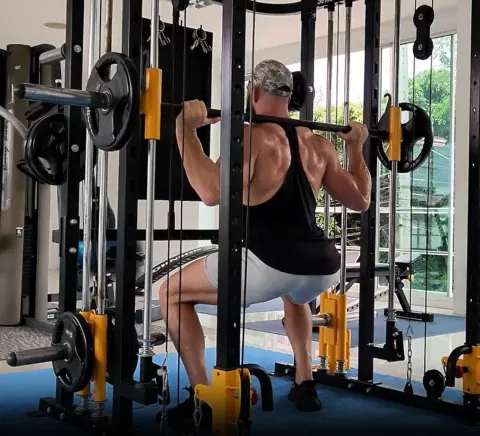
None are dangerous when set up properly, but a few are worth leaving until later: the Smith machine for heavy squats until you understand foot placement, and any machine that does not adjust to fit your limbs. Skip a movement that causes joint pain at every setting and choose an alternative for the same muscle.