Muscle Building Workout Plan: Volume, Reps and Food That Work
A muscle building workout plan based on the numbers that matter: 10–20 weekly sets per muscle, 6–12 reps close to failure and a small calorie surplus.
Example week
4-Day Gym Workout Plan for Muscle Gain
A complete week you can start today: exercises, sets, reps and rest for every session, with swaps for each exercise. Open this plan on its own page (PDF) →
Split
Upper / Lower
Sessions / week
4
Avg. session
40 min
Schedule
Mon · Tue · Thu · Fri
Warm-up (every session, ~6 min)
- 3–5 min easy cardio: brisk walk, bike, jump rope or marching in place.
- Dynamic mobility: 10 leg swings each way, 10 hip circles, 10 arm circles, 8 cat-cows.
- Ramp-up sets on the first exercise: 1–2 light sets of 8 before your working sets.
Day 1
Upper A
Chest + back, strength bias
-
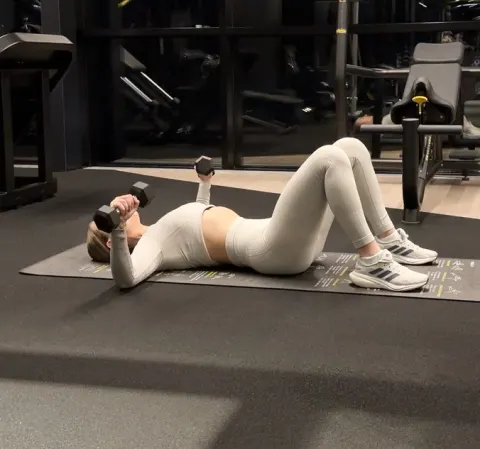
Chest, Triceps · Dumbbell
- Sets
- 3
- Reps
- 6–10
- Rest
- 120s
- Effort
- RPE 8
-
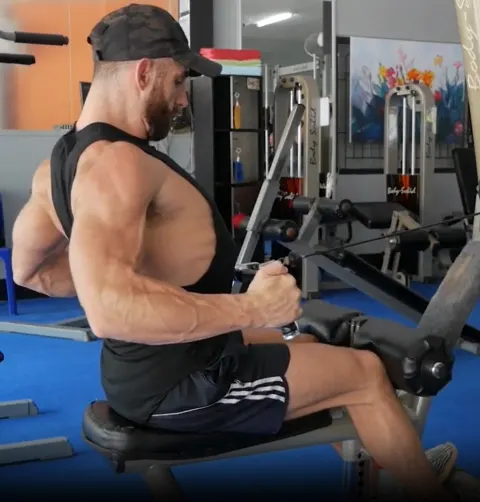
Upper Back, Lats · Cable
- Sets
- 3
- Reps
- 6–10
- Rest
- 120s
- Effort
- RPE 8
swap: Machine Row, Chest-Supported Row, Band Row
-
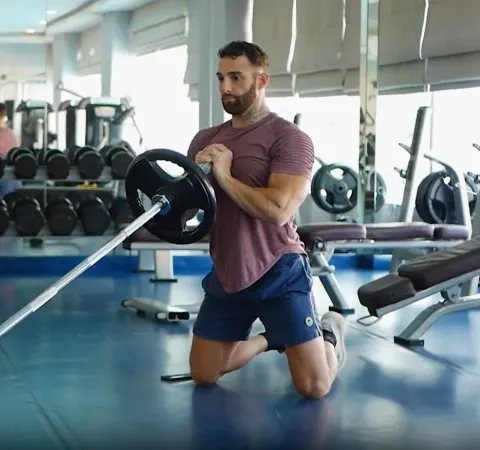
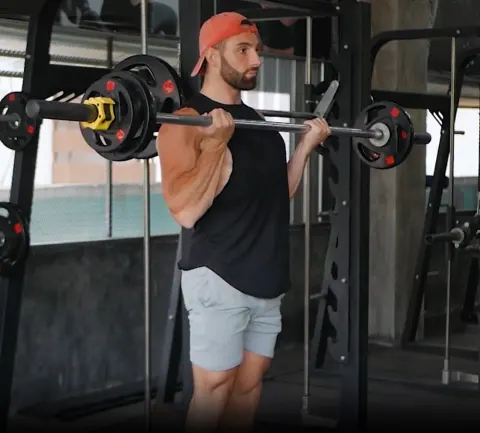
Front Delts, Chest · Barbell
- Sets
- 2
- Reps
- 8–12 / side
- Rest
- 90s
- Effort
- RPE 8
swap: Dumbbell Shoulder Press, Kettlebell Press, Incline Dumbbell Press
-
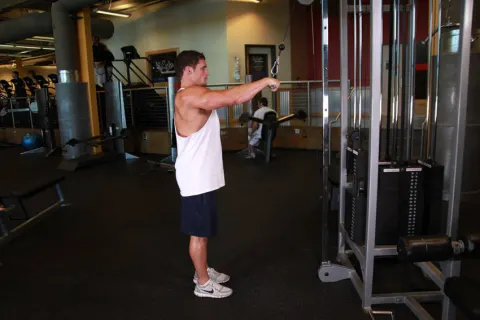
Lats · Cable
- Sets
- 2
- Reps
- 8–12
- Rest
- 90s
- Effort
- RPE 8
-
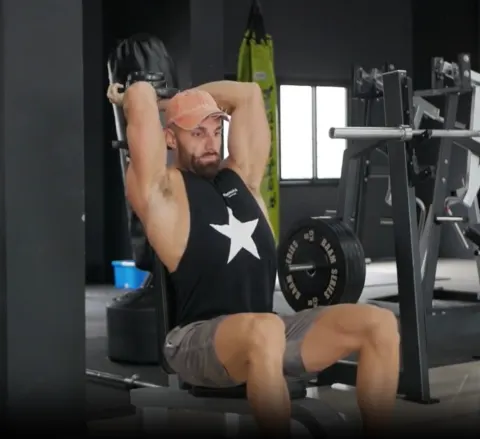
Triceps · Dumbbell
- Sets
- 3
- Reps
- 10–15
- Rest
- 60s
- Effort
- RPE 8–9
Day 2
Lower A
Squat focus
-
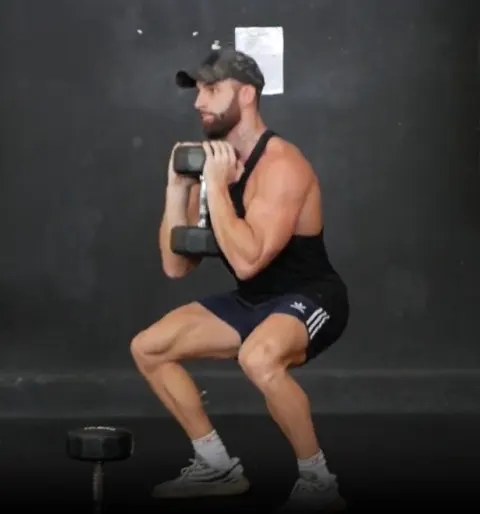
Quads, Glutes · Dumbbell
- Sets
- 3
- Reps
- 6–10
- Rest
- 120s
- Effort
- RPE 8
-
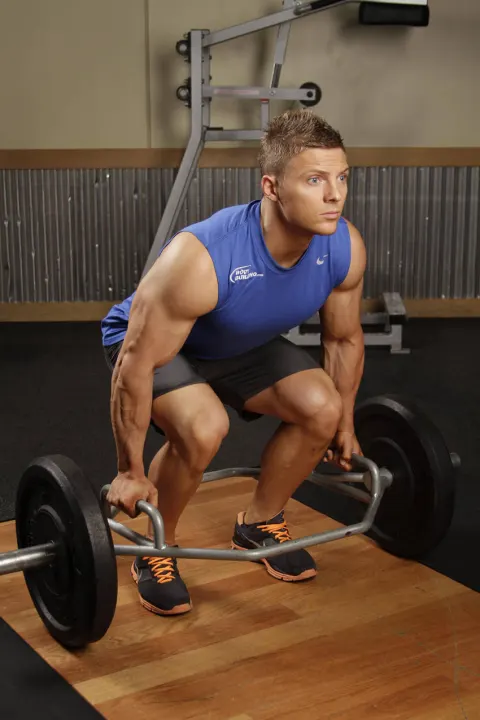
Glutes, Quads, Hamstrings · Barbell
- Sets
- 2
- Reps
- 8–12
- Rest
- 90s
- Effort
- RPE 8
swap: Kettlebell Deadlift, Goblet Squat, Banded Good Morning
-
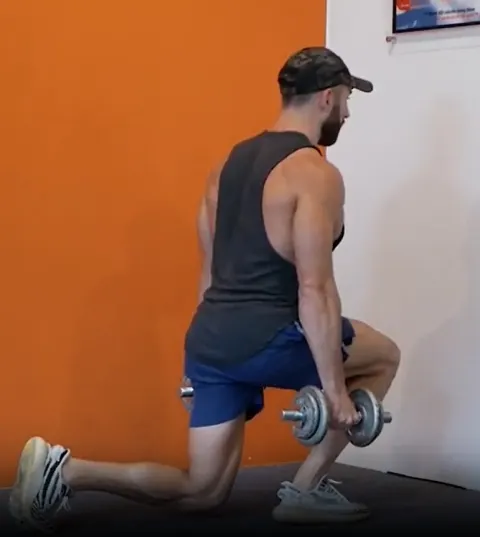
Quads, Glutes · Dumbbell
- Sets
- 2
- Reps
- 8–12 / side
- Rest
- 90s
- Effort
- RPE 8
swap: Reverse Lunge, Split Squat, Step-Up
-
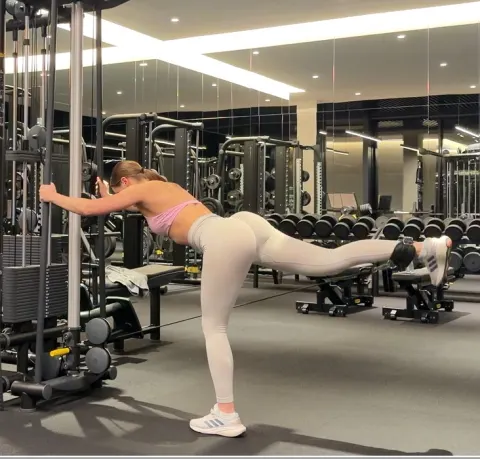
Glutes · Cable
- Sets
- 3
- Reps
- 10–15 / side
- Rest
- 60s
- Effort
- RPE 8–9
swap: Donkey Kick, Hip Thrust, Banded Lateral Walk
-
Calves · Machine
- Sets
- 3
- Reps
- 10–15
- Rest
- 60s
- Effort
- RPE 8–9
-
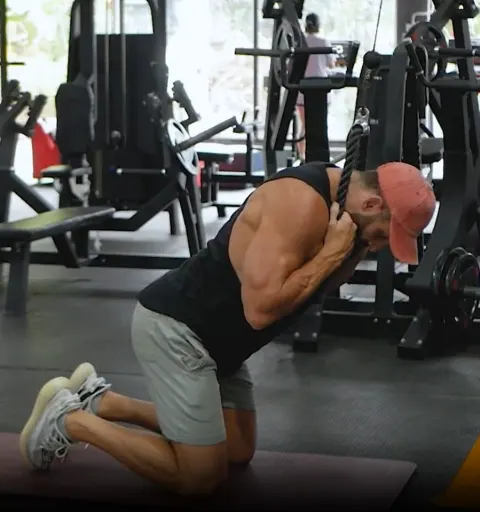
Obliques, Core · Cable
- Sets
- 3
- Reps
- 12–15 / side
- Rest
- 60s
- Effort
- controlled
swap: Side Plank, Suitcase Carry, Russian Twist

Day 3
Upper B
Shoulders + back, volume bias
-
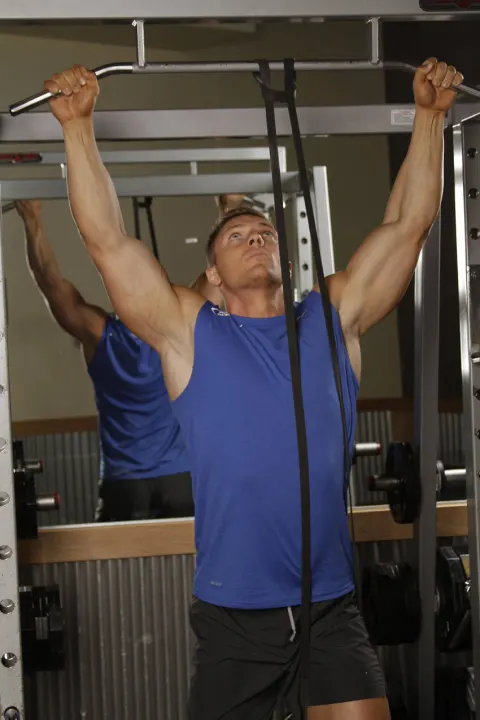
Lats, Upper Back · Pull-Up Bar
- Sets
- 3
- Reps
- 6–10
- Rest
- 120s
- Effort
- RPE 8
-
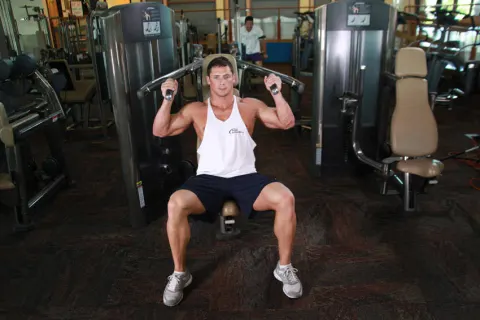
Front Delts, Side Delts · Machine
- Sets
- 3
- Reps
- 6–10
- Rest
- 120s
- Effort
- RPE 8
swap: Seated Dumbbell Press, Dumbbell Shoulder Press, Band Shoulder Press
-
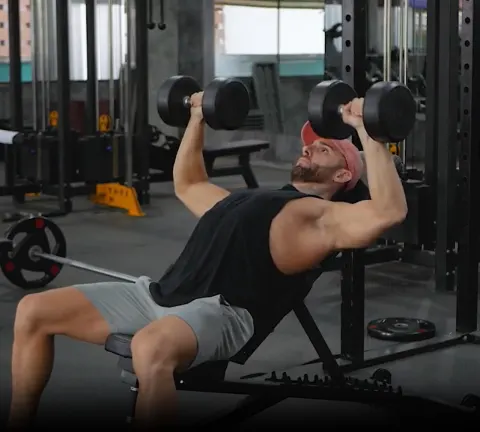
Chest, Front Delts · Dumbbell
- Sets
- 2
- Reps
- 8–12
- Rest
- 90s
- Effort
- RPE 8
swap: Machine Chest Press, Dumbbell Bench Press, Dumbbell Floor Press
-
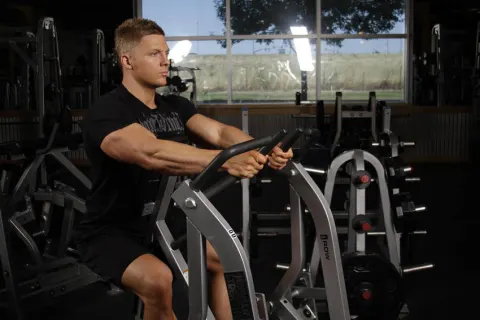
Upper Back, Lats · Machine
- Sets
- 2
- Reps
- 8–12
- Rest
- 90s
- Effort
- RPE 8
-
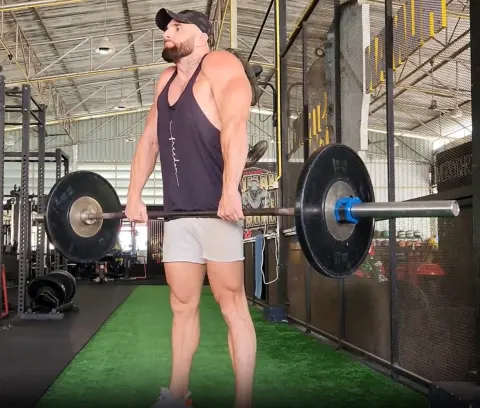
Traps · Barbell
- Sets
- 3
- Reps
- 10–15
- Rest
- 60s
- Effort
- RPE 8–9
swap: Dumbbell Shrug, Face Pull, Band Upright Row
-
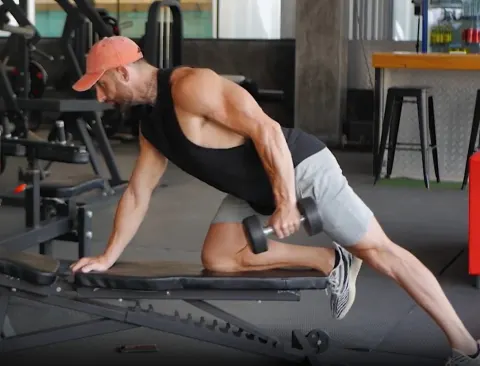
Triceps · Dumbbell
- Sets
- 3
- Reps
- 10–15 / side
- Rest
- 60s
- Effort
- RPE 8–9
swap: Rope Pushdown, Band Triceps Extension, Overhead Triceps Extension
Day 4
Lower B
Hinge focus
-
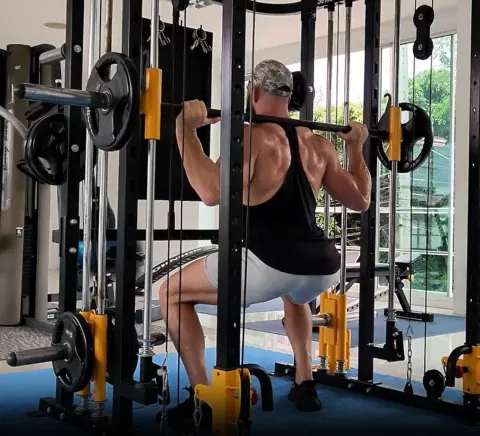
Glutes, Hamstrings · Cable
- Sets
- 3
- Reps
- 6–10
- Rest
- 120s
- Effort
- RPE 8
swap: Hip Thrust, Banded Good Morning, Bodyweight Good Morning
-
Quads, Glutes · Machine
- Sets
- 2
- Reps
- 8–12
- Rest
- 90s
- Effort
- RPE 8
swap: Leg Press, Goblet Squat, Banded Squat
-
Glutes · Machine
- Sets
- 2
- Reps
- 8–12
- Rest
- 90s
- Effort
- RPE 8
-
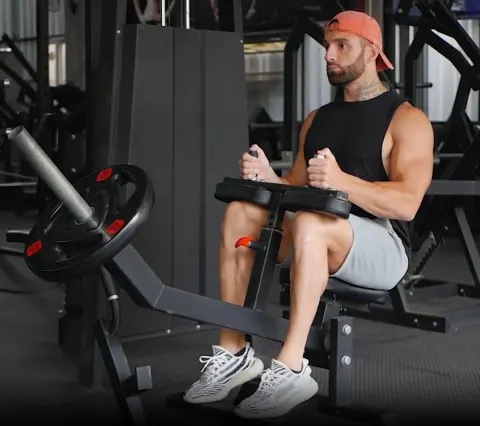
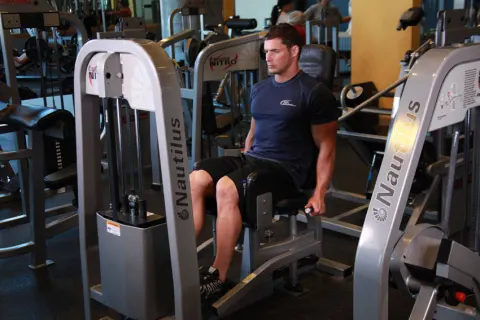
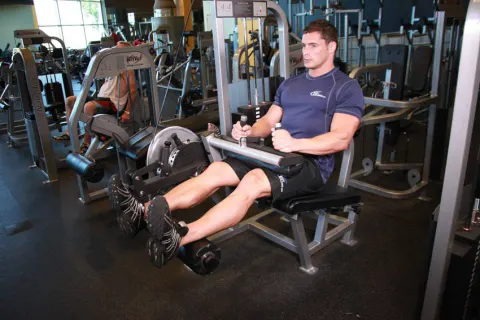
Hamstrings · Machine
- Sets
- 3
- Reps
- 10–15
- Rest
- 60s
- Effort
- RPE 8–9
swap: Lying Leg Curl, Banded Hamstring Curl, Sliding Leg Curl
-
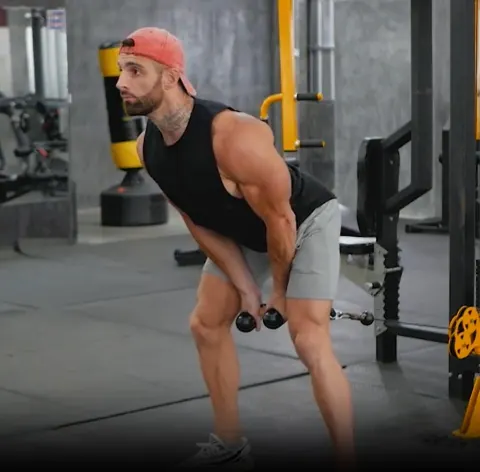
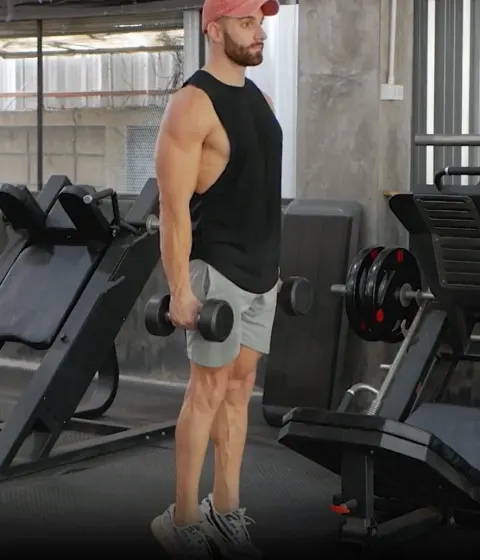
Calves · Dumbbell
- Sets
- 3
- Reps
- 10–15
- Rest
- 60s
- Effort
- RPE 8–9
8-week progression: what to change each week
Same exercises for the whole block. Weeks move the reps, then the load; the last week is a deload.
| Week | Load | Reps | Effort | What to watch |
|---|---|---|---|---|
| 1 | Light: learn the movements | bottom of range (6–8) | RPE 6–7 | Stop every set 3 reps before failure; film one set per exercise to check form. |
| 2 | Same weight | +1 rep per set (8–9) | RPE 8 | Same exercises, same order; only the reps move. |
| 3 | Same weight | top of range (9–10) | RPE 8 | All sets at the top of the range → add load next week. Missed a set? Repeat the week. |
| 4 | +2.5 kg (5 lb) | bottom of range (6–8) | RPE 8 | New weight feels hard at low reps; that is the plan working. |
| 5 | Same weight | +1 rep per set (8–9) | RPE 8 | Keep rest periods the same. |
| 6 | Same weight | top of range (9–10) | RPE 8–9 | Second time at the top: take the last set of each main lift to 1 rep in reserve. |
| 7 | +2.5 kg (5 lb) | bottom of range (6–8) | RPE 8 | Bodyweight moves: slow the lowering phase to 3 s or move to the harder variation. |
| 8 | Deload: 60 % | bottom of range | RPE 5–6 | Half the sets, then regenerate a variation or change the split for the next block. |
How to progress
- First 2 weeks: focus on form with light weights, stop each set 3 reps before failure.
- Double progression: hit the top of the rep range on every set, then add weight (2.5–5 %) and start from the bottom of the range.
- Bodyweight moves: add reps, then slow the tempo (3 sec down), then move to a harder variation.
- Deload every 6–8 weeks: same exercises, half the sets.
Notes for this plan
- Sessions can move between days; keep at least one rest day between hard sessions for the same muscles.
Muscle grows when you give it hard sets, enough of them each week, a little more to lift over time, and the food and sleep to rebuild. Every effective routine is just a way of organising those four things. The sections below explain the numbers, so you can judge any plan, including the one on this page.
The short list of things that drive growth
- Tension close to failure. A set counts when it ends with about 1–3 reps left. Those last slow reps are the stimulus.
- Enough weekly sets. Roughly 10–20 hard sets per muscle per week. This is your training volume.
- Frequency. Spreading those sets over two sessions per muscle beats cramming them into one, because quality drops after 5–6 sets for the same muscle.
- Progression. More reps or more load over months. Without it, the same sets stop being hard.
- Recovery. A small surplus, enough protein, 7–9 hours of sleep.
Exercise novelty, supplements and “muscle confusion” matter far less than these five.
Why the example week is an upper/lower split
The example week above is a 4-day upper/lower split in a gym: Monday and Tuesday, a rest day, then Thursday and Friday. Each half of the body is trained twice, with two or three days to recover in between.
The two upper days are not copies. The first is built on a horizontal press and a row. The second leads with a vertical pull and an overhead press and carries more shoulder and upper-back work. The lower days divide the same way: one led by a squat, the other by a hip hinge.
The biggest lifts open each session while you are fresh, for 6–10 reps with 2 minutes of rest. Lighter work follows for 8–12 and 10–15 reps with shorter rests, and a session takes about 40 minutes.
Because this is a beginner build, those lead slots are filled with dumbbell, cable, machine and trap-bar movements, not the classic barbell lifts. They train the same patterns with less technique to learn. At intermediate level the slots become the bench press, back squat, barbell row and Romanian deadlift.
Main and secondary lifts also get one set fewer than in the standard version, so 2–3 sets each. That puts most muscles at or a little under 10 weekly sets, which is plenty in your first year.
How much volume, by training age
| Training age | Hard sets per muscle per week | Schedule that delivers it | Realistic rate of gain |
|---|---|---|---|
| 0–12 months | 8–12 | 3 full-body days, or 4 days upper/lower | A little over 0.5 kg a month at first |
| 1–3 years | 12–16 | 4 days upper/lower, or 5 days | 0.25–0.5 kg a month |
| 3+ years | 16–20 | 5–6 days | 0.25 kg a month or less |
Presses count for chest, shoulders and triceps, and rows count for back and biceps, so you do not need 10 direct sets for every small muscle. Start at the bottom of your row in the table. Add sets only when progress has stopped for a month while sleep and food are in order. Past 20 sets you mostly add fatigue.
Reps and effort, slot by slot
Muscle responds across a wide span of reps, but 6–12 is where most hypertrophy work belongs: heavy enough to be efficient, light enough to repeat safely.
- Main lifts, a dumbbell or machine press now and the bench press later: 6–10 reps, 2 minutes of rest, stop with 2 reps left. Grinding big lifts to failure costs more recovery than it returns.
- Secondary lifts: 8–12 reps, 90 seconds of rest.
- Accessories, such as curls, triceps work or a cable lateral raise: 10–15 reps, 60 seconds of rest, stopping 1–2 reps short. This is the safe place to push hardest.
Not sure how many reps you had left? Take the last set of an accessory to true failure once in a while. Most people find they had been stopping 5 short.
Progression: a pressing example
Say your main press is listed as 3 × 6–10 and you use a pair of 16 kg dumbbells.
- Week 1: 6, 6, 6. The bottom of the range, form first.
- Week 2: 7, 7, 7.
- Week 3 or later: 10, 10, 10. Every set has reached the top.
- Next session: the 18 kg pair for sets of 6, and the climb restarts. On a barbell the step is 2.5 kg (5 lb).
That is double progression: reps first, then load. The 8-week wave shown with each plan runs this climb twice and ends with a deload week at about 60 % of your loads and half the sets. Treat the wave as the target pace. If three sets of 10 take five weeks to arrive instead of three, keep the weight until they do.
Three, four, five or six days
- 3 days. Full body for beginners; the generator moves intermediates to push/pull/legs. The 3-day gym plan for muscle gain packs the week into three full-body sessions of about 45 minutes.
- 4 days. Upper/lower, the best balance of volume and recovery for most people. Start with the 4-day beginner gym plan, or the 4-day dumbbell version at home.
- 5 days. Push/pull/legs plus an upper and a lower day. Shorter sessions, the same twice-a-week frequency. The 5-day workout plan page explains who it suits.
- 6 days. Push/pull/legs twice. The most volume and the highest recovery bill; see the 6-day workout plan.
The catalog’s beginner series stops at 4 days, on purpose. Weekly sets matter more than how many days you spread them over, so choose the schedule you will still be turning up for in six months.
Eating and sleeping for size
- Calories: about 250–300 kcal above maintenance. Bigger surpluses add fat faster, not muscle.
- Protein: 1.6–2.2 g per kg of body weight; the protein intake calculator converts that into grams per day.
- Scale target: past the first year, 0.25–0.5 kg a month. If you gain 1 kg every fortnight, most of it is not muscle.
- Sleep: 7–9 hours. Short nights show up as stalled reps within a week.
- New and carrying extra fat? Eat at maintenance with high protein. Beginners can build muscle without a surplus.
Mistakes that stall growth
- Too many easy sets. Twenty sets stopped 5 reps short do less than ten taken to within 1–2.
- Swapping exercises every fortnight. You cannot progress a lift you keep replacing. Hold the main lifts for at least 8 weeks.
- Chest and arms first, legs when convenient. Legs and back are most of your muscle mass.
- Bulking by appetite. Weigh yourself, and adjust by 100–150 kcal if the monthly trend is off.
- Never deloading. Aching joints and falling reps in weeks 7–8 are the plan asking for its lighter week.
What to expect, and where to go next
In the first 8–12 weeks, expect to add a rep or a little weight nearly every session and to see a visible change in the mirror by the end. After that, progress is measured in months.
Stay with this structure for as long as the logbook moves. When the main lifts stall and size is no longer your only interest, a block of lower reps on the strength training program often restarts progress. For the reasoning behind every range used here, read sets and reps explained.
Muscle Building Workout Plan: all 107 plans
- 2-Day Bodyweight Workout Plan for Muscle Gain (Women)
- 2-Day Bodyweight Workout Plan for Muscle Gain (Men)
- 2-Day Bodyweight Workout Plan for Muscle Gain (Over 50)
- 2-Day Dumbbell Workout Plan for Muscle Gain
- 2-Day Dumbbell Workout Plan for Muscle Gain (Beginners)
- 2-Day Dumbbell Workout Plan for Muscle Gain (Women)
- 2-Day Dumbbell Workout Plan for Muscle Gain (Men)
- 2-Day Dumbbell Workout Plan for Muscle Gain (Over 50)
- 2-Day Gym Workout Plan for Muscle Gain
- 2-Day Gym Workout Plan for Muscle Gain (Beginners)
- 2-Day Gym Workout Plan for Muscle Gain (Women)
- 2-Day Gym Workout Plan for Muscle Gain (Men)
- 2-Day Gym Workout Plan for Muscle Gain (Over 50)
- 2-Day Kettlebell Workout Plan for Muscle Gain
- 2-Day Kettlebell Workout Plan for Muscle Gain (Beginners)
- 2-Day Kettlebell Workout Plan for Muscle Gain (Women)
- 2-Day Kettlebell Workout Plan for Muscle Gain (Men)
- 2-Day Kettlebell Workout Plan for Muscle Gain (Over 50)
- 2-Day Resistance Band Workout Plan for Muscle Gain
- 2-Day Resistance Band Workout Plan for Muscle Gain (Beginners)
- 2-Day Resistance Band Workout Plan for Muscle Gain (Women)
- 2-Day Resistance Band Workout Plan for Muscle Gain (Men)
- 2-Day Resistance Band Workout Plan for Muscle Gain (Over 50)
- 2-Day Calisthenics Workout Plan for Muscle Gain
- 2-Day Calisthenics Workout Plan for Muscle Gain (Beginners)
- 2-Day Calisthenics Workout Plan for Muscle Gain (Men)
- 3-Day Bodyweight Workout Plan for Muscle Gain (Women)
- 3-Day Bodyweight Workout Plan for Muscle Gain (Men)
- 3-Day Bodyweight Workout Plan for Muscle Gain (Over 50)
- 3-Day Dumbbell Workout Plan for Muscle Gain
- 3-Day Dumbbell Workout Plan for Muscle Gain (Beginners)
- 3-Day Dumbbell Workout Plan for Muscle Gain (Women)
- 3-Day Dumbbell Workout Plan for Muscle Gain (Men)
- 3-Day Dumbbell Workout Plan for Muscle Gain (Over 50)
- 3-Day Gym Workout Plan for Muscle Gain
- 3-Day Gym Workout Plan for Muscle Gain (Beginners)
- 3-Day Gym Workout Plan for Muscle Gain (Women)
- 3-Day Gym Workout Plan for Muscle Gain (Men)
- 3-Day Gym Workout Plan for Muscle Gain (Over 50)
- 3-Day Kettlebell Workout Plan for Muscle Gain
- 3-Day Kettlebell Workout Plan for Muscle Gain (Beginners)
- 3-Day Kettlebell Workout Plan for Muscle Gain (Women)
- 3-Day Kettlebell Workout Plan for Muscle Gain (Men)
- 3-Day Kettlebell Workout Plan for Muscle Gain (Over 50)
- 3-Day Resistance Band Workout Plan for Muscle Gain
- 3-Day Resistance Band Workout Plan for Muscle Gain (Beginners)
- 3-Day Resistance Band Workout Plan for Muscle Gain (Women)
- 3-Day Resistance Band Workout Plan for Muscle Gain (Men)
- 3-Day Resistance Band Workout Plan for Muscle Gain (Over 50)
- 3-Day Calisthenics Workout Plan for Muscle Gain
- 3-Day Calisthenics Workout Plan for Muscle Gain (Beginners)
- 3-Day Calisthenics Workout Plan for Muscle Gain (Men)
- 4-Day Bodyweight Workout Plan for Muscle Gain (Women)
- 4-Day Bodyweight Workout Plan for Muscle Gain (Men)
- 4-Day Bodyweight Workout Plan for Muscle Gain (Over 50)
- 4-Day Dumbbell Workout Plan for Muscle Gain
- 4-Day Dumbbell Workout Plan for Muscle Gain (Beginners)
- 4-Day Dumbbell Workout Plan for Muscle Gain (Women)
- 4-Day Dumbbell Workout Plan for Muscle Gain (Men)
- 4-Day Dumbbell Workout Plan for Muscle Gain (Over 50)
- 4-Day Gym Workout Plan for Muscle Gain
- 4-Day Gym Workout Plan for Muscle Gain (Beginners)
- 4-Day Gym Workout Plan for Muscle Gain (Women)
- 4-Day Gym Workout Plan for Muscle Gain (Men)
- 4-Day Gym Workout Plan for Muscle Gain (Over 50)
- 4-Day Kettlebell Workout Plan for Muscle Gain
- 4-Day Kettlebell Workout Plan for Muscle Gain (Beginners)
- 4-Day Kettlebell Workout Plan for Muscle Gain (Women)
- 4-Day Kettlebell Workout Plan for Muscle Gain (Men)
- 4-Day Kettlebell Workout Plan for Muscle Gain (Over 50)
- 4-Day Resistance Band Workout Plan for Muscle Gain
- 4-Day Resistance Band Workout Plan for Muscle Gain (Beginners)
- 4-Day Resistance Band Workout Plan for Muscle Gain (Women)
- 4-Day Resistance Band Workout Plan for Muscle Gain (Men)
- 4-Day Resistance Band Workout Plan for Muscle Gain (Over 50)
- 4-Day Calisthenics Workout Plan for Muscle Gain
- 4-Day Calisthenics Workout Plan for Muscle Gain (Beginners)
- 4-Day Calisthenics Workout Plan for Muscle Gain (Men)
- 5-Day Bodyweight Workout Plan for Muscle Gain (Men)
- 5-Day Dumbbell Workout Plan for Muscle Gain
- 5-Day Dumbbell Workout Plan for Muscle Gain (Women)
- 5-Day Dumbbell Workout Plan for Muscle Gain (Men)
- 5-Day Gym Workout Plan for Muscle Gain
- 5-Day Gym Workout Plan for Muscle Gain (Women)
- 5-Day Gym Workout Plan for Muscle Gain (Men)
- 5-Day Kettlebell Workout Plan for Muscle Gain
- 5-Day Kettlebell Workout Plan for Muscle Gain (Women)
- 5-Day Kettlebell Workout Plan for Muscle Gain (Men)
- 5-Day Calisthenics Workout Plan for Muscle Gain
- 5-Day Calisthenics Workout Plan for Muscle Gain (Men)
- 6-Day Bodyweight Workout Plan for Muscle Gain (Women)
- 6-Day Bodyweight Workout Plan for Muscle Gain (Men)
- 6-Day Dumbbell Workout Plan for Muscle Gain
- 6-Day Dumbbell Workout Plan for Muscle Gain (Women)
- 6-Day Dumbbell Workout Plan for Muscle Gain (Men)
- 6-Day Gym Workout Plan for Muscle Gain
- 6-Day Gym Workout Plan for Muscle Gain (Women)
- 6-Day Gym Workout Plan for Muscle Gain (Men)
Related programs
Frequently asked questions
How many days a week should I train to build muscle?
Three to five days works for nearly everyone. What matters is reaching 10 to 20 hard sets per muscle per week with each muscle trained about twice. Three full-body days or four upper/lower days do that comfortably. Five or six days only help once you need more volume than four sessions can hold.
How many sets and reps build muscle fastest?
Most sets should fall between 6 and 12 reps and end 1 to 3 reps before failure, with 3 to 4 sets per exercise. That should add up to 10 to 20 sets per muscle per week. Beginners grow on 8 to 12 weekly sets, so starting higher only adds soreness.
How long does it take to see muscle growth?
Strength rises within 2 to 3 weeks as your nervous system adapts. Visible size usually appears after 8 to 12 weeks of consistent training and adequate protein. After the first year the pace slows to roughly 0.25 to 0.5 kg a month, so compare photos every quarter, not every week.
Do I need to eat in a surplus to build muscle?
A small surplus of 250 to 300 kcal a day makes growth more reliable once you are past the beginner stage. Beginners and people carrying extra body fat can gain muscle at maintenance if protein reaches 1.6 to 2.2 g per kg of body weight. Large surpluses mainly add fat.
Should I train to failure to build muscle?
Not on every set. Stopping with 1 or 2 reps in reserve gives nearly the same growth with far less fatigue, especially on squats, presses and deadlifts. Save true failure for the final set of curls, lateral raises or machine work, where a missed rep carries no risk.