3-Day Workout Plan: The Full-Body Week Most People Should Run
A 3-day workout plan trains your whole body on Monday, Wednesday and Friday. See why it works, how it compares with push/pull/legs and when to add a fourth day.
Example week
3-Day Gym Workout Plan for Muscle Gain
A complete week you can start today: exercises, sets, reps and rest for every session, with swaps for each exercise. Open this plan on its own page (PDF) →
Split
Full Body
Sessions / week
3
Avg. session
45 min
Schedule
Mon · Wed · Fri
Warm-up (every session, ~6 min)
- 3–5 min easy cardio: brisk walk, bike, jump rope or marching in place.
- Dynamic mobility: 10 leg swings each way, 10 hip circles, 10 arm circles, 8 cat-cows.
- Ramp-up sets on the first exercise: 1–2 light sets of 8 before your working sets.
Day 1
Full Body A
Squat + push + pull
-
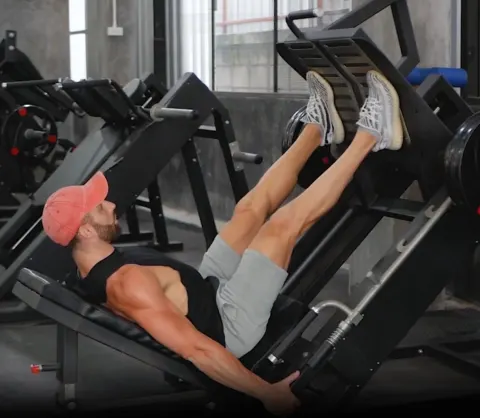
Quads, Glutes · Machine
- Sets
- 3
- Reps
- 6–10
- Rest
- 120s
- Effort
- RPE 8
-
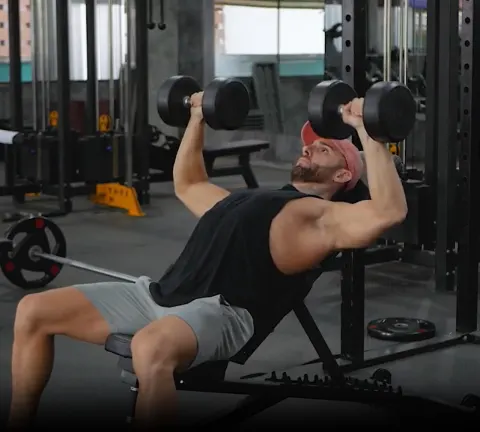
Chest, Front Delts · Dumbbell
- Sets
- 3
- Reps
- 6–10
- Rest
- 120s
- Effort
- RPE 8
swap: Machine Chest Press, Dumbbell Bench Press, Dumbbell Floor Press
-
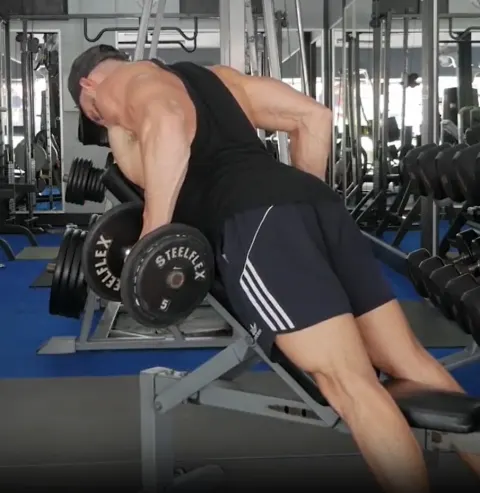
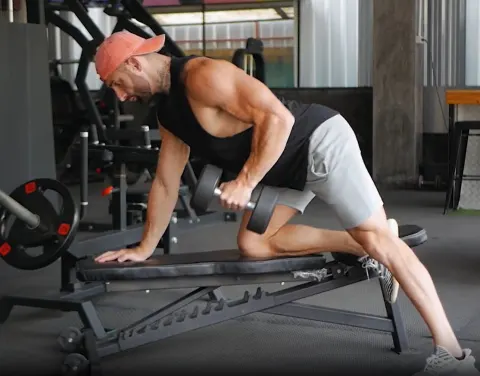
Upper Back, Lats · Dumbbell
- Sets
- 3
- Reps
- 6–10
- Rest
- 120s
- Effort
- RPE 8
swap: Dumbbell Row, Machine Row, Seated Cable Row
-
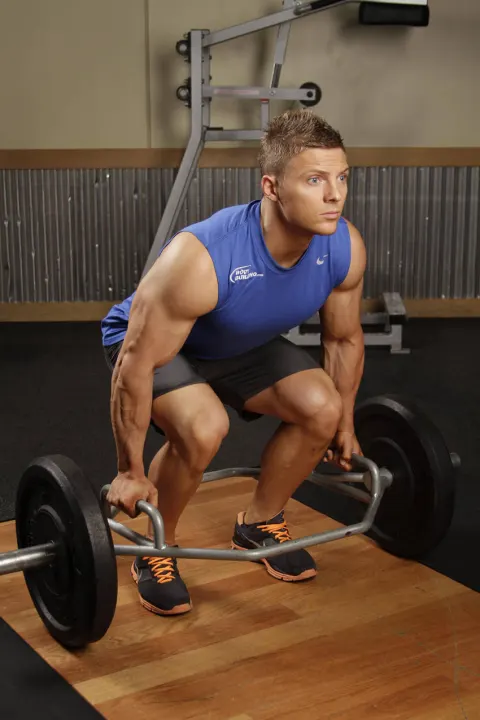
Glutes, Quads, Hamstrings · Barbell
- Sets
- 2
- Reps
- 8–12
- Rest
- 90s
- Effort
- RPE 8
swap: Kettlebell Deadlift, Goblet Squat, Banded Good Morning
-
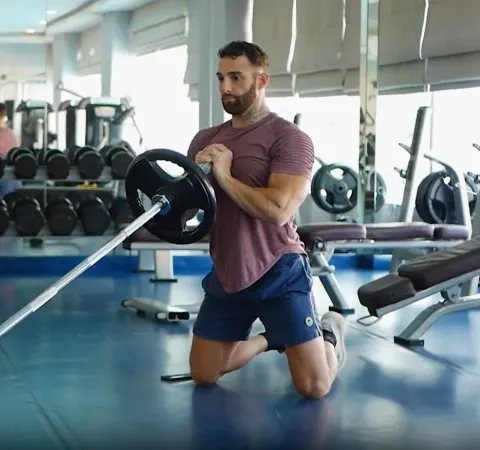
Front Delts, Chest · Barbell
- Sets
- 3
- Reps
- 10–15 / side
- Rest
- 60s
- Effort
- RPE 8–9
swap: Dumbbell Shoulder Press, Kettlebell Press, Incline Dumbbell Press
Day 2
Full Body B
Hinge + vertical push/pull
-
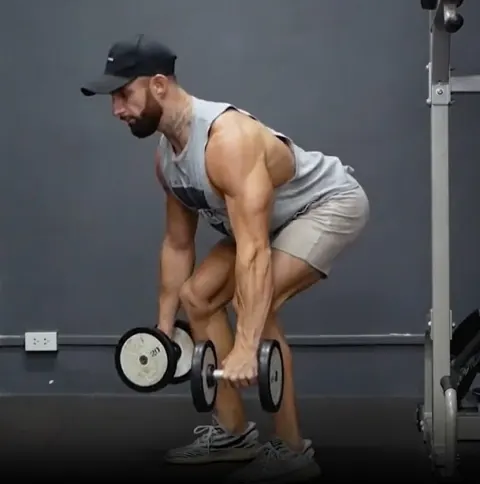
Hamstrings, Glutes · Dumbbell
- Sets
- 3
- Reps
- 6–10
- Rest
- 120s
- Effort
- RPE 8
swap: Dumbbell Romanian Deadlift, Kettlebell Deadlift, Trap Bar Deadlift
-
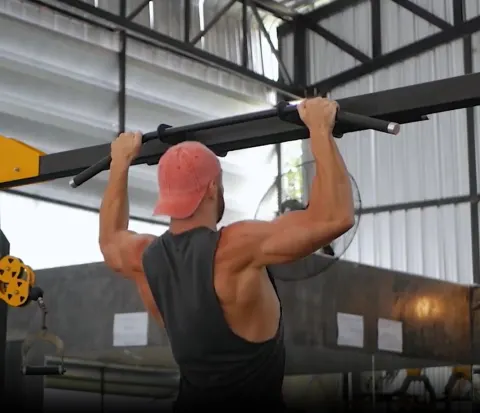
Lats, Upper Back · Pull-Up Bar
- Sets
- 3
- Reps
- 6–10
- Rest
- 120s
- Effort
- RPE 8
swap: Assisted Pull-Up, Lat Pulldown, Inverted Row
-
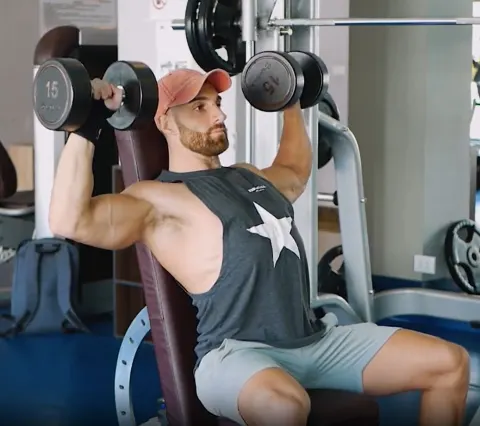
Front Delts, Side Delts · Dumbbell
- Sets
- 3
- Reps
- 6–10
- Rest
- 120s
- Effort
- RPE 8
swap: Seated Dumbbell Press, Pike Push-Up, Band Shoulder Press
-
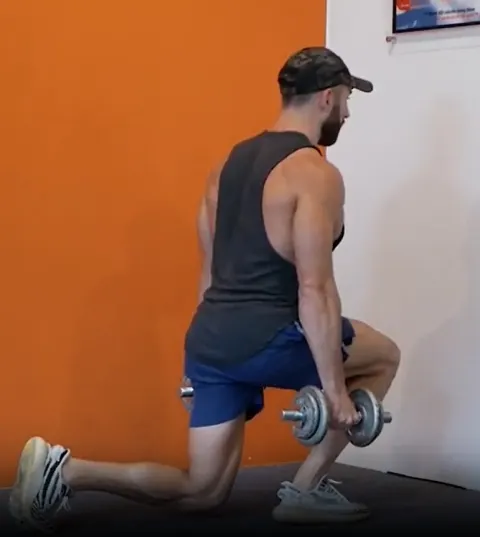
Quads, Glutes · Dumbbell
- Sets
- 2
- Reps
- 8–12 / side
- Rest
- 90s
- Effort
- RPE 8
swap: Reverse Lunge, Split Squat, Step-Up
-
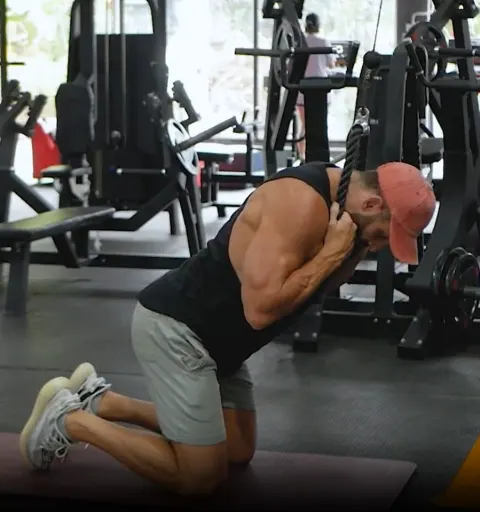
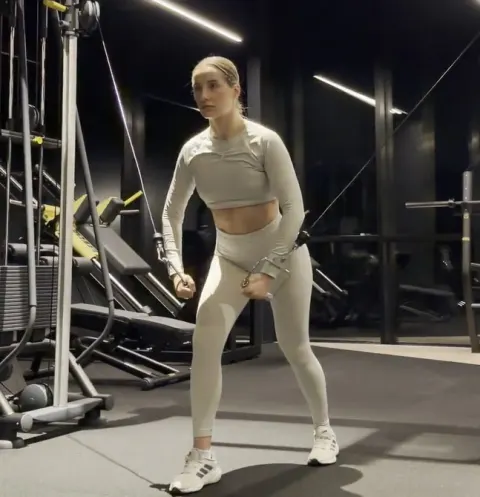
Obliques, Core · Cable
- Sets
- 3
- Reps
- 12–15 / side
- Rest
- 60s
- Effort
- controlled
swap: Side Plank, Suitcase Carry, Russian Twist

Day 3
Full Body C
Single-leg + chest + back
-
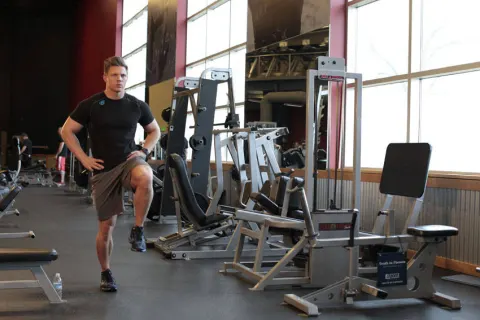
Quads, Glutes · Bodyweight
- Sets
- 3
- Reps
- 6–10 / side
- Rest
- 120s
- Effort
- RPE 8
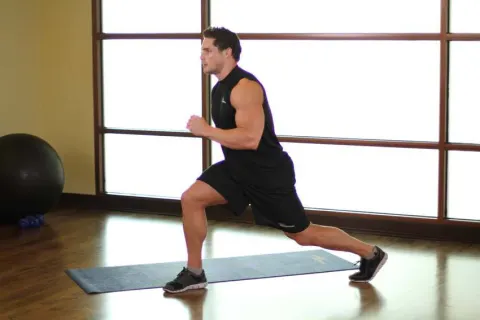
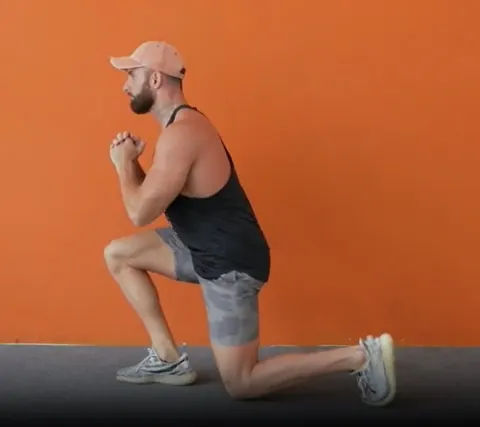
swap: Reverse Lunge, Forward Lunge, Step-Up
-
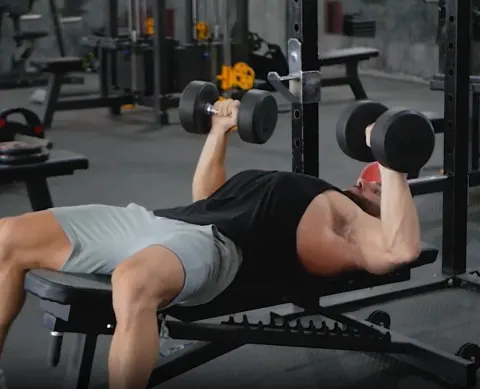
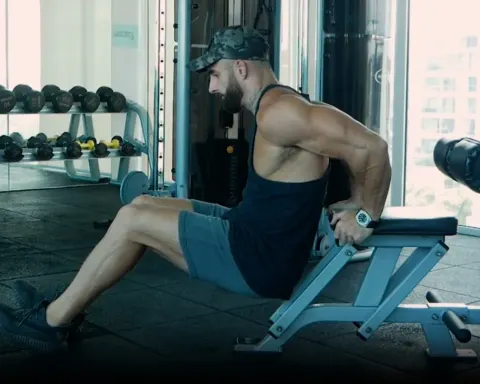
Chest, Triceps · Dumbbell
- Sets
- 3
- Reps
- 6–10
- Rest
- 120s
- Effort
- RPE 8
-
Lats, Upper Back · Dumbbell
- Sets
- 3
- Reps
- 6–10 / side
- Rest
- 120s
- Effort
- RPE 8
-
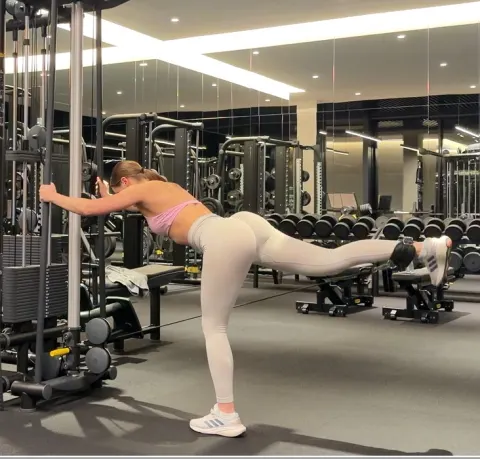
Glutes · Cable
- Sets
- 2
- Reps
- 8–12 / side
- Rest
- 90s
- Effort
- RPE 8
swap: Donkey Kick, Hip Thrust, Banded Lateral Walk
-
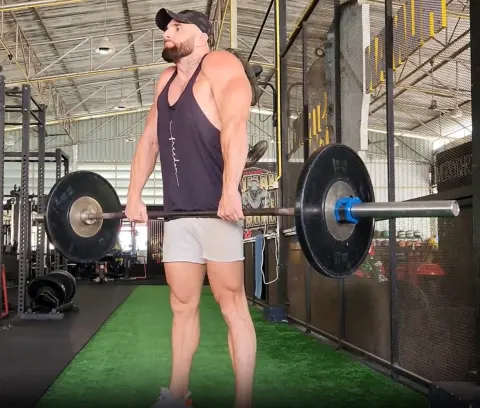
Traps · Barbell
- Sets
- 3
- Reps
- 10–15
- Rest
- 60s
- Effort
- RPE 8–9
swap: Dumbbell Shrug, Face Pull, Band Upright Row
-
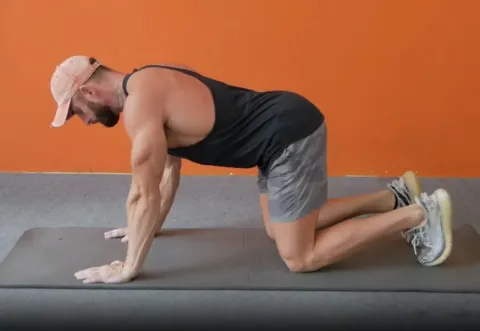
Core, Lower Back · Bodyweight
- Sets
- 3
- Reps
- 30–60 sec
- Rest
- 60s
- Effort
- controlled
swap: Dead Bug, Plank, Donkey Kick
8-week progression: what to change each week
Same exercises for the whole block. Weeks move the reps, then the load; the last week is a deload.
| Week | Load | Reps | Effort | What to watch |
|---|---|---|---|---|
| 1 | Light: learn the movements | bottom of range (6–8) | RPE 6–7 | Stop every set 3 reps before failure; film one set per exercise to check form. |
| 2 | Same weight | +1 rep per set (8–9) | RPE 8 | Same exercises, same order; only the reps move. |
| 3 | Same weight | top of range (9–10) | RPE 8 | All sets at the top of the range → add load next week. Missed a set? Repeat the week. |
| 4 | +2.5 kg (5 lb) | bottom of range (6–8) | RPE 8 | New weight feels hard at low reps; that is the plan working. |
| 5 | Same weight | +1 rep per set (8–9) | RPE 8 | Keep rest periods the same. |
| 6 | Same weight | top of range (9–10) | RPE 8–9 | Second time at the top: take the last set of each main lift to 1 rep in reserve. |
| 7 | +2.5 kg (5 lb) | bottom of range (6–8) | RPE 8 | Bodyweight moves: slow the lowering phase to 3 s or move to the harder variation. |
| 8 | Deload: 60 % | bottom of range | RPE 5–6 | Half the sets, then regenerate a variation or change the split for the next block. |
How to progress
- First 2 weeks: focus on form with light weights, stop each set 3 reps before failure.
- Double progression: hit the top of the rep range on every set, then add weight (2.5–5 %) and start from the bottom of the range.
- Bodyweight moves: add reps, then slow the tempo (3 sec down), then move to a harder variation.
- Deload every 6–8 weeks: same exercises, half the sets.
Notes for this plan
- Sessions can move between days; keep at least one rest day between hard sessions for the same muscles.
Three sessions with a rest day after each: that is the schedule most lifters should start on, and many never need to leave it. On a three-day week each workout trains the whole body, every muscle is worked two or three times, and four days stay free for recovery, cardio or the rest of your life.
Why three days is the default
Training Monday, Wednesday and Friday gives a rhythm of one day on, one day off, then a two-day break at the weekend. Roughly 48 hours pass between sessions, which is enough for the same muscles to be trained hard again.
It is also forgiving. Skip Wednesday and you have still trained everything twice. Skip a session on a five-day split and one body part sits idle for a week.
Three days suits beginners, people returning after a break, anyone lifting for fat loss, and intermediates with a job and a family. A beginner can expect to add reps or load nearly every week for two to three months, and strength on the big lifts often rises 30–50 % in the first eight weeks. Most of that early jump is technique. Visible changes follow at 8–12 weeks.
How the example week is built
The example week above is the 3-day gym plan for muscle gain at beginner level: three different full-body sessions labelled A, B and C, the classic full-body 3-day split.
- Day A leads with a squat, a horizontal press and a horizontal row, followed by a hinge, an optional overhead press and core.
- Day B leads with a hinge, a vertical pull and an overhead press, followed by a lunge, a fly-type accessory and core.
- Day C leads with a single-leg movement, a second chest press and another row, followed by glute work, a shoulder or trap isolation and core.
At beginner level the slots go to lifts you can load safely from the first week. In the week above that means a leg press, dumbbell presses, chest-supported and dumbbell rows, and trap bar and dumbbell deadlifts. The vertical pull is a negative pull-up. If you cannot yet control the lowering for 6 reps, swap it for a lat pulldown or an assisted pull-up. The barbell back squat and bench press take over the main slots at intermediate level.
Rotating three sessions does two things. Every movement pattern is practised often, yet no joint takes the same heavy lift three times in five days. And the hardest leg exercise changes each day: a two-legged push, then a hinge, then single-leg work.
Main lifts use 6–10 reps with 2 minutes of rest, secondary lifts 8–12 with 90 seconds, accessories 10–15 with 60 seconds. Beginner builds run 2–3 sets per exercise, so a session takes 40–50 minutes with the warm-up. For the first two weeks, leave about three reps in reserve on every set and treat the sessions as practice.
The weekly set count
Add up the sets that reach each muscle across A, B and C:
- Chest: a press on Monday, a fly on Wednesday and a second press on Friday, about 9 sets.
- Back: a row, a vertical pull and a second row, about 9 sets.
- Quads, hamstrings and glutes: squat, hinge and lunge patterns spread over all three days, 7–8 sets each.
- Shoulders: two overhead presses, about 6 sets, plus whatever the chest presses contribute and 3 sets of shrugs for the traps.
That is at or just under the low end of the 10–20 weekly sets that drive growth, which is exactly where a beginner should start. With intermediate set counts, one more set on main and secondary lifts, the same week delivers 10–13 sets per muscle.
Full body or push/pull/legs on three days?
There are two sensible ways to fill three days. The generator gives full body to beginners and to anyone training for fat loss, and switches intermediates who want muscle or strength to push/pull/legs.
| Full body A/B/C | Push/pull/legs | |
|---|---|---|
| Each muscle trained | 2–3 times a week | Once a week |
| Sets per muscle in one session | 3–4 | 7–11 |
| Exercises per muscle group in one session | One | Two or three |
| Practice of each main lift | Every 2–5 days | Every 7 days |
| Cost of a missed workout | Everything loses a third of the week | One region waits 14 days |
| How it feels | Moderate work everywhere | One area worked thoroughly |
At equal weekly sets the two build similar muscle. Full body spreads those sets over fresher efforts, which makes it the safer pick if you are new, sometimes miss workouts, or want the most muscle moved per visit. Fat-loss builds such as the 3-day dumbbell plan for weight loss stay full body at every level for that reason.
The 3-day push/pull/legs split earns its place once you have a year or more of training, attend reliably and prefer one focused region per session. An intermediate can do 7–11 quality sets for one area in a single workout. A beginner cannot. The 3-day gym plan for strength is generated at intermediate level and is laid out that way, and the push/pull/legs guide covers both versions in detail.
Placing the rest days
- Best: Monday, Wednesday, Friday, or Tuesday, Thursday, Saturday.
- Fine: Monday, Wednesday, Saturday, or any pattern with a single back-to-back pair.
- Back-to-back days on full body: expect the second session to feel 5–10 % weaker and do not chase personal bests on it.
- Push/pull/legs: consecutive days are no problem, because the three sessions use different muscles.
Rest days are not bed days. Walk 8,000–10,000 steps or do 20–30 minutes of easy cardio, sleep at least 7 hours, and eat 1.6–2.2 g of protein per kg of body weight. The protein intake calculator turns that into a daily number.
Progressing through the eight weeks
Each plan runs as an eight-week wave. Take Monday’s leg press at 3 × 6–10:
- Week 1: 100 kg for 3 sets of 6–8, deliberately light.
- Week 2: the same 100 kg for 8–9 reps per set.
- Week 3: 9–10 reps per set.
- Week 4: all three sets reached 10, so load 105 kg and go back to 6–8.
- Weeks 5–7: climb again, adding 2.5–5 % each time the top of the range is complete. On barbell and dumbbell lifts that is usually 2.5 kg (5 lb).
- Week 8: a lighter week at about 60 % of the load and half the sets.
Real progress is rarely this tidy. The rule that matters is simple: no extra weight until every set reaches the top number. The deload guide explains why the easy eighth week makes the next block better.
Mistakes on a three-day week
- Filling rest days with bonus arm or ab sessions. They eat into the recovery that Friday’s rows and presses need.
- Taking every leg exercise to failure. Legs work on all three days, so finish with one or two reps in hand.
- Changing exercises every week. You cannot progress a lift you only see twice.
- Choosing push/pull/legs as a novice because it looks advanced. Once-a-week practice is slow teaching.
Is three the right number?
Step down if you have missed more than one session in three over the past month. The 2-day workout plan you complete beats the three-day plan you do not.
Step up when you have 6–12 months of consistent training, your sessions run past 75 minutes, and a fourth day is truly free. The 4-day workout plan splits the body into upper and lower days so each visit gets shorter while weekly volume rises.
3-Day Workout Plan: all 94 plans
- 3-Day Bodyweight Workout Plan for Muscle Gain (Over 50)
- 3-Day Bodyweight Workout Plan for General Fitness
- 3-Day Bodyweight Workout Plan for General Fitness (Beginners)
- 3-Day Bodyweight Workout Plan for General Fitness (Women)
- 3-Day Bodyweight Workout Plan for General Fitness (Men)
- 3-Day Bodyweight Workout Plan for General Fitness (Over 50)
- 3-Day Dumbbell Workout Plan for Weight Loss
- 3-Day Dumbbell Workout Plan for Weight Loss (Beginners)
- 3-Day Dumbbell Workout Plan for Weight Loss (Women)
- 3-Day Dumbbell Workout Plan for Weight Loss (Men)
- 3-Day Dumbbell Workout Plan for Weight Loss (Over 50)
- 3-Day Dumbbell Workout Plan for Muscle Gain
- 3-Day Dumbbell Workout Plan for Muscle Gain (Beginners)
- 3-Day Dumbbell Workout Plan for Muscle Gain (Women)
- 3-Day Dumbbell Workout Plan for Muscle Gain (Men)
- 3-Day Dumbbell Workout Plan for Muscle Gain (Over 50)
- 3-Day Dumbbell Workout Plan for Strength
- 3-Day Dumbbell Workout Plan for Strength (Beginners)
- 3-Day Dumbbell Workout Plan for Strength (Women)
- 3-Day Dumbbell Workout Plan for Strength (Men)
- 3-Day Dumbbell Workout Plan for Strength (Over 50)
- 3-Day Dumbbell Workout Plan for General Fitness
- 3-Day Dumbbell Workout Plan for General Fitness (Beginners)
- 3-Day Dumbbell Workout Plan for General Fitness (Women)
- 3-Day Dumbbell Workout Plan for General Fitness (Men)
- 3-Day Dumbbell Workout Plan for General Fitness (Over 50)
- 3-Day Gym Workout Plan for Weight Loss
- 3-Day Gym Workout Plan for Weight Loss (Beginners)
- 3-Day Gym Workout Plan for Weight Loss (Women)
- 3-Day Gym Workout Plan for Weight Loss (Men)
- 3-Day Gym Workout Plan for Weight Loss (Over 50)
- 3-Day Gym Workout Plan for Muscle Gain
- 3-Day Gym Workout Plan for Muscle Gain (Beginners)
- 3-Day Gym Workout Plan for Muscle Gain (Women)
- 3-Day Gym Workout Plan for Muscle Gain (Men)
- 3-Day Gym Workout Plan for Muscle Gain (Over 50)
- 3-Day Gym Workout Plan for Strength
- 3-Day Gym Workout Plan for Strength (Beginners)
- 3-Day Gym Workout Plan for Strength (Women)
- 3-Day Gym Workout Plan for Strength (Men)
- 3-Day Gym Workout Plan for Strength (Over 50)
- 3-Day Gym Workout Plan for General Fitness
- 3-Day Gym Workout Plan for General Fitness (Beginners)
- 3-Day Gym Workout Plan for General Fitness (Women)
- 3-Day Gym Workout Plan for General Fitness (Men)
- 3-Day Gym Workout Plan for General Fitness (Over 50)
- 3-Day Kettlebell Workout Plan for Weight Loss
- 3-Day Kettlebell Workout Plan for Weight Loss (Beginners)
- 3-Day Kettlebell Workout Plan for Weight Loss (Women)
- 3-Day Kettlebell Workout Plan for Weight Loss (Men)
- 3-Day Kettlebell Workout Plan for Weight Loss (Over 50)
- 3-Day Kettlebell Workout Plan for Muscle Gain
- 3-Day Kettlebell Workout Plan for Muscle Gain (Beginners)
- 3-Day Kettlebell Workout Plan for Muscle Gain (Women)
- 3-Day Kettlebell Workout Plan for Muscle Gain (Men)
- 3-Day Kettlebell Workout Plan for Muscle Gain (Over 50)
- 3-Day Kettlebell Workout Plan for General Fitness
- 3-Day Kettlebell Workout Plan for General Fitness (Beginners)
- 3-Day Kettlebell Workout Plan for General Fitness (Women)
- 3-Day Kettlebell Workout Plan for General Fitness (Men)
- 3-Day Kettlebell Workout Plan for General Fitness (Over 50)
- 3-Day Resistance Band Workout Plan for Weight Loss
- 3-Day Resistance Band Workout Plan for Weight Loss (Beginners)
- 3-Day Resistance Band Workout Plan for Weight Loss (Women)
- 3-Day Resistance Band Workout Plan for Weight Loss (Men)
- 3-Day Resistance Band Workout Plan for Weight Loss (Over 50)
- 3-Day Resistance Band Workout Plan for Muscle Gain
- 3-Day Resistance Band Workout Plan for Muscle Gain (Beginners)
- 3-Day Resistance Band Workout Plan for Muscle Gain (Women)
- 3-Day Resistance Band Workout Plan for Muscle Gain (Men)
- 3-Day Resistance Band Workout Plan for Muscle Gain (Over 50)
- 3-Day Resistance Band Workout Plan for General Fitness
- 3-Day Resistance Band Workout Plan for General Fitness (Beginners)
- 3-Day Resistance Band Workout Plan for General Fitness (Women)
- 3-Day Resistance Band Workout Plan for General Fitness (Men)
- 3-Day Resistance Band Workout Plan for General Fitness (Over 50)
- 3-Day Calisthenics Workout Plan for Weight Loss
- 3-Day Calisthenics Workout Plan for Weight Loss (Beginners)
- 3-Day Calisthenics Workout Plan for Weight Loss (Men)
- 3-Day Calisthenics Workout Plan for Muscle Gain
- 3-Day Calisthenics Workout Plan for Muscle Gain (Beginners)
- 3-Day Calisthenics Workout Plan for Muscle Gain (Men)
- 3-Day Calisthenics Workout Plan for General Fitness
- 3-Day Calisthenics Workout Plan for General Fitness (Beginners)
- 3-Day Calisthenics Workout Plan for General Fitness (Men)
Related programs
Frequently asked questions
Is a 3-day workout plan enough to build muscle?
Yes. Three full-body sessions give a beginner about 7 to 9 hard sets per muscle per week and an intermediate 10 to 13, with every muscle trained two or three times. That is enough for steady growth as long as you add reps or weight over time and eat 1.6 to 2.2 g of protein per kg.
What is the best split for 3 days a week?
Full body on all three days for beginners, for fat loss and for anyone who sometimes misses a workout, because each muscle is still trained two or three times. Push/pull/legs suits intermediates who attend reliably and like long, focused sessions. With the same weekly sets, both build similar amounts of muscle.
Can I work out 3 days in a row and rest for 4?
With a full-body plan it is a poor choice, because every session uses the same muscles and they need about 48 hours between hard efforts. Spread the days out, for example Monday, Wednesday and Friday. If three consecutive days are your only option, use push/pull/legs, where the sessions do not overlap.
How long should a 3-day full-body workout take?
A beginner session of up to six exercises at 2 to 3 sets takes 40 to 50 minutes including the warm-up. Intermediate sessions with one more set on the main lifts run 50 to 60 minutes. If you regularly pass 75 minutes, you are doing too many exercises or it is time for a 4-day split.
What should I do on the rest days of a 3-day plan?
Stay lightly active. Walk 8,000 to 10,000 steps, or do 20 to 30 minutes of easy cardio or mobility work. Avoid extra lifting for the muscles you train the next day. Sleep at least 7 hours, because the four days off are when the adaptation to Monday, Wednesday and Friday actually happens.