Gym Workout Plan: The Right Tool for Every Lift, 2–6 Days a Week
A gym workout plan that puts barbells, dumbbells, machines and cables in the right order, with a split for 2 to 6 days and swaps for busy hours.
Example week
3-Day Gym Workout Plan for Muscle Gain
A complete week you can start today: exercises, sets, reps and rest for every session, with swaps for each exercise. Open this plan on its own page (PDF) →
Split
Full Body
Sessions / week
3
Avg. session
45 min
Schedule
Mon · Wed · Fri
Warm-up (every session, ~6 min)
- 3–5 min easy cardio: brisk walk, bike, jump rope or marching in place.
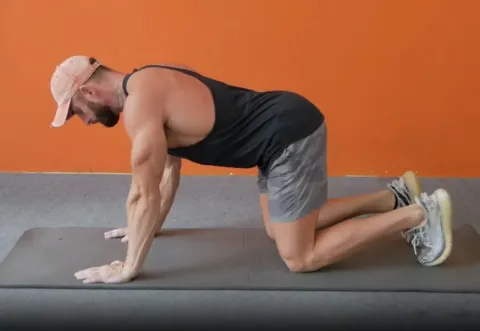
- Dynamic mobility: 10 leg swings each way, 10 hip circles, 10 arm circles, 8 cat-cows.
- Ramp-up sets on the first exercise: 1–2 light sets of 8 before your working sets.
Day 1
Full Body A
Squat + push + pull
-
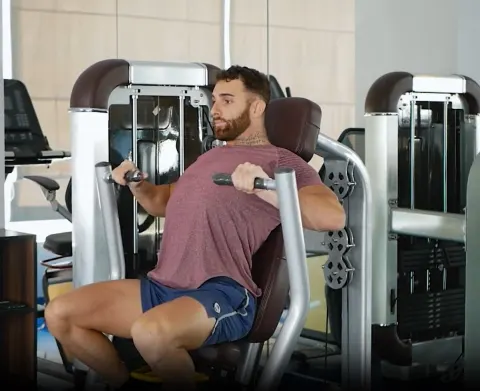
Quads, Glutes · Machine
- Sets
- 3
- Reps
- 6–10
- Rest
- 120s
- Effort
- RPE 8
-
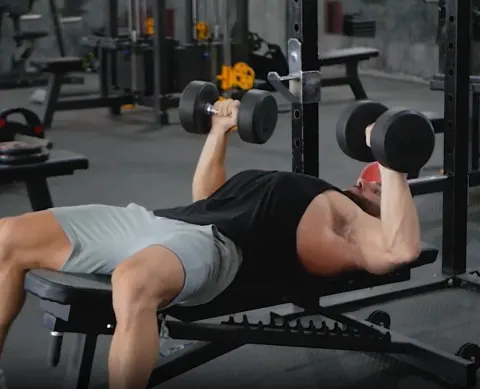
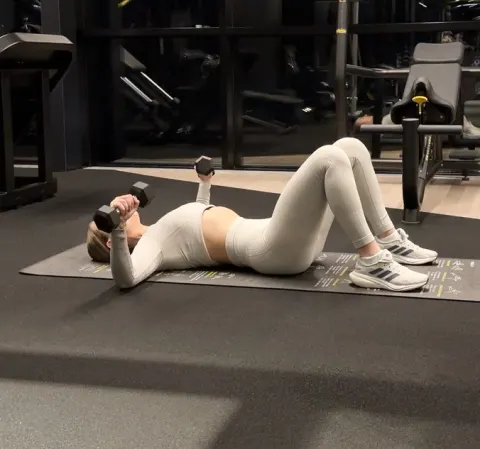
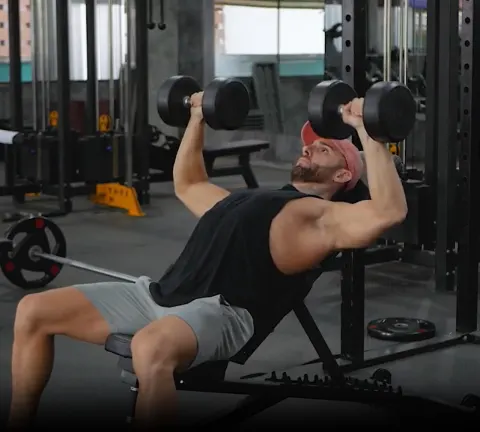
Chest, Front Delts · Dumbbell
- Sets
- 3
- Reps
- 6–10
- Rest
- 120s
- Effort
- RPE 8
swap: Machine Chest Press, Dumbbell Bench Press, Dumbbell Floor Press
-
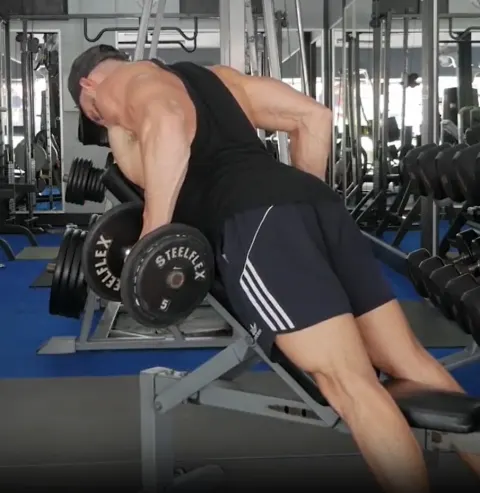
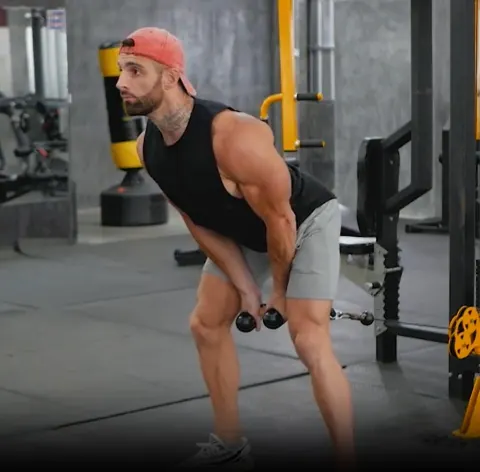
Upper Back, Lats · Dumbbell
- Sets
- 3
- Reps
- 6–10
- Rest
- 120s
- Effort
- RPE 8
swap: Dumbbell Row, Machine Row, Seated Cable Row
-
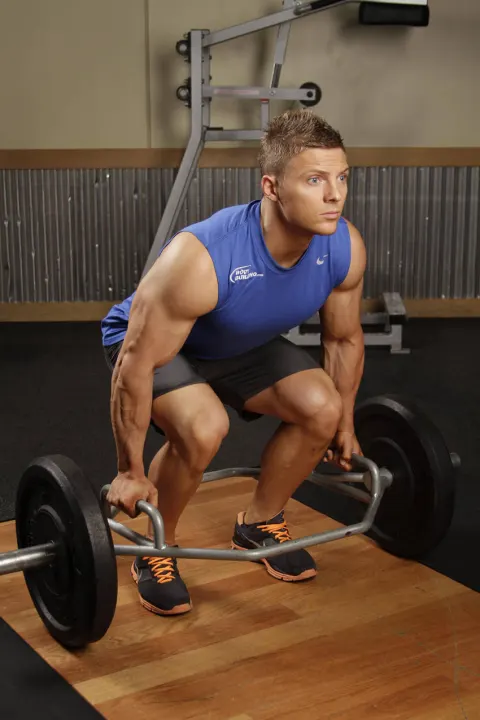
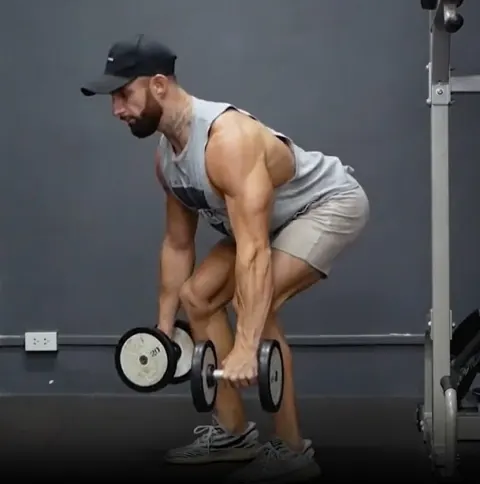
Glutes, Quads, Hamstrings · Barbell
- Sets
- 2
- Reps
- 8–12
- Rest
- 90s
- Effort
- RPE 8
swap: Kettlebell Deadlift, Goblet Squat, Banded Good Morning
-
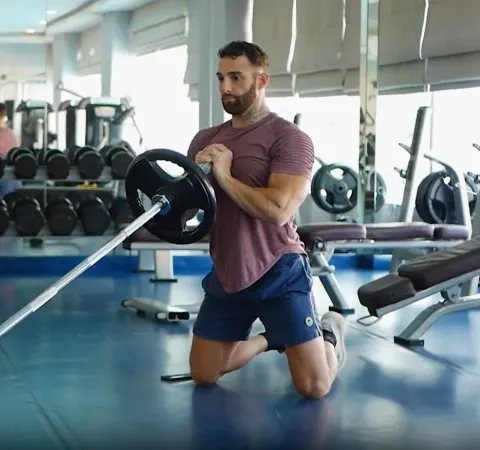
Front Delts, Chest · Barbell
- Sets
- 3
- Reps
- 10–15 / side
- Rest
- 60s
- Effort
- RPE 8–9
swap: Dumbbell Shoulder Press, Kettlebell Press, Incline Dumbbell Press
Day 2
Full Body B
Hinge + vertical push/pull
-
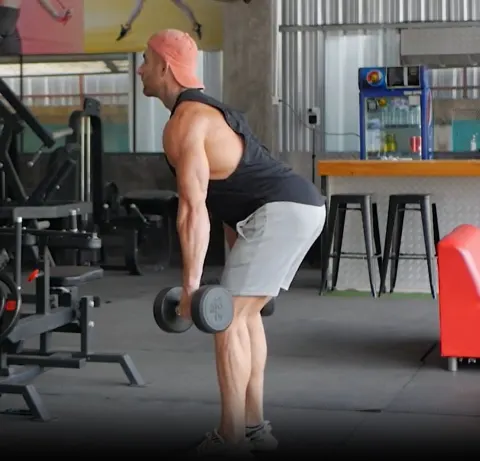
Hamstrings, Glutes · Dumbbell
- Sets
- 3
- Reps
- 6–10
- Rest
- 120s
- Effort
- RPE 8
swap: Dumbbell Romanian Deadlift, Kettlebell Deadlift, Trap Bar Deadlift
-
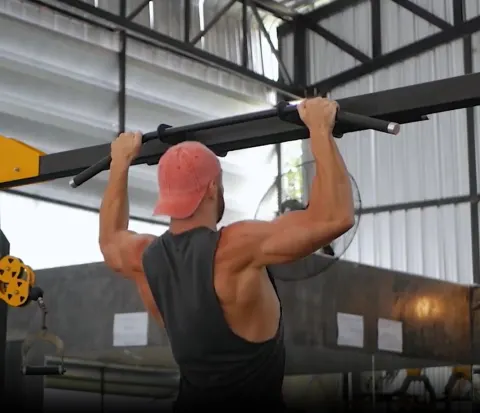
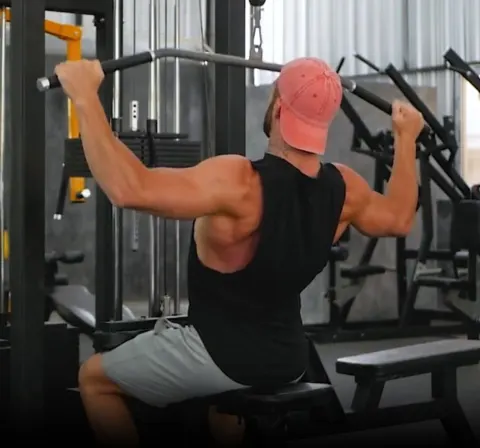
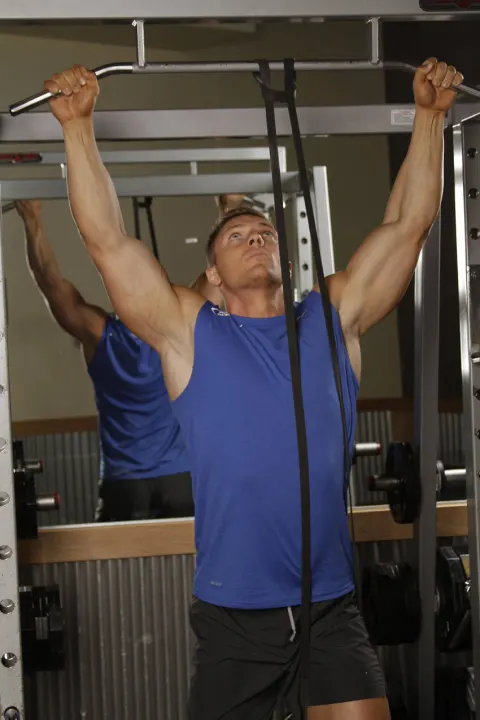
Lats, Upper Back · Pull-Up Bar
- Sets
- 3
- Reps
- 6–10
- Rest
- 120s
- Effort
- RPE 8
swap: Assisted Pull-Up, Lat Pulldown, Inverted Row
-
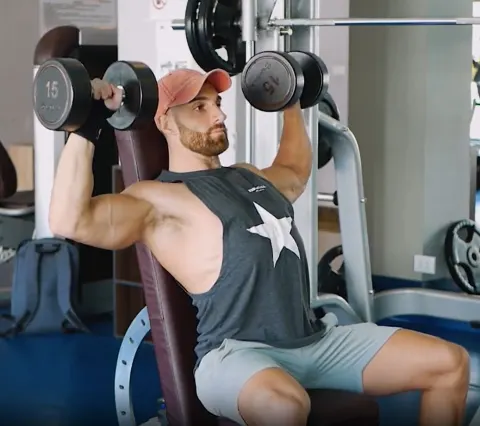
Front Delts, Side Delts · Dumbbell
- Sets
- 3
- Reps
- 6–10
- Rest
- 120s
- Effort
- RPE 8
swap: Seated Dumbbell Press, Pike Push-Up, Band Shoulder Press
-
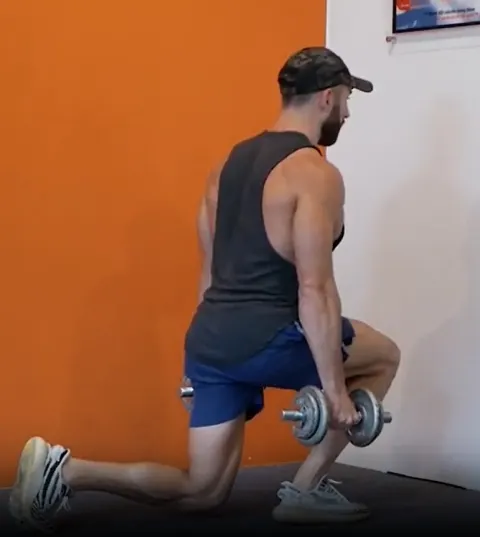
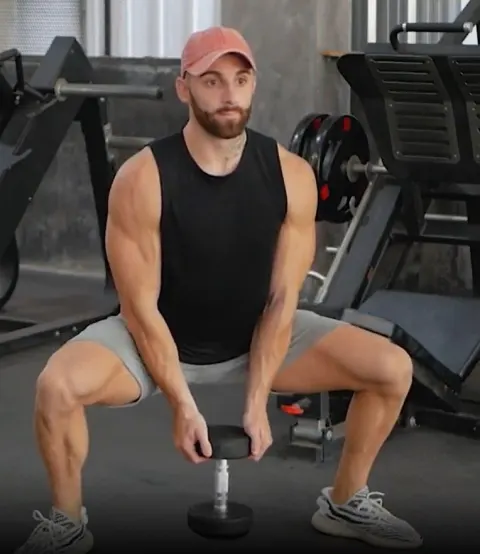
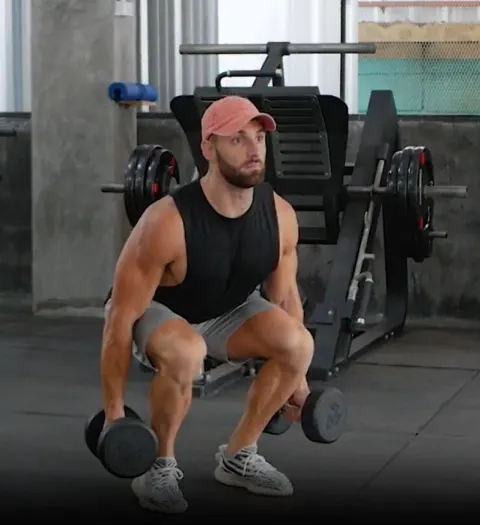
Quads, Glutes · Dumbbell
- Sets
- 2
- Reps
- 8–12 / side
- Rest
- 90s
- Effort
- RPE 8
swap: Reverse Lunge, Split Squat, Step-Up
-
Obliques, Core · Cable
- Sets
- 3
- Reps
- 12–15 / side
- Rest
- 60s
- Effort
- controlled
swap: Side Plank, Suitcase Carry, Russian Twist


Day 3
Full Body C
Single-leg + chest + back
-
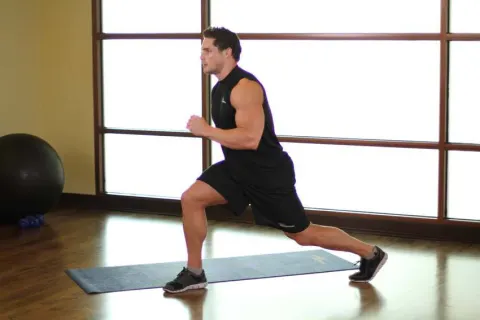
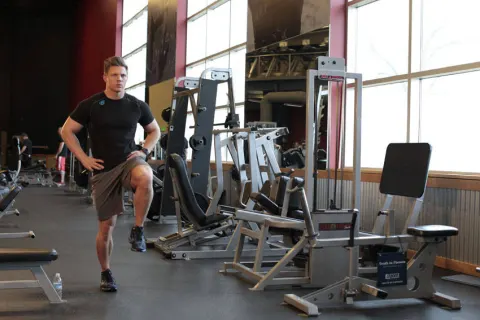
Quads, Glutes · Bodyweight
- Sets
- 3
- Reps
- 6–10 / side
- Rest
- 120s
- Effort
- RPE 8
swap: Reverse Lunge, Forward Lunge, Step-Up
-
Chest, Triceps · Dumbbell
- Sets
- 3
- Reps
- 6–10
- Rest
- 120s
- Effort
- RPE 8
-
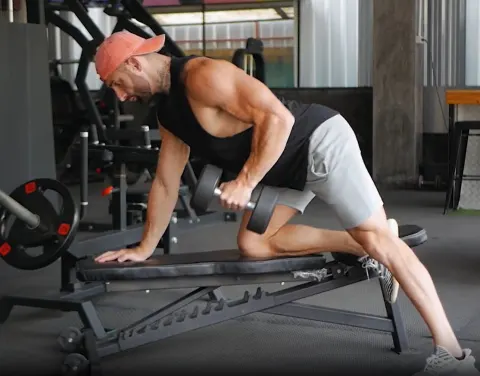
Lats, Upper Back · Dumbbell
- Sets
- 3
- Reps
- 6–10 / side
- Rest
- 120s
- Effort
- RPE 8
-
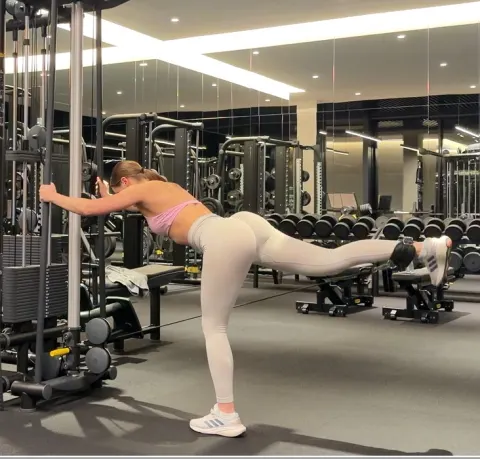
Glutes · Cable
- Sets
- 2
- Reps
- 8–12 / side
- Rest
- 90s
- Effort
- RPE 8
swap: Donkey Kick, Hip Thrust, Banded Lateral Walk
-
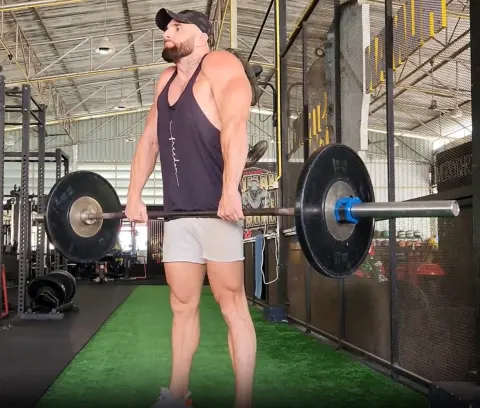
Traps · Barbell
- Sets
- 3
- Reps
- 10–15
- Rest
- 60s
- Effort
- RPE 8–9
swap: Dumbbell Shrug, Face Pull, Band Upright Row
-
Core, Lower Back · Bodyweight
- Sets
- 3
- Reps
- 30–60 sec
- Rest
- 60s
- Effort
- controlled
swap: Dead Bug, Plank, Donkey Kick
8-week progression: what to change each week
Same exercises for the whole block. Weeks move the reps, then the load; the last week is a deload.
| Week | Load | Reps | Effort | What to watch |
|---|---|---|---|---|
| 1 | Light: learn the movements | bottom of range (6–8) | RPE 6–7 | Stop every set 3 reps before failure; film one set per exercise to check form. |
| 2 | Same weight | +1 rep per set (8–9) | RPE 8 | Same exercises, same order; only the reps move. |
| 3 | Same weight | top of range (9–10) | RPE 8 | All sets at the top of the range → add load next week. Missed a set? Repeat the week. |
| 4 | +2.5 kg (5 lb) | bottom of range (6–8) | RPE 8 | New weight feels hard at low reps; that is the plan working. |
| 5 | Same weight | +1 rep per set (8–9) | RPE 8 | Keep rest periods the same. |
| 6 | Same weight | top of range (9–10) | RPE 8–9 | Second time at the top: take the last set of each main lift to 1 rep in reserve. |
| 7 | +2.5 kg (5 lb) | bottom of range (6–8) | RPE 8 | Bodyweight moves: slow the lowering phase to 3 s or move to the harder variation. |
| 8 | Deload: 60 % | bottom of range | RPE 5–6 | Half the sets, then regenerate a variation or change the split for the next block. |
How to progress
- First 2 weeks: focus on form with light weights, stop each set 3 reps before failure.
- Double progression: hit the top of the rep range on every set, then add weight (2.5–5 %) and start from the bottom of the range.
- Bodyweight moves: add reps, then slow the tempo (3 sec down), then move to a harder variation.
- Deload every 6–8 weeks: same exercises, half the sets.
Notes for this plan
- Sessions can move between days; keep at least one rest day between hard sessions for the same muscles.
A gym gives you two things home training cannot: loads that climb in 2.5 kg (5 lb) steps for years, and a different tool for every job. A good plan uses both. The heaviest compound lifts open the session, dumbbells and machines add volume, cables finish the small muscles, and the same lifts repeat every week so you can add weight.
How the example week is ordered
The example week above is a three-day full-body plan for building muscle: Monday, Wednesday and Friday, about 45 minutes each, with a day off after each session. Every day opens with three big compound lifts: a lower-body lift, a press and a pull for 3 sets of 6–10 reps with 2 minutes of rest. Lighter work follows for 8–15 reps with 60–90 seconds of rest.
That order is deliberate. The lifts that need the most skill and move the most weight go first, while your legs and attention are fresh. A cable crunch done as exercise six loses nothing.
Notice what is missing: the classic barbell lifts. The week is generated at beginner level, so its slots are filled with dumbbells, a leg press, a trap bar and supported rows, which load the same patterns with less technique to learn. At intermediate level the main slots become the back squat, bench press and barbell row, as the examples on the 4, 5 and 6-day pages show.
Days A, B and C are different on purpose. Pressing is on an incline one day, overhead the next and flat on the third, so each muscle is trained from several angles and at least twice a week.
Which tool for which slot
| Slot in the session | First choice | Why it fits | Examples |
|---|---|---|---|
| Main lifts (first 2–3) | Barbell, once you have the technique | Heaviest loading, smallest jumps | Squat, bench press, row |
| Secondary compounds | Dumbbells | Each side works alone, longer range | Incline press, Romanian deadlift, lunge |
| Accessory compounds | Machines | Stable, so you can push hard late on | Leg press, chest press, machine row |
| Isolation work | Cables | Tension stays on through the whole rep | Lateral raise, pushdown, face pull |
| Core | Cable or floor | Easy to load in small steps | Pallof press, cable crunch, plank |
Machines are not the easy option. A leg press lets you take your quads close to failure without balance or your lower back giving out first, which is exactly what you want after squats. Free weights build skill and coordination; machines let you add hard sets cheaply. A plan that uses only one of the two leaves results on the gym floor.
Choose your days and the split follows
The number of days you can train decides the split, not the other way round.
| Days | Split | Typical week | Suits |
|---|---|---|---|
| 2 | Full body A/B | Mon, Thu | Tight schedules, maintenance |
| 3 | Full body A/B/C, or push/pull/legs for intermediates | Mon, Wed, Fri | Most people, most goals |
| 4 | Upper/lower | Mon, Tue, Thu, Fri | 6+ months of lifting, more volume |
| 5 | Push/pull/legs plus upper/lower | Mon, Tue, Wed, Fri, Sat | Intermediates who recover well |
| 6 | Push/pull/legs twice | Mon–Sat | Experienced lifters who like daily sessions |
Three days is the default for a reason: full recovery between sessions and enough weekly sets to grow. With six months of steady lifting behind you and four free days, the 4-day upper/lower split gives each muscle more room per session. Five and six-day plans drop the optional accessories so weekly volume stays sensible, and no beginner versions of them exist. Our guide on how many days a week to work out goes through the trade-offs.
One gym, four goals
The exercises barely change between goals. The numbers do.
- Muscle gain: main lifts for 6–10 reps, 2 minutes of rest, accessories for 10–15 reps. The 3-day gym plan for muscle gain is the example week in full.
- Strength: main lifts for 4–6 reps, 2.5 minutes of rest, 1–2 reps kept in reserve. See the 4-day gym plan for strength.
- Weight loss: 8–12 reps on main lifts, 45–75 seconds of rest and a finisher of 6 rounds, 30 seconds on and 30 seconds off. The 3-day gym plan for weight loss is built that way.
- General fitness: 8–10 reps at RPE 7, 45–90 seconds of rest, nothing taken to failure.
Food sets the direction: a surplus of about 250–300 kcal to build, 300–500 kcal under maintenance to lose fat, and 1.6–2.2 g of protein per kg of body weight in both cases.
When the rack is taken
Early evening is peak time in most gyms. In a beginner week the bottlenecks are the leg press, the adjustable benches and the cable stations; once barbell lifts enter your plan, it is the squat racks. You have three options, in this order:
- Reorder. Do your second or third exercise now and come back. Swapping the order of two main lifts costs almost nothing.
- Swap within the pattern. Squat becomes hack squat or leg press. The barbell bench press becomes a dumbbell bench press. Barbell row becomes seated cable row. Pull-up becomes lat pulldown.
- Ask to work in. Alternating sets with someone who rests 2–3 minutes is normal gym etiquette.
Every exercise in a plan lists alternatives with the same movement pattern, and the exercise substitutes tool covers the rest. Log the swap under its own name. A dumbbell press is progressed against last week’s dumbbell press, not against your barbell numbers.
Adding weight: a bench press example
Gym plans run on double progression. Say you have reached the stage where the barbell bench press sits in a main slot for 6–10 reps, and you start at 50 kg:
- Week 1: 50 kg for 6, 6, 6
- Week 2: 50 kg for 8, 7, 7
- Week 3: 50 kg for 10, 10, 10
- Week 4: 52.5 kg for 6, 6, 6
The bar gets heavier only when every set reaches 10, and then by the smallest step in the building: a 1.25 kg plate on each side. The barbell plate calculator shows what to load if arithmetic between sets is not your strength. Dumbbells, machines and cables follow the same rule: the next pair up or one more pin.
Stop main-lift sets with 1–2 reps in reserve. Take the last set of machine and cable work closer to the limit, since a failed leg extension has no consequences. Every 6–8 weeks, run a lighter week at about 60 % of your loads with half the sets.
Mistakes that waste a membership
- Touring the machines. Ten exercises picked by which seat is free is exercise, not a plan. Run the same 5–6 lifts per day for 8 weeks.
- Skipping ramp-up sets. Two lighter sets of the first lift (for a 100 kg leg press: 40 kg, then 70 kg) take three minutes and improve the first working set.
- Training only what the mirror shows. Squats, hinges and rows should take at least half of your weekly sets.
- Timing rest by feel. Two minutes on a phone is usually four. Use a timer.
- Testing a max every week. Strength is built with sets of 4–10 and shown, occasionally, in a single.
Where to go next
If this is your first month in a gym, start with the gym workout plan for beginners, which covers starting weights and day one. If three days feel comfortable and you have progressed for six months, look at the 4-day workout plan. For anything in between, the plan generator builds a gym plan from your days, goal and level, ready to download as a PDF or open in the Fitbe app.
Gym Workout Plan: all 84 plans

- 2-Day Gym Workout Plan for Weight Loss (Women)
- 2-Day Gym Workout Plan for Weight Loss (Men)
- 2-Day Gym Workout Plan for Weight Loss (Over 50)
- 2-Day Gym Workout Plan for Muscle Gain
- 2-Day Gym Workout Plan for Muscle Gain (Beginners)
- 2-Day Gym Workout Plan for Muscle Gain (Women)
- 2-Day Gym Workout Plan for Muscle Gain (Men)
- 2-Day Gym Workout Plan for Muscle Gain (Over 50)
- 2-Day Gym Workout Plan for Strength
- 2-Day Gym Workout Plan for Strength (Beginners)
- 2-Day Gym Workout Plan for Strength (Women)
- 2-Day Gym Workout Plan for Strength (Men)
- 2-Day Gym Workout Plan for Strength (Over 50)
- 2-Day Gym Workout Plan for General Fitness
- 2-Day Gym Workout Plan for General Fitness (Beginners)
- 2-Day Gym Workout Plan for General Fitness (Women)
- 2-Day Gym Workout Plan for General Fitness (Men)
- 2-Day Gym Workout Plan for General Fitness (Over 50)
- 3-Day Gym Workout Plan for Weight Loss (Women)
- 3-Day Gym Workout Plan for Weight Loss (Men)
- 3-Day Gym Workout Plan for Weight Loss (Over 50)
- 3-Day Gym Workout Plan for Muscle Gain
- 3-Day Gym Workout Plan for Muscle Gain (Beginners)
- 3-Day Gym Workout Plan for Muscle Gain (Women)
- 3-Day Gym Workout Plan for Muscle Gain (Men)
- 3-Day Gym Workout Plan for Muscle Gain (Over 50)
- 3-Day Gym Workout Plan for Strength
- 3-Day Gym Workout Plan for Strength (Beginners)
- 3-Day Gym Workout Plan for Strength (Women)
- 3-Day Gym Workout Plan for Strength (Men)
- 3-Day Gym Workout Plan for Strength (Over 50)
- 3-Day Gym Workout Plan for General Fitness
- 3-Day Gym Workout Plan for General Fitness (Beginners)
- 3-Day Gym Workout Plan for General Fitness (Women)
- 3-Day Gym Workout Plan for General Fitness (Men)
- 3-Day Gym Workout Plan for General Fitness (Over 50)
- 4-Day Gym Workout Plan for Weight Loss (Women)
- 4-Day Gym Workout Plan for Weight Loss (Men)
- 4-Day Gym Workout Plan for Weight Loss (Over 50)
- 4-Day Gym Workout Plan for Muscle Gain
- 4-Day Gym Workout Plan for Muscle Gain (Beginners)
- 4-Day Gym Workout Plan for Muscle Gain (Women)
- 4-Day Gym Workout Plan for Muscle Gain (Men)
- 4-Day Gym Workout Plan for Muscle Gain (Over 50)
- 4-Day Gym Workout Plan for Strength
- 4-Day Gym Workout Plan for Strength (Beginners)
- 4-Day Gym Workout Plan for Strength (Women)
- 4-Day Gym Workout Plan for Strength (Men)
- 4-Day Gym Workout Plan for Strength (Over 50)
- 4-Day Gym Workout Plan for General Fitness
- 4-Day Gym Workout Plan for General Fitness (Beginners)
- 4-Day Gym Workout Plan for General Fitness (Women)
- 4-Day Gym Workout Plan for General Fitness (Men)
- 4-Day Gym Workout Plan for General Fitness (Over 50)
- 5-Day Gym Workout Plan for Weight Loss (Men)
- 5-Day Gym Workout Plan for Muscle Gain
- 5-Day Gym Workout Plan for Muscle Gain (Women)
- 5-Day Gym Workout Plan for Muscle Gain (Men)
- 5-Day Gym Workout Plan for Strength
- 5-Day Gym Workout Plan for Strength (Women)
- 5-Day Gym Workout Plan for Strength (Men)
- 5-Day Gym Workout Plan for General Fitness
- 5-Day Gym Workout Plan for General Fitness (Women)
- 5-Day Gym Workout Plan for General Fitness (Men)
- 6-Day Gym Workout Plan for Weight Loss (Women)
- 6-Day Gym Workout Plan for Weight Loss (Men)
- 6-Day Gym Workout Plan for Muscle Gain
- 6-Day Gym Workout Plan for Muscle Gain (Women)
- 6-Day Gym Workout Plan for Muscle Gain (Men)
- 6-Day Gym Workout Plan for Strength
- 6-Day Gym Workout Plan for Strength (Women)
- 6-Day Gym Workout Plan for Strength (Men)
- 6-Day Gym Workout Plan for General Fitness
- 6-Day Gym Workout Plan for General Fitness (Women)
- 6-Day Gym Workout Plan for General Fitness (Men)
Related programs
Frequently asked questions
What is a good gym workout plan?
One that trains every major muscle about twice a week with a squat, a hinge, a push and a pull, and repeats the same lifts long enough to add weight. For most people that means 3 full-body days or a 4-day upper/lower split, 5–6 exercises per session and about 45 minutes.
How many days a week should I go to the gym?
Three days covers most goals and is the easiest schedule to keep. Two days maintain and slowly build, four days suit lifters with 6 or more months behind them, and five or six days only pay off when sleep and food are in order. Months of attendance matter more than the number.
Should I use free weights or machines at the gym?
Use both, in that order. Barbells and dumbbells go first while you are fresh, because they need balance and allow the heaviest loading. Machines and cables come later in the session, when stability matters less and you want to push a muscle to within 1–2 reps of failure safely.
How long should a gym workout last?
About 45 minutes including the warm-up is enough for six exercises, and that is what the three-day plans on this site come to. Sessions that run past 75 minutes usually mean long phone breaks or too many exercises, not better training. On a 5 or 6-day plan each visit gets shorter because accessories are trimmed.
What should I do if the squat rack or bench is taken?
Do your second exercise first and come back, or swap to a lift with the same movement pattern: leg press or hack squat for squats, dumbbell bench press for the barbell bench, seated cable row for barbell rows. If the wait is over 5 minutes, swap rather than stand around.