Workout Plan for Women: Same Rules, Stronger Glutes and Legs
This workout plan for women uses the same training rules as any good program, with extra hinge and glute work. Pick your goal, equipment and days below.
Example week
3-Day Dumbbell Workout Plan for General Fitness (Women)
A complete week you can start today: exercises, sets, reps and rest for every session, with swaps for each exercise. Open this plan on its own page (PDF) →
Split
Full Body
Sessions / week
3
Avg. session
29 min
Schedule
Mon · Wed · Fri
Warm-up (every session, ~6 min)
- 3–5 min easy cardio: brisk walk, bike, jump rope or marching in place.
- Dynamic mobility: 10 leg swings each way, 10 hip circles, 10 arm circles, 8 cat-cows.
- Ramp-up sets on the first exercise: 1–2 light sets of 8 before your working sets.
Day 1
Full Body A
Squat + push + pull
-
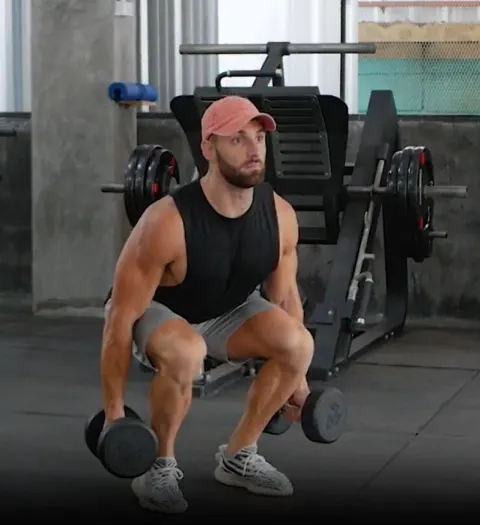
Quads, Glutes · Dumbbell
- Sets
- 2
- Reps
- 8–10
- Rest
- 90s
- Effort
- RPE 7
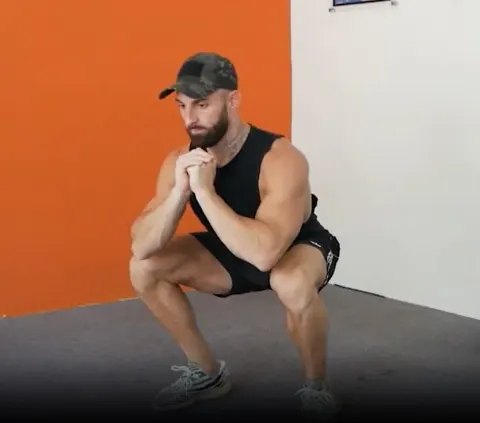
swap: Goblet Squat, Bodyweight Squat, Sumo Squat
-
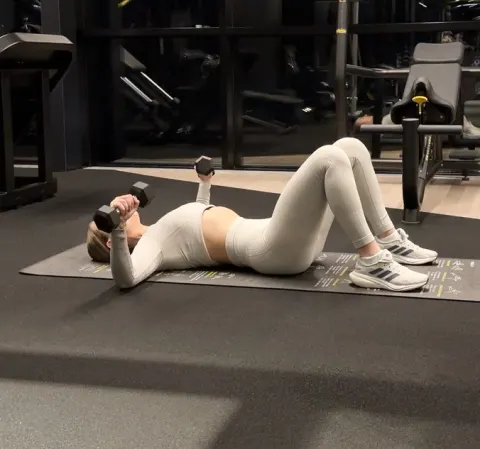
Chest, Triceps · Dumbbell
- Sets
- 2
- Reps
- 8–10
- Rest
- 90s
- Effort
- RPE 7
-
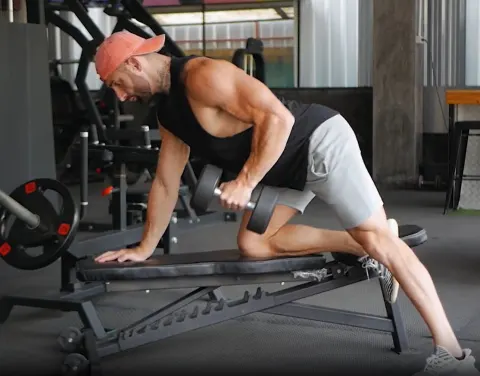
Lats, Upper Back · Dumbbell
- Sets
- 2
- Reps
- 8–10 / side
- Rest
- 90s
- Effort
- RPE 7
-
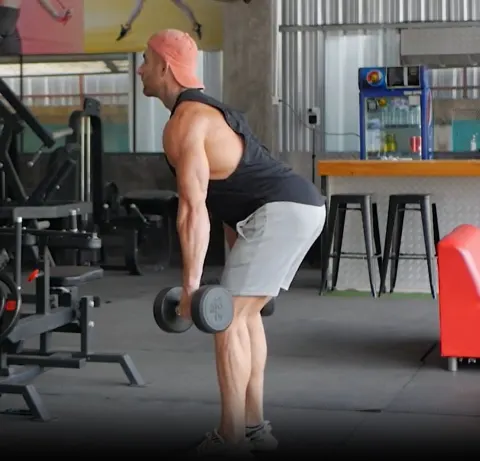
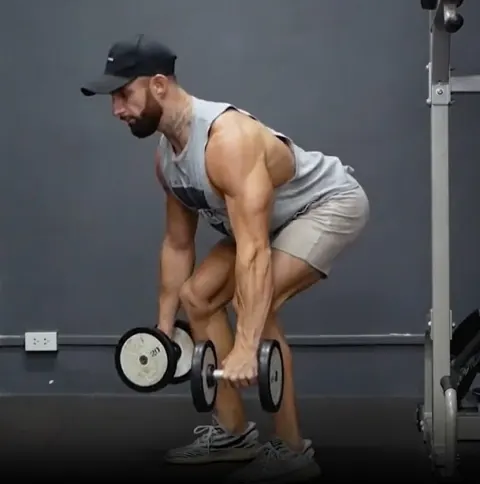
Hamstrings, Glutes · Dumbbell
- Sets
- 2
- Reps
- 8–12
- Rest
- 75s
- Effort
- RPE 7
swap: Bodyweight Hip Hinge, Dumbbell Deadlift, Bodyweight Good Morning
-
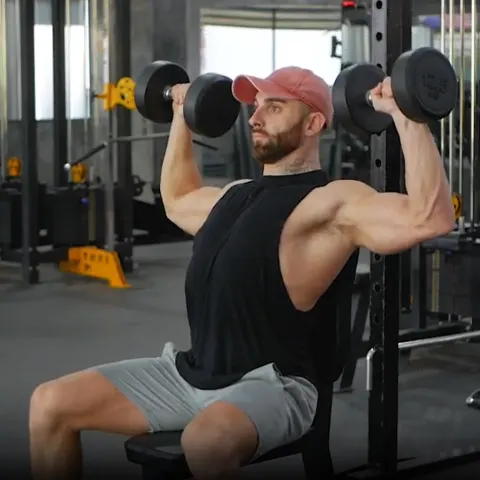
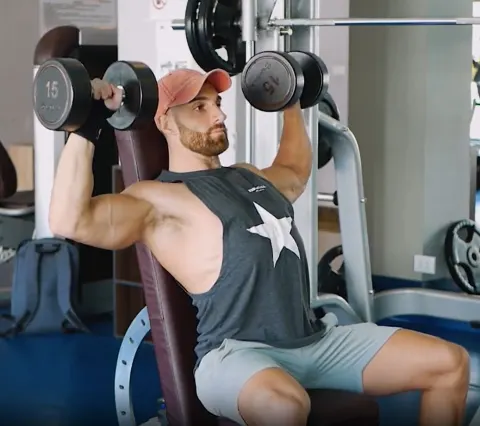
Front Delts, Side Delts · Dumbbell
- Sets
- 2
- Reps
- 12–15
- Rest
- 60s
- Effort
- RPE 7
-
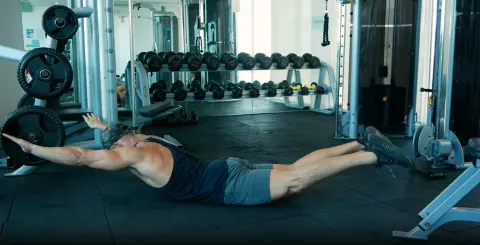
Lower Back, Glutes · Bodyweight
- Sets
- 2
- Reps
- 12–15
- Rest
- 45s
- Effort
- controlled
swap: Bird Dog, Glute Bridge, Plank
Day 2
Full Body B
Hinge + vertical push/pull
-
Hamstrings, Glutes · Dumbbell
- Sets
- 2
- Reps
- 8–10
- Rest
- 90s
- Effort
- RPE 7
-
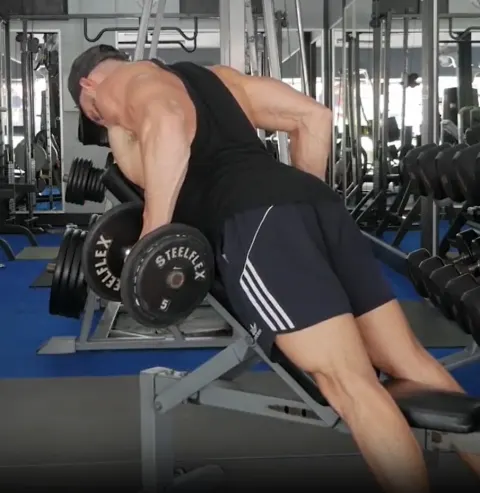
Upper Back, Lats · Dumbbell
- Sets
- 2
- Reps
- 8–10
- Rest
- 90s
- Effort
- RPE 7
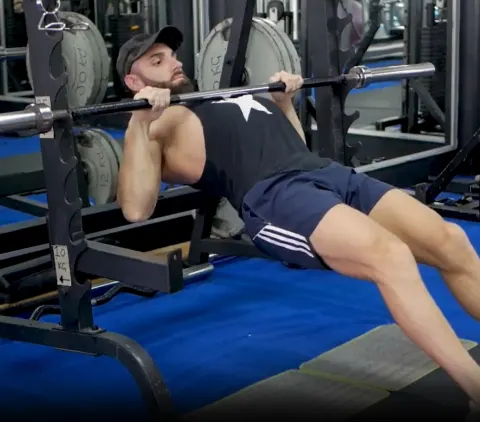
swap: Dumbbell Row, Inverted Row, Rear Delt Fly
-
Front Delts, Side Delts · Dumbbell
- Sets
- 2
- Reps
- 8–10
- Rest
- 90s
- Effort
- RPE 7
-
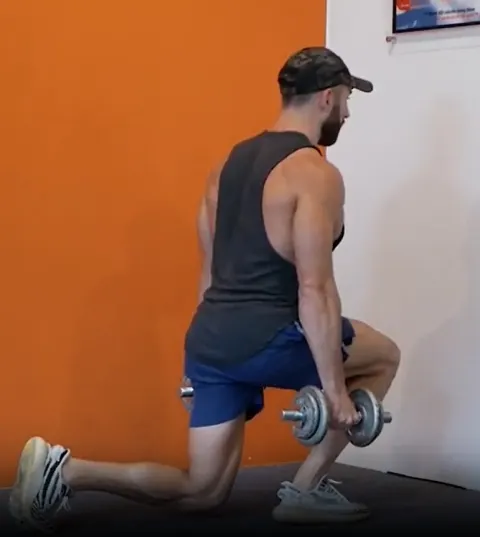
Quads, Glutes · Dumbbell
- Sets
- 2
- Reps
- 8–12 / side
- Rest
- 75s
- Effort
- RPE 7
swap: Reverse Lunge, Split Squat, Step-Up
-
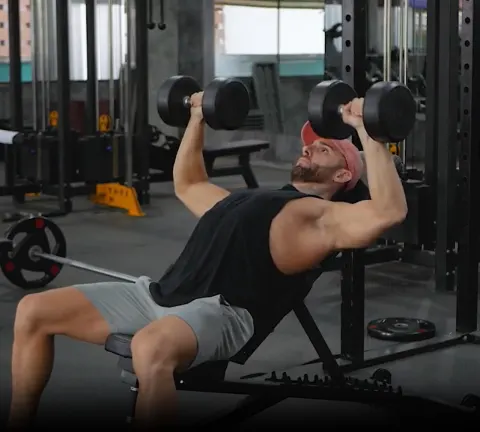
Chest, Front Delts · Dumbbell
- Sets
- 2
- Reps
- 12–15
- Rest
- 60s
- Effort
- RPE 7
-
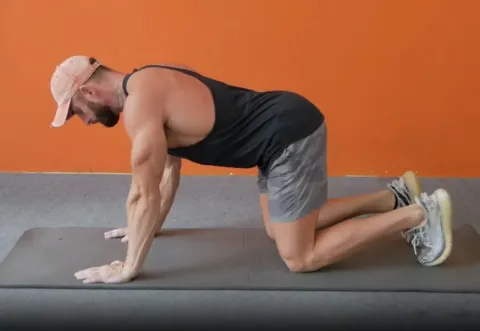
Core, Lower Back · Bodyweight
- Sets
- 2
- Reps
- 30–60 sec
- Rest
- 45s
- Effort
- controlled
swap: Dead Bug, Plank, Donkey Kick
Day 3
Full Body C
Single-leg + chest + back
-
Quads, Glutes · Bodyweight
- Sets
- 2
- Reps
- 8–10 / side
- Rest
- 90s
- Effort
- RPE 7
swap: Reverse Lunge, Walking Lunge, Split Squat
-
Chest, Triceps · Dumbbell
- Sets
- 2
- Reps
- 8–10
- Rest
- 90s
- Effort
- RPE 7
-
Upper Back, Lats · Bodyweight
- Sets
- 2
- Reps
- 8–10
- Rest
- 90s
- Effort
- RPE 7
-
Traps · Dumbbell
- Sets
- 2
- Reps
- 12–15
- Rest
- 60s
- Effort
- RPE 7
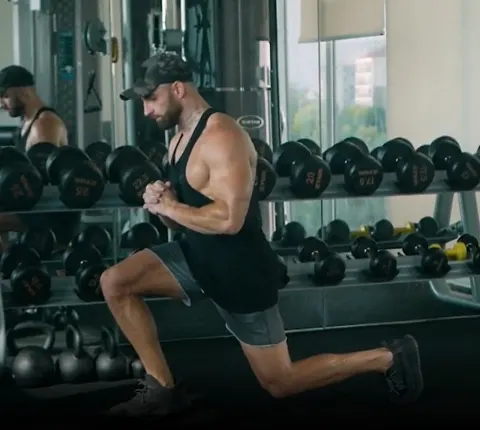
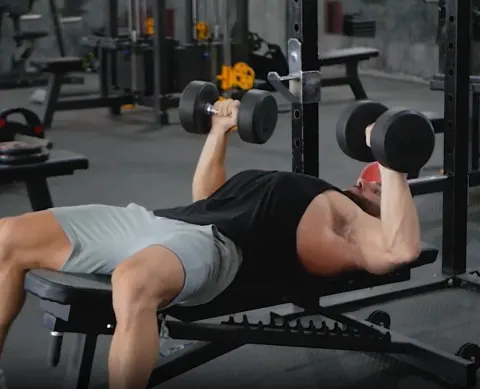
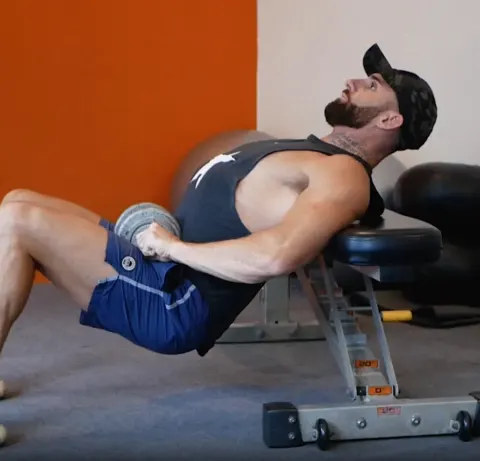
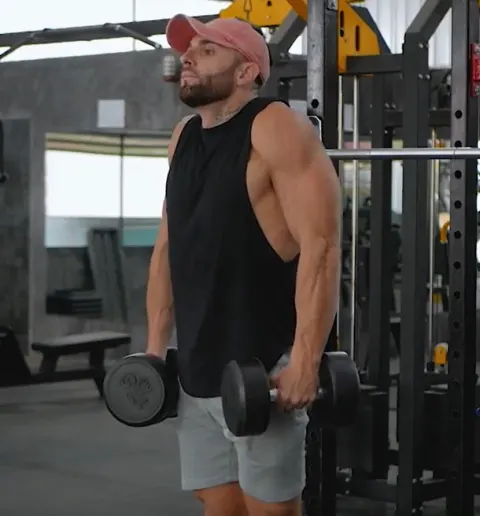
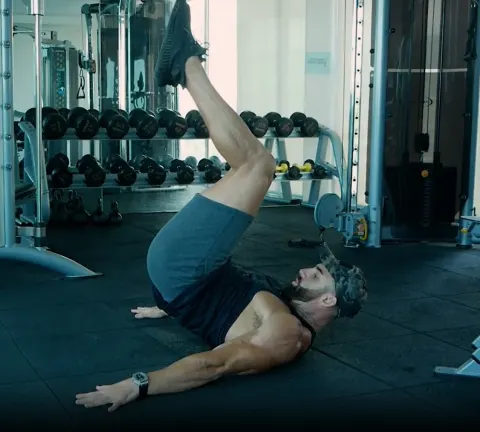
8-week progression: what to change each week
Same exercises for the whole block. Weeks move the reps, then the load; the last week is a deload.
| Week | Load | Reps | Effort | What to watch |
|---|---|---|---|---|
| 1 | Light: learn the movements | bottom of range (8) | RPE 6–7 | Stop every set 3 reps before failure; film one set per exercise to check form. |
| 2 | Same weight | +1 rep per set (9) | RPE 8 | Same exercises, same order; only the reps move. |
| 3 | Same weight | top of range (10) | RPE 8 | All sets at the top of the range → add load next week. Missed a set? Repeat the week. |
| 4 | next dumbbell / harder variation | bottom of range (8) | RPE 8 | New weight feels hard at low reps; that is the plan working. |
| 5 | Same weight | +1 rep per set (9) | RPE 8 | Keep rest periods the same. |
| 6 | Same weight | top of range (10) | RPE 8–9 | Second time at the top: take the last set of each main lift to 1 rep in reserve. |
| 7 | next dumbbell / harder variation | bottom of range (8) | RPE 8 | Bodyweight moves: slow the lowering phase to 3 s or move to the harder variation. |
| 8 | Deload: 60 % | bottom of range | RPE 5–6 | Half the sets, then regenerate a variation or change the split for the next block. |
How to progress
- First 2 weeks: focus on form with light weights, stop each set 3 reps before failure.
- Double progression: hit the top of the rep range on every set, then add weight (2.5–5 %) and start from the bottom of the range.
- Bodyweight moves: add reps, then slow the tempo (3 sec down), then move to a harder variation.
- Deload every 6–8 weeks: same exercises, half the sets.
Notes for this plan
- Glute emphasis: hinge and glute work is prioritised; squat deep and drive through the heels.
- Home setup: if a weight gets too light, slow the lowering phase to 3–4 seconds or add a pause at the hardest point.
- Sessions can move between days; keep at least one rest day between hard sessions for the same muscles.
A workout plan for women follows the rules every sound program follows: big compound lifts, a few hard sets, a fixed rep range and slightly more weight over time. The plans here change one detail. Hinge and glute work moves to the front of the queue, because strong hips are the most common request and they carry over to running, climbing stairs and carrying everyday loads.
What is the same and what is different
Here is what the site’s generator actually changes.
| Topic | Different for women? | What the plans use |
|---|---|---|
| Rep ranges | No | 4–6 for strength, 6–12 for muscle, 8–15 for fat loss |
| Effort per set | No | RPE 7–9, which means 1–3 reps left in the tank |
| Weekly frequency | No | Every muscle trained about twice a week |
| Progression | No | More reps first, then more weight |
| Exercise selection | Slightly | Hinges and glute movements get the priority slots |
Two myths deserve a direct answer.
“Lifting heavy makes women bulky.” Muscle arrives slowly. A trained lifter eating in a small surplus gains roughly 0.25–0.5 kg a month, and that takes deliberate effort. Nobody gets there by accident with three half-hour sessions.
“Light weights and high reps tone.” What people call toned is muscle you can see at a moderate body-fat level. Muscle is built by sets that end 1–3 reps short of failure. Body fat comes off through eating slightly less than you burn. No exercise removes fat from one chosen area, and 30 easy reps with a 2 kg dumbbell does neither job.
How the example week is put together
The example week above is a general fitness plan: three full-body sessions on Monday, Wednesday and Friday with a pair of dumbbells. Each day leads with a different lower-body pattern, a squat on one, a hinge on the next and a single-leg movement on the third. A push and a pull follow, then a second lower-body movement, a lighter upper-body accessory and core work. That rotation loads glutes and hamstrings from three angles without repeating a session.
The numbers are moderate on purpose. Every exercise gets 2 sets, main lifts sit at 8–10 reps at RPE 7, rests run 45–90 seconds, and a session takes about 30 minutes with the warm-up. At beginner level that is enough to get stronger every week and still have energy for the rest of the day.
Two patterns deserve the most attention. For the squat, the goblet squat is a good swap if dumbbells at your sides feel awkward: it teaches depth and an upright torso. The dumbbell Romanian deadlift teaches the hip hinge, the pattern behind almost every glute and hamstring exercise. Push the hips back, keep the dumbbells close to the legs and stop when the hamstrings are fully stretched, not when the weights reach the floor.
Choosing your goal, equipment and days
The example is one of 76 ready plans for women. Three questions narrow them down.
Goal.
- General fitness: the example itself, the 3-day dumbbell plan for general fitness.
- Muscle: 6–10 reps on main lifts with 2-minute rests, as in the 3-day gym plan for muscle gain.
- Fat loss: 8–15 reps, shorter rests and a short finisher. The weight loss workout plan for women covers the food side too.
- Strength: 4–6 heavy reps with 2.5-minute rests. These plans exist for gym and dumbbells only, because bodyweight, bands and a single kettlebell cannot be loaded heavily enough.
Equipment. A gym gives the widest choice of loads, and the gym workout plan for women explains how to use it. Dumbbells, a kettlebell, bands or nothing at all work in a living room; see the home workout plan for women.
Days. Two days is the minimum that still builds strength, for example the 2-day no-equipment plan. Three is the default. Four days switch to upper/lower, five combine push/pull/legs with upper/lower, and six run push/pull/legs twice. If you are unsure, read how many days a week to work out and choose the number you can keep for three months.
Strength benchmarks worth aiming for
Benchmarks keep goals honest. These are the site’s standards for women, expressed as a one-rep max relative to body weight, with the figures for a 65 kg lifter rounded to the nearest 2.5 kg.
| Barbell lift | Novice (about 6 months) | Intermediate (about 2 years) | At 65 kg body weight |
|---|---|---|---|
| Squat | 0.75 × | 1.25 × | 50 kg, then 82.5 kg |
| Deadlift | 1.0 × | 1.25 × | 65 kg, then 82.5 kg |
| Bench press | 0.5 × | 0.75 × | 32.5 kg, then 50 kg |
| Overhead press | 0.35 × | 0.5 × | 22.5 kg, then 32.5 kg |
No true maximum test is needed: a hard set of five shows roughly where you stand, and the strength standards tool has the table for every body weight. Training with dumbbells for now? Treat the benchmarks as a reason to keep adding load, not as a test you are failing.
Training around your menstrual cycle
There is no proven “cycle-synced” program, and research on timing hard training to cycle phases is mixed. The practical rule is simpler: train by feel and keep the week flexible.
- If a heavy day lands on a day with cramps or poor sleep, swap it with a later session. The order of days matters less than doing all three.
- On a low-energy day keep the exercises, drop one set or stop each set one rep earlier.
- On a day you feel strong, take the extra rep and write it down. After two or three months your log will show whether your own pattern is predictable.
- Body weight can rise by a kilo or more from water in the days before a period. That is not fat and it passes.
If you are pregnant, recently gave birth, or your periods have stopped while you train hard and eat little, talk to a doctor before you carry on.
How to progress from week to week
Use progressive overload in its simplest form. Say a main lift calls for 2 sets of 8–10 reps and you start the dumbbell deadlift with 10 kg in each hand for 8 and 8. Add a rep per set each week. When both sets reach 10, pick up the 12 kg pair and go back to 8.
The plan shows this as an 8-week wave: three weeks of building reps, a load increase in week 4, the same pattern through week 7, then a deload in week 8 at about 60 % of the load and half the sets. If you are new to lifting, keep the first two weeks light, about 3 reps short of failure, and spend them on form.
Five mistakes that hold women back
- Never changing the dumbbells. If every set ends with five reps to spare, the weight is a warm-up.
- Training only legs and glutes. Rows and presses fill half of each session for a reason: a strong back and shoulders make every carry, push-up and pull-up easier.
- Stacking classes on top. Three lifting days plus daily high-intensity classes leave no room to recover. Walk on the other days instead.
- Eating too little protein. Aim for 1.6–2.2 g per kg of body weight a day, whatever the goal.
- Judging a session by soreness. Soreness fades after the first weeks. A log that keeps going up is the real measure.
When to move to another plan
Stay with one plan for 8–12 weeks, because visible changes take about that long. Then choose a direction: a fourth day, a barbell, or a sharper goal such as muscle or fat loss. If none of the ready plans fits your week, the plan generator builds one from your goal, days and equipment.
Workout Plan for Women: all 76 plans
- 2-Day Bodyweight Workout Plan for General Fitness (Women)
- 2-Day Dumbbell Workout Plan for Weight Loss (Women)
- 2-Day Dumbbell Workout Plan for Muscle Gain (Women)
- 2-Day Dumbbell Workout Plan for Strength (Women)
- 2-Day Dumbbell Workout Plan for General Fitness (Women)
- 2-Day Gym Workout Plan for Weight Loss (Women)
- 2-Day Gym Workout Plan for Muscle Gain (Women)
- 2-Day Gym Workout Plan for Strength (Women)
- 2-Day Gym Workout Plan for General Fitness (Women)
- 2-Day Kettlebell Workout Plan for Weight Loss (Women)
- 2-Day Kettlebell Workout Plan for Muscle Gain (Women)
- 2-Day Kettlebell Workout Plan for General Fitness (Women)
- 2-Day Resistance Band Workout Plan for Weight Loss (Women)
- 2-Day Resistance Band Workout Plan for Muscle Gain (Women)
- 2-Day Resistance Band Workout Plan for General Fitness (Women)
- 3-Day Bodyweight Workout Plan for General Fitness (Women)
- 3-Day Dumbbell Workout Plan for Weight Loss (Women)
- 3-Day Dumbbell Workout Plan for Muscle Gain (Women)
- 3-Day Dumbbell Workout Plan for Strength (Women)
- 3-Day Dumbbell Workout Plan for General Fitness (Women)
- 3-Day Gym Workout Plan for Weight Loss (Women)
- 3-Day Gym Workout Plan for Muscle Gain (Women)
- 3-Day Gym Workout Plan for Strength (Women)
- 3-Day Gym Workout Plan for General Fitness (Women)
- 3-Day Kettlebell Workout Plan for Weight Loss (Women)
- 3-Day Kettlebell Workout Plan for Muscle Gain (Women)
- 3-Day Kettlebell Workout Plan for General Fitness (Women)
- 3-Day Resistance Band Workout Plan for Weight Loss (Women)
- 3-Day Resistance Band Workout Plan for Muscle Gain (Women)
- 3-Day Resistance Band Workout Plan for General Fitness (Women)
- 4-Day Bodyweight Workout Plan for General Fitness (Women)
- 4-Day Dumbbell Workout Plan for Weight Loss (Women)
- 4-Day Dumbbell Workout Plan for Muscle Gain (Women)
- 4-Day Dumbbell Workout Plan for Strength (Women)
- 4-Day Dumbbell Workout Plan for General Fitness (Women)
- 4-Day Gym Workout Plan for Weight Loss (Women)
- 4-Day Gym Workout Plan for Muscle Gain (Women)
- 4-Day Gym Workout Plan for Strength (Women)
- 4-Day Gym Workout Plan for General Fitness (Women)
- 4-Day Kettlebell Workout Plan for Weight Loss (Women)
- 4-Day Kettlebell Workout Plan for Muscle Gain (Women)
- 4-Day Kettlebell Workout Plan for General Fitness (Women)
- 4-Day Resistance Band Workout Plan for Weight Loss (Women)
- 4-Day Resistance Band Workout Plan for Muscle Gain (Women)
- 4-Day Resistance Band Workout Plan for General Fitness (Women)
- 5-Day Bodyweight Workout Plan for General Fitness (Women)
- 5-Day Dumbbell Workout Plan for Weight Loss (Women)
- 5-Day Dumbbell Workout Plan for Muscle Gain (Women)
- 5-Day Dumbbell Workout Plan for Strength (Women)
- 5-Day Dumbbell Workout Plan for General Fitness (Women)
- 5-Day Gym Workout Plan for Weight Loss (Women)
- 5-Day Gym Workout Plan for Muscle Gain (Women)
- 5-Day Gym Workout Plan for Strength (Women)
- 5-Day Gym Workout Plan for General Fitness (Women)
- 5-Day Kettlebell Workout Plan for Weight Loss (Women)
- 5-Day Kettlebell Workout Plan for Muscle Gain (Women)
- 5-Day Kettlebell Workout Plan for General Fitness (Women)
- 6-Day Bodyweight Workout Plan for Muscle Gain (Women)
- 6-Day Bodyweight Workout Plan for General Fitness (Women)
- 6-Day Dumbbell Workout Plan for Weight Loss (Women)
- 6-Day Dumbbell Workout Plan for Muscle Gain (Women)
- 6-Day Dumbbell Workout Plan for Strength (Women)
- 6-Day Dumbbell Workout Plan for General Fitness (Women)
- 6-Day Gym Workout Plan for Weight Loss (Women)
- 6-Day Gym Workout Plan for Muscle Gain (Women)
- 6-Day Gym Workout Plan for Strength (Women)
- 6-Day Gym Workout Plan for General Fitness (Women)
Related programs
Frequently asked questions
Should women train differently from men?
No. Rep ranges, effort and progression are identical: 4 to 6 reps for strength, 6 to 12 for muscle, 8 to 15 for fat loss, with 1 to 3 reps left in reserve. The plans for women only shift exercise priority, placing hinges and glute movements earlier in the session and in the accessory slots.
Will lifting weights make me bulky?
No. Muscle is gained slowly, about 0.25 to 0.5 kg a month for a trained lifter eating in a calorie surplus, and less without one. Three or four sessions a week make you stronger and firmer. A noticeably muscular build takes years of deliberate training and eating.
How many days a week should a woman work out?
Three full-body strength sessions a week suit most women, with a rest day between them. Two sessions are the minimum that still builds strength, and four upper/lower days fit those who want more volume. On the other days, walk: 8,000 to 10,000 steps is a good target.
Should I change my training during my period?
Only if you need to. There is no proven cycle-based program, so train by feel: move a heavy session by a day or two, drop one set, or stop each set a rep earlier when energy is low. One easier day changes nothing over a month of consistent training.
How long does it take to see results from strength training?
Strength improves within 2 to 3 weeks as you learn the movements, and beginners usually add reps or weight almost every week for the first 2 to 3 months. Visible changes in shape typically take 8 to 12 weeks of regular sessions, enough protein and at least 7 hours of sleep.