How to Get Abs: What Makes a Six-Pack Visible and How Long
How to get abs: body-fat level decides whether a six-pack shows and training builds the muscle. Realistic timelines, a weekly ab routine and common myths.
Visible abs come from two things: abdominal muscles developed enough to show, and body fat low enough to reveal them. For most men that means roughly 10 to 14 percent body fat, and for most women roughly 18 to 22 percent. Training builds the muscle, a calorie deficit held over time lowers the fat, and how long it takes depends on where you start.
Two requirements: muscle and low enough body fat
Everyone has a rectus abdominis, the long muscle that forms the “six-pack”. Whether you can see it depends on the layer of fat between the muscle and the skin.
| Men | Women | What usually shows |
|---|---|---|
| 20 % and above | 28 % and above | No ab definition |
| 15–19 % | 23–27 % | A flatter stomach, a faint upper outline in good light |
| 10–14 % | 18–22 % | A clear six-pack for most people |
| Under 10 % | Under 18 % | Very sharp definition, hard to hold for long |
Treat these bands as rough guides. Fat distribution is individual: some people carry little on the stomach and show abs at higher levels, others store it there first and lose it there last. The shape of the abs is individual too. Whether you have four, six or eight visible segments, and whether they line up evenly, is decided by your anatomy and not by any exercise.
To see roughly where you are, use the body fat calculator. It gives an estimate from tape measurements, which is good enough to follow a trend.
How long does it take to get abs?
The honest answer is a calculation, not a promise. A sustainable rate of fat loss is 0.5–1 % of body weight a week, and it has to slow down as you get leaner if you want to keep your muscle.
| Starting point | Realistic time to visible abs |
|---|---|
| Already lean, upper abs faintly visible | 4–8 weeks |
| About 5 percentage points above the target range | 2–4 months |
| About 10 points above | 5–8 months, with a break at maintenance |
| More than that | A year or longer, in stages |
Two things stretch these timelines in real life: weeks when the deficit is not really there, and the last few kilos, which always go slowest. If you are new to lifting, you have one advantage. Your abs and the rest of your muscles will grow while you lose fat, so the picture improves from both sides.
The fat-loss side
You cannot remove fat from the stomach by training the stomach. Fat comes off the whole body in an order you do not control. That subject has its own guide, how to lose belly fat, so here is only the summary.
- A moderate deficit. Usually 300–500 kcal a day below maintenance. Set yours with the calorie deficit calculator.
- Enough protein. 1.6–2.2 g per kilo each day keeps muscle while fat goes. The protein intake calculator gives the number in grams.
- Lifting for the whole body. Three or four strength sessions a week tell the body to keep its muscle. The cutting workout plan is built for this phase if you already train, and the weight loss workout plan if you are starting out.
- Daily movement. 8,000–10,000 steps widen the deficit without wearing you out.
- Patience. Compare weekly averages on the scale and a waist measurement every two weeks.
The training side: building the abs
Abs are muscles like any other. They grow from hard sets, added load over time and enough recovery. Hundreds of easy crunches every day do less than a few demanding sets twice a week.
- Frequency: two or three sessions a week.
- Volume: 6–12 hard sets a week in total.
- Reps: 8–20 per set, or 20–60 seconds for holds. If you can do more than 20, make the exercise harder.
- Progression: add weight, lengthen the lever or slow the lowering phase.
Cover the three jobs the midsection does:
| Function | Exercises |
|---|---|
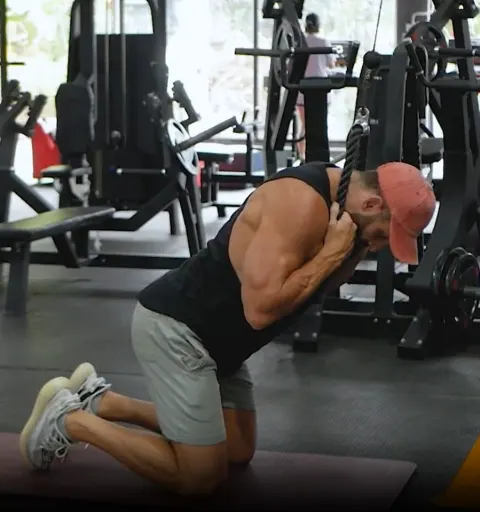
| Curling the trunk | Cable crunch, weighted crunch |
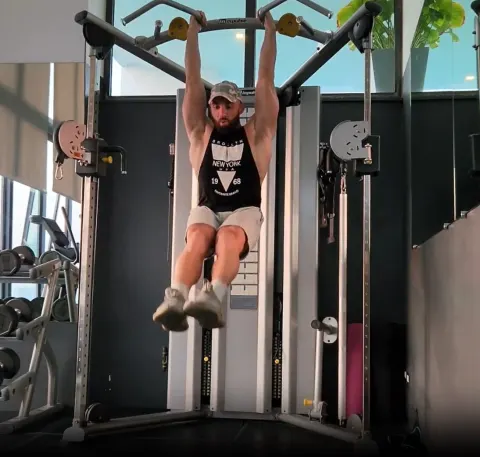
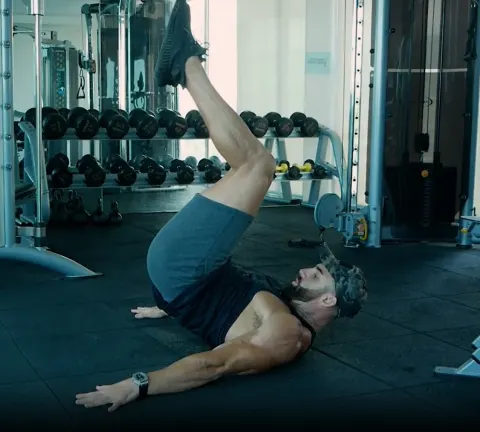
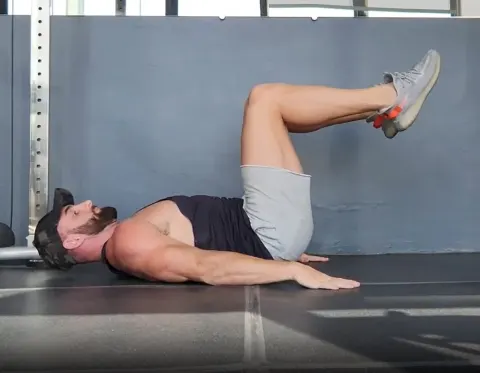
| Lifting the legs and pelvis | Hanging leg raise, hanging knee raise, reverse crunch |
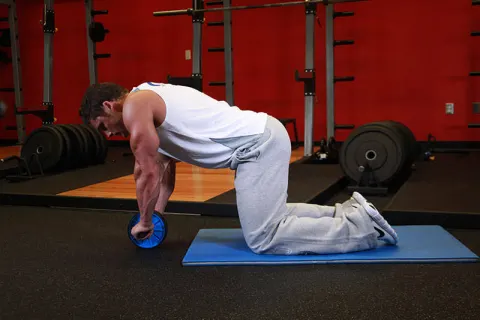
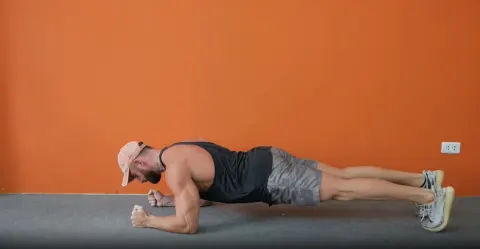
| Resisting movement | Plank, side plank, ab wheel rollout, dead bug |
The first two build the visible muscle most directly. The third makes the trunk strong and stable for everything else you lift.
A weekly ab routine
Add one of these to the end of two or three workouts a week.
| Day | Exercise | Sets × reps |
|---|---|---|
| A | Cable crunch | 3 × 10–15 |
| A | Hanging knee raise | 3 × 8–12 |
| A | Side plank | 2 × 30–45 seconds per side |
| B | Ab wheel rollout | 3 × 6–10 |
| B | Reverse crunch | 3 × 12–15 |
| B | Dead bug | 2 × 8–10 per side |
Rest 45–60 seconds between sets. When you reach the top of a rep range on every set, add a little weight or choose a harder variation.
Ready-made sessions are available too: the ab workout at the gym uses cables, and the ab workout at home needs only a floor. Short on time? The 10-minute ab workout runs on a timer. For a structured month that builds the habit, try the 30-day ab challenge. It will strengthen your abs. Whether they become visible in that month depends on your body fat, as explained above.
Myths that waste time
- “Crunches burn belly fat.” They burn very few calories and cannot direct where fat is lost.
- “Abs are made only in the kitchen.” Half true. Diet reveals them, but untrained abs look flat even on a lean body.
- “Train abs every day.” They recover like other muscles. Two or three good sessions beat seven easy ones.
- “High reps for definition.” Definition comes from low body fat. Reps of 8–20 with real resistance build the muscle.
- “Sweat belts and wraps work.” They shift water for a few hours and nothing else.
- “Everyone can have a symmetrical six-pack.” The layout is genetic. You can make the muscle bigger, not rearrange it.
Staying lean, and when not to chase it
Getting to a body-fat level where abs show is one project. Staying there is another. The lower ranges in the first table demand consistent attention to food, and most people who look like that all year have organised much of their life around it.
Many lifters choose a middle path. They get lean enough to see their abs clearly once, then settle a few percentage points higher, where the upper abs are still visible, training is strong and eating is relaxed.
Very low body fat is not a health goal. If dieting begins to affect your sleep, mood, energy or menstrual cycle, stop the deficit and return to maintenance, and speak to a doctor if the symptoms do not resolve. A strong, well-trained midsection at a comfortable body-fat level is a good result in its own right.
Ready plans for this guide
Exercises mentioned
Frequently asked questions
How long does it take to get abs?
It depends almost entirely on your starting body fat. Someone who is already lean may need four to eight weeks. From an average starting point, expect three to six months of steady fat loss, at a weekly rate of 0.5 to 1 percent of your weight, and longer if you have more to lose. Nobody can honestly promise a date.
Can I get abs by doing ab exercises every day?
Not by exercises alone. Ab training builds the muscle, but it does not remove the fat that covers it, and fat cannot be burned from one chosen area. Two or three ab sessions a week are enough for the muscle. Whether it shows depends on your overall body-fat level, which is set mainly by diet.
What body fat percentage do I need to see my abs?
Most men see a clear six-pack at roughly 10 to 14 percent body fat and most women at roughly 18 to 22 percent. The exact point varies with where your body stores fat and how developed the muscles are. Home measurements are estimates, so use the mirror and a waist measurement alongside any number.
Do I need to train abs if I already do squats and deadlifts?
Heavy compound lifts train the midsection to brace, which keeps it strong. For visible abs, direct work still helps, because the muscle grows best when it is taken through its range against resistance. Six to twelve hard sets a week of crunch, leg-raise and plank variations is enough for most people.
Why can I see my upper abs but not my lower abs?
Because the lower abdomen is one of the last places most people lose fat from, especially men. The muscle runs as one sheet from ribs to pelvis, so you cannot build the lower part separately in any major way. Continued, patient fat loss is what reveals it. Leg raises strengthen the area but do not target the fat.