How to Lose Belly Fat: What Works and What Doesn't
How to lose belly fat honestly: why ab exercises alone will not do it, and how a calorie deficit, strength training, steps and sleep shrink your waist.
You lose belly fat by losing body fat overall: a modest calorie deficit, strength training two to four times a week, a lot of daily walking and enough sleep. No exercise burns fat from the stomach specifically, so crunches alone will not flatten it. A realistic pace is 0.5 to 1 percent of your body weight per week, with the waist following a few weeks behind the scale.
Why you cannot spot-reduce your stomach
Fat is stored in cells all over the body and released into the bloodstream when you run an energy shortfall. A working muscle does not get first call on the fat lying on top of it. In studies where people trained one area for weeks (only abs, or only one leg), the fat they lost came from the whole body, not from the trained spot.
Where you lose first is mostly down to genetics and hormones. Many men store fat around the middle. Many women store it at the hips and thighs, with more moving to the waist after menopause. For a lot of people the abdomen is the last area to lean out, which is why progress there feels slow even when your face, arms and chest are already changing.
There are also two kinds of belly fat:
- Subcutaneous fat is the soft layer you can pinch.
- Visceral fat sits deeper, around the organs, and is the type linked with higher health risk. It tends to respond well to regular activity and overall weight loss, often before the pinchable layer looks different.
What actually moves belly fat
| Lever | What to do | Why it matters |
|---|---|---|
| Calorie deficit | Eat 300–500 kcal below maintenance | The only thing that makes the body draw on stored fat |
| Strength training | 2–4 full-body sessions a week | Keeps muscle so the weight you lose is fat |
| Daily steps | 7,000–10,000 | Adds calorie burn without extra hunger or fatigue |
| Protein | 1.6–2.2 g per kg of body weight | Protects muscle and keeps you full |
| Sleep | 7–9 hours | Short sleep raises appetite and makes a deficit harder to hold |
| Ab training | 2–3 short sessions a week | Stronger core and better shape later, not fat loss |
The deficit
Work out your number with the calorie deficit calculator and aim for the moderate setting. A small, boring calorie deficit held for twelve weeks beats an aggressive one abandoned in two. You do not need to cut out any food group. Most people get there by trimming liquid calories, snacks eaten standing up and oversized evening portions.
Alcohol deserves a mention. It is energy-dense, it lowers your guard around food, and heavy drinking is associated with more fat around the middle. You do not have to quit, but it is one of the first places to look.
Strength training
Lifting does not burn much fat directly. Its job is to tell your body to keep its muscle while you eat less, so that what comes off is fat. Build each session around a squat, a hinge, a push, a pull and a carry. The weight loss workout plan lays this out for home or gym, three or four days a week.
Walking
Steps are the easiest calorie burn to add because they cost almost no recovery. Going from 4,000 to 9,000 a day is worth a few hundred kilocalories for most adults. Check your own figure with the steps to calories calculator, and see how many steps a day you really need.
Protein and sleep
Use the protein intake calculator to set a daily target, then spread it over three or four meals. Treat sleep as part of the plan: people who sleep five or six hours tend to eat more the next day and lose a smaller share of fat for the same deficit.
What ab training does, and what it does not
Ab exercises make the abdominal wall stronger and a little thicker. That gives you a firmer midsection, a better brace for squats and deadlifts, and more visible definition once the fat above is low enough. They do not change how much fat sits there.
A simple routine, two or three times a week:
- Plank: 3 sets of 30–45 seconds
- Dead bug: 3 sets of 8–10 per side
- Hanging knee raise or reverse crunch: 3 sets of 8–12
If you want it laid out, use the ab workout at home or the shorter 10-minute ab workout. The 30-day plank challenge is a good way to build the habit. Just do not confuse a stronger plank with a smaller waist.
Track your waist, not just your weight
The tape measure tells you more about belly fat than the scale does.
- Measure first thing in the morning, before eating.
- Wrap the tape around your bare waist, midway between the lowest rib and the top of the hip bone. For most people that is about navel height.
- Breathe out normally and read the number without pulling the tape tight.
- Repeat every two weeks and write it down.
A common rule of thumb used by health bodies is to keep your waist below half your height. If you want a broader picture, the body fat calculator estimates body fat from a few tape measurements.
A realistic timeline
At 0.5–1 percent of body weight per week, an 80 kg person loses 0.4–0.8 kg weekly. Very roughly, each kilogram lost takes about a centimetre off the waist, though this varies a lot between people.
- Weeks 1–2: the scale drops quickly, mostly water. Bloating often improves.
- Weeks 3–6: steady loss. Clothes fit differently around the waist.
- Weeks 8–12: other people notice. The upper stomach is visibly flatter.
- Month 4 onwards: the lower stomach, usually the last to change, starts to catch up.
If the weekly average has not moved in three weeks, the deficit is not there. Trim 150–200 kcal or add 2,000 steps, then reassess.
Mistakes that keep belly fat in place
- Hundreds of crunches, same diet. Effort spent in the wrong place.
- Slashing calories. Very low intakes cost muscle and energy and rarely last. Keep the deficit moderate.
- Only cardio. You lose weight but also muscle. See cardio vs weights for fat loss for how to combine them.
- Waist trainers, sweat belts and detox teas. They shift water for a few hours at most.
- Judging by one weigh-in. Daily weight swings by a kilogram or two. Compare weekly averages.
The short version
Eat slightly less than you burn, lift three times a week, walk daily, sleep properly and train your abs for strength. Measure your waist every fortnight and give the process at least twelve weeks. If you have a medical condition, are pregnant or take medication that affects weight, speak to your doctor before changing your diet or training.
Ready plans for this guide


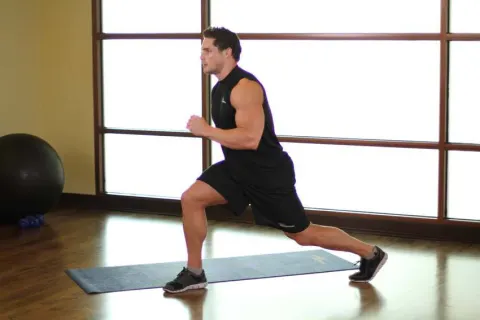


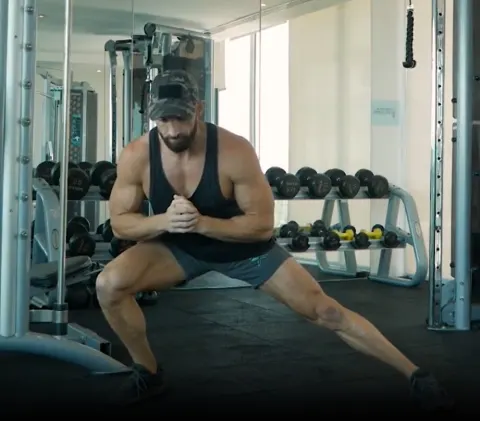






Exercises mentioned





Frequently asked questions
What exercise burns the most belly fat?
No exercise burns fat from the stomach in particular. The sessions that help most are the ones that support overall fat loss: full-body strength training with squats, rows, presses and hinges, plus as much walking as you can fit in. Ab exercises strengthen the muscles underneath but do not remove the layer covering them.
How long does it take to lose belly fat?
It depends on how much there is to lose. At a sustainable pace of 0.5 to 1 percent of body weight per week, most people notice a looser waistband after four to eight weeks and a clearly different midsection after three to six months. The lower stomach is usually the last area to change.
Can I lose belly fat in a week?
Not in any meaningful way. A week of eating less salt and fewer refined carbohydrates can reduce bloating and water, which makes the stomach look flatter, but the fat itself changes by a few hundred grams at most. Use the first week to set up habits you can repeat for three months.
Do sit-ups and crunches flatten your stomach?
They build stronger, slightly thicker abdominal muscles, which improves how your midsection looks once you are lean and helps with posture and lifting. They do not burn the fat on top. Do two or three short ab sessions a week and put the rest of your effort into food, strength work and walking.
Why is belly fat the last to go?
Fat distribution is set largely by genetics, sex and hormones. The body tends to draw from the areas it filled last and to protect the areas it filled first, and for many people that protected store is the abdomen. It still shrinks if you stay in a deficit long enough; it just reports late.