Cutting Workout Plan: Keep Your Strength While You Lose Fat
A cutting workout plan for people who already lift: four gym days that keep the heavy work, short finishers, daily steps and a deficit that spares muscle.
Example week
4-Day Gym Workout Plan for Weight Loss
A complete week you can start today: exercises, sets, reps and rest for every session, with swaps for each exercise. Open this plan on its own page (PDF) →
Split
Upper / Lower
Sessions / week
4
Avg. session
45 min
Schedule
Mon · Tue · Thu · Fri
Warm-up (every session, ~6 min)
- 3–5 min easy cardio: brisk walk, bike, jump rope or marching in place.
- Dynamic mobility: 10 leg swings each way, 10 hip circles, 10 arm circles, 8 cat-cows.
- Ramp-up sets on the first exercise: 1–2 light sets of 8 before your working sets.
Day 1
Upper A
Chest + back, strength bias
-
Chest, Triceps · Barbell
- Sets
- 3
- Reps
- 8–12
- Rest
- 75s
- Effort
- RPE 7–8
-
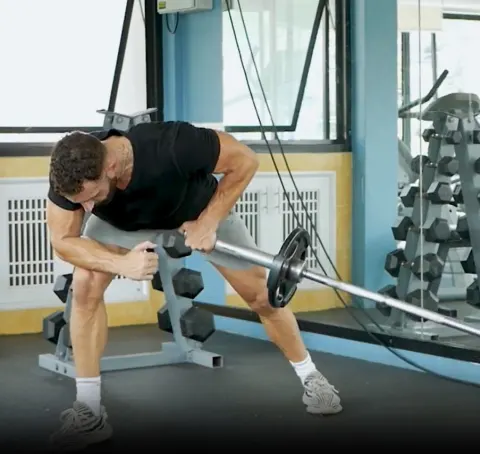
Lats, Upper Back · Barbell
- Sets
- 3
- Reps
- 8–12 / side
- Rest
- 75s
- Effort
- RPE 7–8
swap: Dumbbell Row, Kettlebell Row, T-Bar Row
-
Front Delts, Chest · Barbell
- Sets
- 3
- Reps
- 10–15 / side
- Rest
- 60s
- Effort
- RPE 7–8
swap: Dumbbell Shoulder Press, Kettlebell Press, Overhead Press
-
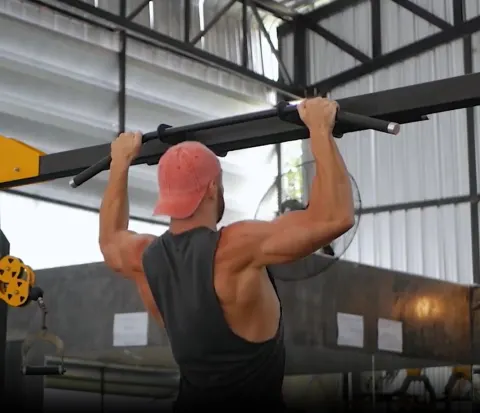
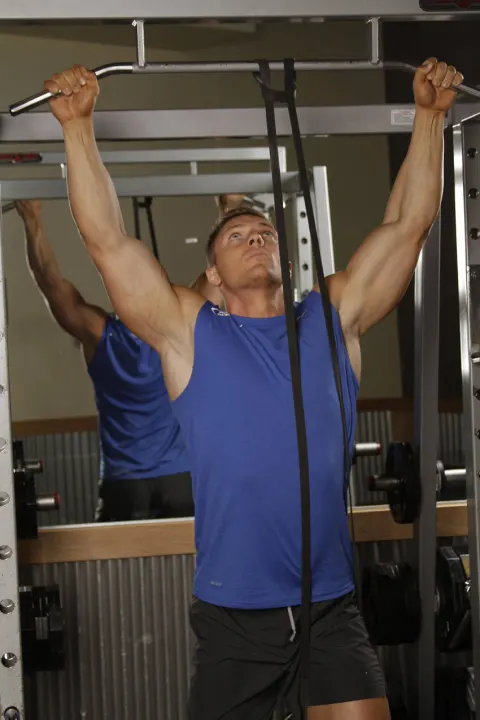
Lats, Upper Back · Pull-Up Bar
- Sets
- 3
- Reps
- 10–15
- Rest
- 60s
- Effort
- RPE 7–8
-
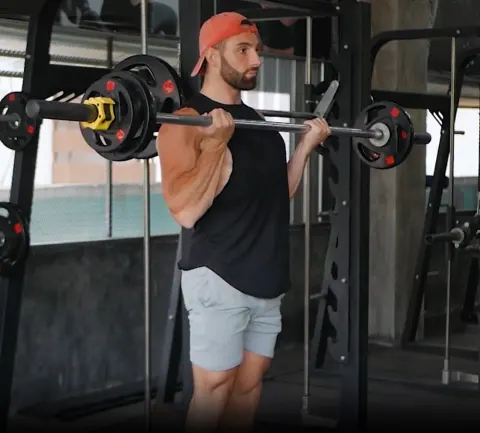
Triceps · Barbell
- Sets
- 3
- Reps
- 12–15
- Rest
- 45s
- Effort
- RPE 8
swap: Overhead Triceps Extension, Triceps Pushdown, Close-Grip Bench Press
-
Calves · Bodyweight
- Sets
- 6
- Reps
- 30 sec on / 30 sec off
- Rest
- 30s
- Effort
- hard but steady




Day 2
Lower A
Squat focus
-
Quads, Glutes · Barbell
- Sets
- 3
- Reps
- 8–12
- Rest
- 75s
- Effort
- RPE 7–8
-
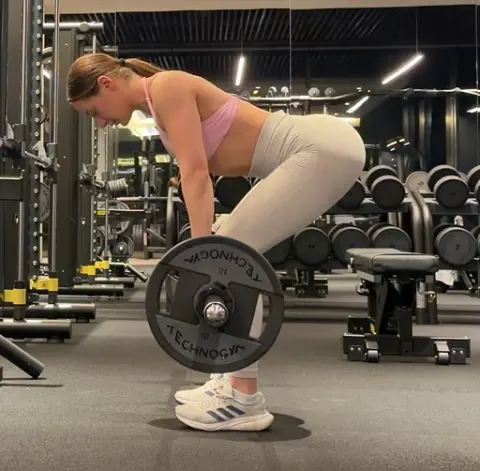
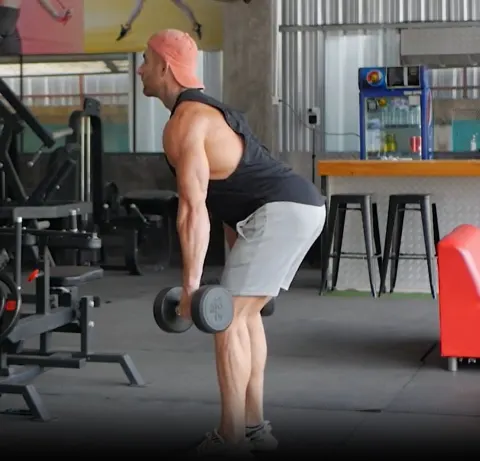
Hamstrings, Glutes · Barbell
- Sets
- 3
- Reps
- 10–15
- Rest
- 60s
- Effort
- RPE 7–8
swap: Dumbbell Romanian Deadlift, Kettlebell Deadlift, Cable Pull-Through
-
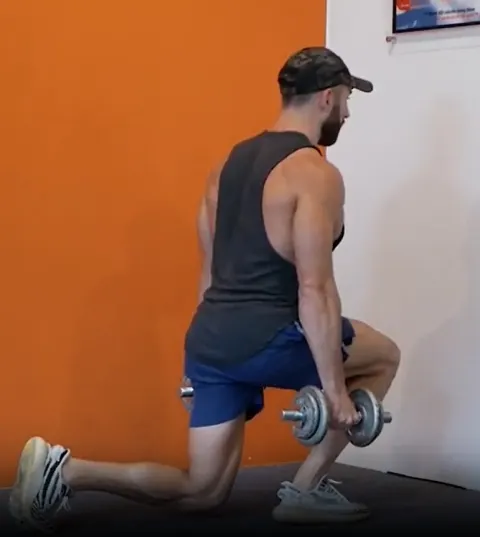
Quads, Glutes · Dumbbell
- Sets
- 3
- Reps
- 10–15 / side
- Rest
- 60s
- Effort
- RPE 7–8
-
Glutes · Barbell
- Sets
- 3
- Reps
- 12–15
- Rest
- 45s
- Effort
- RPE 8
-
Calves · Dumbbell
- Sets
- 3
- Reps
- 12–15
- Rest
- 45s
- Effort
- RPE 8
swap: Standing Calf Raise, Single-Leg Calf Raise, Seated Calf Raise
-
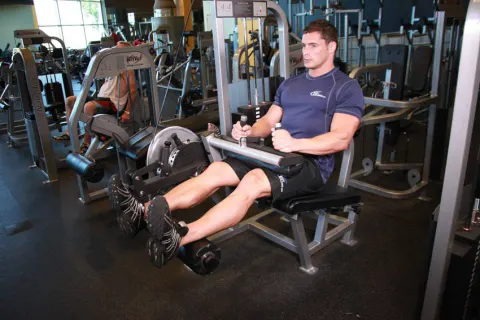
Core · Cable
- Sets
- 3
- Reps
- 15–20
- Rest
- 45s
- Effort
- controlled
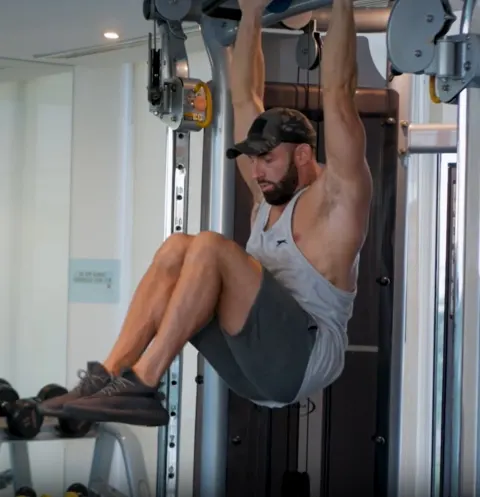
swap: Crunch, Reverse Crunch, Hanging Knee Raise
-
Full Body · Bodyweight
- Sets
- 6
- Reps
- 30 sec on / 30 sec off
- Rest
- 30s
- Effort
- hard but steady
swap: Jumping Jack, Mountain Climber, Jump Squat




Day 3
Upper B
Shoulders + back, volume bias
-
Lats, Upper Back · Pull-Up Bar
- Sets
- 3
- Reps
- 8–12
- Rest
- 75s
- Effort
- RPE 7–8
-
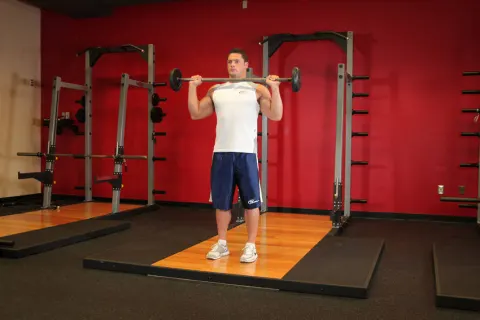
Front Delts, Triceps · Barbell
- Sets
- 3
- Reps
- 8–12
- Rest
- 75s
- Effort
- RPE 7–8
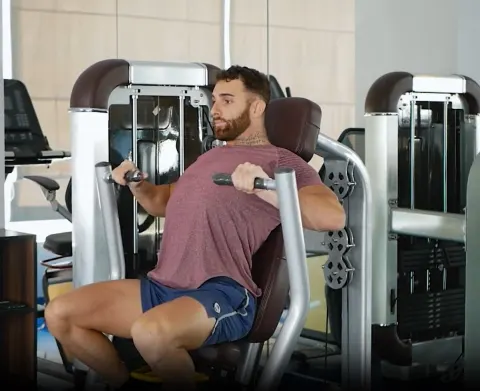
swap: Dumbbell Shoulder Press, Machine Shoulder Press, Pike Push-Up
-
Chest, Front Delts · Barbell
- Sets
- 3
- Reps
- 10–15
- Rest
- 60s
- Effort
- RPE 7–8
swap: Incline Dumbbell Press, Decline Push-Up, Machine Chest Press
-
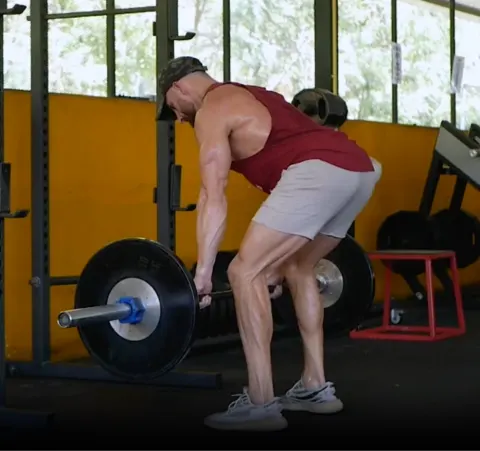
Upper Back, Lats · Barbell
- Sets
- 3
- Reps
- 10–15
- Rest
- 60s
- Effort
- RPE 7–8
-
Triceps · Dumbbell
- Sets
- 3
- Reps
- 12–15
- Rest
- 45s
- Effort
- RPE 8
-
Full Body · Bodyweight
- Sets
- 6
- Reps
- 30 sec on / 30 sec off
- Rest
- 30s
- Effort
- hard but steady
swap: Jumping Jack, Mountain Climber, Jump Squat




Day 4
Lower B
Hinge focus
-
Glutes, Quads, Hamstrings · Barbell
- Sets
- 3
- Reps
- 8–12
- Rest
- 75s
- Effort
- RPE 7–8
swap: Conventional Deadlift, Kettlebell Deadlift, Sumo Deadlift
-
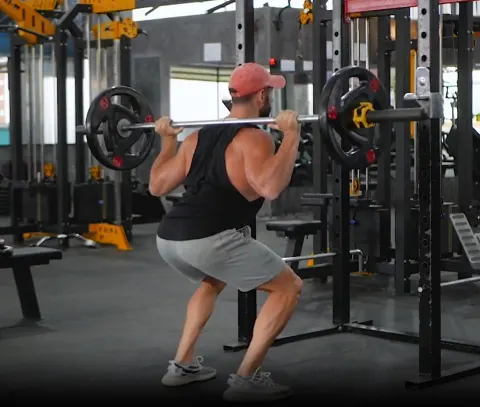
Quads, Glutes · Barbell
- Sets
- 3
- Reps
- 10–15
- Rest
- 60s
- Effort
- RPE 7–8
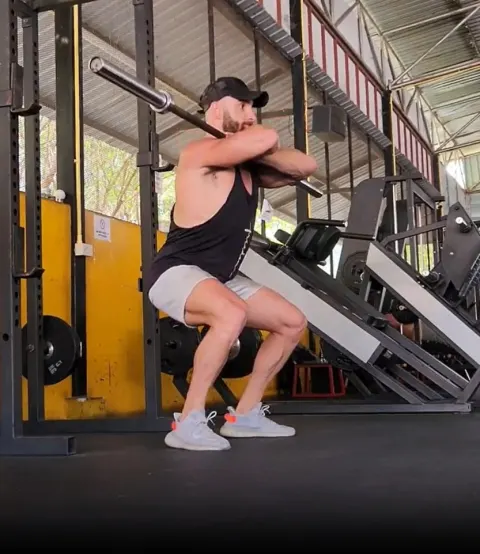
swap: Goblet Squat, Leg Press, Barbell Front Squat
-
Glutes · Cable
- Sets
- 3
- Reps
- 10–15 / side
- Rest
- 60s
- Effort
- RPE 7–8
-
Hamstrings · Machine
- Sets
- 3
- Reps
- 12–15
- Rest
- 45s
- Effort
- RPE 8
swap: Lying Leg Curl, Banded Hamstring Curl, Barbell Romanian Deadlift
-
Calves · Machine
- Sets
- 3
- Reps
- 12–15
- Rest
- 45s
- Effort
- RPE 8
swap: Standing Calf Raise, Dumbbell Calf Raise, Single-Leg Calf Raise
-
Core, Hip Flexors · Pull-Up Bar
- Sets
- 3
- Reps
- 15–20
- Rest
- 45s
- Effort
- controlled
swap: Reverse Crunch, Lying Leg Raise, Dead Bug
-
Glutes, Quads · Bodyweight
- Sets
- 6
- Reps
- 30 sec on / 30 sec off
- Rest
- 30s
- Effort
- hard but steady
swap: Lateral Lunge, Jump Squat, Jumping Jack



8-week progression: what to change each week
Same exercises for the whole block. Weeks move the reps, then the load; the last week is a deload.
| Week | Load | Reps | Effort | What to watch |
|---|---|---|---|---|
| 1 | Starting weight | bottom of range (8) | RPE 7 | Pick a weight you could do 3 more reps with. |
| 2 | Same weight | +1 rep per set (10) | RPE 7–8 | Same exercises, same order; only the reps move. |
| 3 | Same weight | top of range (12) | RPE 8 | All sets at the top of the range → add load next week. Missed a set? Repeat the week. |
| 4 | +2.5 kg (5 lb) | bottom of range (8) | RPE 7–8 | New weight feels hard at low reps; that is the plan working. |
| 5 | Same weight | +1 rep per set (10) | RPE 8 | Shave 10 s off every rest period. |
| 6 | Same weight | top of range (12) | RPE 8 | Second time at the top: take the last set of each main lift to 1 rep in reserve. |
| 7 | +2.5 kg (5 lb) | bottom of range (8) | RPE 8 | Bodyweight moves: slow the lowering phase to 3 s or move to the harder variation. |
| 8 | Deload: 60 % | bottom of range | RPE 5–6 | Half the sets, then regenerate a variation or change the split for the next block. |
How to progress
- Rest less, not lift less: shave 10 seconds off rest periods every two weeks until you hit the targets above.
- When all sets reach the top of the range, add weight or reps, never both at once.
- Daily steps matter more than any finisher: aim for 8 000–10 000 on non-training days.
Notes for this plan
- Sessions can move between days; keep at least one rest day between hard sessions for the same muscles.
A cut is a fat-loss phase for someone who already lifts: you eat a little under maintenance for 8–16 weeks and train so that the muscle you built stays where it is. The training itself barely changes. The lifts and the loads stay, a short finisher and more walking are added, and food does the rest.
A cut is a phase, not a first diet
If you are new to the gym, or you mainly want the scale to come down, start with the general weight loss workout plan. It assumes no training history, uses simpler exercises and explains a calorie deficit from zero.
This page is written for a different reader. You have trained for a year or more, you have probably finished a gaining phase, and now you want to uncover what you built. That changes the brief in three ways:
- You have muscle to lose. A beginner can gain muscle while dieting. You mostly cannot, so the job is to keep it.
- You can handle real barbell work. The example week above is written at intermediate level, with the classic lifts in the lead slots.
- You are already fairly lean. The leaner you get, the more readily the body gives up muscle, so your pace has to be slower than a beginner’s.
What changes in the gym, and what stays
| Variable | During a gaining phase | During a cut |
|---|---|---|
| Exercises | Your main barbell lifts | The same lifts |
| Load on the bar | Rising | Held for as long as possible |
| Effort per set | 1–3 reps short of failure | The same |
| Weekly sets | Often climbing | Held, or trimmed by up to a third late on |
| Conditioning | Optional | A 6-minute finisher per session |
| Daily steps | Whatever happens | 8,000–10,000, tracked |
Row two is the one people break. They strip weight off the bar, raise the reps and shorten the rests “to burn more”, and the body gets the message that heavy muscle is no longer required. Load is what keeps muscle. Volume is negotiable.
How the example week is built
The example week above runs on four gym days, Monday, Tuesday, Thursday and Friday, arranged as an upper/lower split. Sessions take about 45 minutes. Each half of the body is trained twice, so no muscle group waits more than four days for its next session.
Every session follows the same order:
- Main lifts for 3 sets of 8–12, resting 75 seconds. One upper day leads with a horizontal press and a row, the other with a vertical pull and an overhead press. The lower days open with a squat and a deadlift respectively.
- Secondary lifts for 3 sets of 10–15 with a minute of rest.
- Accessories: 3 sets of 12–15 for arms, traps, calves, glutes or hamstrings with 45 seconds of rest. Lower days add an ab exercise for 15–20 reps.
- A finisher: six 30-second efforts, each followed by 30 seconds of rest.
That is 18 lifting sets per session and 72 across the week, before the finishers.
Two honest notes. First, the rests are short. If 75 seconds costs you more than a rep or two on the later sets of a main lift, rest for two minutes there. Second, the main lifts are written for 8–12 reps. If you arrive from a block of heavier sets of 5–8, you may keep that range on the first lift of each day. What matters is that the weight on the bar does not quietly shrink.
Every exercise in the plan lists substitutes, and pages such as bench press alternatives explain what each swap changes.
Steps first, finishers second, cardio last
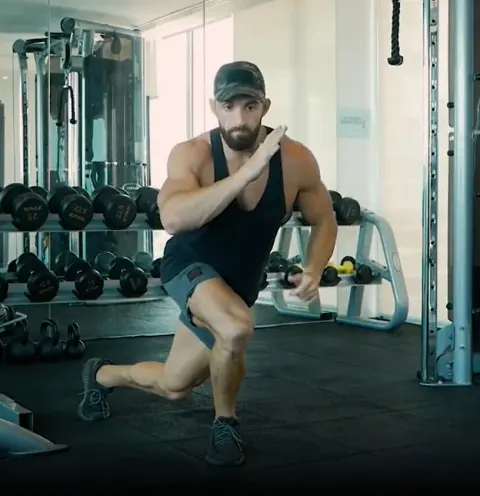
The finishers in the week above are skipping, burpees and skater jumps: six minutes, placed after the lifting so they cannot weaken it. They are conditioning, not the engine of the cut. If your knees object to jumping, do the same six rounds on a bike or a rower.
Walking does more. Going from 5,000 to 10,000 steps a day burns roughly 150–250 kcal for most adults. Over a week that rivals two extra cardio sessions, and it costs no recovery. The steps to calories calculator gives the figure for your weight.
Hold formal cardio in reserve. When progress stalls for three weeks, add one or two easy sessions of 20–30 minutes before you cut more food. Where to put them is covered in cardio before or after weights.
The deficit, the rate of loss and protein
- Rate: lose 0.5–1 % of your body weight a week. For an 80 kg lifter that is 0.4–0.8 kg. Move to the slow end once the outline of your abs is visible.
- Deficit: 300–500 kcal a day below maintenance gets most people there. The calorie deficit calculator turns a target rate into a daily number.
- Protein: 1.6–2.2 g for each kilo you weigh, nearer the top of that range when you are lean. Get your grams from the protein intake calculator.
- Sleep: seven hours or more. Short nights make hunger worse and lifts weaker.
Weigh yourself each morning and judge by the weekly average. Salt and water alone can move a single reading by a kilo.
What your lifts will do
For the first six to eight weeks most people hold their numbers, and some still add a rep here and there. After that, expect the last set of each main lift to lose a rep. That is normal and no reason to rewrite the plan.
Use a rule instead of a mood:
- Lifts steady: change nothing.
- Lifts down for two weeks running: remove one set from every secondary and accessory exercise, and keep the main lifts and their loads. Fewer sets with the same weight protect muscle better than the same sets with less weight.
- Still sliding after that: the deficit is too large. Add 150–200 kcal back and run one easy week, following the deload week guide.
When to end the cut
Stop when one of these is true:
- You have reached the look or the body-fat level you wanted. A tape measure and the body fat calculator give a steadier answer than the mirror.
- You have been in a deficit for 12–16 weeks. Diet fatigue builds whatever your willpower says.
- Strength is down by around 10 % on the main lifts and trimming volume did not stop it.
- Sleep, mood or the wish to train have been poor for a fortnight.
Then raise calories to maintenance over one to two weeks and hold them there for at least a month. Training stays exactly as it is. When you are ready to gain again, the bulking workout plan picks up from here.
Three, four or five days
Four days is the example, not a rule.
- Three days: the 3-day gym plan for weight loss trains the whole body each session and leaves more room for walking.
- Four days: the 4-day gym plan for weight loss has the same upper/lower layout as the example, written for a newer lifter with simpler exercise choices.
- Five days: the 5-day gym plan for weight loss suits you only if you recover well on reduced food.
The catalog versions are built at beginner level. To get a week like the one above, open the generator and set your level to intermediate.
Mistakes that cost muscle on a cut
- Turning every session into a circuit. Breathless sets with half your usual weight are poor strength work and mediocre cardio.
- Cutting food and adding cardio in the same week. Make one change at a time, so you always have another move left.
- Skipping leg days because they are tiring. The legs hold most of your muscle.
Cutting Workout Plan: all 21 plans









- 2-Day Gym Workout Plan for Weight Loss (Women)
- 2-Day Gym Workout Plan for Weight Loss (Men)
- 2-Day Gym Workout Plan for Weight Loss (Over 50)
- 3-Day Gym Workout Plan for Weight Loss (Women)
- 3-Day Gym Workout Plan for Weight Loss (Men)
- 3-Day Gym Workout Plan for Weight Loss (Over 50)
- 4-Day Gym Workout Plan for Weight Loss (Women)
- 4-Day Gym Workout Plan for Weight Loss (Men)
- 4-Day Gym Workout Plan for Weight Loss (Over 50)
- 5-Day Gym Workout Plan for Weight Loss (Men)
- 6-Day Gym Workout Plan for Weight Loss (Women)
- 6-Day Gym Workout Plan for Weight Loss (Men)
Related programs
Frequently asked questions
Should I lift lighter weights with more reps when cutting?
No. The load on the bar is the signal that tells your body to keep its muscle, so swapping to light, high-rep sets removes the very thing you are trying to protect. Keep the same lifts and the same weights for as long as you can, and let the calorie deficit and your daily steps remove the fat.
How long should a cut last?
Most cuts run 8 to 16 weeks. Losing 0.5 to 1 percent of your weight each week, that covers roughly 4 to 10 kg for an 80 kg lifter. If you have more to lose than that, split it into two blocks with a few weeks at maintenance in between and keep training throughout.
Will I lose strength during a cut?
A little, late in the cut, is normal. Expect your main lifts to hold for the first six to eight weeks and then lose a rep or two per set as you get leaner. A drop of more than about 10 percent, or a slide that lasts longer than two weeks, usually means the deficit is too deep or sleep is too short.
How much cardio do I need on a cut?
Less than most people think. Start with 8,000 to 10,000 steps a day and the six-minute finishers already written into the plan. Add one or two easy sessions of 20 to 30 minutes only when your weekly average weight has stalled for three weeks, and place them after lifting or on a rest day so your legs are fresh for squats.
Can I build muscle while cutting?
Beginners and people returning after a long break often can, because almost any hard training is a new stimulus for them. If you have lifted consistently for a few years, treat a cut as a holding phase. The realistic goal is to finish with the same muscle and close to the same strength, with visibly less fat on top.