How to Lose Thigh Fat: Leg Training, Steps and Diet
How to lose thigh fat, including inner thighs: why toning moves and high reps do not slim legs, and the leg training, walking and diet that change them.
You lose thigh fat the same way you lose fat anywhere: a moderate calorie deficit held for several months, backed by leg training and plenty of walking. You cannot pick the thighs as the place fat comes from, and that includes the inner thighs. What you can control is the muscle underneath, which decides how your legs look as the fat comes off.
Why thighs hold on to fat
Hips and thighs are a primary storage area for most women and a secondary one for many men. This is driven largely by oestrogen and genetics, and it is normal. Research on fat distribution also suggests lower-body fat carries less health risk than fat around the waist, so “stubborn” here is mostly an aesthetic frustration, not a medical one.
The practical consequence: when you start losing fat, your face, chest and waist often change before your legs do. Thigh measurements move later, then keep moving for as long as you stay consistent.
The myths worth dropping first
| Myth | What is actually true |
|---|---|
| “Inner thigh exercises burn inner thigh fat” | They train the adductor muscles. Fat loss is body-wide. |
| “High reps with light weights tone, heavy weights bulk” | Muscle firmness comes from having muscle and less fat over it. Rep count does not change that. |
| “Squats make legs bulky” | Significant size needs years of hard training plus a calorie surplus. |
| “Cardio is the only way to slim legs” | Cardio helps the deficit. Without strength work you lose muscle too and legs look softer. |
| “Cellulite means you are doing it wrong” | Cellulite is a normal skin and connective tissue pattern. Fat loss and muscle can reduce how visible it is, but rarely erase it. |
“Toning” is not a separate kind of training. A toned thigh is simply a thigh with reasonable muscle and a thinner fat layer. You build the first with resistance and reveal it with the second.
Step 1: set up a deficit you can live with
Use the calorie deficit calculator to find a target 300–500 kcal below maintenance. For most people that works out at 0.5–1 percent of body weight lost each week. Eat 1.6–2.2 g of protein per kg of body weight daily, so that what you lose is fat and your leg muscle stays.
Avoid the temptation to cut harder because legs are slow to respond. Bigger deficits mostly cost you muscle, energy and training quality, and they do not change the order in which your body releases fat.
Step 2: train your legs to shape them
Two leg sessions a week is enough. Choose four or five movements that cover the front, back, inside and outside of the thigh, and take each set to within a couple of reps of failure.
| Exercise | Main area | Sets × reps |
|---|---|---|
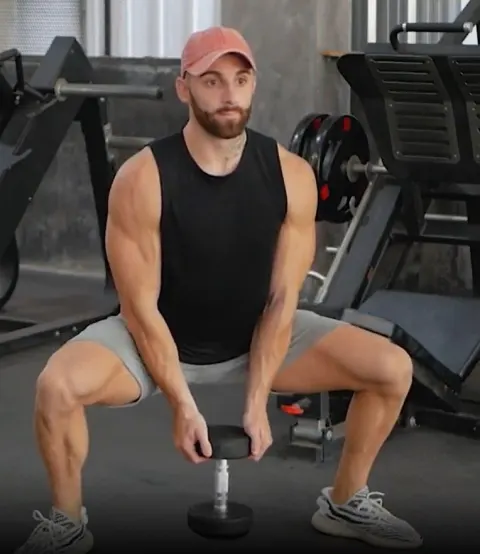
| Goblet squat | Quads, glutes | 3 × 8–12 |
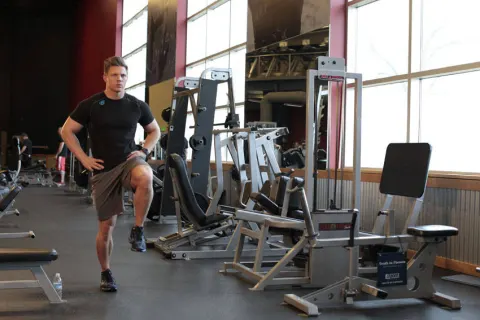
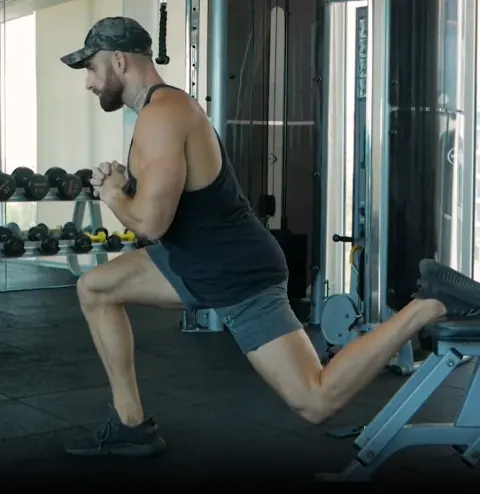
| Bulgarian split squat | Quads, glutes, balance | 3 × 8–10 per leg |
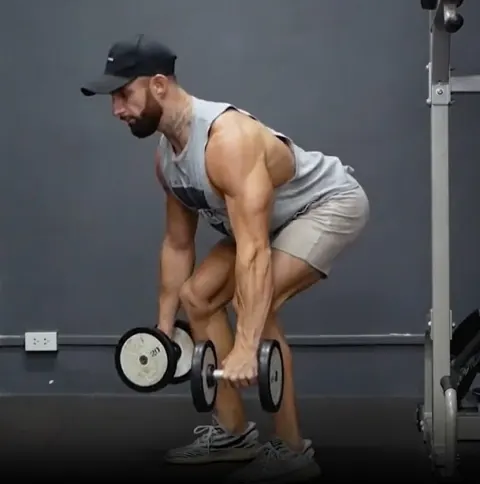
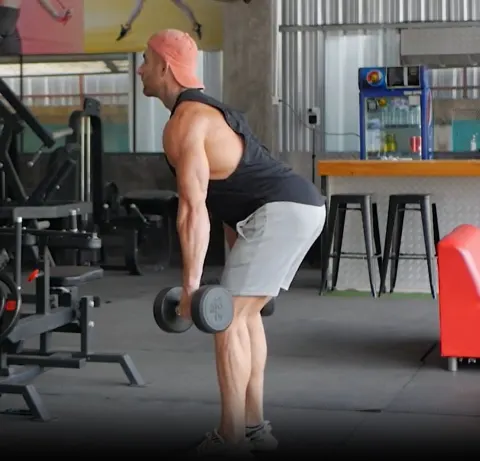
| Dumbbell Romanian deadlift | Hamstrings, glutes | 3 × 8–12 |
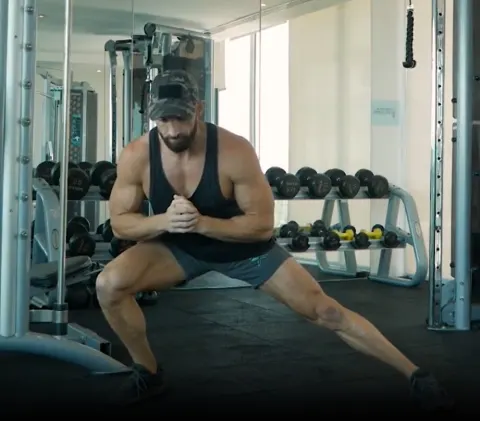
| Lateral lunge | Inner thigh (adductors), glutes | 3 × 8–10 per side |
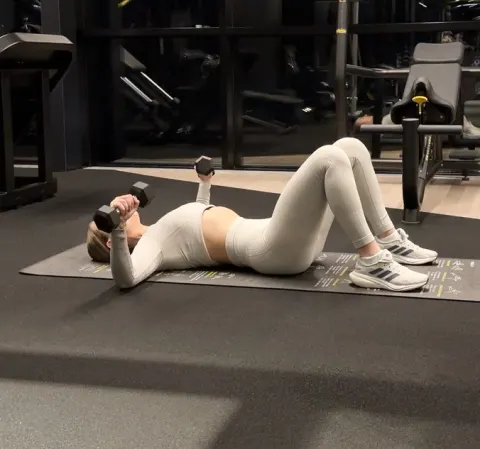
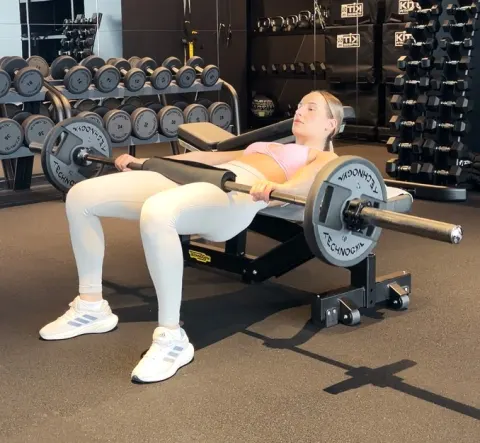
| Hip thrust or glute bridge | Glutes | 3 × 10–15 |
Use a weight that makes the last two reps hard. Once every set hits the upper number, add load. That is progressive overload, and it matters far more than the exercise list. The sets and reps guide explains why 8–12 heavy reps do more for shape than 30 light ones.
Ready-made sessions: the leg workout at home needs no equipment, and the leg workout with dumbbells adds load. For a daily habit, the 30-day squat challenge and 30-day leg challenge build volume gradually.
What about the inner thigh?
The adductors are real muscles and deserve training. They stabilise the hip and knee and contribute to squats and lunges. Wide-stance squats, lateral lunges and Cossack squats work them through a long range. In a gym, the adductor machine isolates them. Two or three sets, once or twice a week, is plenty.
Just keep the expectation honest. Stronger adductors make the inner thigh firmer. The gap or shape there is set mostly by your pelvis width and overall body fat.
Step 3: walk more
Walking is the best cardio for leg fat loss because you can do a lot of it. It burns energy all day without leaving your legs too tired to train. Aim for 7,000–10,000 steps; the steps guide explains where those numbers come from and how to add them.
Cycling, incline walking, swimming and running all work too. None of them slims the thigh specifically, and none of them bulks it. Choose the one you will repeat.
A note on soreness and swelling: in the first two or three weeks of a new leg routine, thighs can feel tighter in your jeans. Trained muscle holds extra water and stored carbohydrate while it adapts. This settles within a month and is not fat gain or sudden muscle growth, so do not let it talk you out of training legs.
A sample week
| Day | Session |
|---|---|
| Monday | Legs A: squat, Romanian deadlift, lateral lunge, calf raise |
| Tuesday | Walk 8,000+ steps |
| Wednesday | Upper body and core |
| Thursday | Walk 8,000+ steps |
| Friday | Legs B: split squat, hip thrust, leg curl or bridge, sumo squat |
| Saturday | Long walk, hike or bike ride |
| Sunday | Rest, easy steps |
If you want the whole week programmed, the weight loss workout plan for women follows this pattern, and the glute workout plan puts more emphasis on the back of the leg.
How to measure thigh progress
- Tape measure: mid-thigh, halfway between hip crease and kneecap, same leg, every two weeks.
- Photos: front, side and back, same light, same shorts, once a month.
- Clothes: one pair of fitted jeans as a reference.
- Strength: if your squat and deadlift numbers hold or rise while the tape goes down, you are losing fat and keeping muscle.
A change of around a centimetre per thigh per month is typical at a steady rate of loss, though it varies widely between people. Some months will show nothing, then a drop. That is normal.
When to get advice
Painful, easily bruised or very disproportionate fat on the legs that does not respond to weight loss is worth mentioning to a doctor, as is any knee or hip pain during training. Otherwise, the method is simple: modest deficit, heavy-enough leg work twice a week, daily steps and three to four months of patience.
Ready plans for this guide
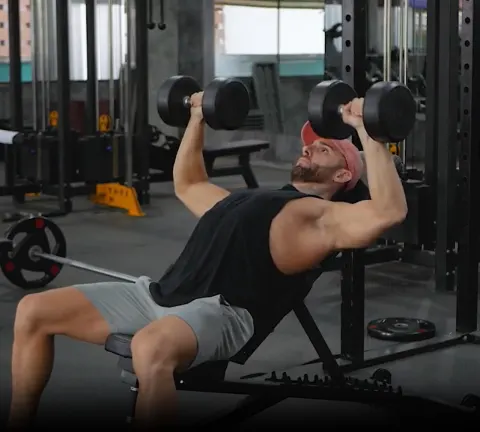
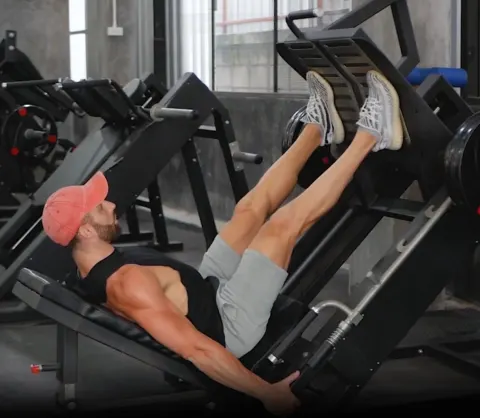
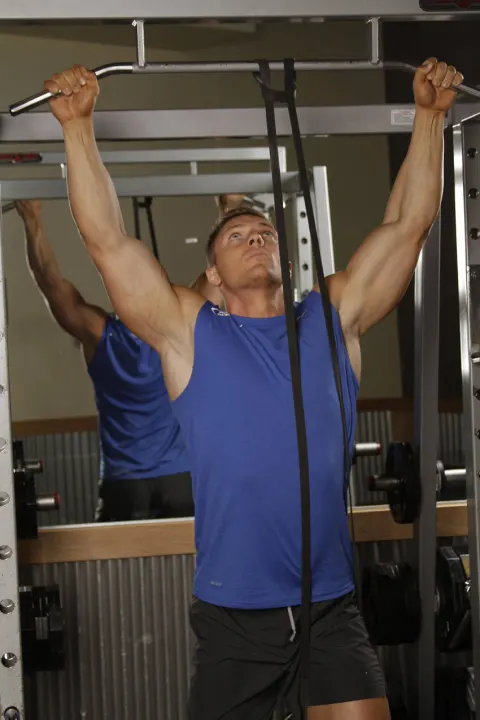
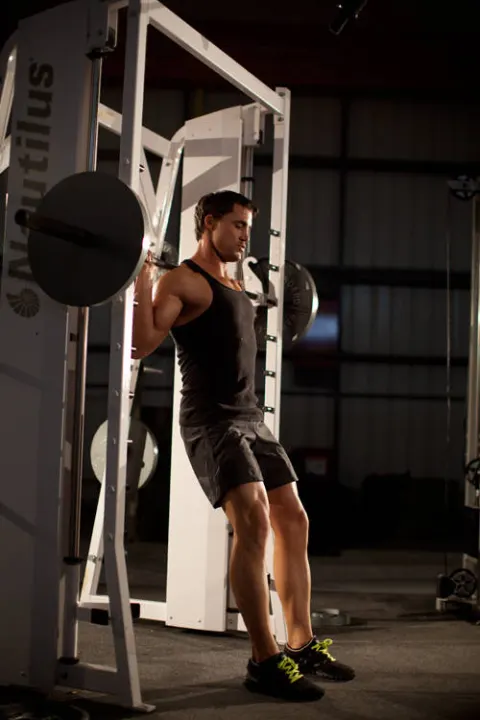
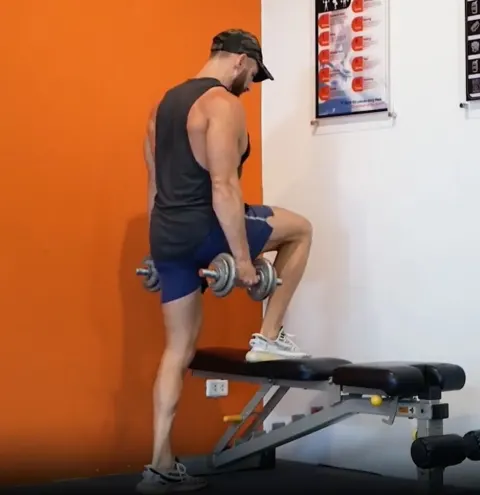
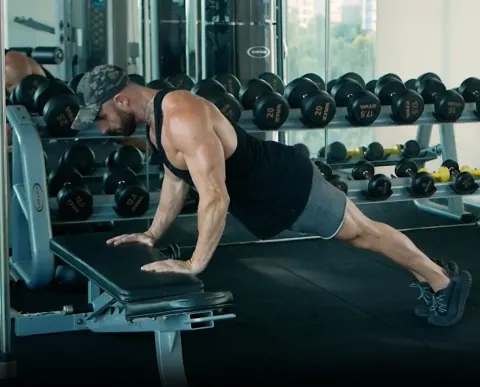
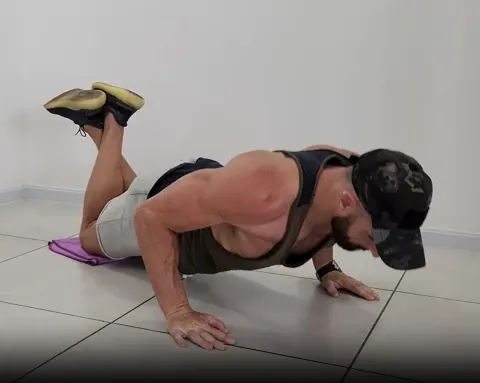
Exercises mentioned
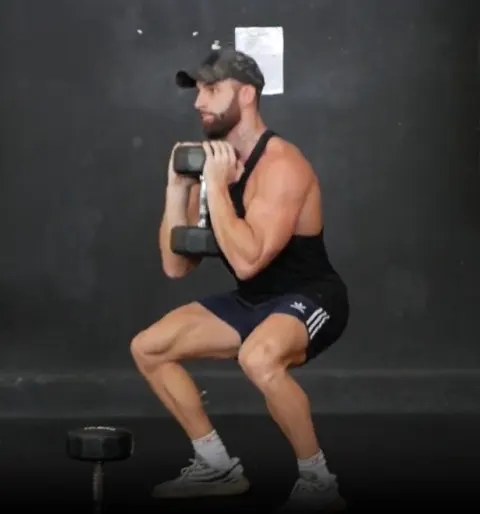 video
beginner
 video
intermediate
 video
beginner
 video
beginner
 video
beginner
Frequently asked questions
Can you lose fat from just your thighs?
No. Fat is drawn from the whole body according to a pattern you inherit, and no exercise changes which area gives it up first. Leg exercises build and firm the muscle in your thighs, which changes their shape, but the fat layer only thins when your overall body fat comes down through diet and activity.
How do I lose inner thigh fat?
The same way as any other fat: a sustained calorie deficit. Adductor exercises such as lateral lunges, sumo squats and the adductor machine strengthen the inner-thigh muscles and are worth doing for hip stability, but squeezing a ball between your knees a hundred times will not remove the fat in that spot.
Will squats make my thighs bigger?
For most people eating at or below maintenance, no. Building noticeable leg size takes years of heavy training and a calorie surplus. While you are losing fat, squats mainly preserve the muscle you have, so thighs get smaller and firmer. If they feel bigger in week two, that is temporary swelling and water.
How long does it take to slim down thighs?
Expect visible change in two to four months if you hold a moderate deficit and train legs twice a week. Thighs are a late-responding area for many women, so your waist and upper body often change first. Measure mid-thigh circumference every two weeks instead of relying on the mirror.
Does walking reduce thigh fat?
Walking helps you lose fat everywhere, thighs included, because it raises daily energy use without adding much fatigue or hunger. It will not single out your legs. Combine 7,000 to 10,000 daily steps with a small calorie deficit and two leg sessions a week for the most reliable change in thigh size.