Time Under Tension (TUT)
Definition: Time under tension is how long a muscle works against load during a set, from the first rep to the last; it is one way of describing a set's total work.
Time under tension (TUT) is the total time a muscle spends working against resistance during a set, from the start of the first rep to the end of the last. A set of 8 reps at a controlled tempo lasts around 25–30 seconds; a set of 15 slow reps might last 60. The idea is that longer tension means more stimulus, which is true only when the tension is high enough to matter.
How we use it in our plans
We do not program by TUT, because hard reps are the simpler and better-supported target. Where it shows up is in plans where adding weight is not an option. On the 3-day no-equipment plan and the 4-day band plan, the progression ladder includes slower eccentrics and pauses specifically because they raise the time under meaningful tension when the resistance itself cannot go up. The home workout guide and band training guide use this to make 20-rep bodyweight sets hard again. Planks and other holds are pure time-under-tension exercises, which is why they are prescribed in seconds.
Worked example
You can do 25 push-ups at normal speed, about 35 seconds, and the set no longer feels hard. Switch to a 3-second lowering phase with a one-second pause at the bottom. Now 12 reps take 60 seconds, the last three are a grind, and the set is back in the growth zone. Same exercise, same body weight, but every second of the set is spent under high tension. A plank works the same way: 45 hard seconds beat three lazy minutes.
Common misunderstanding
Time under tension is often presented as the hidden variable behind muscle growth, so people slow every rep to a crawl with light weights. That produces a burn and very little muscle, because low tension for a long time is endurance training. A 5-rep heavy squat set with 20 seconds of TUT builds more than a 90-second set of air squats. The useful version of the idea is narrower: when you cannot add load, make each rep harder by removing momentum and adding pauses. Otherwise, count hard sets and reps, as in sets and reps explained, and let time take care of itself.
Plans that use this






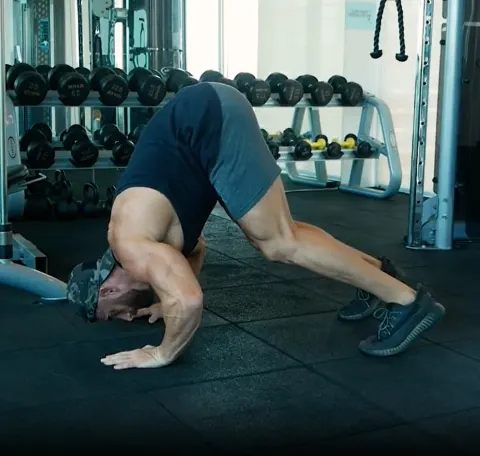
Exercises mentioned



Frequently asked questions
How long should a set last for muscle growth?
Roughly 20–60 seconds covers everything from 5 heavy reps to 20 controlled ones, and all of it builds muscle if the set is hard. Past about 60–70 seconds you are mostly training endurance, not size.
Is time under tension more important than reps?
No. Reps close to failure are what matter; time under tension is just a by-product of how many reps you do and how fast. Chasing a long TUT with light weights produces burning muscles and little growth.