Warm-Up Ramp Sets
Definition: Ramp sets are two to four progressively heavier, low-rep sets of an exercise done before the first working set, to prepare the joints and rehearse the movement.
Warm-up ramp sets are two to four progressively heavier sets of an exercise, with low reps, done before the first working set. They take the joints through the exact range, let the nervous system rehearse the pattern at increasing loads and give you a last check on how the weight feels today. They are separate from the general warm-up (a few minutes of movement to raise body temperature) and they are not working sets.
How we use it in our plans
Every plan page shows a short general warm-up and then assumes ramp sets before the first compound exercise of each session. For strength plans such as the 3-day gym strength plan, where working sets are at 5–8 reps and heavy, we spell out a ramp: empty bar, then roughly 50%, 70% and 85% of the working weight for 5, 3 and 2 reps. For muscle-gain plans like the 4-day gym plan, one or two ramp sets on the first lift are enough, and the accessories need none because the muscles are already warm. The warm-up guide gives the full six-minute routine.
Worked example
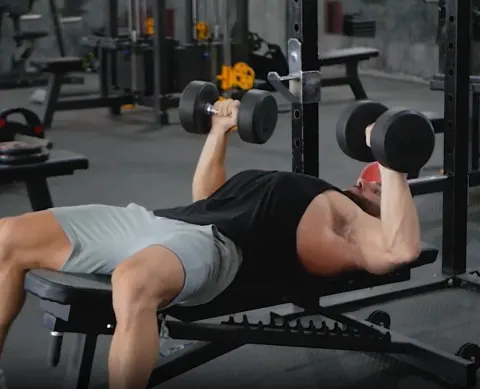
Working sets today: back squat 4 × 6 at 100 kg. Ramp: empty bar × 8, 50 kg × 5, 70 kg × 3, 85 kg × 2, then rest 90 seconds and start the four sets at 100 kg. Total ramp time about six minutes; total fatigue negligible, because 18 reps at an average of 55% of your working weight is nothing like a hard set. For dumbbell bench press at 3 × 10 with 26 kg, two ramp sets are enough: 14 kg × 8, 20 kg × 5. The deadlift later in the same session gets 60 kg × 3 and 100 kg × 2 before working sets at 130 kg, since the legs and back are warm already.
Common misunderstanding
Warm-up sets are not light high-rep sets to “get the blood flowing”, and they are not an opportunity to grind. Doing 20 reps with the bar and 15 with half the weight tires the muscles you need fresh, so the first working set is already compromised. Ramp sets ramp: fewer reps as the weight rises, never close to failure. The opposite error is skipping them to save time, then wondering why the first working set is the hardest and the knees ache. Lifters over 40 need them most, as the training after 40 guide explains, and if the first ramp set at 70% feels like 90%, that is a signal to take a deload rather than fight through. Working-set counts for the week are covered in sets and reps explained.
Plans that use this




Exercises mentioned
video
intermediate
video
intermediate
 video
intermediate
 intermediate
 video
beginner
Frequently asked questions
How many warm-up sets should I do?
Two to four for the first compound exercise of the session, one or none for exercises later on, when the muscles are already warm. The heavier the working weight, the more ramp sets you need; a 60 kg bench needs two, a 120 kg bench needs four.
Do warm-up sets count as volume?
No. They are well short of failure by design, so they do not count as hard sets. Keep the reps low (3–6) so they prepare you without using up energy you need for the working sets.