How Long Should a Workout Be? 30, 45, 60 Minutes Compared
How long should a workout be? Most people need 30 to 60 minutes. See what fits your goal, whether 30 minutes is enough and when 2 hours is too long.
A workout should last 30 to 60 minutes for most people, warm-up included. Thirty minutes is enough for general fitness and for beginners building strength, 45 to 60 suits muscle growth, and only heavy strength training with long rests regularly needs 60 to 90. Length is the result of your sets and rest periods, not a goal in itself.
Workout length by goal
| Goal | Typical session | Why |
|---|---|---|
| General fitness and health | 20–40 minutes | Few sets per muscle are enough; consistency does the work |
| Fat loss | 30–45 minutes, plus daily walking | Lifting keeps muscle; food and steps create the deficit |
| Muscle growth | 45–70 minutes | More sets per muscle, moderate rests |
| Maximal strength | 60–90 minutes | Heavy sets need 3–5 minutes of rest |
| Cardio session | 20–60 minutes | Depends on intensity: shorter when hard, longer when easy |
For health in general, guidelines recommend 150–300 minutes of moderate activity a week, or half that if it is vigorous, plus strength work on two days. That is a weekly total. How you slice it is up to you.
What actually sets the length
A lifting session is simple arithmetic: the number of hard sets multiplied by the time each one takes, including the rest that follows.
| Session | Hard sets | Average rest | Time, with a 5-minute warm-up |
|---|---|---|---|
| Short full body | 10–12 | 75 seconds | About 25–30 minutes |
| Standard session | 15–18 | 90 seconds | About 40–50 minutes |
| High-volume split day | 20–24 | 2 minutes | About 60–75 minutes |
| Heavy strength day | 15–18 | 3–4 minutes | About 70–90 minutes |
So if a session feels too long, there are only three levers: fewer sets, shorter rests, or less dead time between exercises. The third is the easiest to pull. Changing plates, queueing for equipment and reading messages often take more minutes than the training does.
How many exercises to spread those sets over is a separate question, answered in how many exercises per workout.
Is 30 minutes enough?
Yes, for three common goals.
Health. Five 30-minute sessions of brisk walking, cycling or similar reach the 150-minute guideline exactly.
Strength and muscle as a beginner. Ten to twelve hard sets across four or five exercises fit comfortably into half an hour, and that is as much as a new lifter can use. Three such sessions a week train every major muscle.
Maintenance. Holding on to strength and muscle takes far less work than building them, so an experienced lifter can keep nearly everything on two or three half-hour sessions during a busy period.
Thirty minutes becomes limiting when you want to build muscle past the beginner stage, because the weekly sets no longer fit, and when you train for maximal strength, because heavy sets need long rests. If half an hour is what you have, the workout plan for busy people is designed around it, and the 30-minute full-body workout with dumbbells is a single session you can start today.
Is a 2-hour workout too long?
Two hours will not harm a healthy person. The old claim that muscle starts to break down after exactly 60 minutes is not supported by evidence. The real problems are practical:
- Quality fades. After about 60–75 minutes of hard lifting, concentration and performance drop. The last exercises get a tired version of you.
- Later sets add little. Past roughly eight hard sets for one muscle in a session, extra sets mostly add fatigue.
- It is hard to repeat. A plan that needs two free hours four times a week breaks at the first busy month.
A two-hour session usually hides one of three things: more than eight exercises, rests that drift to five minutes, or a lot of standing around. Fix whichever applies and the same work fits into 70 minutes.
There are honest exceptions. Powerlifters taking long rests on three heavy lifts, people combining sport practice with gym work, and long endurance sessions all take time by nature. See the strength training program for why heavy barbell days run long.
Workout length by experience
- Beginner, first year: 30–45 minutes. Four to six exercises, two or three sets each.
- Intermediate: 45–60 minutes. Five to seven exercises, three or four sets each.
- Advanced: 60–90 minutes. More sets on the main lifts and longer rests, often spread over five or six days to keep single sessions reasonable.
If you need more work than fits into an hour, it is usually better to add a training day than to stretch the session. The guide to weekly training frequency covers that choice.
How to shorten a workout without losing results
- Time your rests. Guessing adds a minute to every break. Use the interval timer and start the next set when it sounds.
- Use supersets for small or opposing muscles. Alternating a press with a row, or a curl with a triceps exercise, saves a third of the time for those sets. The superset entry explains good and bad pairings.
- Keep rests long only where they pay. Squats, deadlifts and heavy presses need two minutes or more. Lateral raises do not. See how long to rest between sets.
- Warm up efficiently. Three to five minutes of general movement, such as the 5-minute warm-up, then lighter sets of the first lift only. The full method is in how to warm up before lifting.
- Delete duplicates. Three kinds of curl do the job of one and a half.
- Set up once. Arrange the session so exercises that share equipment follow each other.
When you only have 10 to 20 minutes
Short sessions count. Evidence on activity “snacks” and brief workouts is consistent: some is far better than none, and the health guidelines no longer require activity to come in blocks of a minimum length.
- 10 minutes: three movements as a circuit, such as squats, push-ups and rows, for as many good rounds as fit.
- 15 minutes: a timed routine like the 15-minute full-body workout.
- 20 minutes: two supersets of two exercises, three rounds each, or the 20-minute HIIT workout if conditioning is the aim.
A short session will not replace a full one for ever, but it keeps the habit and the muscle while life is busy.
The weekly total matters more
Judge your training by the week, not by the stopwatch. Twelve hard sets per muscle can come from two long sessions, three medium ones or five short ones, and the results will be close. Choose the session length you can repeat for months, protect it in your calendar, and spend it on sets instead of on waiting. That decides more than the difference between 45 minutes and 60.
Ready plans for this guide
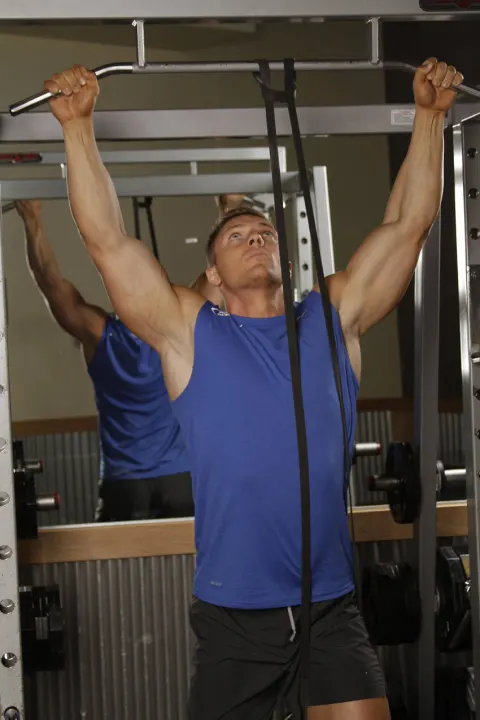
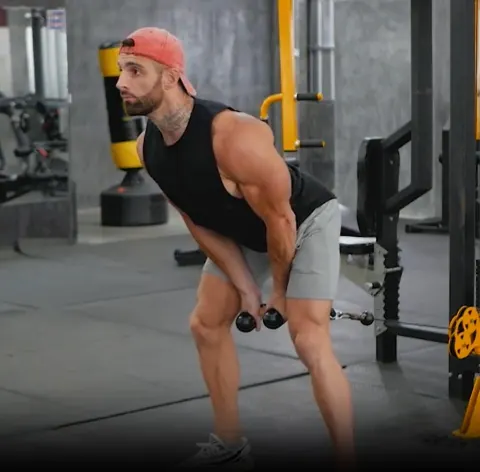
Exercises mentioned
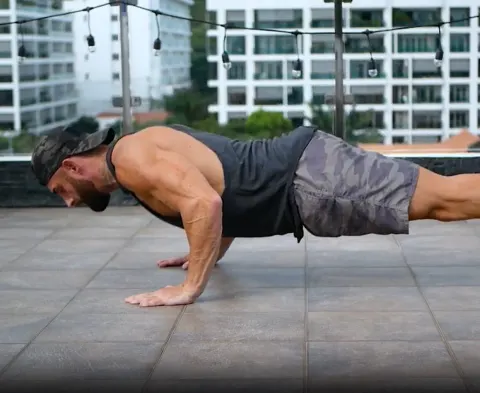
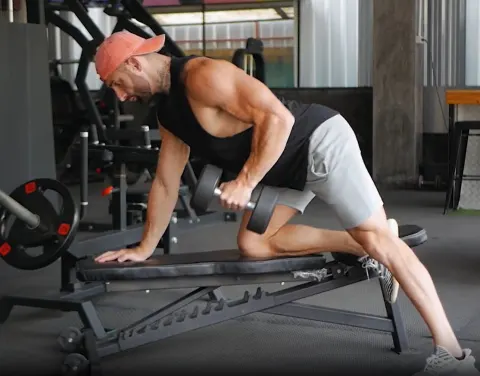
Frequently asked questions
Is 30 minutes of exercise a day enough?
For health, yes. Thirty minutes of moderate activity on five days meets the widely used guideline of 150 minutes a week. For strength, three focused 30-minute sessions are enough for beginners to progress. Body weight depends mainly on food intake, so half an hour of exercise supports weight loss but does not replace a calorie deficit.
Is a 2 hour workout too long?
It is not harmful in itself, but it is rarely necessary. Two hours usually means long rests, many overlapping exercises or a lot of waiting and chatting. Most people get the same training effect in 60 to 75 minutes. Powerlifters and athletes who combine skill practice with lifting are the main exceptions.
How long should a beginner work out?
About 30 to 45 minutes, three times a week. That allows a short warm-up and four to six exercises with two or three sets each, which is all a new lifter needs to progress. Longer sessions add soreness and make the habit harder to keep without making the first months more productive.
Is it better to work out longer or more often?
More often, in most cases. Four 45-minute sessions usually beat two 90-minute ones, because the quality of sets falls as a session drags on and each muscle is trained more frequently. Shorter sessions are also easier to fit into a week. Total weekly work matters most, and frequency is the easier way to accumulate it.
Does the warm-up count towards workout time?
Yes, plan for it. Five to ten minutes covers light movement and a few easier sets of the first exercise, and it belongs inside your time budget, not on top of it. When a session must be short, shrink the general warm-up to two or three minutes but keep the lighter sets before your first heavy lift.