Strength Training Program: Get Stronger on the Big Barbell Lifts
A strength training program that takes you from a beginner on-ramp to the big barbell lifts: sets of 4–6, long rests and 4-week waves that add weight steadily.
Example week
3-Day Gym Workout Plan for Strength
A complete week you can start today: exercises, sets, reps and rest for every session, with swaps for each exercise. Open this plan on its own page (PDF) →
Split
Full Body
Sessions / week
3
Avg. session
46 min
Schedule
Mon · Wed · Fri
Warm-up (every session, ~6 min)
- 3–5 min easy cardio: brisk walk, bike, jump rope or marching in place.
- Dynamic mobility: 10 leg swings each way, 10 hip circles, 10 arm circles, 8 cat-cows.
- Ramp-up sets on the first exercise: 1–2 light sets of 8 before your working sets.
Day 1
Full Body A
Squat + push + pull
-
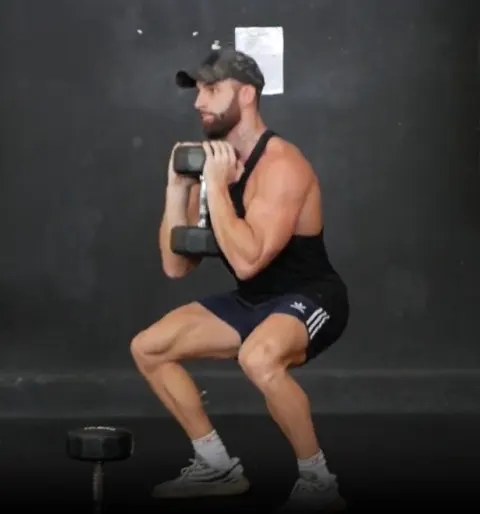
Quads, Glutes · Dumbbell
- Sets
- 3
- Reps
- 4–6
- Rest
- 150s
- Effort
- RPE 8
-
Chest, Triceps · Dumbbell
- Sets
- 3
- Reps
- 4–6
- Rest
- 150s
- Effort
- RPE 8
-
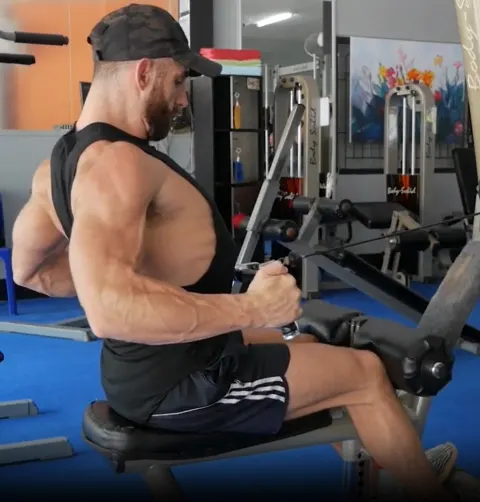
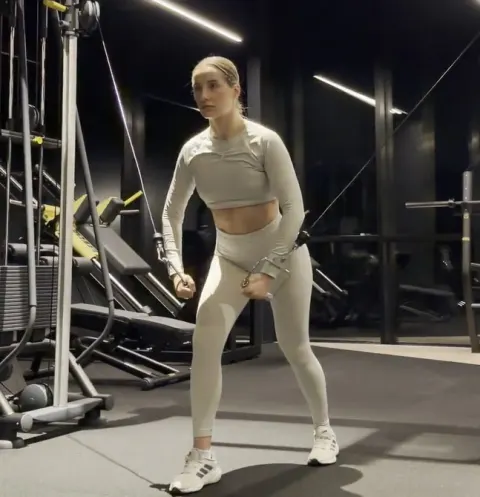
Upper Back, Lats · Cable
- Sets
- 3
- Reps
- 4–6
- Rest
- 150s
- Effort
- RPE 8
swap: Machine Row, Chest-Supported Row, Band Row
-
Glutes, Quads, Hamstrings · Barbell
- Sets
- 2
- Reps
- 6–8
- Rest
- 120s
- Effort
- RPE 7–8
swap: Kettlebell Deadlift, Goblet Squat, Banded Good Morning
-
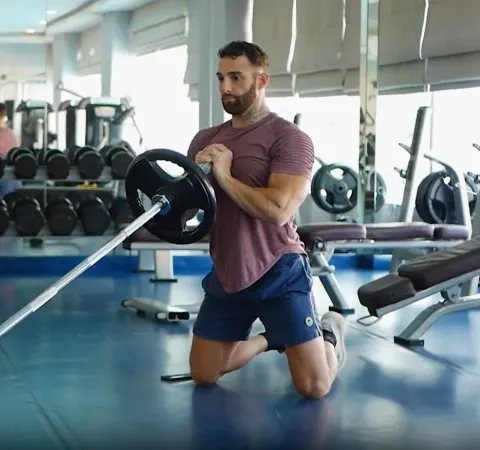
Front Delts, Chest · Barbell
- Sets
- 3
- Reps
- 8–12 / side
- Rest
- 75s
- Effort
- RPE 7
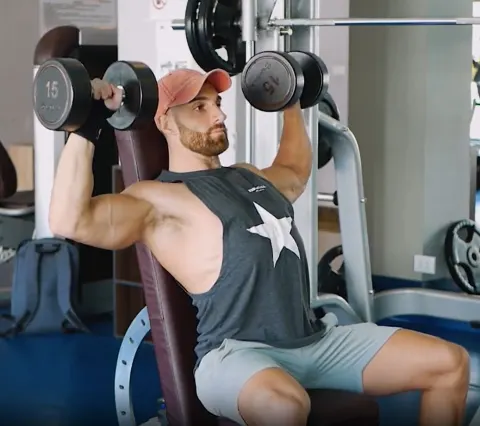
swap: Dumbbell Shoulder Press, Kettlebell Press, Incline Dumbbell Press
Day 2
Full Body B
Hinge + vertical push/pull
-
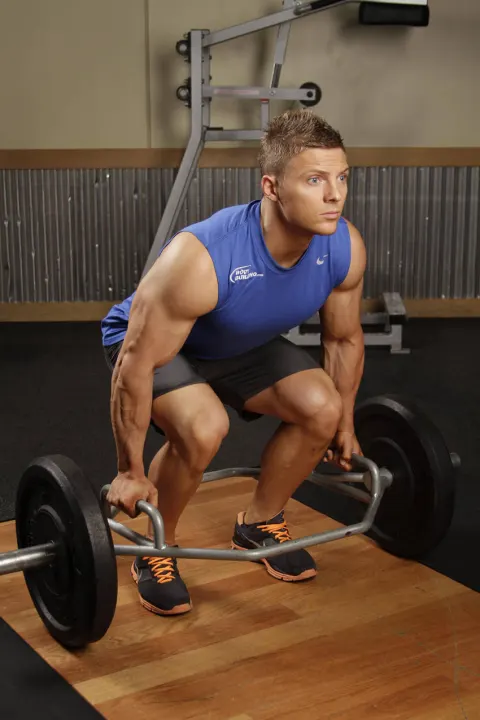
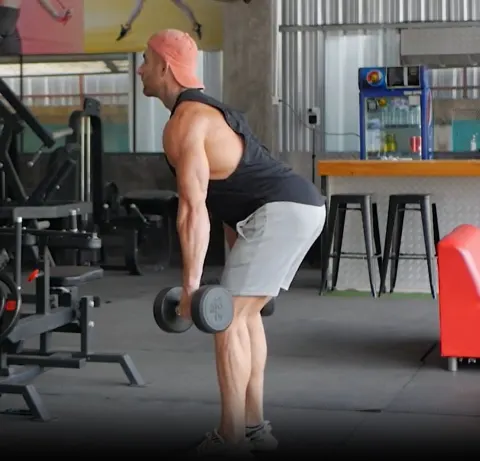
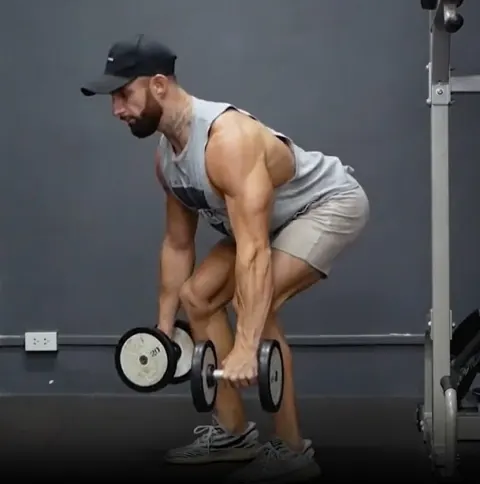
Hamstrings, Glutes · Dumbbell
- Sets
- 3
- Reps
- 4–6
- Rest
- 150s
- Effort
- RPE 8
swap: Dumbbell Romanian Deadlift, Kettlebell Deadlift, Trap Bar Deadlift
-
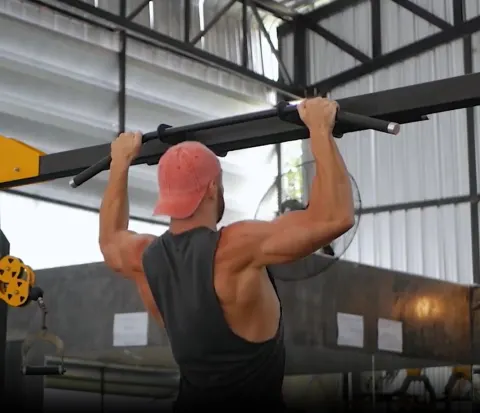
Lats, Upper Back · Pull-Up Bar
- Sets
- 3
- Reps
- 4–6
- Rest
- 150s
- Effort
- RPE 8
swap: Assisted Pull-Up, Lat Pulldown, Inverted Row
-
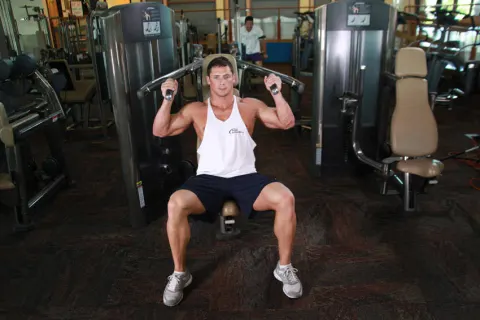
Front Delts, Side Delts · Machine
- Sets
- 3
- Reps
- 4–6
- Rest
- 150s
- Effort
- RPE 8
swap: Seated Dumbbell Press, Dumbbell Shoulder Press, Band Shoulder Press
-
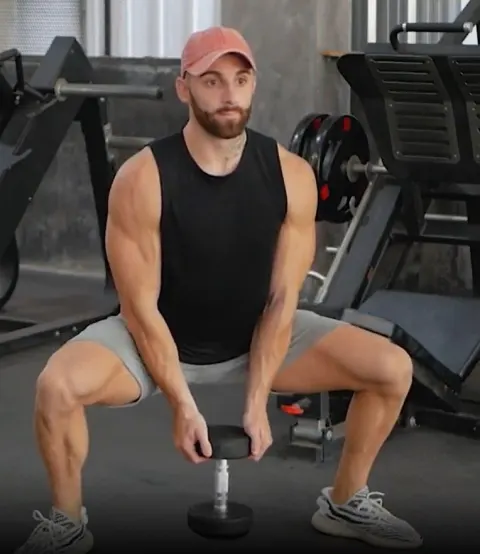
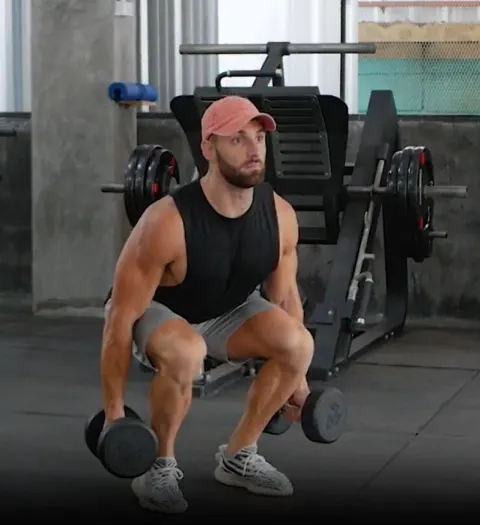
Quads, Glutes · Dumbbell
- Sets
- 2
- Reps
- 6–8 / side
- Rest
- 120s
- Effort
- RPE 7–8
swap: Reverse Lunge, Split Squat, Step-Up
Day 3
Full Body C
Single-leg + chest + back
-
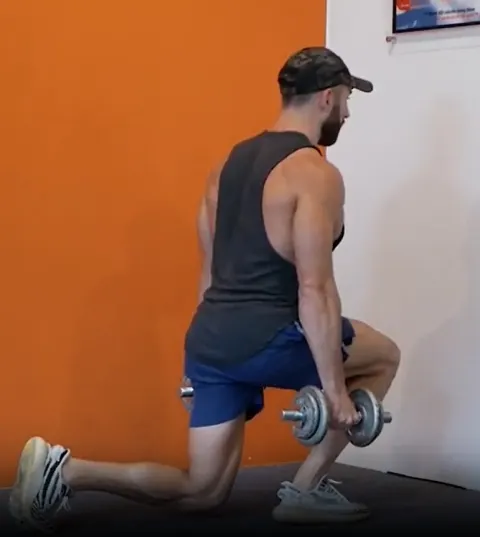
Quads, Glutes · Dumbbell
- Sets
- 3
- Reps
- 4–6 / side
- Rest
- 150s
- Effort
- RPE 8
swap: Reverse Lunge, Split Squat, Step-Up
-
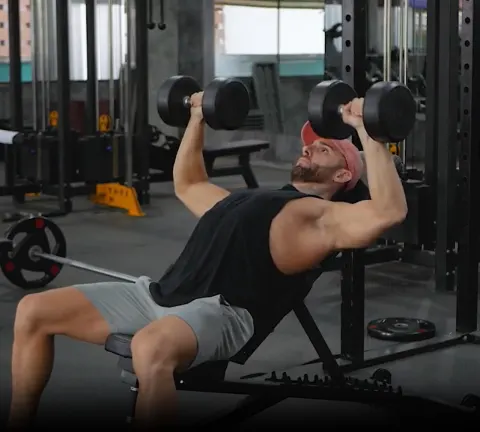
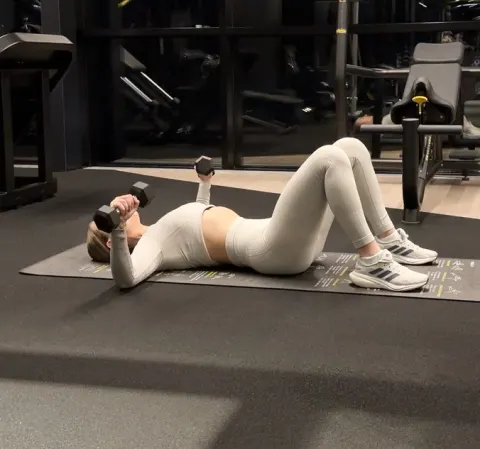
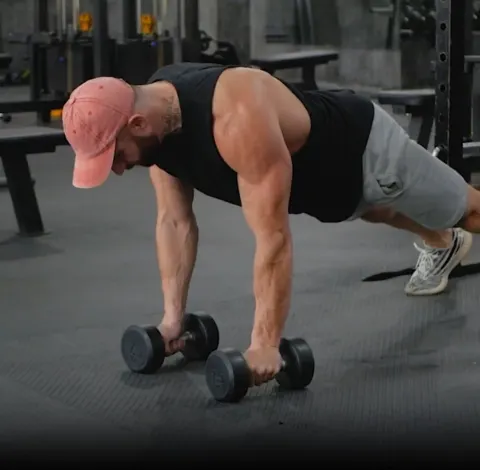
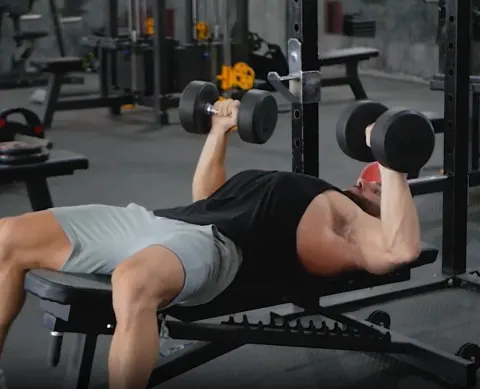
Chest, Front Delts · Dumbbell
- Sets
- 3
- Reps
- 4–6
- Rest
- 150s
- Effort
- RPE 8
swap: Machine Chest Press, Dumbbell Bench Press, Dumbbell Floor Press
-
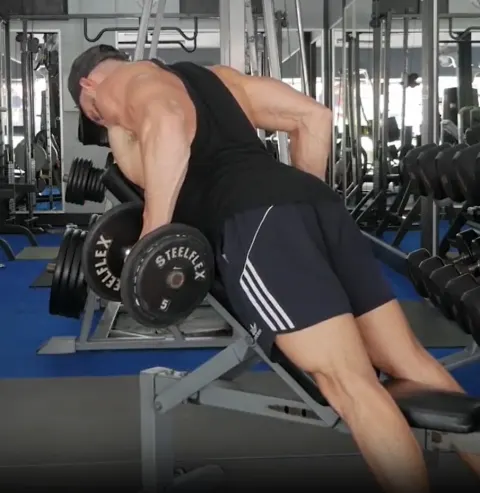
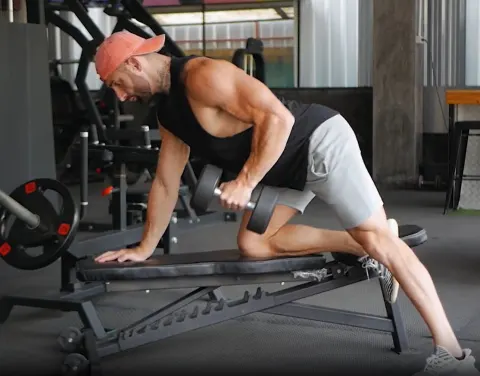
Lats, Upper Back · Dumbbell
- Sets
- 3
- Reps
- 4–6 / side
- Rest
- 150s
- Effort
- RPE 8
-
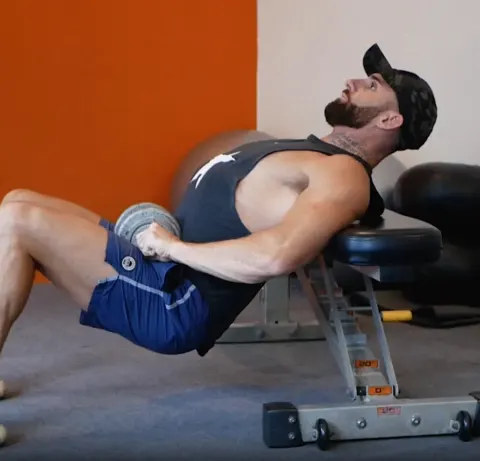
Glutes · Dumbbell
- Sets
- 2
- Reps
- 6–8
- Rest
- 120s
- Effort
- RPE 7–8
-
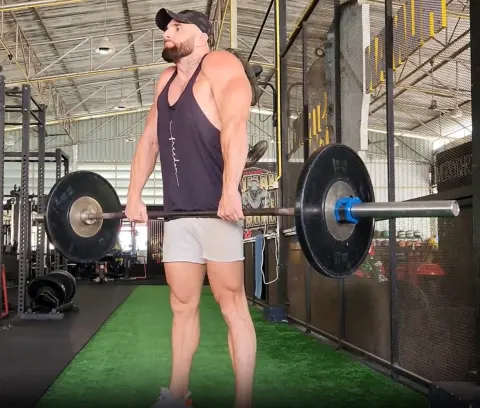
Traps · Barbell
- Sets
- 3
- Reps
- 8–12
- Rest
- 75s
- Effort
- RPE 7
swap: Dumbbell Shrug, Face Pull, Band Upright Row
8-week progression: what to change each week
Same exercises for the whole block. Weeks move the reps, then the load; the last week is a deload.
| Week | Load | Reps | Effort | What to watch |
|---|---|---|---|---|
| 1 | Starting weight | bottom of range (4) | RPE 7 | Should feel 2–3 reps short of failure on every set. |
| 2 | Same weight | middle of range (5) | RPE 8 | Add a rep per set; rest the full time. |
| 3 | Same weight | top of range (6) | RPE 8–9 | Hit every set at the top → earn the increase. |
| 4 | Deload: 60 % | bottom of range | RPE 5–6 | Half the sets, easy speed. Recovery is where strength shows up. |
| 5 | +2.5 kg (5 lb) | bottom of range (4) | RPE 7 | New working weight; reps drop back to the bottom of the range. |
| 6 | Same weight | middle of range (5) | RPE 8 | Add a rep per set; rest the full time. |
| 7 | Same weight | top of range (6) | RPE 8–9 | Hit every set at the top → earn the increase. |
| 8 | Deload: 60 % | bottom of range | RPE 5–6 | Half the sets, easy speed. Recovery is where strength shows up. |
How to progress
- First 2 weeks: focus on form with light weights, stop each set 3 reps before failure.
- Double progression on main lifts: when you hit the top of the rep range on every set, add 2.5 kg (5 lb) next session.
- Keep 1–2 reps in reserve on main lifts; grind only on the last set of the week.
- Every 4th week, drop to 60 % of your working weights for a deload.
Notes for this plan
- Sessions can move between days; keep at least one rest day between hard sessions for the same muscles.
Strength is a skill you practise under heavy load. A good program picks a handful of big lifts, has you repeat them several times a week for sets of 4–6, gives you long rests, and raises the weight on a schedule you can sustain. The week on this page is the beginner on-ramp to that; the barbell classics come one step later.
Who this is for, and what 12 weeks can bring
This program suits anyone whose goal is a number on the bar more than a look: new lifters with a gym membership, people returning after a break, and anyone bored of sets of 12.
Beginners often add 30–50 % to their main lifts in the first 8 weeks. Be honest about why: most of it is coordination and confidence, not new muscle. It is still real strength, and it is the base later gains are built on.
How the three days are organised
The example week above has three full-body sessions on Monday, Wednesday and Friday. Each opens with three main lifts, then adds one supporting lift and one accessory. Five exercises take about 46 minutes, most of it rest.
- Day A leads with a squat, a horizontal press and a row.
- Day B leads with a hinge, a vertical pull and an overhead press.
- Day C leads with a single-leg movement, an incline press and a second row.
You train legs, pressing and pulling three times a week without repeating the same heavy lift in back-to-back sessions.
| Slot | Sets | Reps | Rest | Effort |
|---|---|---|---|---|
| Main lifts | 3 | 4–6 | 2.5 minutes | 1–2 reps left |
| Supporting lift | 2 | 6–8 | 2 minutes | About 2 reps left |
| Accessory | 3 | 8–12 | 75 seconds | 2–3 reps left |
Do not shorten the rests to save time. Two and a half minutes is what lets your third set match your first, and matching sets are what build strength.
Where the barbell lifts come in
Look closely at the week above and you will find no back squat, bench press or deadlift from the floor. That is deliberate. The exercise library rates those lifts as intermediate, so the beginner build fills the same slots with dumbbell squats and presses, cable and dumbbell rows, a trap-bar deadlift, a machine shoulder press and lowering-only pull-ups. The patterns, reps and rests are identical. Only the skill demand is lower, which lets you push hard from week one.
Run the on-ramp for two or three waves, 8–12 weeks. Then move to the ready-made strength plans, which are intermediate builds with barbell lifts in the main slots for 4 × 4–6. The 3-day gym strength plan is a push/pull/legs week, and the 4-day gym strength plan is upper/lower. If you have lifted before or have a coach, start there.
Technique comes before load
For the first two weeks, lift light and stop every set about 3 reps before failure. Three habits pay off for years:
- Same setup every rep. Foot position, grip width and the path of the weight should look identical on your lightest set and your heaviest.
- Brace before you move. Big breath into the belly, ribs down, then lift.
- Film one set from the side each week. Depth and bar path are hard to feel and easy to see.
When you move to the bar, begin with it empty. An Olympic bar weighs 20 kg, which is the right first load for the overhead press and a fine place to learn the back squat. Learn to hinge with a trap bar or dumbbells, as the on-ramp has you do, before you pull a conventional deadlift.
Ramp-up sets: the part of the warm-up that matters
After 3–5 minutes of easy cardio and some mobility drills, build to your working weight in steps. These ramp-up sets rehearse the lift and should never tire you. For a 60 kg barbell squat:
| Set | Load | Reps |
|---|---|---|
| 1 | Empty bar, 20 kg | 8 |
| 2 | 40 kg | 5 |
| 3 | 50 kg | 2 |
| Work sets | 60 kg | 4–6 |
With dumbbells or machines, one set at about half the working weight and one at three-quarters does the job. The warm-up guide has the full routine.
The 4-week wave: how weight goes on
Strength plans on this site do not chase a rep range for months. They run short waves at a fixed weight. Here is one for a lift at 60 kg:
| Week | Load and reps | What changes |
|---|---|---|
| 1 | 60 kg, sets of 4 | Starting weight, 2 reps in reserve |
| 2 | 60 kg, sets of 5 | One more rep per set |
| 3 | 60 kg, sets of 6 | Top of the range, 1 rep in reserve |
| 4 | About 35 kg, half the sets | Lighter week at roughly 60 % |
| 5 | 62.5 kg, sets of 4 | +2.5 kg (5 lb), the wave repeats |
That is 2.5 kg a month, or 30 kg a year if nothing stalls. It sounds slow beside adding weight every session, but it is a pace people sustain long after the first few months. The light week is not optional: it is where three weeks of work turn into strength.
On dumbbell lifts the step is the next pair. If that jump is too big, repeat the wave at the same weight before moving up. Either way, choose a starting weight that makes week 1 feel almost too easy.
Estimated 1RM and strength standards
You never need to test a true one-rep max. Enter any hard set of 3–8 reps into the one rep max calculator and it estimates your 1RM. Five reps at 60 kg works out to roughly 68–70 kg. A rising estimate is progress even when the plates have not changed.
Once you are on the barbell lifts, compare the estimate with the strength standards for your body weight to spot a lagging lift. A bench press far ahead of your squat tells you where the effort should go.
When the jumps stall
Sooner or later a wave fails: week 3 gives you 6, 5, 4. Work down this list.
- Repeat the wave at the same weight. One bad month is not a plateau.
- Check recovery. Under 7 hours of sleep or a hard diet stalls a press faster than any programming flaw. Eat at maintenance or slightly above, with 1.6–2.2 g of protein per kg of body weight.
- Shrink the jump. Use 1.25 kg plates, especially on the overhead press, which always stalls first.
- Reset. Take 10 % off the lift and build back over two waves with cleaner reps.
Never fix a stall by grinding main lifts to failure. Missed reps teach your body to miss.
Why strength plans need a gym or dumbbells
Getting stronger at 4–6 reps takes a load you can raise in small steps for years. A barbell does that best. Dumbbells do it well enough, so there is a 3-day dumbbell strength plan; expect bigger jumps between weights and more single-leg work, as the dumbbell workout plan page explains.
There are no dedicated strength plans for bodyweight, kettlebell or resistance bands. Those tools build muscle and fitness, but there is not enough load to keep adding. If that is what you own, choose a muscle or general fitness goal.
Common mistakes
- Maxing out often. Testing is not training.
- Rushing rests. Ninety seconds between heavy sets turns strength work into bad cardio.
- Big jumps. Adding 5 kg because week 1 felt easy burns through the wave in a fortnight.
- Skipping the on-ramp. Loading a barbell squat you cannot yet control is how backs get tweaked.
- Program hopping. Give the waves at least three cycles, which is 12 weeks.
Where to start, and what comes next
New to lifting? Begin with the 3-day gym strength plan for beginners, and read the gym workout plan for beginners page if the weights area still feels unfamiliar. When low reps alone stop moving your lifts, a higher-volume block on the muscle building workout plan gives you more muscle to make strong.
Strength Training Program: all 42 plans
- 2-Day Dumbbell Workout Plan for Strength (Women)
- 2-Day Dumbbell Workout Plan for Strength (Men)
- 2-Day Dumbbell Workout Plan for Strength (Over 50)
- 2-Day Gym Workout Plan for Strength
- 2-Day Gym Workout Plan for Strength (Beginners)
- 2-Day Gym Workout Plan for Strength (Women)
- 2-Day Gym Workout Plan for Strength (Men)
- 2-Day Gym Workout Plan for Strength (Over 50)
- 3-Day Dumbbell Workout Plan for Strength (Women)
- 3-Day Dumbbell Workout Plan for Strength (Men)
- 3-Day Dumbbell Workout Plan for Strength (Over 50)
- 3-Day Gym Workout Plan for Strength
- 3-Day Gym Workout Plan for Strength (Beginners)
- 3-Day Gym Workout Plan for Strength (Women)
- 3-Day Gym Workout Plan for Strength (Men)
- 3-Day Gym Workout Plan for Strength (Over 50)
- 4-Day Dumbbell Workout Plan for Strength (Women)
- 4-Day Dumbbell Workout Plan for Strength (Men)
- 4-Day Dumbbell Workout Plan for Strength (Over 50)
- 4-Day Gym Workout Plan for Strength
- 4-Day Gym Workout Plan for Strength (Beginners)
- 4-Day Gym Workout Plan for Strength (Women)
- 4-Day Gym Workout Plan for Strength (Men)
- 4-Day Gym Workout Plan for Strength (Over 50)
- 5-Day Dumbbell Workout Plan for Strength (Men)
- 5-Day Gym Workout Plan for Strength
- 5-Day Gym Workout Plan for Strength (Women)
- 5-Day Gym Workout Plan for Strength (Men)
- 6-Day Dumbbell Workout Plan for Strength (Women)
- 6-Day Dumbbell Workout Plan for Strength (Men)
- 6-Day Gym Workout Plan for Strength
- 6-Day Gym Workout Plan for Strength (Women)
- 6-Day Gym Workout Plan for Strength (Men)
Related programs
Frequently asked questions
How many days a week should I do strength training?
Three non-consecutive days is the best starting point: each main movement is practised three times a week with a rest day after every session. Two days still works if sessions are focused. Move to four days only after 6 to 12 months, when three sessions can no longer hold the work.
How many sets and reps should I do for strength?
For the main lifts, 3 to 4 sets of 4 to 6 reps with about 2.5 minutes of rest, stopping 1 or 2 reps before failure. Supporting lifts use 6 to 8 reps and accessories 8 to 12. Heavy low-rep sets train your nervous system to produce force, which is what strength is.
How fast should I add weight to the bar?
On this program, 2.5 kg per lift every four weeks: three weeks building from 4 to 6 reps at one weight, one lighter week, then the increase. Complete beginners may progress faster for a couple of months, but a steady monthly jump is what continues to work after that.
Can I build strength at home without a barbell?
Yes, with adjustable dumbbells that reach at least 24 to 32 kg per hand. Heavy split squats, presses and rows in the 4 to 6 rep range can progress for a long time. Bodyweight, kettlebells and bands suit muscle and fitness goals better, because their load cannot rise in small enough steps.
What is the difference between strength training and hypertrophy training?
Strength training uses heavier loads for 4 to 6 reps with long rests to raise how much force you can produce. Hypertrophy training uses 6 to 12 reps and more weekly sets to add muscle size. They overlap heavily: beginners gain both from either, and experienced lifters alternate blocks of each.