How Many Exercises per Workout? A Guide by Goal and Level
How many exercises per workout and per muscle group: 4 to 7 per session for most people, with tables by experience, session length and training split.
Most people should do 4 to 7 exercises per workout: 4 to 6 in a full-body session and 5 to 7 in a split session. Per muscle group, 1 to 2 exercises in a session and 2 to 4 different ones across the week is enough. The number of hard sets you complete matters more than the number of exercises you spread them over.
Exercises per workout by experience
| Level | Exercises per session | Sets per exercise | Hard sets per session |
|---|---|---|---|
| Beginner, first year | 4–6 | 2–3 | 10–15 |
| Intermediate, 1–3 years | 5–7 | 3–4 | 15–22 |
| Advanced, 3+ years | 4–7 | 3–5 | 16–24 |
Notice that the advanced row does not contain more exercises. Experienced lifters usually do more sets of fewer movements, because they need more work on each lift to keep improving and they know which exercises suit them.
Why the set count matters more
“Six exercises” tells you very little. Six exercises for two sets each is a 30-minute session of 12 sets. Six exercises for five sets each is 30 sets and well over an hour. The body responds to the hard sets it receives per muscle per week, which is called training volume, and exercises are only containers for those sets.
So plan in this order:
- Decide the weekly sets for each muscle. The guide to sets per muscle group per week gives the ranges.
- Divide them over your training days.
- Choose the fewest exercises that deliver those sets well.
Three sets of two exercises and two sets of three exercises give a muscle the same six sets. The first option needs less warming up, less walking around the gym and less equipment, and it lets you practise each lift more often.
How many exercises per muscle group
| Muscle group | Per session | Different exercises per week |
|---|---|---|
| Chest | 1–2 | 2–3 |
| Back | 2 | 3–4 |
| Quads | 1–2 | 2–3 |
| Hamstrings and glutes | 1–2 | 2–3 |
| Shoulders | 1–2 | 2–3 |
| Biceps, triceps | 1 each | 2 each |
| Calves, abs | 1 each | 1–2 each |
The back gets the most because it does two different jobs: pulling down from overhead, as in the lat pulldown, and pulling towards the body, as in any row. One of each is worth having. Small muscles need fewer direct exercises because presses already train the triceps and rows already train the biceps.
A second exercise for a muscle earns its place when it does something the first does not: a different angle, a different part of the range, or a longer stretch. A flat press and an incline press differ. A barbell bench press followed by a machine chest press and a dumbbell bench press is the same movement three times.
Exercises by training split
How you divide the week changes the count per session, not the weekly total.
- Full body, 2–3 days: 4–6 exercises. One for the legs, one hinge, one press, one pull, then one or two extras such as a core or shoulder movement. The full-body workout with dumbbells follows this pattern.
- Upper/lower, 4 days: 5–7 exercises. Upper days hold two presses, two pulls and one to three smaller movements, as in the upper-body workout at the gym. Lower days hold a squat, a hinge, a single-leg or machine exercise, calves and core.
- Push/pull/legs or body-part days, 5–6 days: 5–6 exercises. With fewer muscles per session you can give each one two movements. A typical leg workout at the gym has six.
If you are not sure which layout fits your week, the 3-day workout plan page is a safe starting point.
Exercises by the time you have
Each hard set costs roughly two to three minutes once rest is included, so time sets a ceiling whatever your plan says.
| Session length | Exercises | Total sets |
|---|---|---|
| 20 minutes | 3–4 | 8–10 |
| 30 minutes | 4–5 | 10–12 |
| 45 minutes | 5–6 | 15–18 |
| 60 minutes | 6–8 | 18–24 |
Shorter rests fit more in, but they also cut the reps you can do on big lifts. See how long to rest between sets before you squeeze the breaks, and how long a workout should be for the bigger picture.
The order of exercises
The sequence affects results almost as much as the number.
- Big lifts first. Start with the compound exercise that uses the most muscle and needs the most skill, such as the back squat or a heavy press. It gets your best energy.
- Second compound next. Usually a movement for the opposite pattern: a pull after a press, a hinge after a squat.
- Isolation work last. An isolation exercise such as a curl or lateral raise is safe to do when tired and costs little recovery.
If a small muscle is your priority, break rule three on purpose and train it first once a week.
Signs you are doing too many
- The session regularly runs past 75 minutes.
- Your weights on the last three exercises never go up.
- You cannot remember what you lifted last week on half of the list.
- Several exercises feel like easier copies of an earlier one.
- You are sore for days but your numbers stay flat.
The fix is to delete, not to try harder. Remove the two exercises you progress on least and add a set to the two you progress on most.
Signs you are doing too few
Too few is less common, and it shows up differently:
- A muscle group gets no direct work in the whole week. Hamstrings, rear shoulders and calves are the usual gaps.
- Every exercise for a muscle uses the same angle.
- One joint aches because the same movement is repeated for many sets, several times a week.
Here, swapping some sets to a second exercise helps more than adding sets.
A template you can reuse
For a 45-minute full-body session:
- Squat or leg press: 3 sets
- Press, on a bench or overhead: 3 sets
- Row or pulldown: 3 sets
- Hinge, such as a Romanian deadlift: 3 sets
- One small exercise for arms or shoulders: 2 sets
- One core exercise: 2 sets
That is six exercises and 16 sets. Change the pressing angle and the type of pull from one session to the next, and you cover two to four exercises per muscle group across the week without lengthening any single day. For the ranges that go with each slot, read sets and reps explained.
Ready plans for this guide
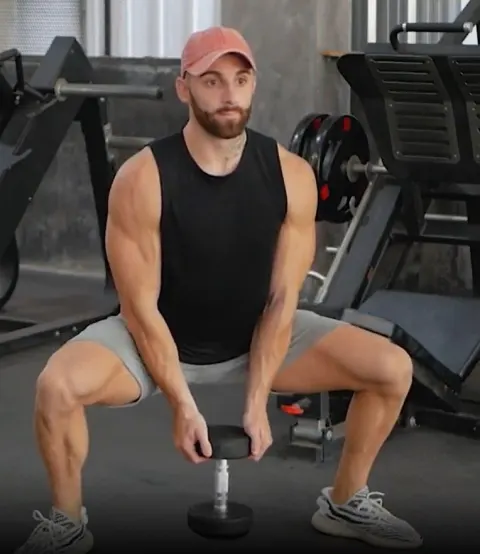
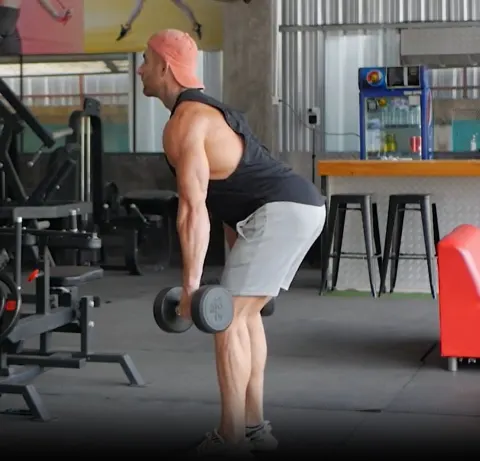
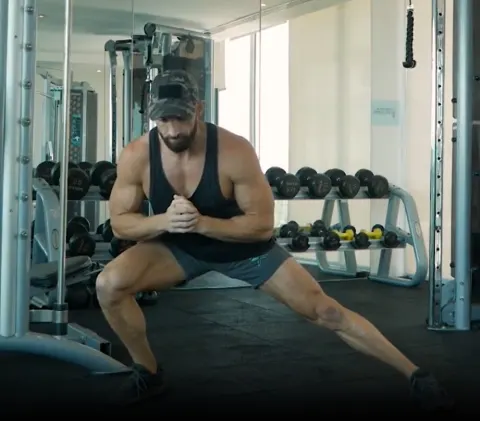
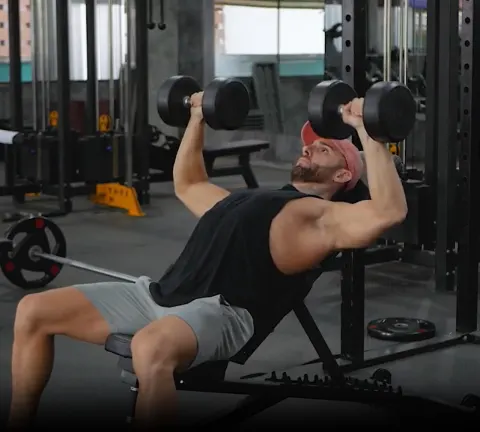
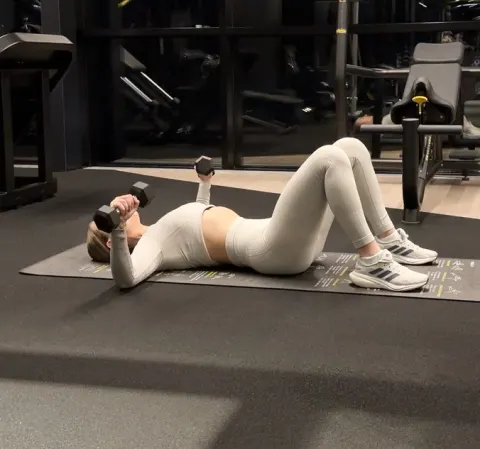
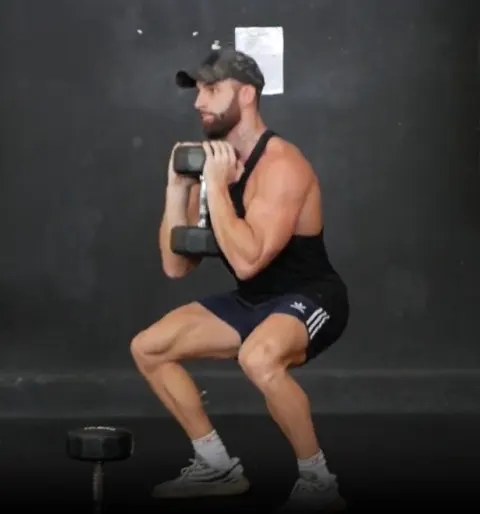
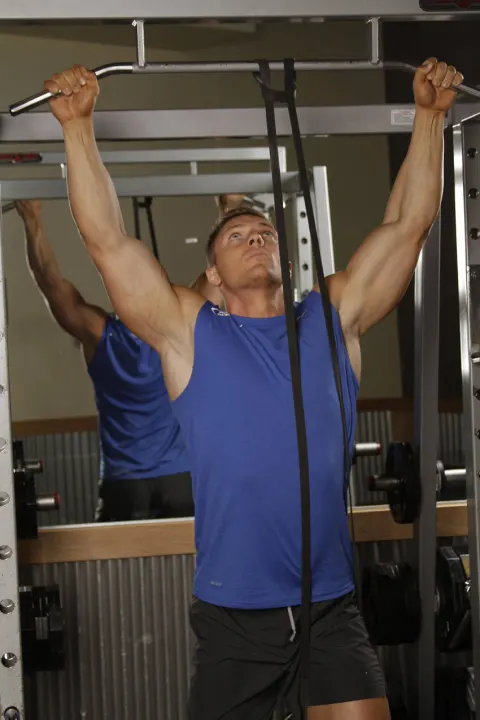
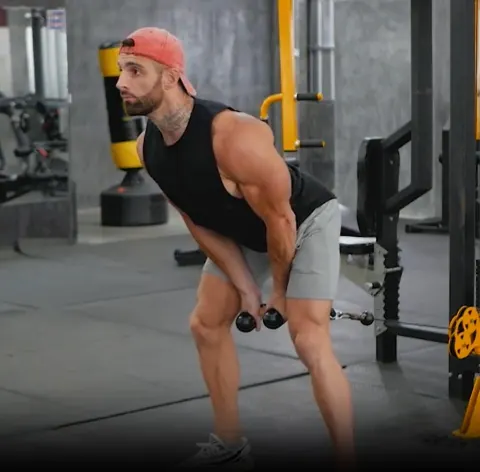
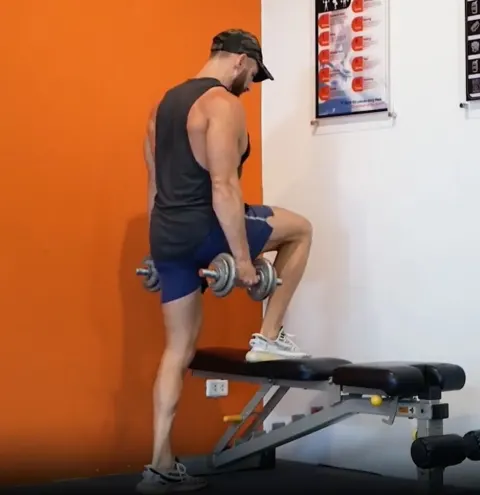
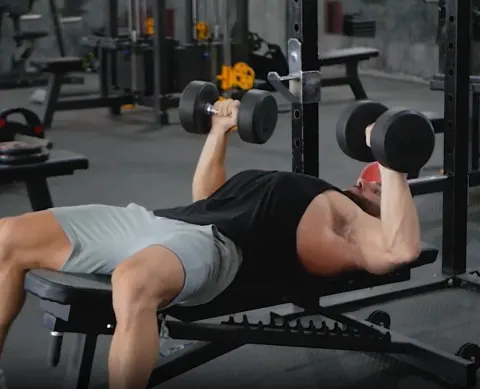
Exercises mentioned
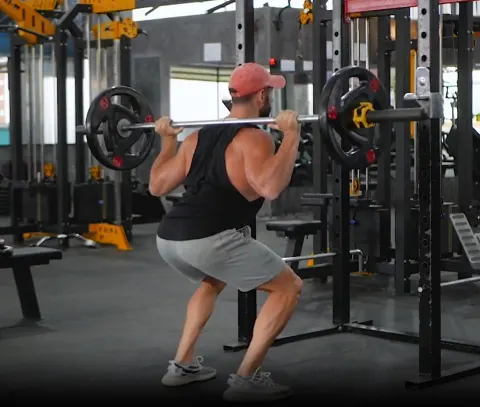 video
intermediate
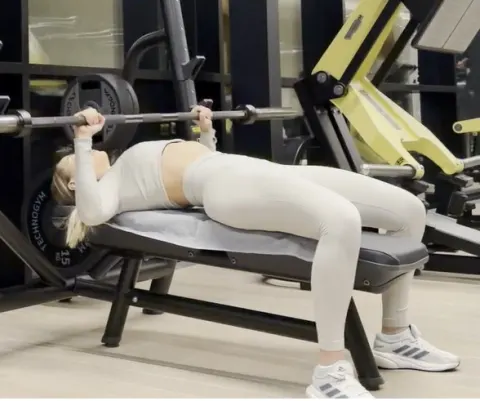 video
intermediate
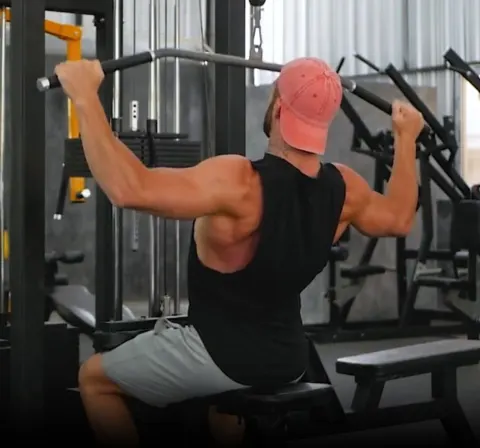 video
beginner
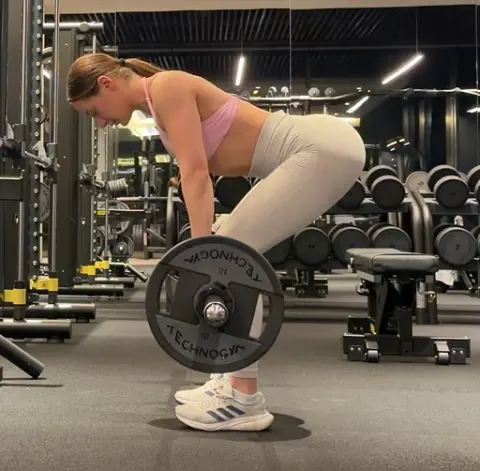 video
intermediate
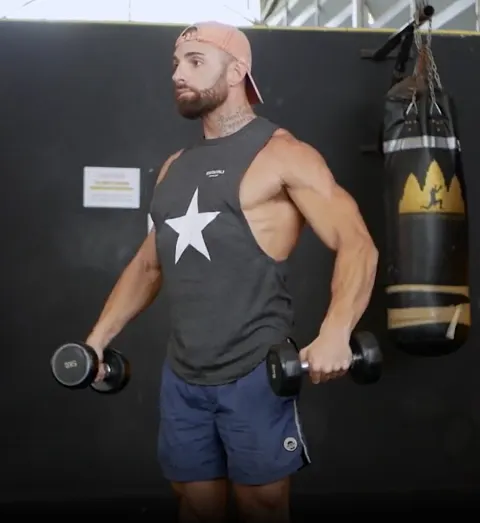 video
beginner
Frequently asked questions
Is 4 exercises per workout enough?
Yes, if they are the right four and the sets are hard. A squat or leg press, a press, a row or pulldown and a hinge such as a Romanian deadlift cover almost every major muscle. With three sets of each you have twelve hard sets, which is a complete session for a beginner and a solid short session for anyone.
How many exercises should I do per muscle group?
One or two per session and two to four across the week. Large muscle groups such as the back or quads benefit from two different movements, for example a row and a pulldown. Small ones such as biceps or calves need only one per session. Rotating in a second exercise later in the week covers different angles.
Is 3 exercises per muscle group too much?
In one session it usually is. By the third exercise for the same muscle you are tired enough that the sets add fatigue more than growth. Two exercises with three or four sets each already give six to eight hard sets. If you want three movements for a muscle, spread them over two different training days.
Is it bad to do 10 exercises in one workout?
It is rarely useful. Ten exercises with three sets each make a session of 90 minutes or more, and the quality of the last few drops sharply. Most ten-exercise routines contain several movements that duplicate each other. Trimming to six or seven and working harder on each normally produces better results in less time.
Should beginners do fewer exercises?
Yes. Four to six exercises per session is ideal in the first year. Each one is a skill that improves with repetition, so a short list practised three times a week is learned faster than a long list practised once. Beginners also respond to few sets, so extra exercises add soreness without adding results.