Workout Plan for Busy People: Three 30-Minute Sessions a Week
A workout plan for busy people: three full-body dumbbell sessions of under 30 minutes, with supersets, a what-to-cut-first list and short routines in between.
Example week
3-day example plan
A complete week you can start today: exercises, sets, reps and rest for every session, with swaps for each exercise.
Split
Full Body
Sessions / week
3
Avg. session
29 min
Schedule
Mon · Wed · Fri
Warm-up (every session, ~6 min)
- 3–5 min easy cardio: brisk walk, bike, jump rope or marching in place.
- Dynamic mobility: 10 leg swings each way, 10 hip circles, 10 arm circles, 8 cat-cows.
- Ramp-up sets on the first exercise: 1–2 light sets of 8 before your working sets.
Day 1
Full Body A
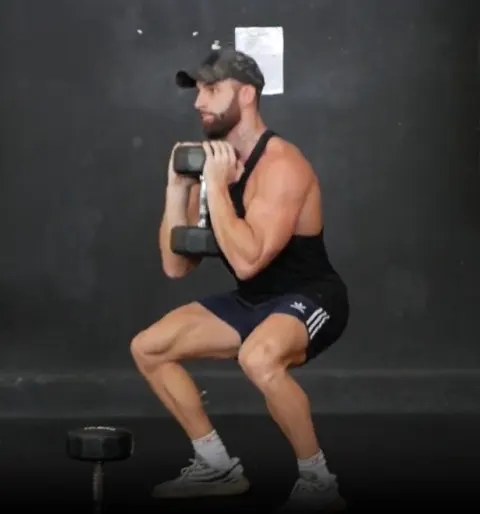
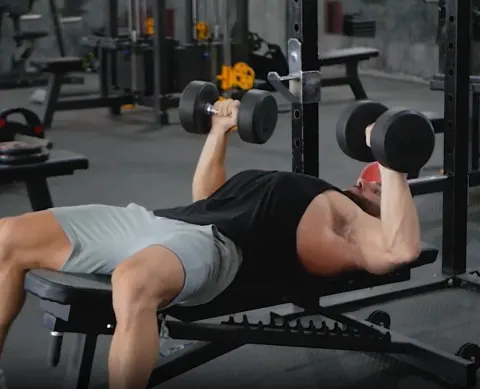
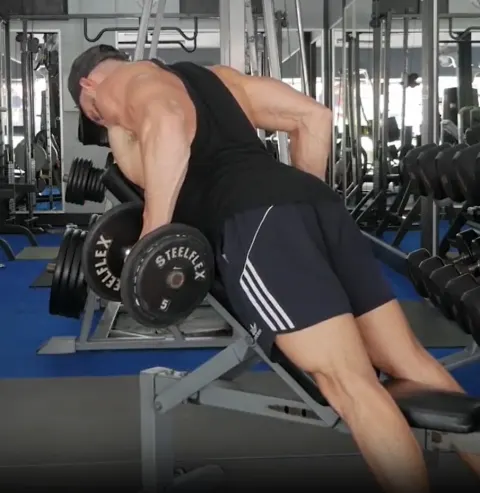
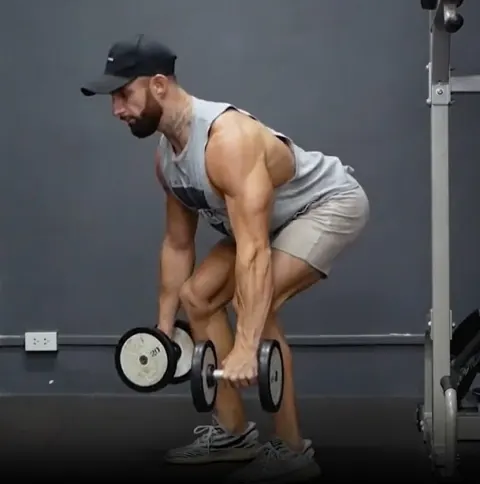
Squat + push + pull
-
Quads, Glutes · Dumbbell
- Sets
- 2
- Reps
- 8–10
- Rest
- 90s
- Effort
- RPE 7
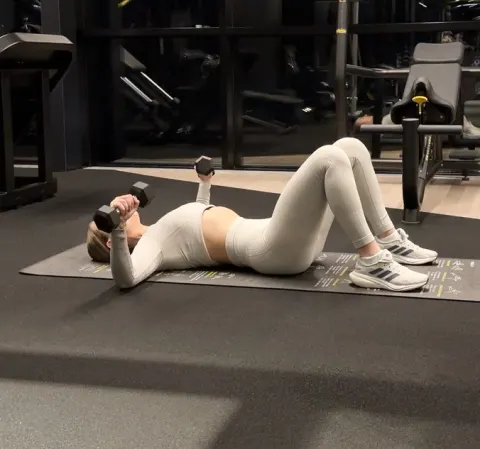
swap: Bodyweight Squat, Dumbbell Squat, Sumo Squat
-
Chest, Triceps · Dumbbell
- Sets
- 2
- Reps
- 8–10
- Rest
- 90s
- Effort
- RPE 7
-
Upper Back, Lats · Dumbbell
- Sets
- 2
- Reps
- 8–10
- Rest
- 90s
- Effort
- RPE 7
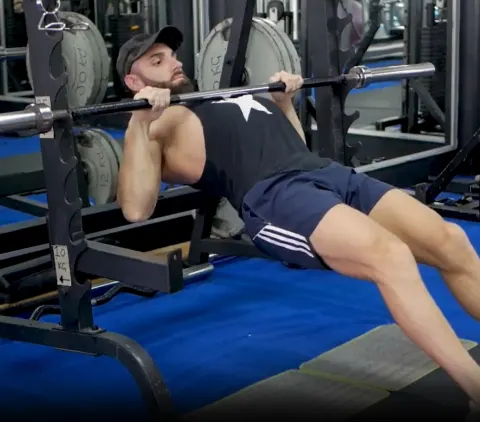
swap: Dumbbell Row, Inverted Row, Rear Delt Fly
-
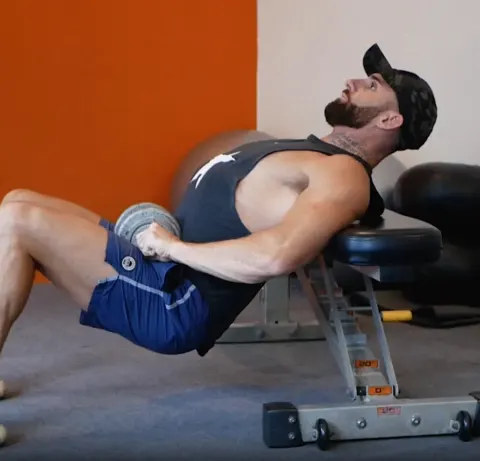
Hamstrings, Glutes · Dumbbell
- Sets
- 2
- Reps
- 8–12
- Rest
- 75s
- Effort
- RPE 7
-
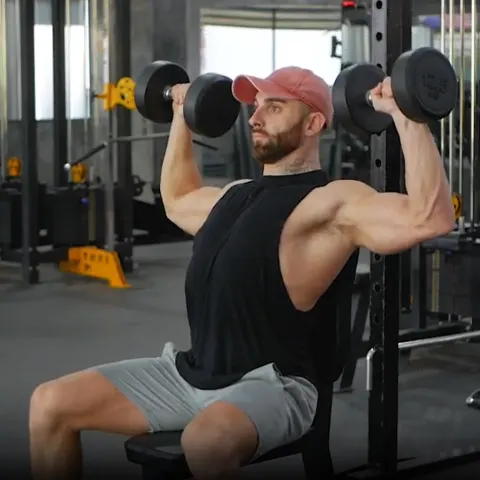
Front Delts, Side Delts · Dumbbell
- Sets
- 2
- Reps
- 12–15
- Rest
- 60s
- Effort
- RPE 7
-
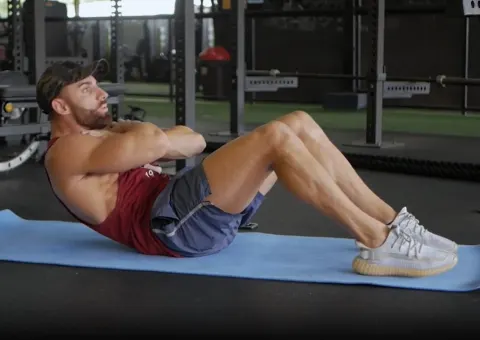
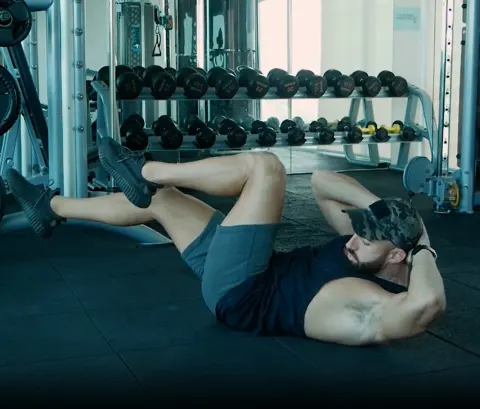
Core · Bodyweight
- Sets
- 2
- Reps
- 12–15
- Rest
- 45s
- Effort
- controlled
swap: Reverse Crunch, Bicycle Crunch, Dead Bug
Day 2
Full Body B
Hinge + vertical push/pull
-
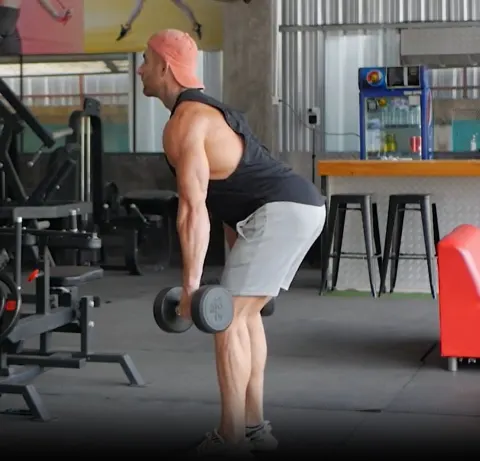
Hamstrings, Glutes · Dumbbell
- Sets
- 2
- Reps
- 8–10
- Rest
- 90s
- Effort
- RPE 7
swap: Bodyweight Hip Hinge, Dumbbell Deadlift, Bodyweight Good Morning
-
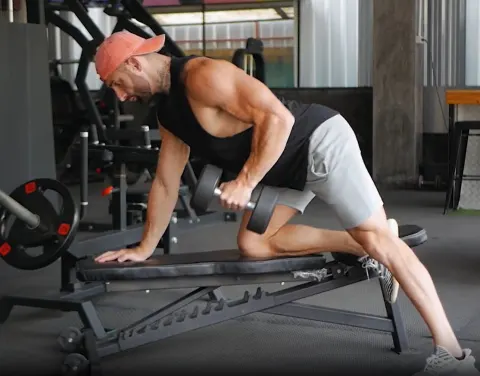
Lats, Upper Back · Dumbbell
- Sets
- 2
- Reps
- 8–10 / side
- Rest
- 90s
- Effort
- RPE 7
-
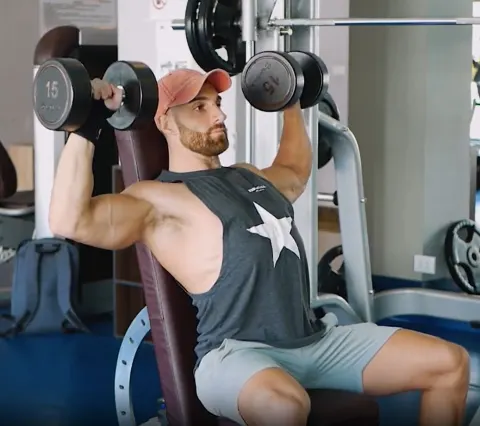
Front Delts, Side Delts · Dumbbell
- Sets
- 2
- Reps
- 8–10
- Rest
- 90s
- Effort
- RPE 7
-
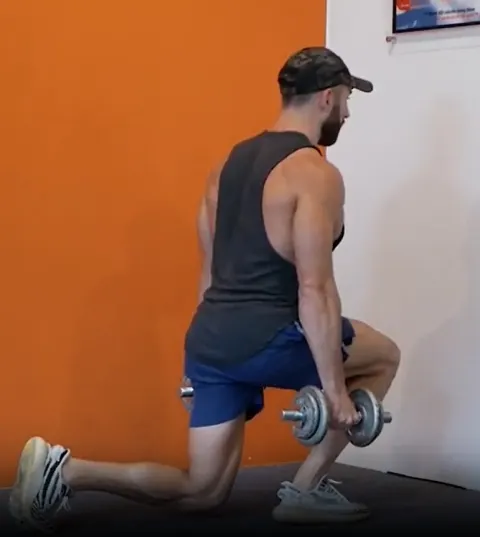
Quads, Glutes · Dumbbell
- Sets
- 2
- Reps
- 8–12 / side
- Rest
- 75s
- Effort
- RPE 7
swap: Reverse Lunge, Split Squat, Step-Up
-
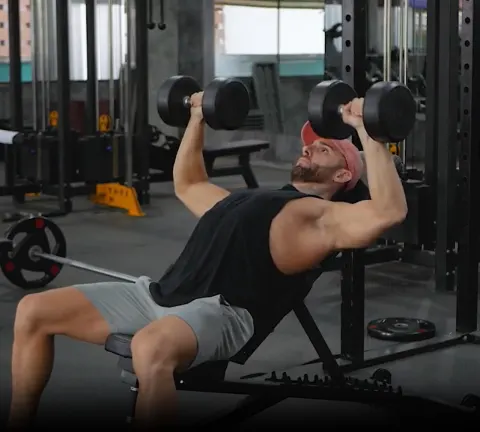
Chest, Front Delts · Dumbbell
- Sets
- 2
- Reps
- 12–15
- Rest
- 60s
- Effort
- RPE 7
-
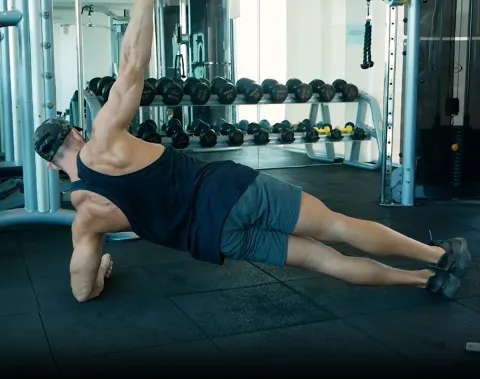
Obliques, Core · Bodyweight
- Sets
- 2
- Reps
- 30–60 sec
- Rest
- 45s
- Effort
- controlled
swap: Plank, Suitcase Carry, Russian Twist
Day 3
Full Body C
Single-leg + chest + back
-
Quads, Glutes · Bodyweight
- Sets
- 2
- Reps
- 8–10 / side
- Rest
- 90s
- Effort
- RPE 7
swap: Reverse Lunge, Split Squat, Walking Lunge
-
Chest, Triceps · Dumbbell
- Sets
- 2
- Reps
- 8–10
- Rest
- 90s
- Effort
- RPE 7
-
Upper Back, Lats · Bodyweight
- Sets
- 2
- Reps
- 8–10
- Rest
- 90s
- Effort
- RPE 7
-
Obliques, Core · Bodyweight
- Sets
- 2
- Reps
- 12–15 / side
- Rest
- 45s
- Effort
- controlled
swap: Crunch, Russian Twist, Dead Bug

8-week progression: what to change each week
Same exercises for the whole block. Weeks move the reps, then the load; the last week is a deload.
| Week | Load | Reps | Effort | What to watch |
|---|---|---|---|---|
| 1 | Light: learn the movements | bottom of range (8) | RPE 6–7 | Stop every set 3 reps before failure; film one set per exercise to check form. |
| 2 | Same weight | +1 rep per set (9) | RPE 8 | Same exercises, same order; only the reps move. |
| 3 | Same weight | top of range (10) | RPE 8 | All sets at the top of the range → add load next week. Missed a set? Repeat the week. |
| 4 | next dumbbell / harder variation | bottom of range (8) | RPE 8 | New weight feels hard at low reps; that is the plan working. |
| 5 | Same weight | +1 rep per set (9) | RPE 8 | Keep rest periods the same. |
| 6 | Same weight | top of range (10) | RPE 8–9 | Second time at the top: take the last set of each main lift to 1 rep in reserve. |
| 7 | next dumbbell / harder variation | bottom of range (8) | RPE 8 | Bodyweight moves: slow the lowering phase to 3 s or move to the harder variation. |
| 8 | Deload: 60 % | bottom of range | RPE 5–6 | Half the sets, then regenerate a variation or change the split for the next block. |
How to progress
- First 2 weeks: focus on form with light weights, stop each set 3 reps before failure.
- Double progression: hit the top of the rep range on every set, then add weight (2.5–5 %) and start from the bottom of the range.
- Bodyweight moves: add reps, then slow the tempo (3 sec down), then move to a harder variation.
- Deload every 6–8 weeks: same exercises, half the sets.
Notes for this plan
- Home setup: if a weight gets too light, slow the lowering phase to 3–4 seconds or add a pause at the hardest point.
- Sessions can move between days; keep at least one rest day between hard sessions for the same muscles.
A workout plan for a crowded week needs three things: sessions short enough to survive a bad day, exercises that train several muscles at once, and a rule for what to drop when even that is too much. Three full-body sessions of under 30 minutes cover all of it. Months of short workouts beat a perfect program that lasts three weeks.
The minimum effective dose
Studies on training volume keep finding the same shape: the first few hard sets of the week produce most of the benefit, and each further set adds a little less.
| Weekly dose per muscle | What it does |
|---|---|
| About 4 hard sets | Maintains what you have, and moves a beginner forward |
| 6–10 hard sets | Steady progress for most people |
| 10–20 hard sets | The fastest growth, at two or three times the time cost |
A hard set ends within two or three reps of the point where you could not complete another. Short sessions only work when the sets are honest.
Health guidelines ask for 150–300 minutes of moderate activity a week plus muscle-strengthening work on two days. Three short strength sessions and ordinary walking meet both.
How the example week is built
The example week above has three full-body dumbbell sessions on Monday, Wednesday and Friday. The generator estimates each at about 26 minutes, warm-up included. Every session has five exercises and ten sets:
- Three main lifts for 2 sets of 8–10 with 90 seconds of rest: a leg movement, a press and a row.
- One secondary exercise for the legs or hips: 2 sets of 8–12, resting 75 seconds.
- One core exercise: 2 sets of 30–60 seconds.
Across the week that is 12 sets for the lower body, 6 of pressing and 6 of pulling. The three days are not copies. The leading leg lift moves from a squat to a hip hinge to a lunge, and the press changes angle every session, so each joint gets variety without a longer exercise list.
Two practical notes. Some picks assume an adjustable bench, and one of the rows is a bodyweight row under a sturdy bar or table. If you own only dumbbells and a floor, use the listed substitutes: a dumbbell floor press for any bench press and a one-arm dumbbell row for any row.
Supersets: the same work in less time
A superset pairs two exercises that do not compete, so one muscle rests while another works.
- Pair the press and the row. Do a set of presses, rest 30–45 seconds, do a set of rows, rest again, and repeat. This saves about three minutes.
- Pair the secondary lift with the core exercise in the same way. That saves another two.
- Leave the first leg lift alone. It is the heaviest movement of the day and deserves its full rest.
Together this brings a 26-minute session down to roughly 20. Run the rests on the interval timer, because a phone in the hand is where the missing minutes usually go.
What to cut first when the day falls apart
| Time you have | What to do |
|---|---|
| 30 minutes | The full session |
| 20 minutes | The full session with both supersets |
| 15 minutes | The three main lifts only, press and row paired |
| 10 minutes | A timed 10-minute full-body routine, no equipment |
| Less | A brisk walk, and no guilt |
The order of cuts is always the same: extras first, then the core exercise, then the secondary lift, then rest time through supersets. The squat or hinge, the press and the row go last, because those three movements are the plan. Keep one lighter warm-up set of the first exercise even on the worst day.
Scheduling that survives real life
- Fix the slots. Put three recurring appointments in your calendar. “When I have time” is how weeks pass without a session.
- Remove the setup. Dumbbells already out and clothes ready save more minutes than any training trick.
- Use the next-day rule. If you miss Monday, train on Tuesday and carry on. Never squeeze two sessions into one to catch up.
- Accept two-session weeks. During deadlines, illness in the family or travel, do two of the three days and resume the following week. The 2-day workout plan shows how little it takes to hold your ground.
- Split the session if you must. Main lifts in the morning and the rest in the evening counts in full.
Parents of small children often do best with a slot that does not depend on anyone else: before the house wakes up, or straight after bedtime.
The days in between
Rest days need no structure, but a short timed routine fits into gaps where a full session will not:
- The 10-minute morning workout, before the shower.
- The 15-minute full-body workout, when you want to sweat without setting anything up.
- The 20-minute HIIT workout, once a week for conditioning if your joints are happy with jumping.
- The 10-minute stretching routine, after a long day at a desk.
One or two of these a week is plenty. Walking covers the rest. Aim for 7,000 steps or more a day, and collect them in pieces: a call taken on foot, the stairs, ten minutes after lunch.
Progressing on a short plan
With only two sets per exercise, each set has to count.
- Start every lift at the bottom of its rep range, with a weight that leaves two or three reps in reserve.
- Add a rep per set whenever you can.
- When both sets reach the top of the range, move to the next pair of dumbbells and start again at the bottom.
After 8–12 weeks, if a little more time opens up, add a third set to the three main lifts before you add exercises or days. That costs about six minutes a session and gives you half as much work again on the lifts that matter. When your schedule relaxes for good, the 3-day workout plan page shows the full-length version of the same week.
Same schedule, other equipment
- The standard-length relative of the example is the 3-day dumbbell plan for general fitness.
- The 3-day no-equipment plan needs nothing at all, which makes it the one to save for hotel rooms and holidays.
Catalog plans use the standard session length. Choose “busy” or 30 minutes in the generator and any of them is trimmed in the same way as the week above.
Workout Plan for Busy People: all 74 plans
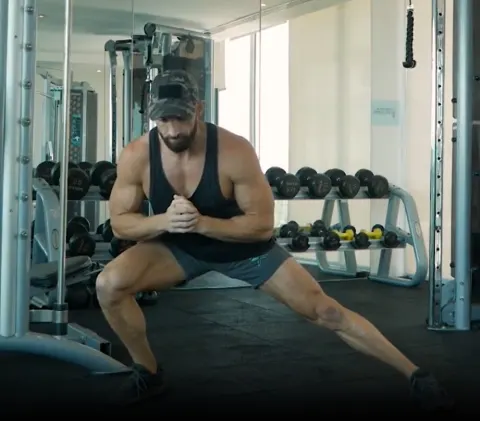
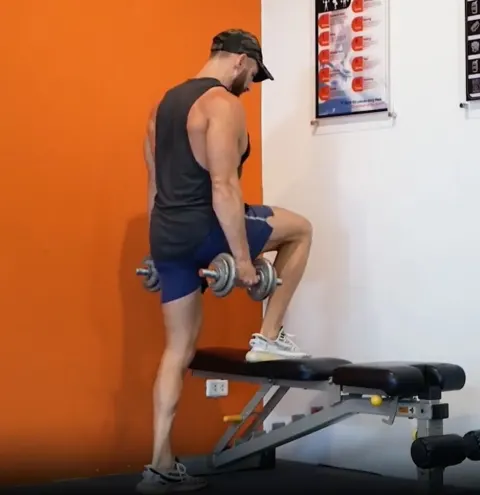
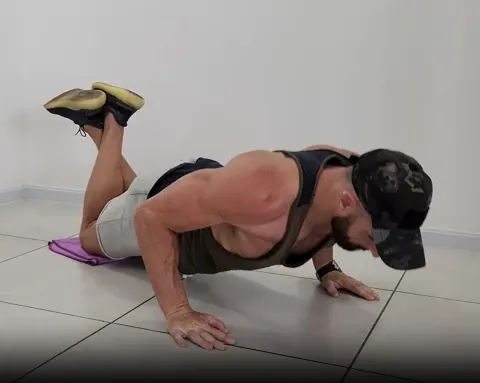
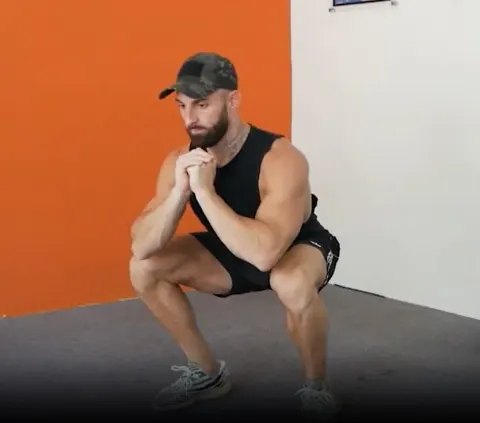
- 3-Day Bodyweight Workout Plan for Muscle Gain (Over 50)
- 3-Day Bodyweight Workout Plan for General Fitness
- 3-Day Bodyweight Workout Plan for General Fitness (Beginners)
- 3-Day Bodyweight Workout Plan for General Fitness (Women)
- 3-Day Bodyweight Workout Plan for General Fitness (Men)
- 3-Day Bodyweight Workout Plan for General Fitness (Over 50)
- 3-Day Dumbbell Workout Plan for Weight Loss
- 3-Day Dumbbell Workout Plan for Weight Loss (Beginners)
- 3-Day Dumbbell Workout Plan for Weight Loss (Women)
- 3-Day Dumbbell Workout Plan for Weight Loss (Men)
- 3-Day Dumbbell Workout Plan for Weight Loss (Over 50)
- 3-Day Dumbbell Workout Plan for Muscle Gain
- 3-Day Dumbbell Workout Plan for Muscle Gain (Beginners)
- 3-Day Dumbbell Workout Plan for Muscle Gain (Women)
- 3-Day Dumbbell Workout Plan for Muscle Gain (Men)
- 3-Day Dumbbell Workout Plan for Muscle Gain (Over 50)
- 3-Day Dumbbell Workout Plan for Strength
- 3-Day Dumbbell Workout Plan for Strength (Beginners)
- 3-Day Dumbbell Workout Plan for Strength (Women)
- 3-Day Dumbbell Workout Plan for Strength (Men)
- 3-Day Dumbbell Workout Plan for Strength (Over 50)
- 3-Day Dumbbell Workout Plan for General Fitness
- 3-Day Dumbbell Workout Plan for General Fitness (Beginners)
- 3-Day Dumbbell Workout Plan for General Fitness (Women)
- 3-Day Dumbbell Workout Plan for General Fitness (Men)
- 3-Day Dumbbell Workout Plan for General Fitness (Over 50)
- 3-Day Kettlebell Workout Plan for Weight Loss
- 3-Day Kettlebell Workout Plan for Weight Loss (Beginners)
- 3-Day Kettlebell Workout Plan for Weight Loss (Women)
- 3-Day Kettlebell Workout Plan for Weight Loss (Men)
- 3-Day Kettlebell Workout Plan for Weight Loss (Over 50)
- 3-Day Kettlebell Workout Plan for Muscle Gain
- 3-Day Kettlebell Workout Plan for Muscle Gain (Beginners)
- 3-Day Kettlebell Workout Plan for Muscle Gain (Women)
- 3-Day Kettlebell Workout Plan for Muscle Gain (Men)
- 3-Day Kettlebell Workout Plan for Muscle Gain (Over 50)
- 3-Day Kettlebell Workout Plan for General Fitness
- 3-Day Kettlebell Workout Plan for General Fitness (Beginners)
- 3-Day Kettlebell Workout Plan for General Fitness (Women)
- 3-Day Kettlebell Workout Plan for General Fitness (Men)
- 3-Day Kettlebell Workout Plan for General Fitness (Over 50)
- 3-Day Resistance Band Workout Plan for Weight Loss
- 3-Day Resistance Band Workout Plan for Weight Loss (Beginners)
- 3-Day Resistance Band Workout Plan for Weight Loss (Women)
- 3-Day Resistance Band Workout Plan for Weight Loss (Men)
- 3-Day Resistance Band Workout Plan for Weight Loss (Over 50)
- 3-Day Resistance Band Workout Plan for Muscle Gain
- 3-Day Resistance Band Workout Plan for Muscle Gain (Beginners)
- 3-Day Resistance Band Workout Plan for Muscle Gain (Women)
- 3-Day Resistance Band Workout Plan for Muscle Gain (Men)
- 3-Day Resistance Band Workout Plan for Muscle Gain (Over 50)
- 3-Day Resistance Band Workout Plan for General Fitness
- 3-Day Resistance Band Workout Plan for General Fitness (Beginners)
- 3-Day Resistance Band Workout Plan for General Fitness (Women)
- 3-Day Resistance Band Workout Plan for General Fitness (Men)
- 3-Day Resistance Band Workout Plan for General Fitness (Over 50)
- 3-Day Calisthenics Workout Plan for Weight Loss
- 3-Day Calisthenics Workout Plan for Weight Loss (Beginners)
- 3-Day Calisthenics Workout Plan for Weight Loss (Men)
- 3-Day Calisthenics Workout Plan for Muscle Gain
- 3-Day Calisthenics Workout Plan for Muscle Gain (Beginners)
- 3-Day Calisthenics Workout Plan for Muscle Gain (Men)
- 3-Day Calisthenics Workout Plan for General Fitness
- 3-Day Calisthenics Workout Plan for General Fitness (Beginners)
- 3-Day Calisthenics Workout Plan for General Fitness (Men)
Related programs
Frequently asked questions
Is 30 minutes of exercise three times a week enough?
For general fitness, and for building strength as a beginner, yes. Three sessions of 25 to 30 minutes give every major muscle at least six hard sets a week, which is above the minimum that produces progress. Add regular walking on the other days to reach the 150 minutes of weekly activity that health guidelines recommend.
What should I do if I only have 15 minutes?
Do the three main lifts of the day and nothing else: one leg movement, one press and one row, two sets each, with the press and the row paired as a superset. That keeps the part of the session that drives nearly all the results. A shortened workout done today beats a complete one postponed to a day that never comes.
Is it better to train in the morning or the evening when I am busy?
Train in whichever slot is least likely to be taken from you. For many people with jobs and children that is early morning, before the day can make other plans. Evening sessions work equally well for results. What matters is that the slot is fixed in your calendar and treated like any other appointment.
Can I split a 30-minute workout into shorter pieces?
Yes. Two 15-minute blocks or three 10-minute blocks on the same day deliver similar benefits, as long as the total work is the same and the sets are equally hard. Warm up briefly before each block. Splitting is especially practical for parents, because short gaps appear more often than one free half hour.
Do supersets make a workout less effective?
Not when you pair movements that use different muscles, such as a press with a row or a lunge with a core exercise. Each muscle rests while the other works, so performance holds up and the session gets shorter. Avoid pairing two exercises for the same muscle, or two heavy leg lifts, where fatigue from the first clearly limits the second.