How Much Protein Do You Need a Day to Build Muscle?
To build muscle, eat 1.6 to 2.2 g of protein per kg of body weight a day over 3 to 5 meals. Targets by goal, a body-weight table and a sample day.
To build muscle, eat about 1.6 g of protein per kg of body weight a day, and up to 2.2 g per kg if you want a safety margin. For a 75 kg person that is 120 to 165 g a day, best split over three to five meals. The official minimum for sedentary adults is much lower, 0.8 g per kg, and needs go up during fat loss and after the age of 65.
Protein targets by goal
| Situation | Protein per day | Basis |
|---|---|---|
| Sedentary adult, minimum | 0.8 g/kg (US RDA), 0.83 g/kg (EU reference intake) | Official reference values |
| Regular exercise, general fitness | 1.4-2.0 g/kg | Sports nutrition position stand |
| Building muscle with resistance training | 1.6 g/kg, up to 2.2 g/kg | Meta-analysis of 49 trials |
| Losing fat while lifting | 1.6-2.4 g/kg | Position stand, 2 to 3 times the RDA |
| Lean, trained lifter on a hard diet | 2.3-3.1 g per kg of fat-free mass | Systematic review of dieting athletes |
| Adults over 65 | 1.0-1.2 g/kg, and 1.2 g/kg or more if you exercise | PROT-AGE position paper |
A few notes on reading the table:
- The RDA is a floor, not a training target. It is the reference intake for the general adult population. The International Society of Sports Nutrition (ISSN) states plainly that it is not an appropriate amount for someone who trains.
- 1.6 g/kg is where the benefit levels off. A 2018 meta-analysis pooled 49 trials and 1,863 people doing resistance training. Extra protein added on average 0.30 kg of fat-free mass on top of what training alone produced, and intakes above about 1.6 g/kg a day gave no further gain.
- 2.2 g/kg is the upper end of the uncertainty. The confidence interval around that 1.6 figure ran from 1.03 to 2.20 g/kg. Eating at the top of it is a reasonable choice if you want to be sure you are not leaving anything behind.
- Training does most of the work. The 0.30 kg difference is small next to what months of progressive overload deliver. Protein supports the result; it does not create it.
In pounds, 1.6 to 2.2 g per kg is roughly 0.7 to 1.0 g per lb of body weight.
How much is that for your body weight?
| Body weight | Minimum (0.8 g/kg) | Active (1.4 g/kg) | Muscle gain (1.6 g/kg) | Upper end (2.2 g/kg) |
|---|---|---|---|---|
| 50 kg | 40 g | 70 g | 80 g | 110 g |
| 60 kg | 48 g | 84 g | 96 g | 132 g |
| 70 kg | 56 g | 98 g | 112 g | 154 g |
| 80 kg | 64 g | 112 g | 128 g | 176 g |
| 90 kg | 72 g | 126 g | 144 g | 198 g |
| 100 kg | 80 g | 140 g | 160 g | 220 g |
The protein intake calculator does this for any weight and goal, and the macro calculator fits the result into your calories. Protein has 4 kcal per gram, so 128 g a day accounts for 512 kcal.
If you carry a lot of body fat, these per-kg figures overshoot, because fat tissue needs very little protein. In that case work from your fat-free mass or your goal weight instead. The lean body mass calculator gives a usable estimate.
How much per meal
Total daily protein matters most. How you divide it matters a little.
A 2018 review of single-meal protein use concluded that, to make the most of muscle building, a sensible target is 0.4 g per kg per meal across at least four meals, which lands on 1.6 g/kg for the day. Spreading the upper daily intake of 2.2 g/kg over four meals gives 0.55 g per kg per meal. The ISSN gives a simpler rule: 0.25 g per kg, or 20 to 40 g, of good-quality protein per meal, every three to four hours.
| Body weight | 0.25 g/kg | 0.4 g/kg | 0.55 g/kg |
|---|---|---|---|
| 60 kg | 15 g | 24 g | 33 g |
| 70 kg | 18 g | 28 g | 39 g |
| 80 kg | 20 g | 32 g | 44 g |
| 90 kg | 23 g | 36 g | 50 g |
| 100 kg | 25 g | 40 g | 55 g |
Two common worries, answered:
- “You can only absorb 30 g at a time.” Not so. The same review found that larger doses lead to more amino acids being burned for energy, but not all of the extra is lost: some is still used to build tissue. A 50 g dinner is not wasted.
- “I only eat two or three meals.” Then make each one bigger. Three meals of 0.55 g/kg get an 80 kg person to 132 g. You give up very little compared with four or five.
Older adults respond less strongly to small servings. The ISSN notes that around 40 g per meal is likely needed to get the full muscle-building response in elderly people.
Timing, in proportion
Protein timing is the least important item on this page. The ISSN position is that benefits come from protein eaten either before or after training, and that the muscle-building effect of a session lasts at least 24 hours. There is no need to eat in the changing room.
A practical rule covers it: have a protein-containing meal within a few hours on each side of your session, and space the rest of your protein through the day. Details are in what to eat before and after a workout.
Plant versus animal protein
Animal proteins contain more leucine, the amino acid most closely tied to switching on muscle building: about 9 to 11 percent in dairy protein, 8.6 percent in egg and 8 percent in meat, with plant proteins lower. In single-meal laboratory studies, plant proteins often produce a smaller response.
Over months of real training, the gap largely closes when total protein is high enough. In a 12-week trial in previously untrained young men, 19 habitual vegans and 19 omnivores all ate 1.6 g/kg a day, topped up with soy protein or whey, and trained twice a week. Both groups gained 1.2 kg of leg lean mass and grew their thigh muscles to a similar degree, with no significant difference in strength gains.
So if you eat little or no animal food:
- Hit the same daily target, and lean towards the upper half of the range as a margin. That margin is a sensible precaution, not a figure tested in trials.
- Mix sources through the day: soy foods, lentils, beans, grains, nuts and seeds.
- Use larger portions, since most plant foods carry less protein per 100 g.
The high-protein foods list ranks animal and plant options by protein per 100 g and per 100 kcal.
Is a lot of protein safe?
For healthy adults, the evidence is reassuring. A 2018 meta-analysis of 28 randomised trials with 1,358 participants compared higher-protein diets (at least 1.5 g/kg a day, or at least 100 g a day, or at least 20 percent of energy) with lower intakes. The change in glomerular filtration rate, the standard measure of kidney function, did not differ between the groups. The ISSN adds that controlled studies of up to one year at 2.5 to 3.3 g/kg a day in healthy, resistance-trained people found no harmful effect on markers of kidney or liver function.
Three limits to keep in mind:
- Kidney disease changes the answer. People with severely reduced kidney function may need to limit protein. If you have kidney disease, your doctor’s target replaces every number on this page.
- Pregnancy and breastfeeding raise needs. The European Food Safety Authority adds 1 g, 9 g and 28 g a day for the first, second and third trimesters, and 19 g a day in the first six months of breastfeeding, on top of the standard adult intake. Weight-loss diets and muscle-gain targets are a separate matter to discuss with your midwife or doctor.
- More is not better. Past about 2.2 g/kg there is no good evidence of extra muscle, and the protein crowds out carbohydrate and fat you could use for training.
What a day at 120 g looks like
This is 1.6 g/kg for a 75 kg person. Protein figures come from USDA FoodData Central.
| Meal | Food | Protein |
|---|---|---|
| Breakfast | 200 g fat-free Greek yoghurt, 50 g oats (dry weight) | 27 g |
| Lunch | 120 g roast chicken breast, 150 g cooked brown rice | 41 g |
| Snack | 150 g cottage cheese (2% fat) | 16 g |
| Dinner | 130 g cooked salmon, 200 g cooked pasta | 40 g |
| Total | 124 g |
Notice that the grains contribute: the oats, rice and pasta add about 22 g between them. A plant-based day works the same way with different anchors: 200 g of firm tofu supplies about 35 g and 250 g of cooked lentils about 23 g.
A protein powder is a convenience food that can fill a gap on a busy day. It is not required, and it does nothing that the same amount of protein from food does not.
Set your own number
- Pick the row that matches your goal in the first table and multiply by your body weight in kg, or use the protein intake calculator.
- Fit it into your calories. Find maintenance with the TDEE calculator, then see how to count macros for the rest of the split.
- Divide by your number of meals and check each one reaches roughly 0.4 g/kg.
- Hold it for at least a month before judging. Daily precision matters less than the weekly average.
If you are gaining weight on purpose, how to bulk without getting fat covers the calorie side. If you are dieting, see how to cut without losing muscle. For training that gives the protein something to do, start with the muscle building workout plan; if you are over 50, strength training after 50 and 60 explains why both protein and lifting matter more with age.
These figures are for healthy adults. If you have kidney or liver disease, diabetes, or any other medical condition, or you are pregnant or breastfeeding, ask your doctor or a registered dietitian before changing your protein intake.
Sources
- Morton RW, et al. (2018). A systematic review, meta-analysis and meta-regression of the effect of protein supplementation on resistance training-induced gains in muscle mass and strength in healthy adults. British Journal of Sports Medicine. doi:10.1136/bjsports-2017-097608
- Jäger R, et al. (2017). International Society of Sports Nutrition Position Stand: protein and exercise. Journal of the International Society of Sports Nutrition. doi:10.1186/s12970-017-0177-8
- Schoenfeld BJ, Aragon AA (2018). How much protein can the body use in a single meal for muscle-building? Implications for daily protein distribution. Journal of the International Society of Sports Nutrition. doi:10.1186/s12970-018-0215-1
- Helms ER, et al. (2014). A systematic review of dietary protein during caloric restriction in resistance trained lean athletes: a case for higher intakes. International Journal of Sport Nutrition and Exercise Metabolism. PubMed 24092765
- Bauer J, et al. (2013). Evidence-based recommendations for optimal dietary protein intake in older people: a position paper from the PROT-AGE Study Group. Journal of the American Medical Directors Association. PubMed 23867520
- Devries MC, et al. (2018). Changes in kidney function do not differ between healthy adults consuming higher- compared with lower- or normal-protein diets: a systematic review and meta-analysis. The Journal of Nutrition. PubMed 30383278
- Hevia-Larraín V, et al. (2021). High-protein plant-based diet versus a protein-matched omnivorous diet to support resistance training adaptations. Sports Medicine. PubMed 33599941
- European Food Safety Authority (2012). EFSA sets population reference intakes for protein. efsa.europa.eu
Ready plans for this guide

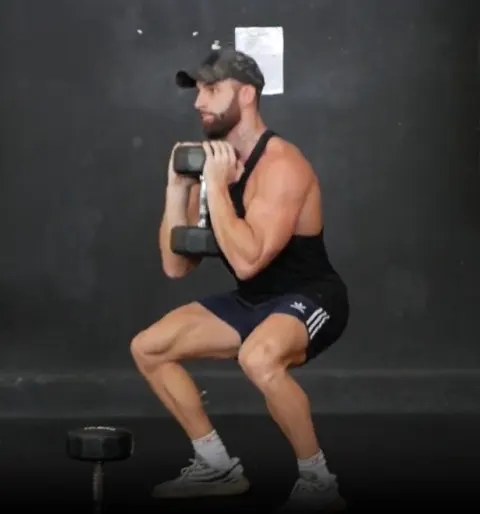


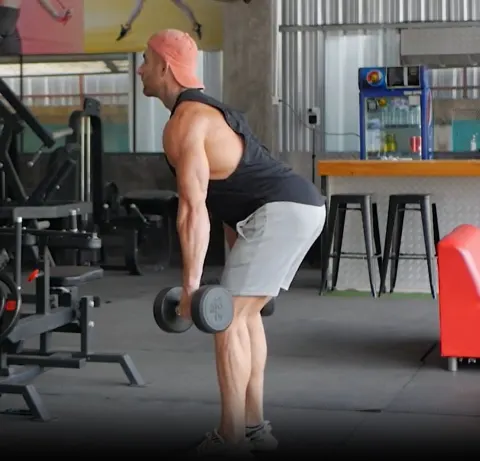
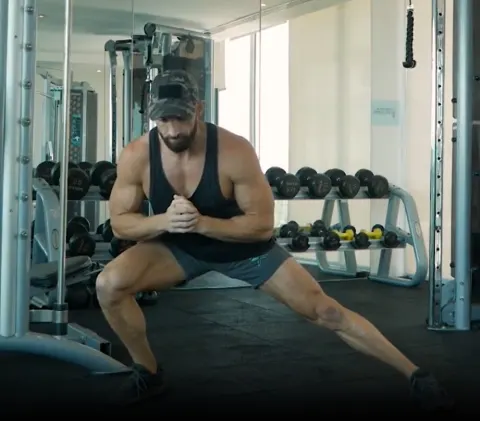


Exercises mentioned
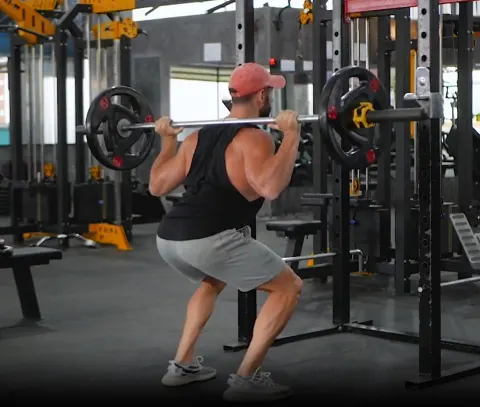 video
intermediate
 video
intermediate
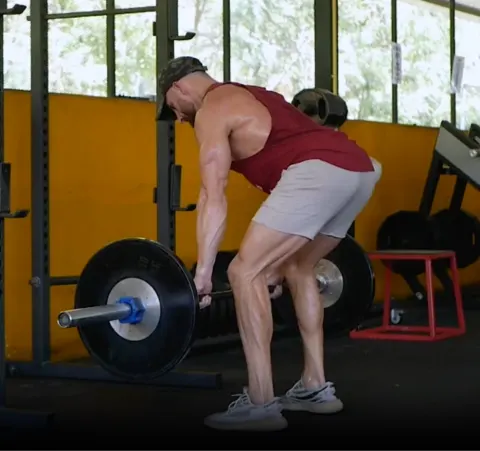 video
intermediate
 video
intermediate
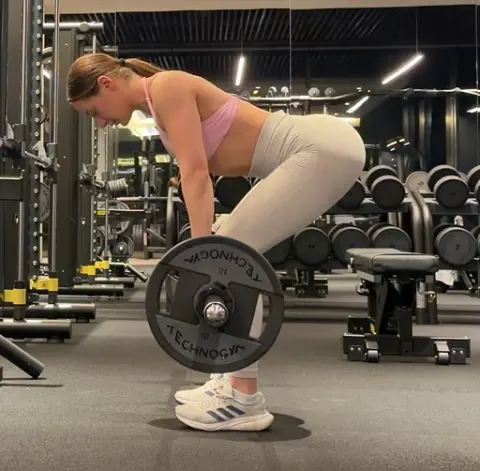 video
intermediate
Frequently asked questions
How much protein do I need a day to build muscle?
About 1.6 g per kg of body weight a day, and up to 2.2 g per kg if you want a margin. For a 75 kg person that is 120 to 165 g. In a meta-analysis of 49 trials, eating more than about 1.6 g per kg brought no further gain in fat-free mass on average.
Is 100 g of protein a day enough to build muscle?
It depends on your weight. 100 g equals 1.6 g per kg for someone who weighs about 62 kg, so it covers a lighter person well. At 80 kg it works out to 1.25 g per kg, which is above the 0.8 g per kg minimum but below the 1.6 g per kg where muscle gain levels off in studies.
How much protein can your body use in one meal?
There is no hard cap at 30 g. A review of the evidence suggests aiming for about 0.4 g per kg per meal over at least four meals, with an upper figure of 0.55 g per kg per meal. For an 80 kg person that is 32 to 44 g per meal.
Is a high-protein diet bad for your kidneys?
Not in healthy adults, on current evidence. A meta-analysis of 28 trials with 1,358 participants without kidney disease found that higher-protein diets, defined as at least 1.5 g per kg a day, did not adversely affect kidney function. People with kidney disease are a different case and should follow the protein target set by their doctor.
Do I need more protein when losing fat?
Yes, relative to your calories. While dieting and lifting, 1.6 to 2.4 g per kg of body weight a day helps hold on to muscle. For lean, resistance-trained people in a deficit, reviews suggest 2.3 to 3.1 g per kg of fat-free mass, with the higher end for harder diets and leaner bodies.