What to Eat Before and After a Workout
Eat a meal with 20 to 40 g of protein and some carbohydrate 1 to 4 hours before training and again within about 2 hours after. Daily totals matter more.
Eat a normal meal containing 20 to 40 g of protein and some carbohydrate one to four hours before you train, and another within about two hours afterwards. That covers nearly everyone. Your total protein and calories across the day matter far more than the exact timing, and the “anabolic window” is several hours wide, not 30 minutes.
What matters, in order
- Total daily calories and protein. A meta-analysis of protein timing studies found that the apparent benefit of eating protein close to training disappeared once total protein intake was accounted for. Total intake was the strongest predictor of muscle gain.
- Protein spread across the day. Sports nutrition guidelines suggest 20 to 40 g, or 0.25 to 0.4 g per kg of body weight, every three to four hours.
- Meals around training. Useful, flexible, and the subject of the rest of this page.
- Fine details: exact minutes, fast or slow protein, special ratios. These matter least.
If the first two are not in place, start with how much protein do you need and the TDEE calculator.
Before training
The aim is simple: arrive fuelled, hydrated and comfortable.
| Time before training | What to eat | Example |
|---|---|---|
| 3-4 hours | A full mixed meal: protein, carbohydrate, vegetables, some fat | 120 g roast chicken breast (37 g protein) with rice and vegetables |
| 1-2 hours | A smaller meal, lighter on fat and fibre | 200 g fat-free Greek yoghurt (20 g protein) with oats and fruit |
| 30-60 minutes | A small carbohydrate snack if you are hungry; protein optional | A banana, or toast with honey |
| No time (early morning) | Nothing, or a few mouthfuls of something light | Train, then eat a proper meal soon after |
The size-by-time pattern is about comfort: a large or fatty meal sits heavily for many people if eaten too close to exercise. Adjust it to your own stomach.
How much protein: 20 to 40 g, or 0.25 to 0.4 g per kg. For an 80 kg person that is 20 to 32 g.
How much carbohydrate: for an ordinary strength session of 45 to 90 minutes, whatever is in a normal meal. The position stand figure of 1 to 4 g of carbohydrate per kg in the hours beforehand is intended for higher-intensity exercise lasting more than 90 minutes: long runs, rides and matches. For an 80 kg person that is 80 to 320 g, which shows how different the demands of endurance sport are.
After training
| Situation | Protein | Carbohydrate |
|---|---|---|
| Normal session, next one tomorrow or later | 20-40 g within about 2 hours | As part of your usual meals |
| You trained fasted, or more than 3-4 hours after your last meal | At least 25 g as soon as practical | As part of your usual meals |
| Another hard session within 4 hours | 0.2-0.4 g/kg per hour, taken with the carbohydrate | 1.2 g/kg per hour, or 0.8 g/kg per hour when combined with protein |
The first row is most people, most days. Protein eaten from immediately after to two hours after exercise produces a strong rise in muscle protein synthesis, and the effect of a training session on muscle lasts at least 24 hours, so there is no need to rush.
The third row applies to two-a-day training, tournaments and back-to-back events. Outside those situations, and provided your daily carbohydrate intake matches your activity, the importance of carbohydrate timing drops sharply. Lifting weights does lower muscle glycogen, but only modestly compared with exhaustive endurance exercise.
Amounts by body weight:
| Body weight | Protein per meal (0.25-0.4 g/kg) | Fast refuelling, carbohydrate per hour (1.2 g/kg) | Pre-endurance carbohydrate (1-4 g/kg) |
|---|---|---|---|
| 60 kg | 15-24 g | 72 g | 60-240 g |
| 70 kg | 18-28 g | 84 g | 70-280 g |
| 80 kg | 20-32 g | 96 g | 80-320 g |
| 90 kg | 23-36 g | 108 g | 90-360 g |
The “anabolic window”, in proportion
The claim: muscle is primed for nutrients for 30 to 60 minutes after training, and missing that slot costs you gains.
What the evidence supports:
- The window is wide. A 2013 review concluded that support for a narrow post-exercise window is far from definitive, and that the idea rests largely on studies in which people trained fasted. Its practical guideline: pre- and post-exercise meals should not be more than about three to four hours apart, given a typical 45 to 90 minute session.
- Before works as well as after. In a 10-week trial, 21 resistance-trained men took 25 g of protein either immediately before or immediately after each session. Strength, muscle size and body composition changed to the same degree in both groups.
- Pooled data agree. The timing meta-analysis mentioned above covered 23 studies on muscle growth. With total protein controlled for, timing made no significant difference.
Where timing does carry more weight: when you train fasted, or when your last meal was more than three to four hours before the session. Then the review’s advice is to eat at least 25 g of protein as soon as is practical afterwards.
A simple way to satisfy all of this: eat a protein-containing meal at some point in the few hours before training and another in the couple of hours after. If you had a snack with protein at 16:00 and trained at 17:30, dinner at 19:00 does the job.
Training fasted
Fasted training does not burn more body fat over time. In a four-week trial, 20 young women on a calorie-controlled diet did an hour of steady cardio three days a week, half of them fasted and half after a meal. Both groups lost weight and fat, with no difference between them. It is a single small study, but it tested the claim directly and found nothing.
So choose by preference:
- If you feel strong and clear-headed fasted, train fasted. Early risers often do.
- If you feel weak, dizzy or flat, eat something small 30 to 60 minutes before, or move the session.
- For long or very hard sessions, eating beforehand is the safer choice for performance.
- After fasted lifting, do not wait hours to eat. Have a full meal with at least 25 g of protein.
Timing your session around your day is covered in best time of day to work out.
During training
For gym sessions and anything under an hour, water is enough. Carbohydrate during exercise, about 30 to 60 g an hour, is recommended for high-intensity sessions that run past 60 minutes, and a consistent performance benefit is not seen until around 90 minutes when you started well fed.
Hydration, briefly
- Start normally hydrated. Recreational exercisers do not need to drink extra beforehand; they need to not arrive dehydrated.
- Drink to limit, not to eliminate, sweat loss. The target in athletic guidelines is to finish with less than 2 percent of body weight lost. You should not weigh more after a session than before it.
- Afterwards, replace what you lost. Weigh yourself before and after a hard session: each kg lost is about a litre of sweat. Drinking 100 to 150 percent of that amount over the next few hours restores it. Have it with food, because the sodium lost in sweat needs replacing too.
Daily needs, heat and the risks of drinking too much are covered in how much water should you drink a day, and the water intake calculator gives a personal estimate.
Example days
Morning lifter, 07:00 session, 80 kg
- 06:30: banana or nothing
- 07:00-08:00: train
- 08:30: breakfast with 20 to 40 g of protein, for example 200 g fat-free Greek yoghurt with 50 g oats (27 g protein)
Lunchtime session, 12:30
- 08:00: breakfast with 20 to 40 g of protein
- 12:30-13:30: train
- 13:45: lunch straight after training, because breakfast was more than four hours before it: for example 120 g roast chicken breast (37 g protein) with rice and salad
Evening session, 18:30
- 13:00: lunch with 20 to 40 g of protein
- 16:30: snack, for example 150 g cottage cheese (16 g protein) and fruit
- 18:30-19:30: train
- 20:15: dinner, for example 130 g cooked salmon (29 g protein) with potatoes and vegetables
Protein figures are from USDA FoodData Central; more options are in the high-protein foods list. A protein shake is a convenient stand-in when a meal is not practical, nothing more.
What matters less than your daily total
- The exact minute you eat. Hours matter a little; minutes do not.
- Eating immediately before versus immediately after. The same in a direct trial.
- Fasted versus fed cardio for fat loss. The same in a direct trial.
- Carbohydrate straight after lifting, unless you train again within four hours.
- Special post-workout products. Ordinary food supplies the same protein and carbohydrate.
What does not matter less: reaching your protein target, eating in line with your goal, and training consistently. Set calories and macros with the macro calculator and the protein intake calculator, and learn the tracking method in how to count macros. For the training side, see how long should a workout be and the muscle building workout plan.
These guidelines are for healthy adults. If you have diabetes, especially if you use insulin or other glucose-lowering medication, a digestive condition or kidney disease, or you are pregnant, ask your doctor or a registered dietitian how to time food around exercise.
Sources
- Kerksick CM, et al. (2017). International Society of Sports Nutrition position stand: nutrient timing. Journal of the International Society of Sports Nutrition. doi:10.1186/s12970-017-0189-4
- Aragon AA, Schoenfeld BJ (2013). Nutrient timing revisited: is there a post-exercise anabolic window? Journal of the International Society of Sports Nutrition. doi:10.1186/1550-2783-10-5
- Schoenfeld BJ, Aragon AA, Krieger JW (2013). The effect of protein timing on muscle strength and hypertrophy: a meta-analysis. Journal of the International Society of Sports Nutrition. doi:10.1186/1550-2783-10-53
- Schoenfeld BJ, et al. (2017). Pre- versus post-exercise protein intake has similar effects on muscular adaptations. PeerJ. doi:10.7717/peerj.2825
- Schoenfeld BJ, et al. (2014). Body composition changes associated with fasted versus non-fasted aerobic exercise. Journal of the International Society of Sports Nutrition. doi:10.1186/s12970-014-0054-7
- Jäger R, et al. (2017). International Society of Sports Nutrition Position Stand: protein and exercise. Journal of the International Society of Sports Nutrition. doi:10.1186/s12970-017-0177-8
- McDermott BP, et al. (2017). National Athletic Trainers’ Association position statement: fluid replacement for the physically active. Journal of Athletic Training. doi:10.4085/1062-6050-52.9.02
Ready plans for this guide

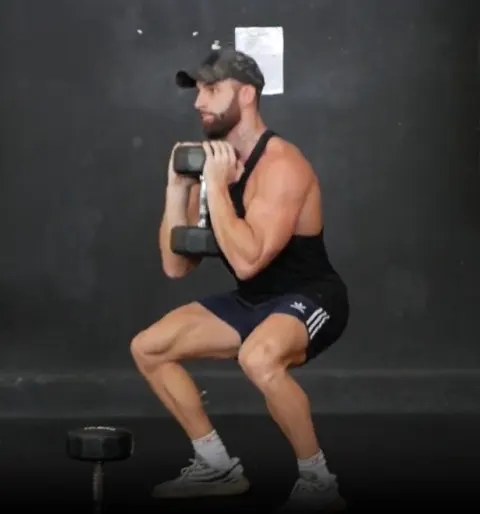
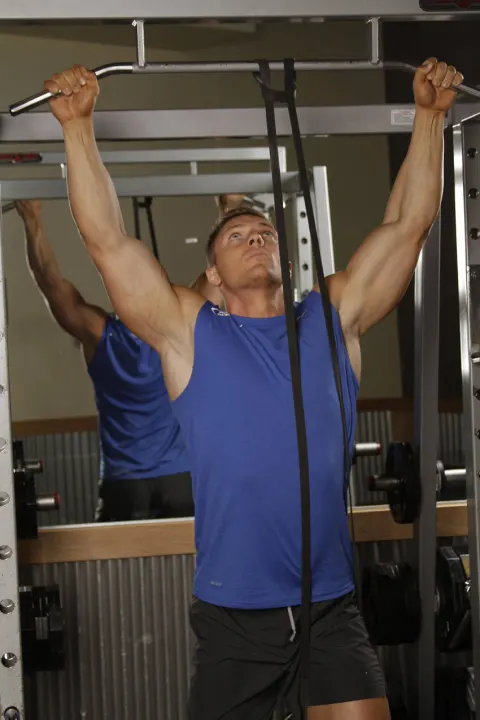
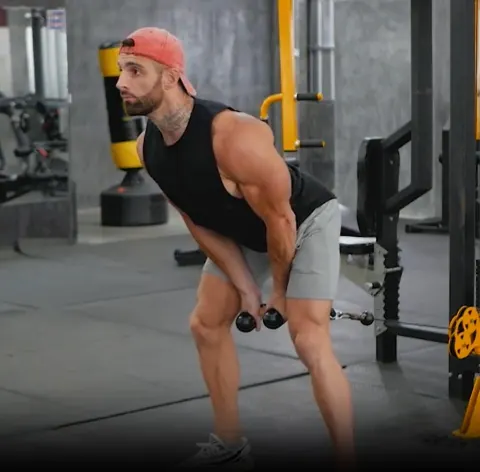
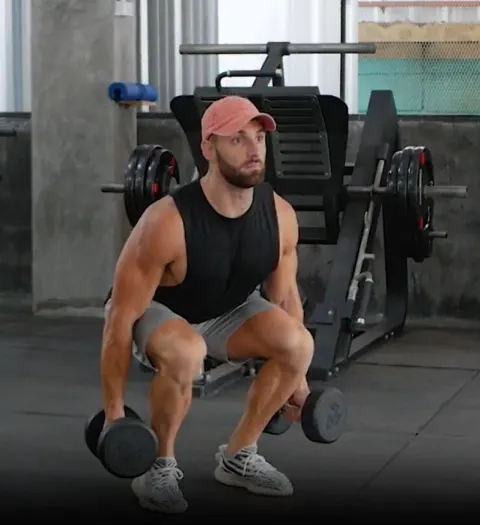
Exercises mentioned



Frequently asked questions
What should I eat before a workout?
A normal mixed meal with 20 to 40 g of protein and some carbohydrate, eaten 1 to 4 hours before training, suits most gym sessions. The closer you are to the session, the smaller and lighter the meal should be. A larger carbohydrate meal of 1 to 4 g per kg in the hours before is aimed at hard endurance efforts longer than 90 minutes.
What should I eat after a workout?
A meal or snack with 20 to 40 g of good-quality protein, about 0.25 to 0.4 g per kg of body weight, within roughly two hours. Add carbohydrate as part of your normal eating. Rapid carbohydrate refuelling at 1.2 g per kg per hour is only needed if you train hard again within four hours.
How soon after a workout do I need to eat protein?
There is no 30-minute deadline. A sound guideline is to keep your pre- and post-workout meals within about three to four hours of each other around a 45 to 90 minute session. In a 10-week trial of trained men, 25 g of protein immediately before training produced the same results as 25 g immediately after.
Is it OK to work out on an empty stomach?
Yes, if you feel fine doing it. In a four-week trial of 20 women on a calorie-controlled diet, fasted and fed cardio produced the same fat loss, so fasted training has no special fat-burning benefit. If you lift fasted, eat a meal with at least 25 g of protein soon afterwards.
Do I need carbs straight after lifting weights?
Not urgently. Lifting lowers muscle glycogen only modestly compared with exhaustive endurance exercise, and when your daily carbohydrate intake matches your activity, timing matters little. Fast refuelling at 1.2 g of carbohydrate per kg per hour matters when you have less than four hours before another hard session.