How to Build Muscle at Home With Little or No Equipment
How to build muscle at home without a gym: progressive overload with bodyweight, bands or dumbbells, the rep ranges and tempo that work, and what to buy first.
You can build muscle at home by training each muscle group two or three times a week with exercises that are hard for 6 to 20 reps, taking sets close to failure, and making them harder over time. Heavy weights are optional: harder variations, single-limb work, slower tempo and extra reps all provide the overload muscle needs. Eat enough protein, sleep, and expect visible change in 8 to 12 weeks.
What muscle needs, wherever you train
Muscle growth, also called hypertrophy, comes from three things:
- Tension. The muscle must work hard against resistance through a good range of motion.
- Effort. Sets need to end within about one to three reps of failure.
- Progression. The work has to get harder as you adapt.
Nothing on that list says “barbell”. Studies comparing light and heavy loads find similar growth as long as sets are pushed close to failure, across a range of roughly 5 to 30 reps. The gym makes progression convenient. At home you need to be a little more inventive.
Progressive overload without heavy weights
Adding weight is only one form of progressive overload. At home, use these in roughly this order:
| Method | How to apply it | Example |
|---|---|---|
| Add reps | Stay in a variation until you reach the top of the range | Push-ups from 3 × 8 to 3 × 15 |
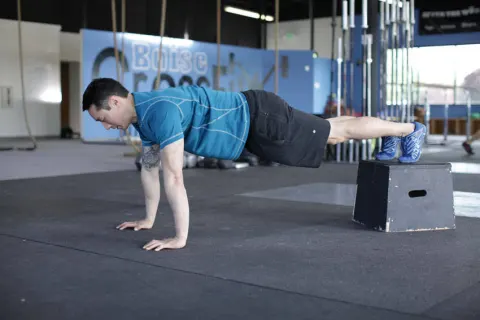
| Harder variation | Change leverage or body angle | Push-up to decline push-up |
| One limb at a time | Halve the support, double the load per side | Squat to Bulgarian split squat |
| Slower tempo | 3–4 seconds lowering, 1–2 second pause | Paused split squats |
| Longer range | Elevate hands or feet to stretch further | Deficit push-ups on books |
| Shorter rest | Only once the above are used up | 90 s down to 60 s |
| Add load | Backpack, bands, dumbbells | Backpack push-ups or rows |
Keep a log. If the numbers in it are not rising over a month, you are exercising, not building.
Rep ranges and effort
- 6–12 reps for exercises you can load well: dumbbell work, weighted backpack moves, hard single-leg variations.
- 12–20 reps for bodyweight and band exercises where you cannot add much load.
- Up to 30 reps still builds muscle but is uncomfortable and slow. Treat 20 as the signal to make the exercise harder.
The last three reps of a set should be noticeably slower than the first three. If they are not, the set was a warm-up. Aim for 10–20 hard sets per muscle group per week, starting at the low end.
Use tempo on purpose
Tempo is the speed of each phase of a rep. Slowing the lowering phase and pausing in the stretched position makes a light exercise far more demanding and is easier on joints.
A good default at home: 3 seconds down, 1 second pause, push up with intent. A bodyweight squat that was easy for 30 becomes hard at 15. Do not go to extremes, though. Ten-second reps mostly cut the number of reps you can do without adding growth.
The exercises that carry a home program
| Muscle group | No equipment | With bands or dumbbells |
|---|---|---|
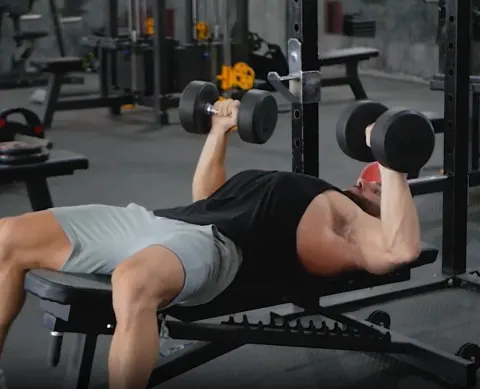
| Chest, triceps | Push-up, decline push-up, diamond push-up | Dumbbell floor press, band chest press |
| Shoulders | Pike push-up | Dumbbell shoulder press, lateral raise |
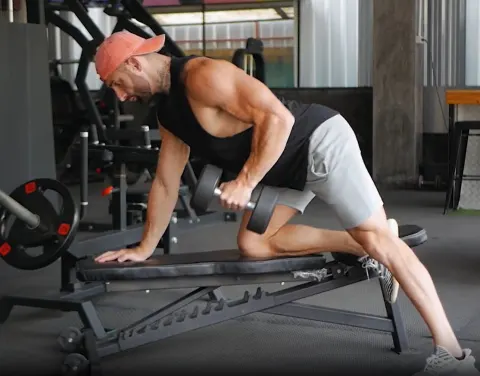
| Back, biceps | Doorway row, table row | Dumbbell row, band row, pull-up with a bar |
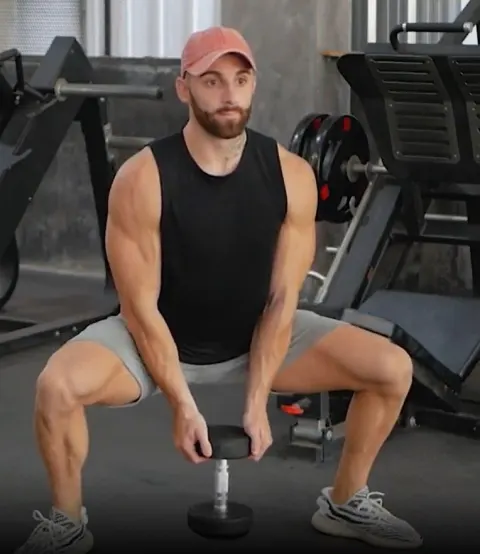
| Quads, glutes | Bulgarian split squat, step-up | Goblet squat, dumbbell lunge |
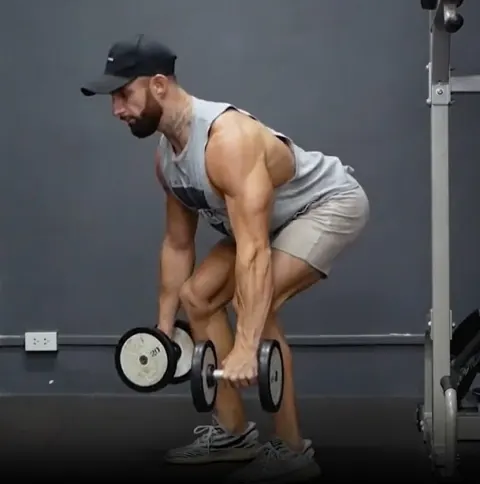
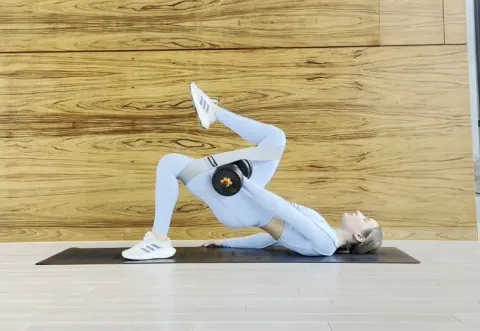
| Hamstrings, glutes | Single-leg glute bridge, sliding leg curl | Dumbbell Romanian deadlift |
| Calves | Single-leg calf raise on a step | The same, holding a weight |
| Core | Plank, hollow hold, leg raise | Suitcase carry |
Back is the hard one without equipment. Towel rows in a doorway and rows under a sturdy table work for a while, but a bar or bands make a real difference.
A simple weekly structure
Three full-body sessions a week suit most people. Each muscle gets trained three times, and no session runs past 45 minutes.
| Slot | Exercise type | Sets × reps |
|---|---|---|
| 1 | Single-leg squat or lunge variation | 3 × 8–15 per leg |
| 2 | Push-up variation | 3 × 8–20 |
| 3 | Row or pull-up variation | 3 × 8–15 |
| 4 | Hip hinge or bridge variation | 3 × 10–15 |
| 5 | Shoulder press variation | 3 × 6–12 |
| 6 | Arms or calves | 2 × 12–20 |
| 7 | Core | 2–3 sets |
Rest 60–120 seconds between sets. Ready-made options: the 3-day no-equipment plan for muscle gain, the full-body workout with dumbbells for a single session, or the home workout plan page to choose by equipment and days. For the wider picture, see the muscle building workout plan.
What to buy first
You can start with nothing. When you are ready to spend, this order gives the most muscle per unit of money and floor space:
- Pull-up bar. Fills the biggest hole in equipment-free training.
- Resistance bands. Cheap, light, good for rows, presses, curls and assisted pull-ups. See the resistance band guide.
- Adjustable dumbbells. The biggest single upgrade. Small weight jumps make progression simple. The dumbbell-only guide shows how far they go.
- A bench or sturdy step. Opens up presses, split squats and hip thrusts.
- A backpack. Free, and it turns books or water bottles into load.
A treadmill, an ab roller and a multi-gym are not on the list. They are fine to own, but they do little for muscle growth compared with the five above.
Eating and recovery
- Protein: 1.6–2.2 g per kg of body weight a day. The protein intake calculator gives you a figure.
- Calories: maintenance or a small surplus. A large deficit makes muscle gain very slow.
- Sleep: 7–9 hours. Growth happens between sessions.
- Rest days: at least one between sessions for the same muscles.
You do not need supplements to build muscle. Ordinary food that covers your protein and calories is enough.
Why home training stalls, and how to fix it
- Sets are too easy. Thirty comfortable push-ups build less than twelve hard ones. Pick a harder variation.
- No pulling. Chest and shoulders grow, back does not. Add rows today and a bar soon.
- Legs get only two-legged squats. Move to single-leg work and slow tempo.
- Nothing is written down. Without a log you repeat the same session for months.
- Sessions are random. Follow one plan for eight weeks before changing it.
- Under-eating. Hard training on low protein produces fatigue, not size.
How far can you get at home?
With no equipment, most beginners can add muscle for six to twelve months before progress slows, mainly in the legs and back. With a bar, bands and adjustable dumbbells, you can keep progressing for years. The no-equipment home workout guide goes deeper into exercise choices.
If you have an injury, a heart condition or another medical issue, speak to a doctor before starting a strength program, and stop any exercise that causes sharp joint pain.
Ready plans for this guide
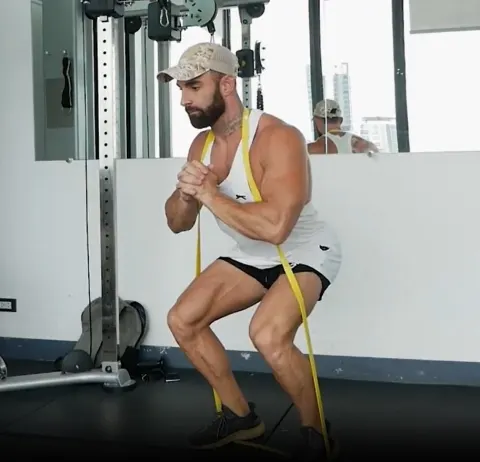
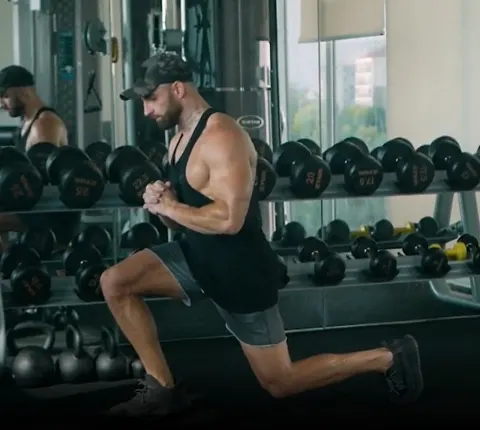
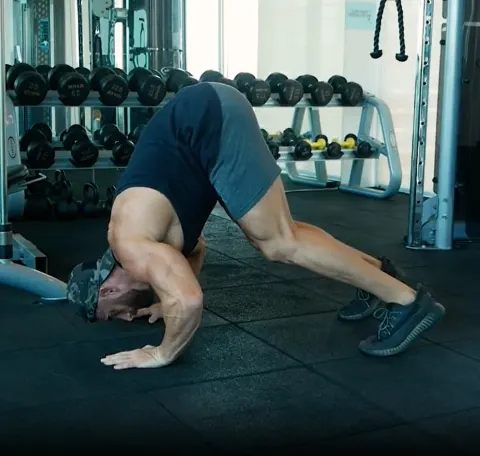
Exercises mentioned
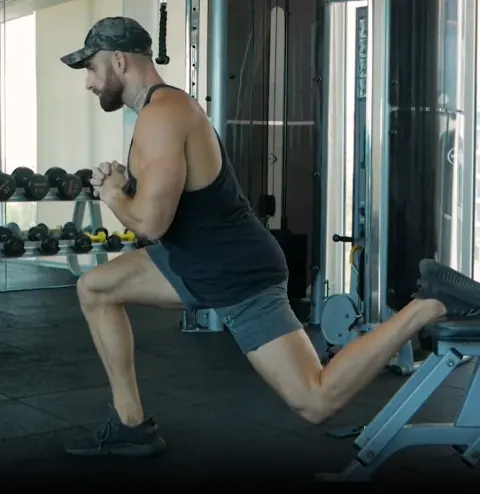 video
intermediate
 intermediate
 video
intermediate
video
beginner
 video
beginner
Frequently asked questions
Can you really build muscle at home without weights?
Yes, for a long time. Research shows that light and heavy loads produce similar muscle growth when sets are taken close to failure, and bodyweight exercises can be made hard enough to do that. The limits appear mainly in the legs and back, which is where a pull-up bar, bands or dumbbells start to earn their place.
How long does it take to build muscle at home?
The timeline is the same as in a gym. Expect to feel stronger in two to four weeks and to see changes in the mirror after eight to twelve weeks of training three times a week. Location does not slow muscle growth. Easy sets, skipped sessions and too little protein do.
What is the best home equipment for building muscle?
Adjustable dumbbells give the most options per square metre and cover every muscle group. If budget or space is tight, start with a doorway pull-up bar and a set of resistance bands, which together solve the biggest gap in equipment-free training: pulling exercises for the back and biceps.
How many push-ups a day to build muscle?
A daily number is the wrong target. Chest, shoulders and triceps grow from roughly 10 to 20 hard sets a week, each ending within a few reps of failure. Once you can do more than 20 push-ups in a set, switch to a harder variation or add load instead of piling on easy reps.
Do I need to eat more to build muscle at home?
You need enough protein, about 1.6 to 2.2 grams per kilogram of body weight, and at least maintenance calories. A small surplus of 200 to 300 kcal a day speeds things up for lean people. Beginners with more body fat can often gain muscle while eating at maintenance or slightly below.