How to Lose Arm Fat: Firmer Arms Without the Myths
How to lose arm fat and firm up flabby arms: what triceps and shoulder training can do, what only a calorie deficit can do, and how long it really takes.
You lose arm fat by reducing body fat overall through a moderate calorie deficit, and you firm up the arms themselves by training your triceps, shoulders and biceps twice a week. No exercise removes fat from the upper arm directly. What training does is build the muscle underneath, and that is often what turns a soft arm into a defined one.
Arm fat, loose skin or low muscle?
“Flabby arms” usually describes a mix of three things, and it helps to know which one you are mostly dealing with.
| What you notice | Likely cause | What helps |
|---|---|---|
| Soft all over, pinchable layer on the back of the arm | Body fat | Calorie deficit plus training |
| Arm looks thin but hangs when you wave | Low triceps muscle | Strength training, enough protein |
| Thin, crinkled skin that stays loose after weight loss | Skin elasticity (age, large weight loss, sun) | Muscle fills some of it out; training cannot tighten skin |
Most people have some of each. The triceps make up roughly two thirds of the upper arm’s muscle, so an untrained triceps leaves a lot of empty space under the skin. That is why the back of the arm is where people notice it.
Why arm exercises alone do not burn arm fat
Fat is released from stores across the whole body when you are in an energy deficit, and the order is set by your genetics. Classic experiments make the point: tennis players have more muscle in their playing arm but about the same fat thickness on both, and people who trained a single arm for weeks lost fat across the whole body, not specifically from the arm they trained.
So a hundred daily triceps kickbacks will give you a stronger triceps under the same layer of fat. Useful, but only half the job.
The fat-loss half
- Find your maintenance. The TDEE calculator gives you a starting figure.
- Eat 300–500 kcal below it. That is a loss of roughly 0.5–1 percent of body weight per week.
- Keep protein high. 1.6–2.2 g per kg of body weight; the protein intake calculator does the sum.
- Walk daily. 7,000–10,000 steps make the deficit easier to reach without eating very little.
If you are already at a healthy weight and your main issue is low muscle, skip the deficit. Eat at maintenance, train, and let the muscle do the work.
The training half: triceps, shoulders, biceps
Train arms and shoulders twice a week, either on their own or at the end of an upper-body session. Compound pressing and rowing already work these muscles; a few direct exercises finish the job. Direct arm work is a textbook isolation exercise and responds well to moderate weights and controlled reps.
| Exercise | Target | Sets × reps |
|---|---|---|
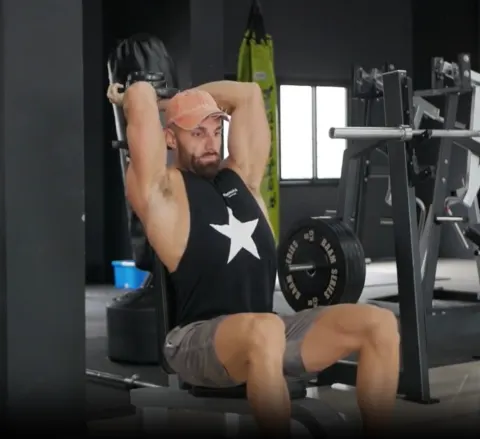
| Overhead triceps extension | Triceps, long head (back of arm) | 3 × 10–15 |
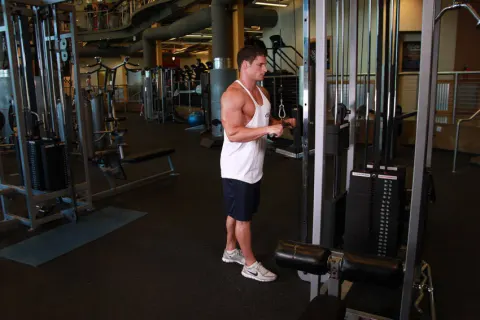
| Triceps pushdown or band pushdown | Triceps | 3 × 10–15 |
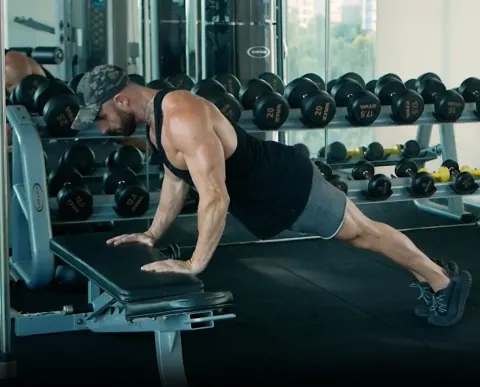
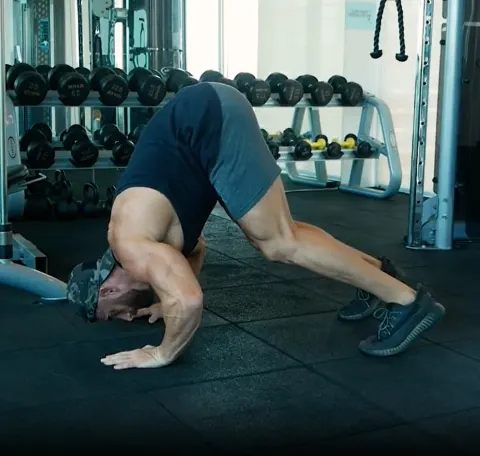
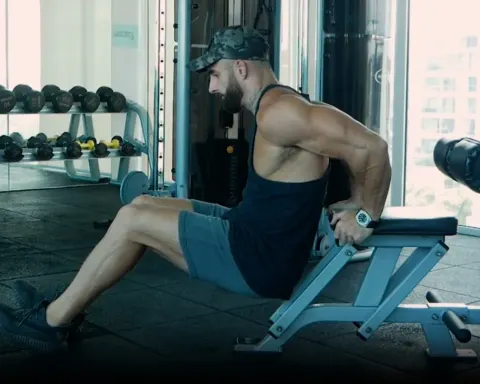
| Bench dip or close-grip push-up | Triceps, chest | 3 × 8–12 |
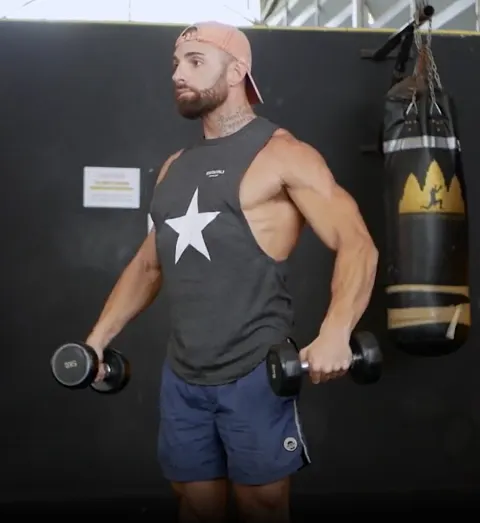
| Dumbbell lateral raise | Outer shoulder | 3 × 12–15 |
| Dumbbell or hammer curl | Biceps, forearm | 2–3 × 10–15 |
A few points that make these work:
- Use real resistance. If you can do 25 reps, the weight is too light to build much. Pick a load where the last two or three reps of each set are slow and difficult.
- Go through the full range. Let the triceps stretch fully at the bottom of an overhead extension. The stretched position seems to matter most for growth.
- Progress. Add a rep each week until you hit the top of the range, then add weight. The double progression guide shows how.
- Include shoulders. A slightly wider shoulder makes the upper arm look leaner by contrast.
Full sessions you can follow: the arm workout with dumbbells, the equipment-free arm workout at home, or the focused triceps workout at home. If you like a daily target, try the 30-day arm challenge.
No dumbbells? Use your body weight and a band
You can train arms properly without a gym. Push-ups with hands close together load the triceps hard. Dips off a sturdy chair do the same, as long as your shoulders tolerate them. A resistance band anchored in a door covers pushdowns, overhead extensions, curls and lateral raises for the price of a takeaway.
The rule about effort still applies. When a bodyweight move gets easy, slow the lowering phase to three seconds, add a pause at the bottom, or move to a harder version such as feet-elevated push-ups. Easy reps done in front of the television will not change much.
A simple week
| Day | Session |
|---|---|
| Monday | Upper body: push-ups or press, rows, then triceps and lateral raises |
| Tuesday | Walk |
| Wednesday | Lower body and core |
| Thursday | Walk |
| Friday | Upper body: shoulder press, pulldown or row, then curls and overhead extensions |
| Weekend | One longer walk, one rest day |
That gives the arms 10–14 hard sets a week counting the pressing and pulling, which is inside the range that builds muscle for most people. A pair of adjustable dumbbells is enough; the dumbbell workout plan turns this into a full program.
Realistic expectations
- Weeks 1–3: arms feel firmer after sessions. That is mostly temporary swelling, but strength is genuinely rising.
- Weeks 4–8: you can lift noticeably more. Sleeves fit a little differently around the shoulder.
- Weeks 8–16: visible change in relaxed photos, provided weight is trending down or muscle is going up.
Arms are a small area, so the tape measure is not very helpful. Photos taken in the same pose and light work better. For a fuller picture of timing, see how long it takes to see results.
Be realistic about skin as well. Training fills out the arm and makes loose skin less obvious, but it cannot restore elasticity lost to age or major weight change. That is not a failure of effort.
Common mistakes
- Only doing light, fast “toning” reps. They burn few calories and build little muscle.
- Skipping the diet side. Stronger triceps under the same fat look much the same.
- Dieting too hard. Very low intakes strip muscle, and arms end up softer.
- Training arms every day. Muscles grow between sessions. Two or three times a week is plenty.
- Expecting two weeks to undo ten years. Give it three months before you judge.
If you have elbow, wrist or shoulder pain, or a medical condition that affects exercise, get it checked by a doctor or physiotherapist before loading those joints.
Ready plans for this guide
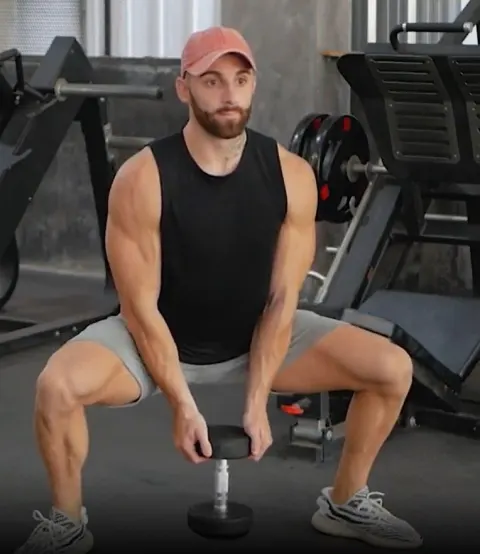
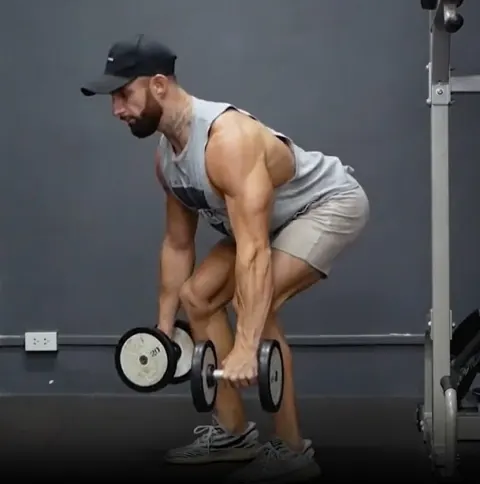
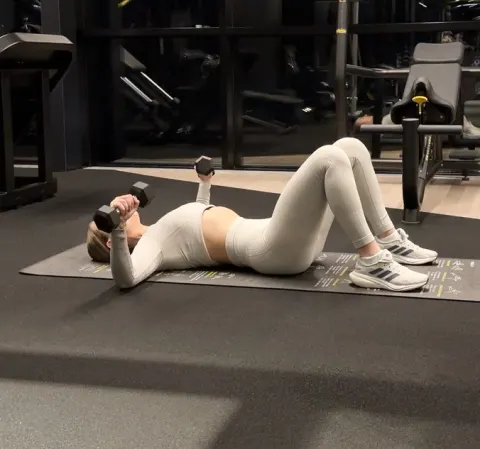
Exercises mentioned
Frequently asked questions
What is the fastest way to lose arm fat?
There is no shortcut specific to arms. The quickest honest route is a moderate calorie deficit of 300 to 500 kcal a day combined with two upper-body strength sessions a week. That pairing reduces fat across the body while adding shape to the triceps and shoulders, so your arms look better at every stage.
Can lifting weights get rid of flabby arms?
Lifting changes half of the picture. It builds the triceps, biceps and shoulders, which makes the upper arm firmer and fills out loose-looking skin. The other half, the fat layer over the muscle, responds to your overall energy balance. Most people need both training and a small deficit to see a clear difference.
Why do I have fat arms but I am otherwise slim?
Fat distribution is individual. Some people, women more often than men, store a larger share on the back of the upper arm even at a healthy weight. Low muscle mass in the triceps and shoulders exaggerates the effect. In that situation building muscle usually helps more than trying to lose additional weight.
How long does it take to tone your arms?
Strength improves within two or three weeks. Visible firmness usually takes six to twelve weeks of training twice a week, and longer if there is a fair amount of fat to lose. Take a relaxed photo of the back of your arm each month, because day-to-day changes are too small to notice.
Will arm exercises make my arms bulky?
Very unlikely. Adding obvious arm size takes years of heavy training, plenty of food and, for most women, more effort than they will ever accidentally apply. Two short sessions a week while eating at or slightly below maintenance produce firmer, more defined arms, not bigger ones.