Dumbbell Workout Plan: Build a Full Week Around One Set of Weights
A dumbbell workout plan built on three full-body days: which weights to own, how to get past big jumps between pairs and how to keep legs challenged.
Example week
3-Day Dumbbell Workout Plan for Muscle Gain
A complete week you can start today: exercises, sets, reps and rest for every session, with swaps for each exercise. Open this plan on its own page (PDF) →
Split
Full Body
Sessions / week
3
Avg. session
45 min
Schedule
Mon · Wed · Fri
Warm-up (every session, ~6 min)
- 3–5 min easy cardio: brisk walk, bike, jump rope or marching in place.
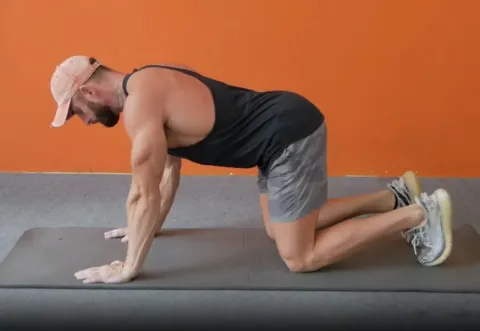
- Dynamic mobility: 10 leg swings each way, 10 hip circles, 10 arm circles, 8 cat-cows.
- Ramp-up sets on the first exercise: 1–2 light sets of 8 before your working sets.
Day 1
Full Body A
Squat + push + pull
-
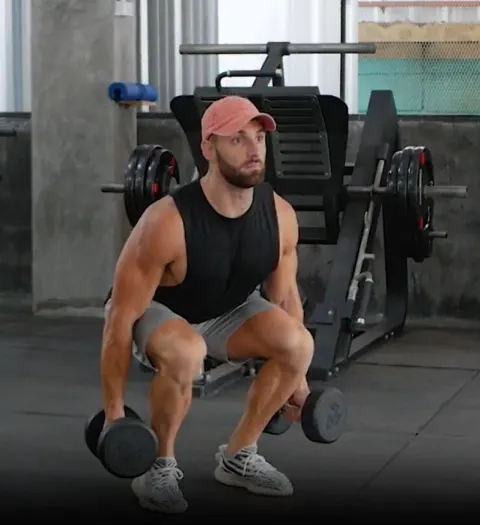
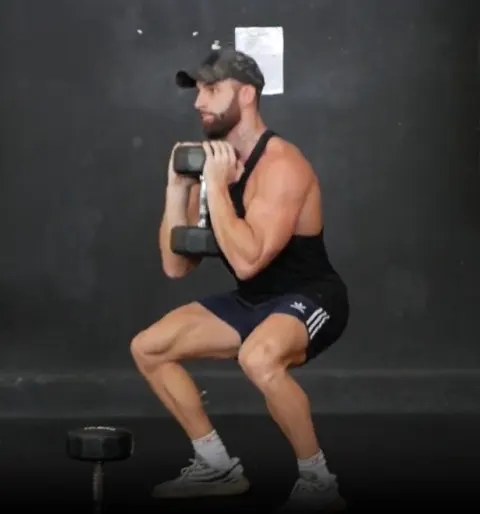
Quads, Glutes · Dumbbell
- Sets
- 3
- Reps
- 6–10
- Rest
- 120s
- Effort
- RPE 8
swap: Bodyweight Squat, Dumbbell Squat, Sumo Squat
-
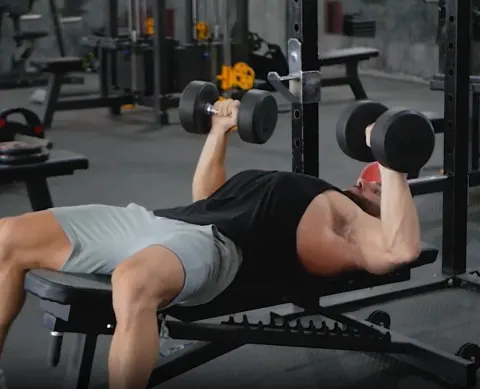
Chest, Triceps · Dumbbell
- Sets
- 3
- Reps
- 6–10
- Rest
- 120s
- Effort
- RPE 8
-
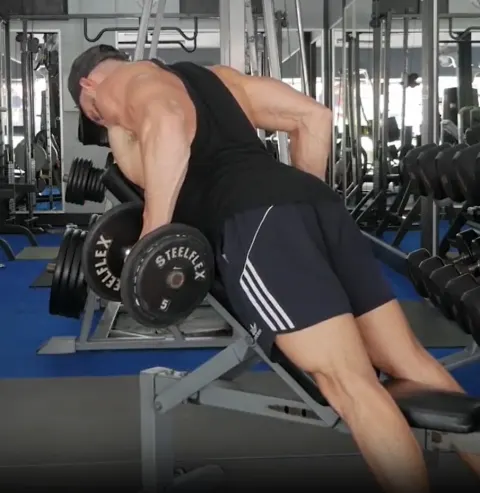
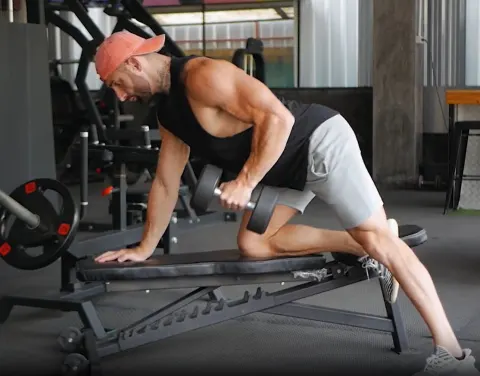
Upper Back, Lats · Dumbbell
- Sets
- 3
- Reps
- 6–10
- Rest
- 120s
- Effort
- RPE 8
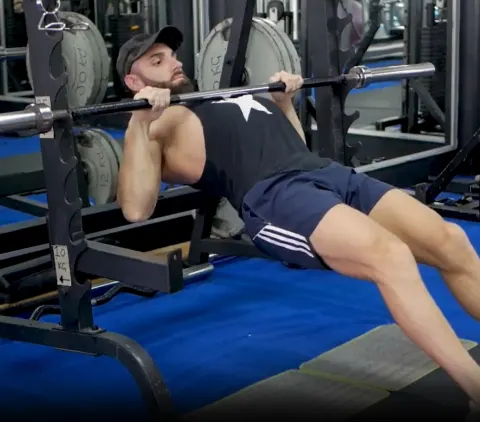
swap: Dumbbell Row, Inverted Row, Rear Delt Fly
-
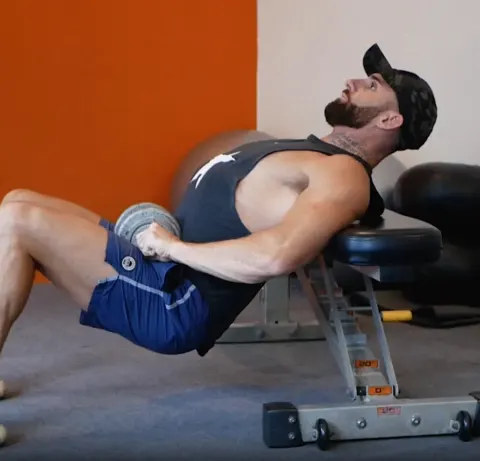
Hamstrings, Glutes · Dumbbell
- Sets
- 2
- Reps
- 8–12
- Rest
- 90s
- Effort
- RPE 8
-
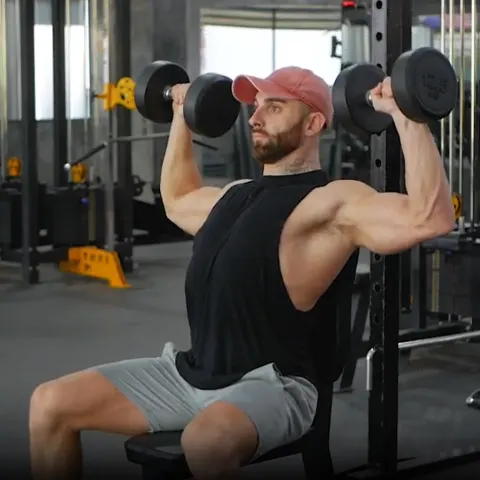
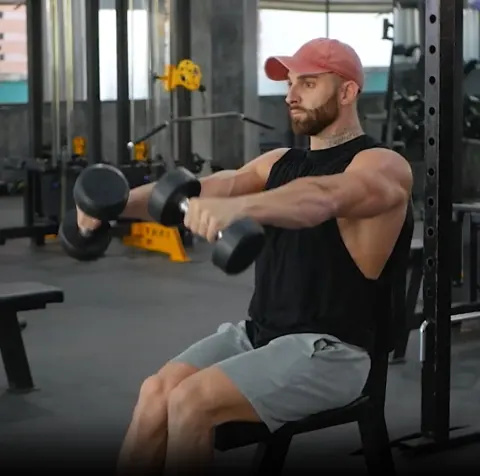
Front Delts, Side Delts · Dumbbell
- Sets
- 3
- Reps
- 10–15
- Rest
- 60s
- Effort
- RPE 8–9
-
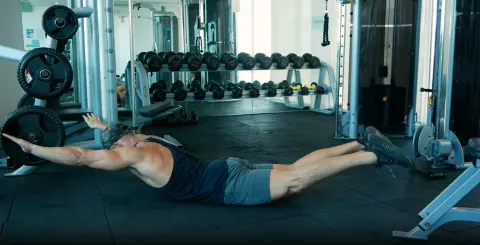
Core, Lower Back · Bodyweight
- Sets
- 3
- Reps
- 30–60 sec
- Rest
- 60s
- Effort
- controlled
swap: Dead Bug, Plank, Donkey Kick
Day 2
Full Body B
Hinge + vertical push/pull
-
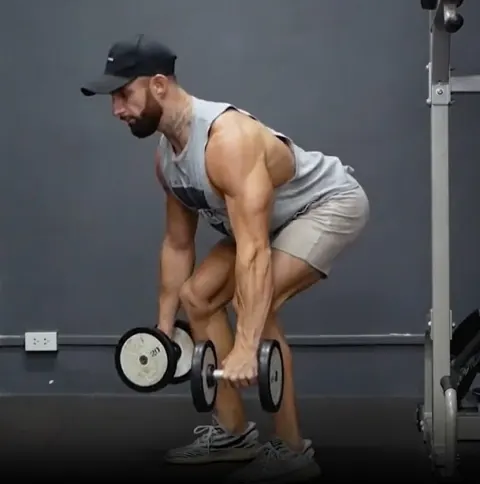
Hamstrings, Glutes · Dumbbell
- Sets
- 3
- Reps
- 6–10
- Rest
- 120s
- Effort
- RPE 8
swap: Bodyweight Hip Hinge, Dumbbell Deadlift, Bodyweight Good Morning
-
Lats, Upper Back · Dumbbell
- Sets
- 3
- Reps
- 6–10 / side
- Rest
- 120s
- Effort
- RPE 8
-
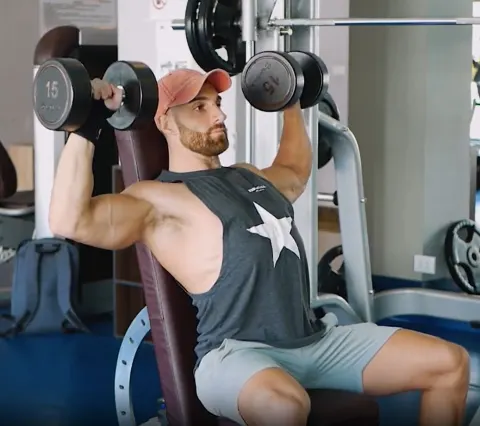
Front Delts, Side Delts · Dumbbell
- Sets
- 3
- Reps
- 6–10
- Rest
- 120s
- Effort
- RPE 8
-
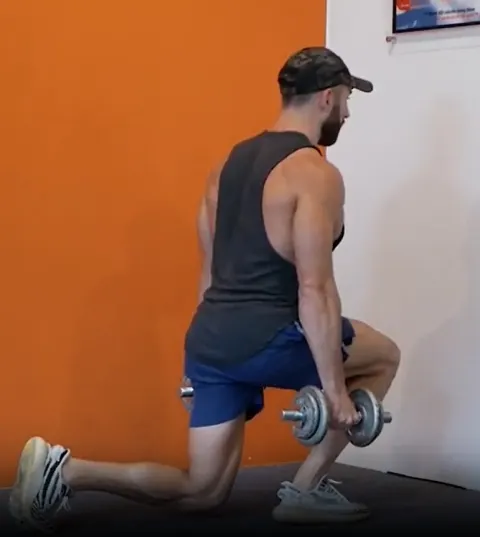
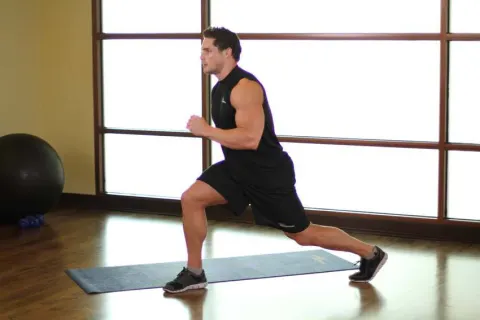
Quads, Glutes · Dumbbell
- Sets
- 2
- Reps
- 8–12 / side
- Rest
- 90s
- Effort
- RPE 8
swap: Reverse Lunge, Split Squat, Step-Up
-
Chest, Front Delts · Dumbbell
- Sets
- 3
- Reps
- 10–15
- Rest
- 60s
- Effort
- RPE 8–9
-
Lower Back, Glutes · Bodyweight
- Sets
- 3
- Reps
- 12–15
- Rest
- 60s
- Effort
- controlled
swap: Bird Dog, Glute Bridge, Plank
Day 3
Full Body C
Single-leg + chest + back
-
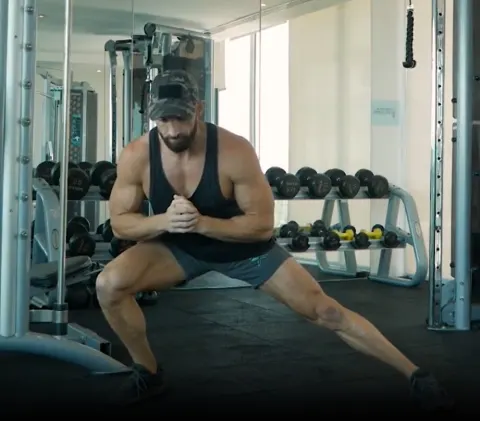
Glutes, Adductors, Quads · Bodyweight
- Sets
- 3
- Reps
- 6–10 / side
- Rest
- 120s
- Effort
- RPE 8
swap: Sumo Squat, Forward Lunge, Reverse Lunge
-
Chest, Triceps · Dumbbell
- Sets
- 3
- Reps
- 6–10
- Rest
- 120s
- Effort
- RPE 8
-
Upper Back, Lats · Bodyweight
- Sets
- 3
- Reps
- 6–10
- Rest
- 120s
- Effort
- RPE 8
-
Front Delts · Dumbbell
- Sets
- 3
- Reps
- 10–15
- Rest
- 60s
- Effort
- RPE 8–9
swap: Dumbbell Shoulder Press, Dumbbell Lateral Raise, Dumbbell Shrug
-
Obliques, Core · Bodyweight
- Sets
- 3
- Reps
- 12–15
- Rest
- 60s
- Effort
- controlled
8-week progression: what to change each week
Same exercises for the whole block. Weeks move the reps, then the load; the last week is a deload.
| Week | Load | Reps | Effort | What to watch |
|---|---|---|---|---|
| 1 | Light: learn the movements | bottom of range (6–8) | RPE 6–7 | Stop every set 3 reps before failure; film one set per exercise to check form. |
| 2 | Same weight | +1 rep per set (8–9) | RPE 8 | Same exercises, same order; only the reps move. |
| 3 | Same weight | top of range (9–10) | RPE 8 | All sets at the top of the range → add load next week. Missed a set? Repeat the week. |
| 4 | next dumbbell / harder variation | bottom of range (6–8) | RPE 8 | New weight feels hard at low reps; that is the plan working. |
| 5 | Same weight | +1 rep per set (8–9) | RPE 8 | Keep rest periods the same. |
| 6 | Same weight | top of range (9–10) | RPE 8–9 | Second time at the top: take the last set of each main lift to 1 rep in reserve. |
| 7 | next dumbbell / harder variation | bottom of range (6–8) | RPE 8 | Bodyweight moves: slow the lowering phase to 3 s or move to the harder variation. |
| 8 | Deload: 60 % | bottom of range | RPE 5–6 | Half the sets, then regenerate a variation or change the split for the next block. |
How to progress
- First 2 weeks: focus on form with light weights, stop each set 3 reps before failure.
- Double progression: hit the top of the rep range on every set, then add weight (2.5–5 %) and start from the bottom of the range.
- Bodyweight moves: add reps, then slow the tempo (3 sec down), then move to a harder variation.
- Deload every 6–8 weeks: same exercises, half the sets.
Notes for this plan
- Home setup: if a weight gets too light, slow the lowering phase to 3–4 seconds or add a pause at the hardest point.
- Sessions can move between days; keep at least one rest day between hard sessions for the same muscles.
A dumbbell workout plan needs three things: enough weight for your strongest lifts, a way to progress when the next pair is a big step up, and leg exercises that stay hard. Get those right and one corner of a room covers muscle gain, fat loss, general fitness and even dedicated strength work.
Why the example week is three full-body days
The example week above is a beginner muscle-gain plan: full-body sessions on Monday, Wednesday and Friday. Each one takes about 45 minutes and opens with three main lifts for 3 sets of 6–10 reps and 2 minutes of rest, then moves to lighter work for 8–15 reps.
With dumbbells this layout has a practical edge. Full-body days rotate the movements, so a squat such as the goblet squat leads one day, a hinge the next and a lunge the third. No pattern comes round often enough to outrun your heaviest pair in the first months, yet every muscle is still worked several times a week.
The rep range matters more here than it does with a barbell. A 6–10 range gives a heavy pair five reps of headroom before you need the next size. Use all of it.
What weights to own
Buy for the lift, not for the person. A pair that is right for rows is too heavy for lateral raises and too light for hinges.
| Lifter | Light pair (raises, curls) | Middle pair (presses, rows) | Heavy pair (squats, hinges) |
|---|---|---|---|
| New to lifting, smaller frame | 2–4 kg | 6–8 kg | 10–14 kg |
| New to lifting, larger frame | 4–6 kg | 10–12 kg | 16–20 kg |
| 6–12 months in | 6–8 kg | 14–18 kg | 20–26 kg |
| 2+ years in | 8–12 kg | 20–28 kg | 30 kg and up |
Three fixed pairs cover a start. Adjustable handles that reach 24–32 kg per hand replace the whole rack and are the better buy once you know you will keep training. Whichever you choose, check that the steps between settings are 2 kg or less at the light end. Detailed buying advice and an exercise list by muscle are in the dumbbell-only training guide.
The big-jump problem
On a 60 kg barbell the smallest step is 2.5 kg, about 4 %. Going from 8 kg to 10 kg dumbbells on a shoulder press is 25 %. Nobody gets a quarter stronger between Monday and Friday, so the usual rule (reach the top of the range, add weight) needs a bridge.
Here is one for a press written as 8–12 reps:
| Stage | Load | Target | Move on when |
|---|---|---|---|
| 1 | 8 kg | 8–12 reps | Every set reaches 12 |
| 2 | 8 kg | 12–15 reps | Every set reaches 15 |
| 3 | 8 kg, 3 s lowering | 10–12 reps | Every set reaches 12 at that speed |
| 4 | 10 kg | 6–8 reps at first | You are back at 8 or more within 2–3 weeks |
Other bridges work too: the first set with the heavier pair and the rest with the lighter one, an extra set at the old weight, or a slower tempo on the way down. Change one thing at a time so the log stays readable.
Legs: go single-leg before you go shopping
Your legs will outgrow your dumbbells first. Holding a 20 kg dumbbell at the chest becomes an arm and upper-back exercise long before the quads are done.
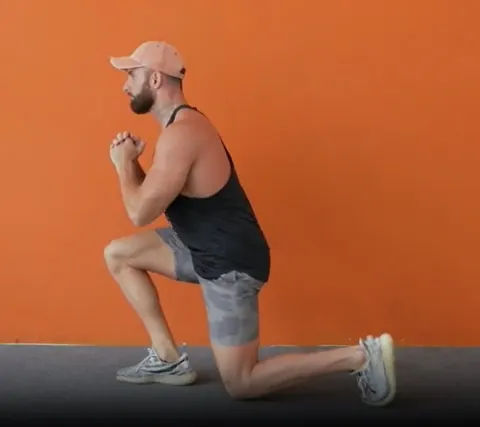
The fix is unilateral training. A Bulgarian split squat with 14 kg in each hand sends most of that 28 kg, plus your body weight, through one leg. The single-leg Romanian deadlift does the same job for hamstrings and glutes. Escalate in this order:
- Goblet squat and two-leg Romanian deadlift until your heaviest pair reaches the top of the range.
- Split squat, then the rear foot on a chair.
- A 3-second lowering phase and a 1-second pause at the bottom.
- Only then a heavier pair.
Balance will limit the first two weeks of single-leg work. Hold a door frame with one hand if needed and load the other side.
Bench or no bench
A plan runs fine from the floor. The dumbbell floor press replaces the bench press, a one-arm row with a hand on a chair replaces the chest-supported row, and a sofa edge holds your shoulders for hip thrusts.
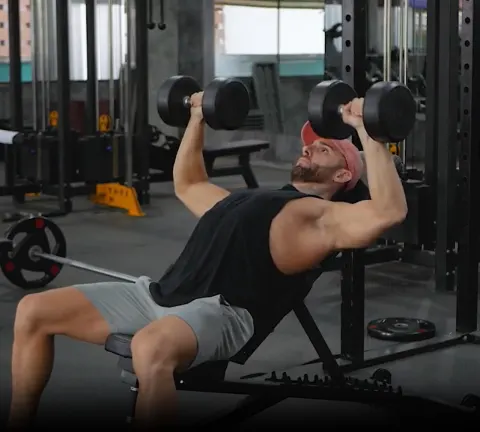
What you give up is the bottom third of the press, where the chest works hardest, and incline pressing, which the week uses for lighter accessory work. Pause for 2 seconds with your upper arms on the floor to recover some of the difference. An adjustable bench earns its space once your floor press passes roughly 16–20 kg per hand.
One pull in a dumbbell week is usually not a dumbbell lift at all: an inverted row under a sturdy table or a low bar. If you have nothing safe to hang from, do a one-arm dumbbell row in its place for the same sets and reps.
Three days full body or four days upper/lower
Stay on three days while sessions fit into 45–50 minutes and loads are still climbing. Switch when you want more sets per muscle than three days can hold, usually after 6–12 months. The 4-day dumbbell plan for muscle gain runs an upper/lower split on Monday, Tuesday, Thursday and Friday: a chest-and-back day and a shoulders-and-back day for the upper body, a squat-led and a hinge-led day for the legs.
Dumbbells are also the only home equipment with dedicated strength plans. The 3-day dumbbell plan for strength is written for intermediates as a push/pull/legs week with 4–6 reps and 2.5-minute rests on the main lifts, which only makes sense if your heavy pair is truly heavy for 6 reps.
Mistakes that stall dumbbell plans
- One pair for everything. Either your raises are sloppy or your squats are a warm-up.
- Abandoning the rep range. Doing 20 reps because the next pair looks scary turns a muscle plan into endurance work. Use the bridge above.
- Uneven sides. Start each one-arm set with the weaker side and match its reps on the stronger one.
- Rushing the pick-up. Getting heavy dumbbells into pressing position is a skill. Rest them on your thighs, then kick one knee up at a time as you lie back.
- Dropping leg work when it gets hard. Split squats are unpleasant. They are also the reason a 20 kg pair can still train your legs.
Where to take it next
Starting from zero? The dumbbell workout plan for beginners covers first purchases and starting loads. Comparing dumbbells with bands, a kettlebell or no equipment? See the home workout plan overview. When your heaviest pair no longer challenges rows and hinges, the gym workout plan is the logical step. For any other mix of days and goal, the plan generator builds the dumbbell version in about a minute.
Dumbbell Workout Plan: all 84 plans
- 2-Day Dumbbell Workout Plan for Weight Loss (Women)
- 2-Day Dumbbell Workout Plan for Weight Loss (Men)
- 2-Day Dumbbell Workout Plan for Weight Loss (Over 50)
- 2-Day Dumbbell Workout Plan for Muscle Gain
- 2-Day Dumbbell Workout Plan for Muscle Gain (Beginners)
- 2-Day Dumbbell Workout Plan for Muscle Gain (Women)
- 2-Day Dumbbell Workout Plan for Muscle Gain (Men)
- 2-Day Dumbbell Workout Plan for Muscle Gain (Over 50)
- 2-Day Dumbbell Workout Plan for Strength
- 2-Day Dumbbell Workout Plan for Strength (Beginners)
- 2-Day Dumbbell Workout Plan for Strength (Women)
- 2-Day Dumbbell Workout Plan for Strength (Men)
- 2-Day Dumbbell Workout Plan for Strength (Over 50)
- 2-Day Dumbbell Workout Plan for General Fitness
- 2-Day Dumbbell Workout Plan for General Fitness (Beginners)
- 2-Day Dumbbell Workout Plan for General Fitness (Women)
- 2-Day Dumbbell Workout Plan for General Fitness (Men)
- 2-Day Dumbbell Workout Plan for General Fitness (Over 50)
- 3-Day Dumbbell Workout Plan for Weight Loss (Women)
- 3-Day Dumbbell Workout Plan for Weight Loss (Men)
- 3-Day Dumbbell Workout Plan for Weight Loss (Over 50)
- 3-Day Dumbbell Workout Plan for Muscle Gain
- 3-Day Dumbbell Workout Plan for Muscle Gain (Beginners)
- 3-Day Dumbbell Workout Plan for Muscle Gain (Women)
- 3-Day Dumbbell Workout Plan for Muscle Gain (Men)
- 3-Day Dumbbell Workout Plan for Muscle Gain (Over 50)
- 3-Day Dumbbell Workout Plan for Strength
- 3-Day Dumbbell Workout Plan for Strength (Beginners)
- 3-Day Dumbbell Workout Plan for Strength (Women)
- 3-Day Dumbbell Workout Plan for Strength (Men)
- 3-Day Dumbbell Workout Plan for Strength (Over 50)
- 3-Day Dumbbell Workout Plan for General Fitness
- 3-Day Dumbbell Workout Plan for General Fitness (Beginners)
- 3-Day Dumbbell Workout Plan for General Fitness (Women)
- 3-Day Dumbbell Workout Plan for General Fitness (Men)
- 3-Day Dumbbell Workout Plan for General Fitness (Over 50)
- 4-Day Dumbbell Workout Plan for Weight Loss (Women)
- 4-Day Dumbbell Workout Plan for Weight Loss (Men)
- 4-Day Dumbbell Workout Plan for Weight Loss (Over 50)
- 4-Day Dumbbell Workout Plan for Muscle Gain
- 4-Day Dumbbell Workout Plan for Muscle Gain (Beginners)
- 4-Day Dumbbell Workout Plan for Muscle Gain (Women)
- 4-Day Dumbbell Workout Plan for Muscle Gain (Men)
- 4-Day Dumbbell Workout Plan for Muscle Gain (Over 50)
- 4-Day Dumbbell Workout Plan for Strength
- 4-Day Dumbbell Workout Plan for Strength (Beginners)
- 4-Day Dumbbell Workout Plan for Strength (Women)
- 4-Day Dumbbell Workout Plan for Strength (Men)
- 4-Day Dumbbell Workout Plan for Strength (Over 50)
- 4-Day Dumbbell Workout Plan for General Fitness
- 4-Day Dumbbell Workout Plan for General Fitness (Beginners)
- 4-Day Dumbbell Workout Plan for General Fitness (Women)
- 4-Day Dumbbell Workout Plan for General Fitness (Men)
- 4-Day Dumbbell Workout Plan for General Fitness (Over 50)
- 5-Day Dumbbell Workout Plan for Weight Loss (Men)
- 5-Day Dumbbell Workout Plan for Muscle Gain
- 5-Day Dumbbell Workout Plan for Muscle Gain (Women)
- 5-Day Dumbbell Workout Plan for Muscle Gain (Men)
- 5-Day Dumbbell Workout Plan for Strength
- 5-Day Dumbbell Workout Plan for Strength (Women)
- 5-Day Dumbbell Workout Plan for Strength (Men)
- 5-Day Dumbbell Workout Plan for General Fitness
- 5-Day Dumbbell Workout Plan for General Fitness (Women)
- 5-Day Dumbbell Workout Plan for General Fitness (Men)
- 6-Day Dumbbell Workout Plan for Weight Loss (Women)
- 6-Day Dumbbell Workout Plan for Weight Loss (Men)
- 6-Day Dumbbell Workout Plan for Muscle Gain
- 6-Day Dumbbell Workout Plan for Muscle Gain (Women)
- 6-Day Dumbbell Workout Plan for Muscle Gain (Men)
- 6-Day Dumbbell Workout Plan for Strength
- 6-Day Dumbbell Workout Plan for Strength (Women)
- 6-Day Dumbbell Workout Plan for Strength (Men)
- 6-Day Dumbbell Workout Plan for General Fitness
- 6-Day Dumbbell Workout Plan for General Fitness (Women)
- 6-Day Dumbbell Workout Plan for General Fitness (Men)
Related programs
Frequently asked questions
Is a dumbbell workout plan enough to build muscle?
Yes, for most people for several years. Growth needs hard sets of 6–12 reps and about 10–20 sets per muscle each week, and dumbbells deliver both for chest, back, shoulders and arms. Legs are the limit: once goblet squats pass 12 easy reps, switch to split squats and single-leg deadlifts.
How heavy should my dumbbells be?
Heavy enough that the last 2 reps of a set slow down inside the plan's rep range. As a rough guide, a new lifter needs pairs between 4 and 16 kg and an intermediate between 8 and 26 kg. One light, one medium and one heavy pair is the minimum workable set.
Can I follow a dumbbell workout plan without a bench?
Yes. Press from the floor instead of a bench, row with one hand on a chair and do hip thrusts with your shoulders on a sofa. You lose the bottom part of the pressing range and the incline angle, so add a 2-second pause to the floor press. A bench is the first upgrade to buy.
How often should I increase dumbbell weight?
Whenever every set reaches the top of the rep range, typically every 2–4 weeks per exercise for a beginner and more slowly after that. Small muscles lag behind: a lateral raise may stay at the same weight for two months while reps climb from 10 to 15. That still counts as progress.
Is 3 days a week enough with dumbbells?
Three full-body days train every muscle two to three times a week, which is plenty for the first 6–12 months. Move to a 4-day upper/lower split when sessions run past an hour or you need more sets per muscle than three days can hold. Dumbbell plans also exist for 5 and 6 days.