Should You Work Out When Sore? DOMS, Training and Relief
Should you work out when sore? Usually yes, with lighter or different work. How DOMS behaves, what eases muscle soreness and when pain means stop.
Yes, you can usually work out when sore: mild to moderate muscle soreness is not damage that needs complete rest, and gentle movement tends to ease it. Train a different muscle group or do a lighter session, and postpone hard work for the same muscles if they are very sore or clearly weaker. Sharp, sudden or one-sided pain is a different thing and a reason to stop.
What DOMS is
The ache that arrives a day after training is called delayed onset muscle soreness, or DOMS. It typically starts 12–24 hours after a session, peaks at 24–72 hours and is gone within three to five days.
It is caused by unfamiliar strain on muscle fibres and the repair process that follows. It is not caused by lactic acid, which clears within an hour or so of exercise. Three situations produce the most soreness:
- Something new. A new exercise, a first session after a break, or a sport you have not played for months.
- Lowering under load. The lengthening phase of a movement, such as the way down in a squat or walking downhill, causes more soreness than the lifting phase.
- A sudden jump. Twice the sets you did last week, or a much deeper range of motion.
The good news is built in. After one exposure, the same session causes far less soreness the next time, a protection that lasts for weeks. This is why the first fortnight of any program is the worst.
Train, modify or rest: a simple scale
| How it feels | What to do |
|---|---|
| Stiff when you start moving, fine once warm | Train as planned |
| Clearly sore, slightly restricted, strength roughly normal | Train other muscles, or the same ones at about half the usual sets and lighter loads |
| Painful to sit down or climb stairs, strength clearly down | No hard training for those muscles; walk and move gently |
| Sharp, sudden, in a joint, one-sided, or with swelling or numbness | Stop. This is not ordinary soreness |
The top two rows cover the great majority of cases. The third is common after a first leg day and passes on its own. The fourth is discussed at the end of this guide.
Why training through mild soreness is fine
A warm-up raises blood flow and temperature in the sore area, and stiffness usually drops within minutes. Soreness may reduce your strength slightly for a day or two, so do not expect records, but a normal session will not slow recovery or cause harm.
The easiest solution is a plan that never asks the same muscle for hard work on consecutive days. If your legs are sore, train your upper body. If everything is sore after a full-body day, the next session is 48 hours away anyway. The guide to what muscle groups to work out together shows how to arrange a week so that this happens automatically.
If the plan does call for the same muscles while they are still noticeably sore, keep the session and lower the dose: the same exercises, lighter weights, one set fewer, and stop each set well short of failure. Practising the movement helps more than skipping it.
How to relieve muscle soreness
Nothing switches soreness off. These measures make it more comfortable while time does the work.
Worth doing
- Light movement. A walk, easy cycling or something gentle like the 15-minute low-impact workout. Hitting your usual daily step count is often the best single remedy for sore legs.
- Sleep. Most repair happens at night. Seven to nine hours is the most effective recovery tool there is.
- Enough food and protein. Eating too little slows recovery. The protein intake calculator gives a daily target.
- Warmth. A warm bath or shower relaxes stiff muscles for a while.
- Massage or foam rolling. A few minutes on the sore area brings short-term relief.
- Easy mobility work. Slow, comfortable movement through the range, as in the 10-minute stretching routine or the 10-minute hip mobility routine, feels good and does no harm.
Does less than people hope
- Stretching before or after training. It does not prevent DOMS in any meaningful way.
- Complete bed rest. Staying still tends to prolong the stiffness.
- Pushing through a hard session to “work it out”. Gentle movement helps. Another round of the same heavy work does not.
This guide does not cover medication. If you are considering painkillers for muscle soreness, ask a pharmacist or doctor first.
How to get less sore next time
Severe soreness is mostly avoidable.
- Start below your limit. In the first two weeks of a new plan, do two sets per exercise and finish each with three or four reps to spare. Our guide on how to start working out builds this in.
- Increase gradually. Add sets, load or new exercises one at a time, not all in the same week.
- Keep your exercises stable. Changing the whole program every fortnight brings the “something new” soreness back each time.
- Do not take every set to the limit. Routine training to failure adds a lot of soreness for little extra result.
- Warm up. Five minutes of movement and one or two lighter sets, as described in how to warm up before lifting. For the general movement, use the 5-minute warm-up.
- Return carefully after a break. After two weeks or more away, cut loads and sets by about a third for the first week back.
Soreness is not the goal
Many people use soreness as proof that a workout “worked”. It is a poor measure. Soreness reflects novelty, and muscle grows from repeated hard sets that you gradually make harder. Experienced lifters gain strength and size for years while rarely feeling more than mild stiffness.
Two patterns are worth noticing:
- Never sore, numbers rising: everything is working. Change nothing.
- Always sore, numbers flat: you are doing more than you can recover from. Reduce your weekly sets, and think about a deload: the deload week guide explains how to run one.
When pain is a reason to stop
This article is general information, not a diagnosis. Normal soreness is dull, spread across the muscle, similar on both sides and better once you move. Stop training and have it looked at by a doctor or physiotherapist if you notice any of the following:
- Sharp or stabbing pain, or pain that began at a specific moment during an exercise.
- Pain in or around a joint, not in the body of the muscle.
- Visible swelling, bruising or a change in the shape of a muscle.
- Numbness, tingling or pain that travels down an arm or a leg.
- Soreness that is still getting worse after three days, or has not gone after a week.
- Pain that wakes you at night or is present at rest.
One situation is urgent. Extreme soreness and swelling after an unusually hard session, together with very dark urine, needs prompt medical attention.
When in doubt, do not train through it. A missed week costs almost nothing. An aggravated injury can cost months.
Ready plans for this guide
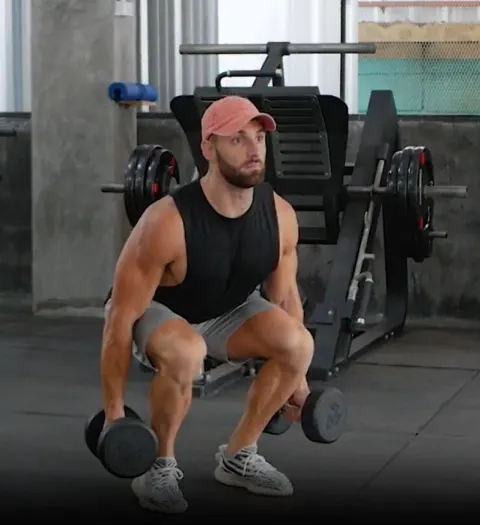
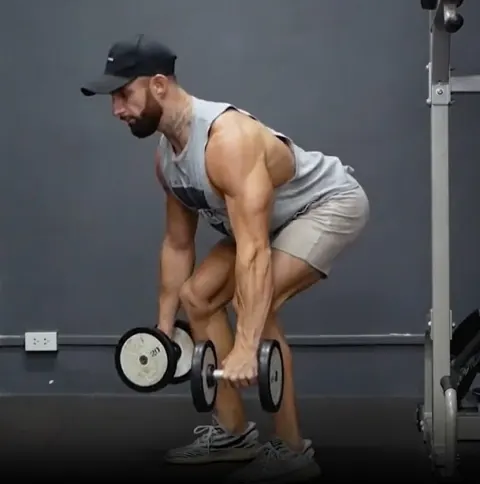
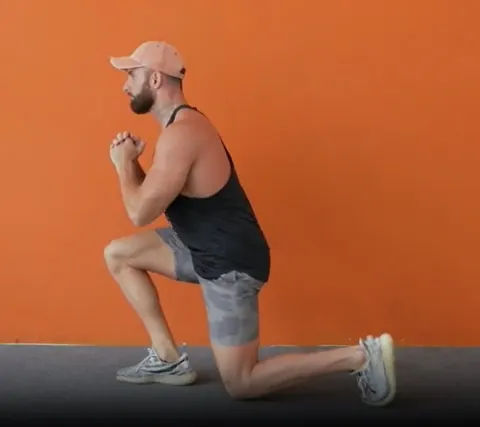

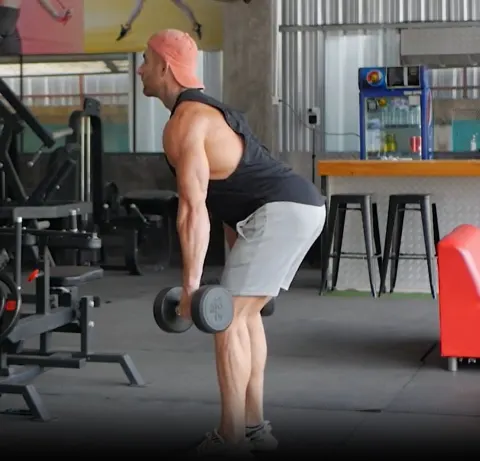
Exercises mentioned
 video
beginner
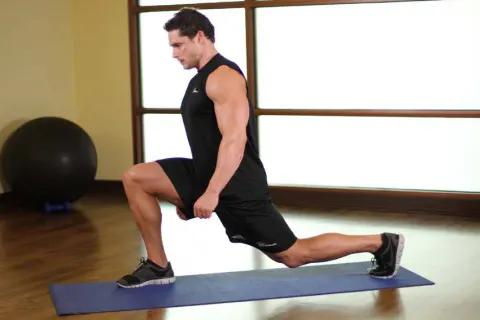 beginner
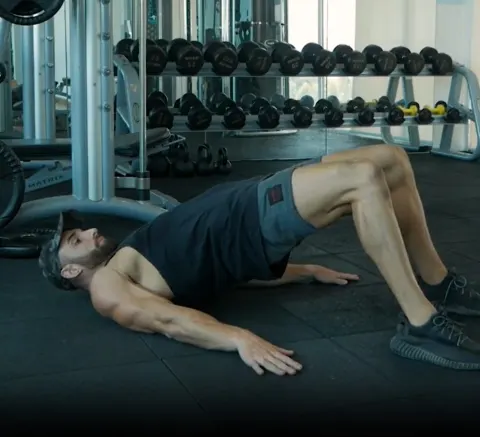 video
beginner
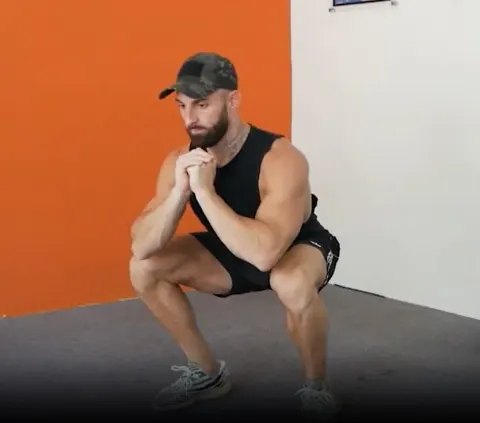 video
beginner
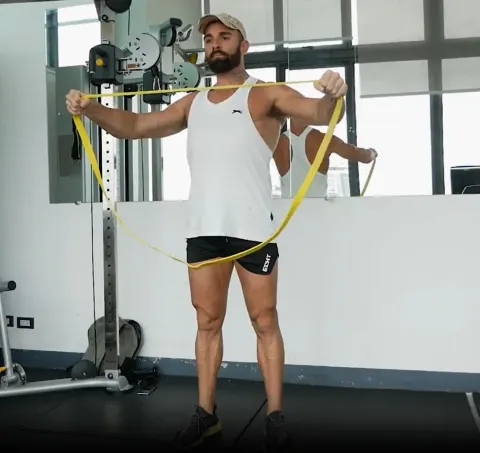 video
beginner
Frequently asked questions
Should I work out when sore or rest?
With mild or moderate soreness, train. Either work a different muscle group or repeat the same one with lighter loads and fewer sets, and expect the stiffness to ease once you are warm. Rest the affected muscles from hard training when soreness is severe, movement is clearly restricted or strength is obviously down.
How long does DOMS last?
Delayed onset muscle soreness usually begins 12 to 24 hours after a session, peaks between 24 and 72 hours and fades within three to five days. It is strongest after new exercises or a sudden jump in workload. Soreness that keeps getting worse after three days, or lasts beyond a week, is worth having checked.
Is being sore a sign of a good workout?
No. Soreness mainly shows that the work was unfamiliar, not that it was effective. As your body adapts to an exercise, the same session causes far less soreness while still building strength and muscle. Judge your training by whether your weights and reps rise over the weeks, not by how you feel the next day.
What helps sore muscles recover faster?
Nothing removes soreness quickly, but a few things ease it: light movement such as walking or easy cycling, a good night of sleep, enough food and protein, gentle massage or foam rolling and a warm bath. Stretching feels pleasant but does little to shorten it. Time does most of the work.
How do I know if it is soreness or an injury?
Soreness is a dull, spread-out ache in the muscle, usually on both sides of the body, that appears a day later and eases with movement. Pain that is sharp, starts suddenly during an exercise, sits in a joint, affects one side only, or comes with swelling or numbness is not normal soreness. Stop training and see a health professional.