How Much Water Should You Drink a Day?
Official adequate intakes are 2.0 L a day for women and 2.5 L for men in the EU, counting all drinks and food. What that means in glasses, and with exercise.
Official adequate intakes for total water are 2.0 litres a day for women and 2.5 litres for men in the EU, and 2.7 and 3.7 litres in the United States. Those totals count every drink and the water in food, so the amount you need from drinks is lower: roughly 1.6 to 2.2 litres for women and 2.0 to 3.0 litres for men. Exercise and heat add to that, and for healthy people thirst is a reliable guide.
What the official figures are
| Source | Women | Men | What is counted |
|---|---|---|---|
| European Food Safety Authority, 2010 | 2.0 L a day | 2.5 L a day | Total water: drinking water, all other drinks and moisture in food |
| US National Academies, 2004 | 2.7 L a day (91 oz) | 3.7 L a day (125 oz) | Total water: all drinks and food |
| Share from drinks, about 80% | 1.6-2.2 L | 2.0-3.0 L | Water, tea, coffee, milk and other drinks |
| NHS (UK) | 6 to 8 cups or glasses of fluid | 6 to 8 cups or glasses of fluid | Drinks, including tea, coffee and lower-fat milk |
Four things to understand about these numbers:
- They include food. In an average diet about 80 percent of total water comes from drinks and about 20 percent from food. Fruit, vegetables, soup, yoghurt and cooked grains all carry water.
- They are “adequate intakes”, not minimums. Both bodies based them on how much healthy, well-hydrated populations actually consume. The US panel noted that the vast majority of healthy people meet their needs by letting thirst guide them, and it set no upper limit.
- They assume moderate conditions. The European values apply to moderate temperatures and moderate activity. Heat and exercise raise needs, sometimes by litres.
- Pregnancy and breastfeeding raise them. The European figures are 2.3 litres in pregnancy and 2.7 litres when breastfeeding; the US figures are 3.0 and 3.8 litres.
The gap between the European and US numbers is not a disagreement about physiology. Each was built largely on what its own surveyed population was observed to drink.
Where “8 glasses a day” comes from
The rule says eight 8-ounce glasses of water a day: 64 US fluid ounces, about 1.9 litres.
In 2002 Heinz Valtin, writing in the American Journal of Physiology, went looking for its scientific basis and reported that he found no studies supporting it. He also noted that it is usually quoted with the warning that caffeinated drinks do not count, which the evidence does not support either.
One likely origin, described in a later BMJ review of medical myths, is a nutrition recommendation published in 1945. It said a suitable allowance of water for adults is 2.5 litres daily in most instances, an ordinary standard being 1 millilitre for each calorie of food. The next sentence, usually forgotten, was: “Most of this quantity is contained in prepared foods.”
Read in full, the 1945 advice is close to modern guidance. One millilitre per kilocalorie is 2.0 litres on a 2,000 kcal diet and 2.5 litres on 2,500 kcal, the same as today’s European totals, and it was always meant to include food and other drinks.
So eight glasses is not wrong as an amount of fluid. It is wrong as a requirement, wrong if it means plain water only, and unnecessary if you are not thirsty.
The “ml per kg” rule
A common rule of thumb is 30 to 35 ml of water per kg of body weight.
| Body weight | 25 ml/kg | 30 ml/kg | 35 ml/kg |
|---|---|---|---|
| 50 kg | 1.25 L | 1.5 L | 1.75 L |
| 60 kg | 1.5 L | 1.8 L | 2.1 L |
| 70 kg | 1.75 L | 2.1 L | 2.45 L |
| 80 kg | 2.0 L | 2.4 L | 2.8 L |
| 90 kg | 2.25 L | 2.7 L | 3.15 L |
| 100 kg | 2.5 L | 3.0 L | 3.5 L |
Neither the European nor the US reference values are expressed per kilogram. The nearest formal figure is clinical: UK hospital guidance (NICE) sets routine maintenance fluid for adult patients who need a drip at 25 to 30 ml of water per kg a day. That is a prescription for intravenous fluid in hospital, not a target for healthy people.
As a rough estimate of total water, the per-kg rule gives sensible answers: for 60 to 80 kg at 30 ml/kg it produces 1.8 to 2.4 litres, in line with the European totals. Treated as a quota of plain water on top of food and other drinks, it overshoots, especially for heavier people. The water intake calculator applies body weight and activity and shows the result as a range.
Exercise and heat
This is where needs move most. Sweat rates in adults during exercise range from 0.5 to 4.0 litres an hour depending on the person and the conditions, so fixed advice such as “one bottle an hour” fits few people.
What the athletic position statements recommend:
- Start normally hydrated. Recreational exercisers do not need to load up beforehand.
- Limit the loss, do not chase zero. Aim to finish with less than 2 percent of body weight lost. Endurance performance is consistently reduced once the deficit reaches 2 percent or more. For a 70 kg person, 2 percent is 1.4 kg.
- Never gain weight during exercise. Finishing heavier than you started means you drank more than you sweated, which is the route to hyponatraemia.
- Replace 100 to 150 percent afterwards. The higher figure applies when you need to recover within about four hours.
- In the heat, drink more and expect to want more. Voluntary drinking rises substantially above 25°C, and sweat losses increase as you adapt to hot conditions.
To find your own sweat rate, weigh yourself before and after an hour of typical training, with minimal clothing and after towelling off:
Sweat loss (L) = weight before (kg) - weight after (kg) + fluid drunk (L) - urine passed (L)
Example: 70.0 kg before, 69.4 kg after, 0.5 L drunk, no toilet break. Sweat loss = 0.6 + 0.5 = 1.1 litres in the hour. The remaining 0.6 kg deficit is under 1 percent of body weight, so the drinking was adequate; afterwards, 0.6 to 0.9 litres over the next few hours restores it.
For a normal gym session of an hour or less in a cool room, drinking to thirst is enough. Food and drink timing around training is covered in what to eat before and after a workout. If you are building up daily walking, as in how many steps a day, carry water in warm weather. The calories burned calculator estimates the energy cost of longer sessions.
Practical checks: thirst and urine colour
Thirst. For healthy adults in everyday life, thirst and the habit of drinking with meals are sufficient, according to the US National Academies. During hard exercise thirst can lag behind losses, but drinking to thirst is still considered a safe strategy for people who do not know their sweat rate.
Urine colour. The NHS advice is to drink enough that your urine is a clear, pale yellow. Urine colour charts have been validated against laboratory measures and are used in sport. One caution from the athletic trainers’ statement: colour judged in the toilet bowl, where it is diluted, is not a reliable reading. Treat it as a rough check, and judge it over the day.
| Sign | What it suggests | What to do |
|---|---|---|
| Pale yellow urine, rarely thirsty | Adequately hydrated | Carry on |
| Thirst, dark yellow strong-smelling urine, dry mouth, passing urine less often | Signs of dehydration listed by the NHS | Drink a glass or two and reassess |
| Drinking by the clock with no thirst | More than you need | Ease off and follow thirst |
According to the NHS, you may need more fluid than usual if you are pregnant or breastfeeding, in a hot environment, physically active for long periods, or ill or recovering from illness. It also notes that babies, children and older adults are more at risk of dehydration.
Can you drink too much?
Yes, and it is the more dangerous error. Hyponatraemia is a blood sodium concentration below 135 mmol per litre. In healthy, active people the main cause is drinking beyond thirst, usually combined with a hormone response to prolonged exertion that makes the body retain water.
- The kidneys have a ceiling. With normal kidney function, a person can excrete roughly 500 to 1,000 ml of water an hour. Drinking faster than that for hours dilutes the blood.
- Exercise lowers the ceiling. During long events the body often holds on to water, so even moderate overdrinking can cause trouble.
- It is not rare in endurance sport. Screening studies have found low blood sodium, mostly without symptoms, in 11 percent of 1,089 Ironman triathletes and 8 percent of 192 marathon and half-marathon runners after their races. Cases have also been reported after yoga and after two hours of weightlifting followed by tennis.
- Severe cases involve confusion and other changes in mental state, and deaths have occurred in otherwise healthy people.
The prevention advice from the specialists who study it is short: drink according to thirst, and do not force down water on a schedule. If someone becomes confused or has a seizure during or after a long event, treat it as an emergency; more water is not the answer.
Do coffee and tea count?
Yes.
- The NHS counts water, lower-fat milk and lower-sugar drinks, including tea and coffee, towards daily fluid.
- The US National Academies concluded that caffeinated beverages can contribute as much as non-caffeinated ones.
- The athletic trainers’ position statement notes that caffeine may increase urine production for a short time at rest, but that moderate amounts, up to 3 mg per kg, do not compromise rehydration or increase urine output.
The limits on coffee and tea are about caffeine, not hydration. In pregnancy the NHS advises no more than 200 mg of caffeine a day. Sugary drinks hydrate too, but they add calories that are easy to overlook: if you are tracking intake, see how many calories should I eat and the TDEE calculator.
A simple daily routine
- Have a drink with each meal and between meals. The NHS suggests 6 to 8 cups or glasses a day.
- Keep water within reach during the day and drink when thirsty.
- Add fluid around exercise in proportion to how much you sweat, using the weigh-in method once to calibrate.
- Add more in hot weather or when ill, guided by thirst and urine colour.
- Do not drink by the clock when you are not thirsty.
If you are starting to exercise regularly, the general fitness workout plan is a sensible place to begin, and best time of day to work out can help you avoid the hottest hours.
These figures are for healthy adults. Some heart, kidney and liver conditions and some medicines change how much you should drink, in either direction, so if you have a medical condition follow the advice of your doctor or a registered dietitian.
Sources
- European Food Safety Authority (2010). Scientific Opinion on Dietary Reference Values for water, EFSA Journal 8(3):1459, as announced in EFSA sets European dietary reference values for nutrient intakes and tabulated by the European Commission in Dietary recommendations for water intake.
- National Academies of Sciences, Engineering, and Medicine (2004). Report sets dietary intake levels for water, salt, and potassium to maintain health and reduce chronic disease risk. nationalacademies.org
- NHS. Water, drinks and hydration and Dehydration. Accessed 13 November 2026.
- Valtin H (2002). “Drink at least eight glasses of water a day.” Really? Is there scientific evidence for “8 x 8”? American Journal of Physiology: Regulatory, Integrative and Comparative Physiology. PubMed 12376390
- Vreeman RC, Carroll AE (2007). Medical myths. BMJ. PubMed 18156231
- National Institute for Health and Care Excellence. Intravenous fluid therapy in adults in hospital (NICE guideline CG174), recommendations. nice.org.uk
- McDermott BP, et al. (2017). National Athletic Trainers’ Association position statement: fluid replacement for the physically active. Journal of Athletic Training. doi:10.4085/1062-6050-52.9.02
- Hew-Butler T, et al. (2017). Exercise-associated hyponatremia: 2017 update. Frontiers in Medicine. doi:10.3389/fmed.2017.00021
Ready plans for this guide


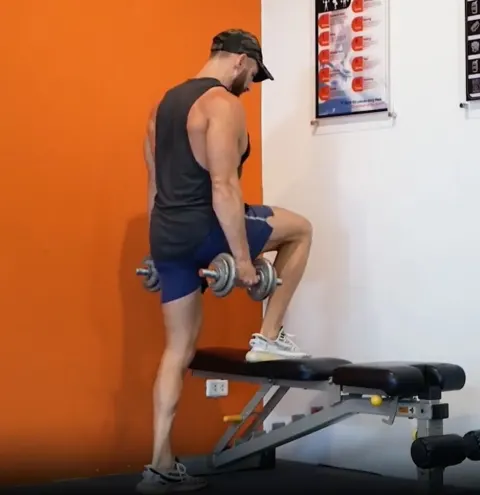
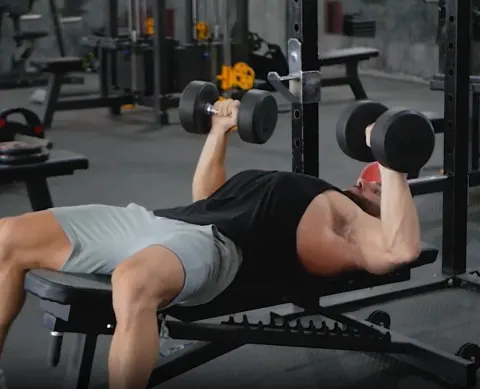

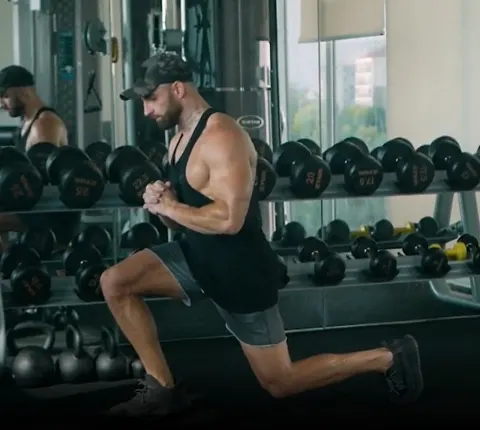

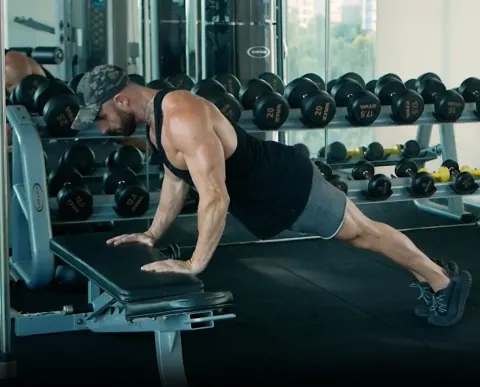
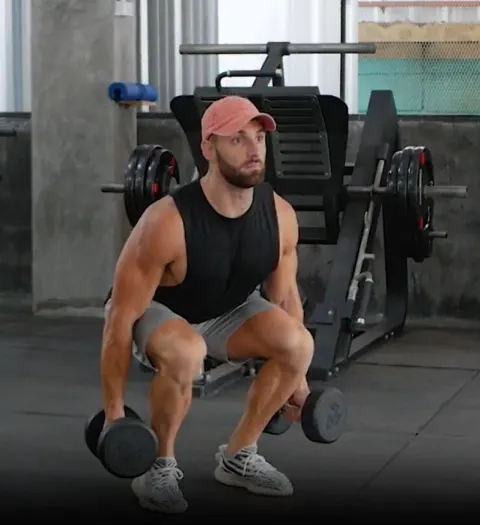

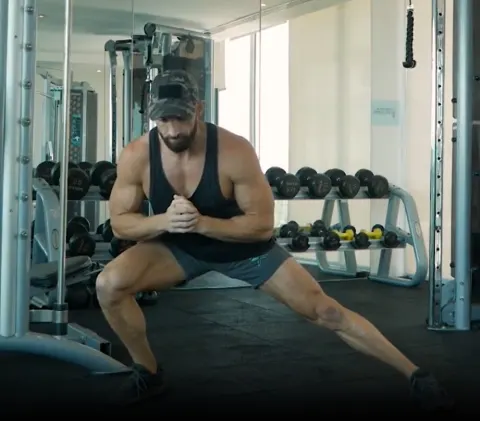
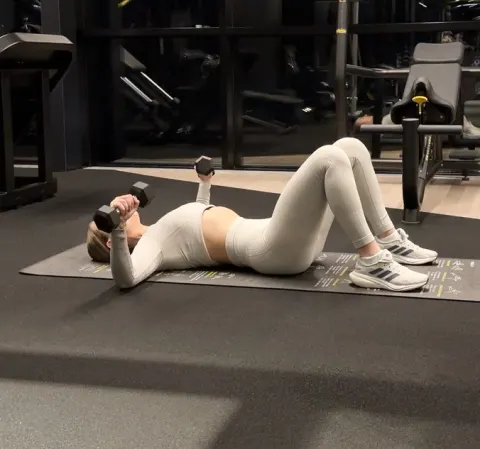
Exercises mentioned




Frequently asked questions
How much water should I drink a day?
European guidance sets an adequate total water intake of 2.0 litres a day for women and 2.5 litres for men; the US figures are 2.7 and 3.7 litres. These totals include all drinks and the water in food. About 80 percent comes from drinks, which works out at roughly 1.6 to 2.2 litres for women and 2.0 to 3.0 litres for men.
Do I really need 8 glasses of water a day?
No. A scientific review found no studies supporting the rule of eight 8-ounce glasses, about 1.9 litres, of plain water. It is a reasonable amount of fluid for many adults, but tea, coffee, milk and the water in food all count towards your needs, and healthy people can rely on thirst.
Does coffee or tea count towards water intake?
Yes. The NHS states that tea and coffee count towards the 6 to 8 cups or glasses of fluid it suggests a day, and the US National Academies concluded that caffeinated drinks contribute as much as non-caffeinated ones. If you are pregnant, the NHS advises keeping caffeine below 200 mg a day.
Can you drink too much water?
Yes. Drinking far beyond thirst can dilute blood sodium below 135 mmol per litre, a condition called hyponatraemia, which can be fatal. Healthy kidneys can clear roughly 500 to 1,000 ml of water an hour, and less during long exercise. The safeguard is simple: drink according to thirst.
How much water should I drink when exercising?
Enough to keep your body weight loss under 2 percent by the end of the session, and never so much that you finish heavier than you started. Sweat rates range from 0.5 to 4.0 litres an hour, so needs differ widely. Afterwards, drink 100 to 150 percent of the weight you lost.