Mind-Muscle Connection
Definition: Mind-muscle connection is deliberately focusing attention on the target muscle while lifting, so it does more of the work; it helps most on isolation exercises.
Mind-muscle connection is the practice of deliberately focusing attention on the muscle you are trying to train while you lift, rather than on the weight or the movement. Sports science calls it an internal focus of attention. It increases activation of the target muscle on exercises where other muscles could take over, which makes it a useful tool for isolation exercises and a poor one for heavy compound lifts.
How we use it in our plans
The exercise notes in our plans use it where it earns its place: glute work in plans with a glute emphasis such as the 3-day dumbbell plan for women, side delt and rear delt work in muscle-gain plans like the 4-day gym plan, and almost everything in the 4-day band plan, where the resistance is too light to force the right muscle to work. For the main lifts the cue is the opposite: push the floor away, drive the bar up, move the weight. The sets and reps guide explains why effort on compounds matters more than feel.
Worked example
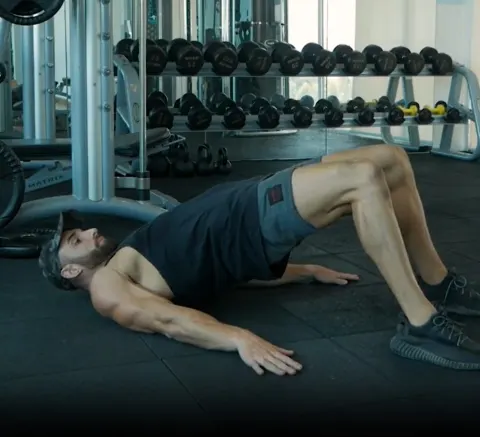
Lat pulldown, 3 × 10–12. Pulling with an external focus (“get the bar to my chest”) you feel it mostly in the biceps and forearms. Switch to an internal focus: start each rep by pulling the shoulder blades down, imagine your elbows driving into your back pockets, pause for a second at the bottom with the lats squeezed, lower slowly. Drop the weight by 10% to make that possible. The biceps now do less, the lats more, and in three weeks you can feel the lats on the first rep without thinking about it. The same approach fixes hip thrusts that live in the hamstrings and lateral raises that live in the traps.
Common misunderstanding
Feeling a muscle is not the same as training it, and not feeling it is not the same as failing to train it. Quads grow from heavy squats whether or not you “feel” them, and a burning sensation on a light set often signals fatigue in the wrong tissue rather than a productive set. Treat mind-muscle connection as a technique check for isolation work and for muscles you have trouble engaging, not as a substitute for load, reps and progressive overload. It is also a practical tool around injuries: when a shoulder cannot tolerate heavy pressing, a controlled internal focus on light flies keeps the chest working, as the shoulder pain guide shows. The band training guide applies it to every exercise in a band plan.
Plans that use this

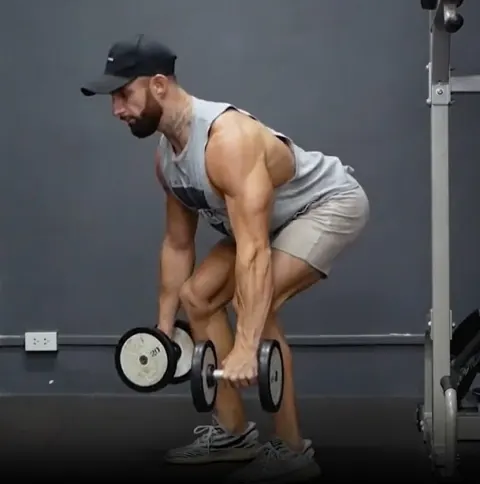

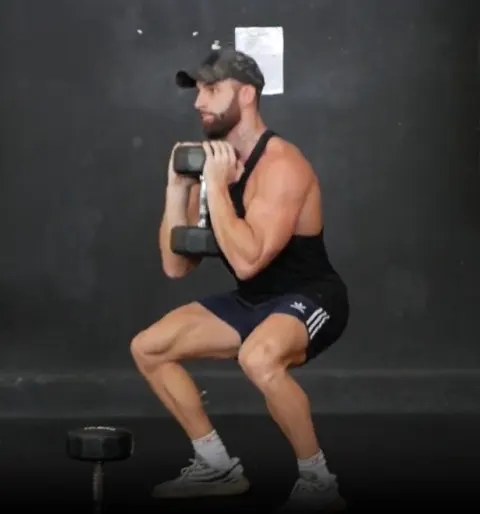
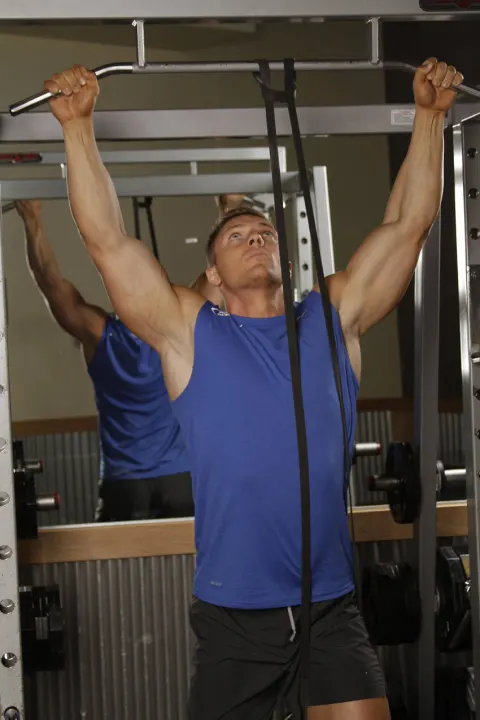

Exercises mentioned




Frequently asked questions
Does mind-muscle connection actually build more muscle?
On isolation exercises, probably a little: one study found more biceps growth with an internal focus. On heavy compounds it does not help and can hurt performance. Use it for curls, raises, flies and glute work; think about moving the weight on squats and presses.
I cannot feel my glutes or lats working. What do I do?
Lighten the weight, slow the lowering phase, pause and squeeze at the point of peak contraction, and do a light activation set first, such as glute bridges before hip thrusts or straight-arm pulldowns before lat pulldowns. The feeling comes with practice over a few weeks.