General Fitness Workout Plan: Strong, Mobile and Fit for Life
A general fitness workout plan for health and everyday capability: three moderate full-body strength days, regular walking or cardio and a little mobility.
Example week
3-Day Dumbbell Workout Plan for General Fitness
A complete week you can start today: exercises, sets, reps and rest for every session, with swaps for each exercise. Open this plan on its own page (PDF) →
Split
Full Body
Sessions / week
3
Avg. session
29 min
Schedule
Mon · Wed · Fri
Warm-up (every session, ~6 min)
- 3–5 min easy cardio: brisk walk, bike, jump rope or marching in place.
- Dynamic mobility: 10 leg swings each way, 10 hip circles, 10 arm circles, 8 cat-cows.
- Ramp-up sets on the first exercise: 1–2 light sets of 8 before your working sets.
Day 1
Full Body A
Squat + push + pull
-
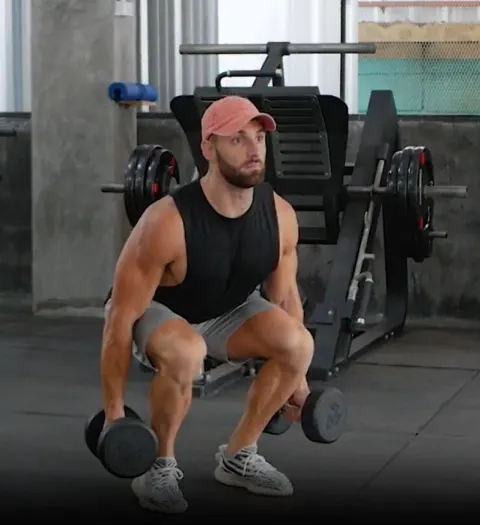
Quads, Glutes · Dumbbell
- Sets
- 2
- Reps
- 8–10
- Rest
- 90s
- Effort
- RPE 7
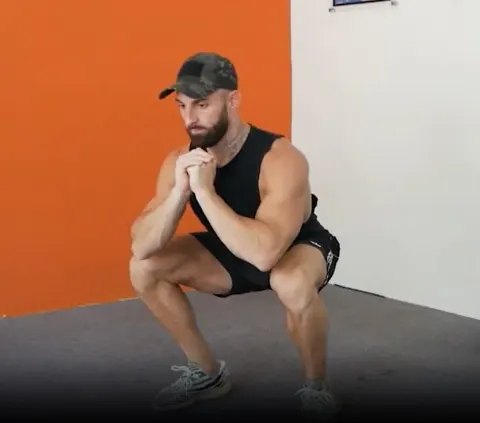
swap: Goblet Squat, Bodyweight Squat, Sumo Squat
-
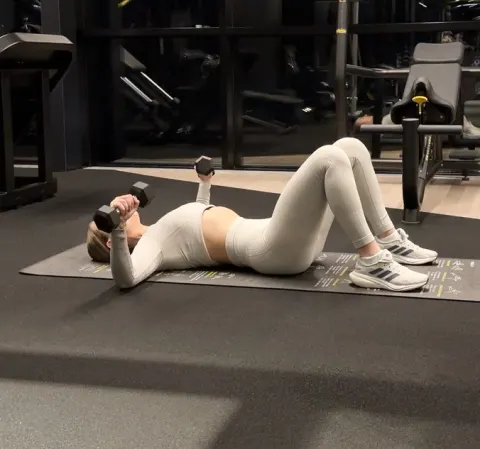
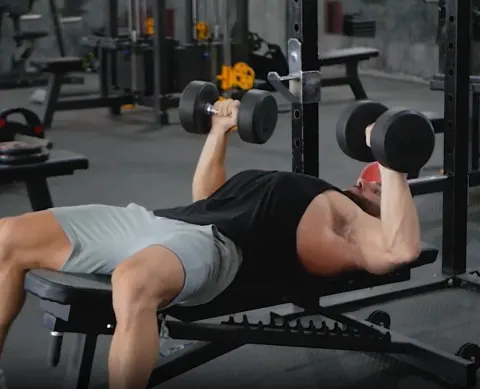
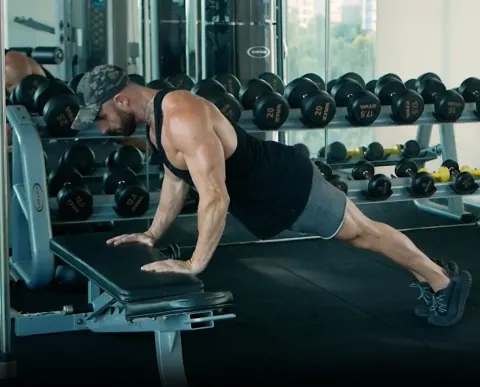
Chest, Triceps · Dumbbell
- Sets
- 2
- Reps
- 8–10
- Rest
- 90s
- Effort
- RPE 7
-
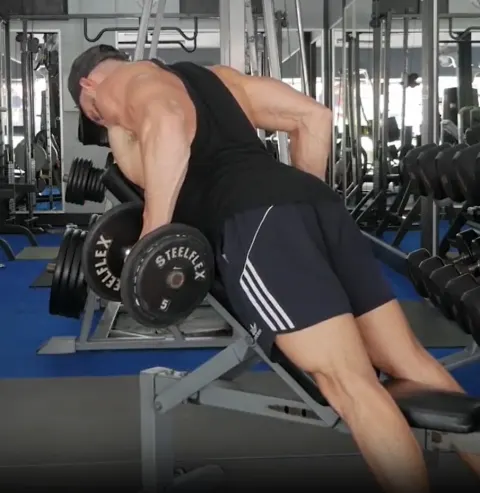
Upper Back, Lats · Dumbbell
- Sets
- 2
- Reps
- 8–10
- Rest
- 90s
- Effort
- RPE 7
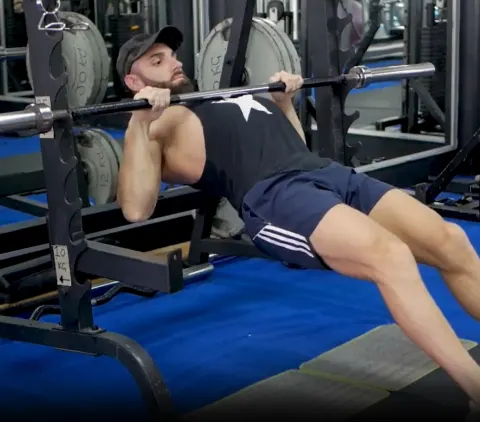
swap: Dumbbell Row, Inverted Row, Rear Delt Fly
-
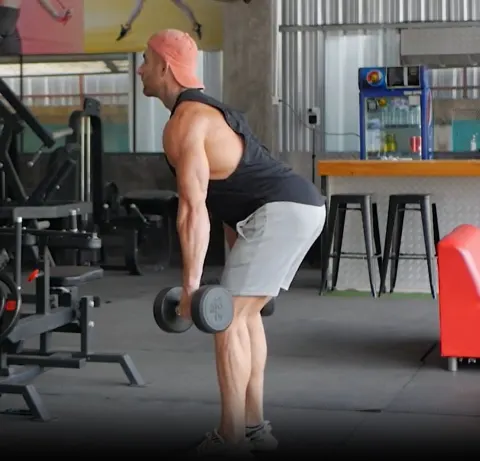
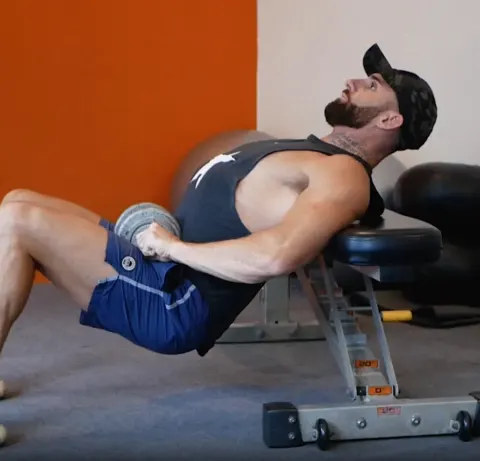
Hamstrings, Glutes · Dumbbell
- Sets
- 2
- Reps
- 8–12
- Rest
- 75s
- Effort
- RPE 7
swap: Bodyweight Hip Hinge, Dumbbell Deadlift, Bodyweight Good Morning
-
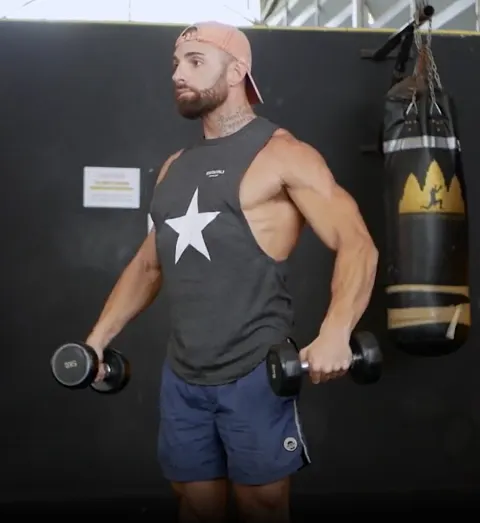
Front Delts, Side Delts · Dumbbell
- Sets
- 2
- Reps
- 12–15
- Rest
- 60s
- Effort
- RPE 7
-
Core, Hip Flexors · Bodyweight
- Sets
- 2
- Reps
- 30–60 sec
- Rest
- 45s
- Effort
- controlled
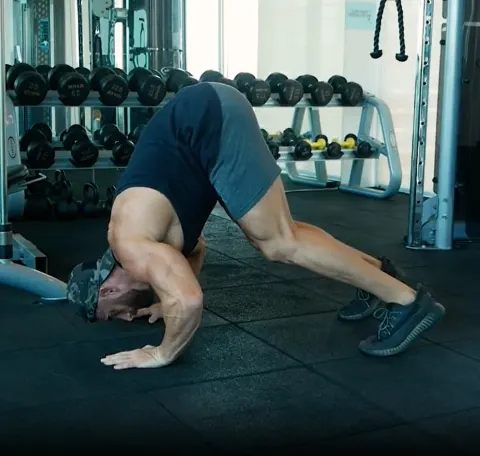
swap: Plank Shoulder Tap, High Knees, Bear Crawl
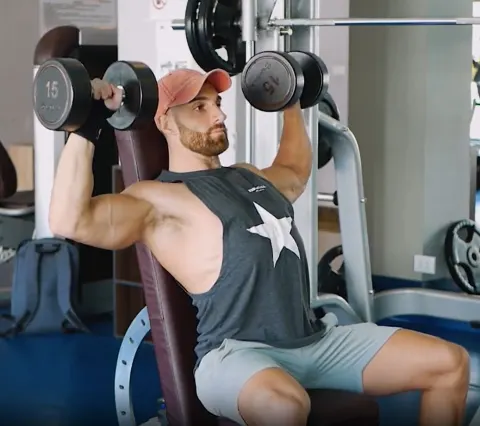
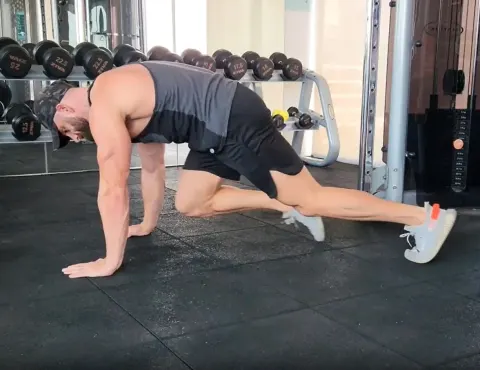
Day 2
Full Body B
Hinge + vertical push/pull
-
Hamstrings, Glutes · Dumbbell
- Sets
- 2
- Reps
- 8–10
- Rest
- 90s
- Effort
- RPE 7
-
Lats, Upper Back · Dumbbell
- Sets
- 2
- Reps
- 8–10 / side
- Rest
- 90s
- Effort
- RPE 7
-
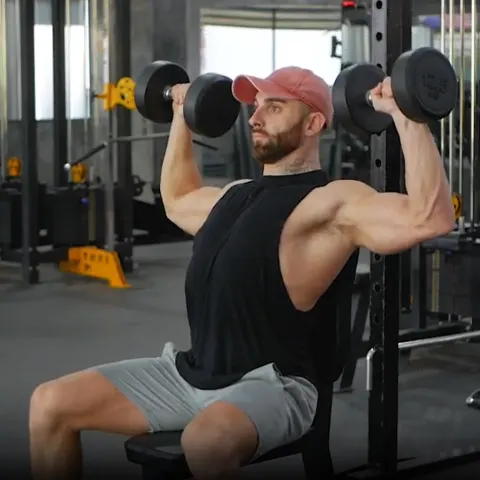
Front Delts, Side Delts · Dumbbell
- Sets
- 2
- Reps
- 8–10
- Rest
- 90s
- Effort
- RPE 7
-
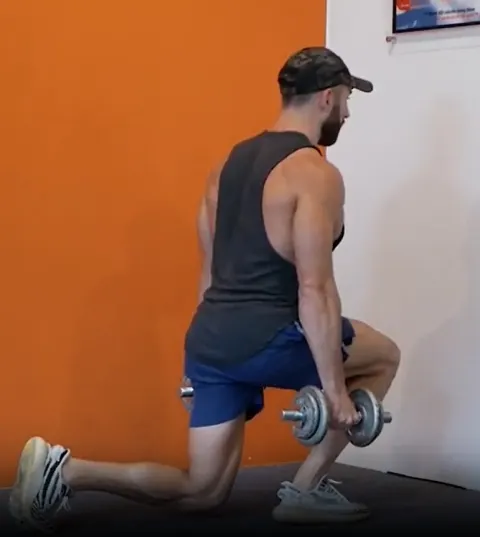
Quads, Glutes · Dumbbell
- Sets
- 2
- Reps
- 8–12 / side
- Rest
- 75s
- Effort
- RPE 7
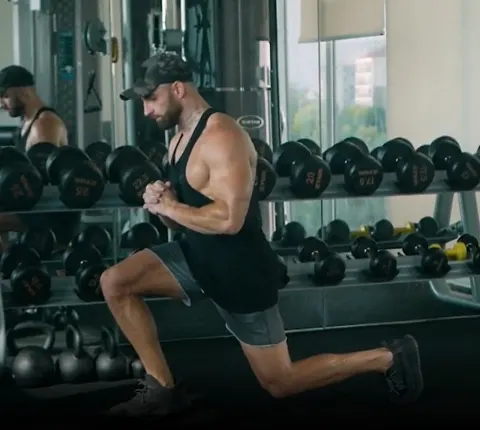
swap: Reverse Lunge, Split Squat, Step-Up
-
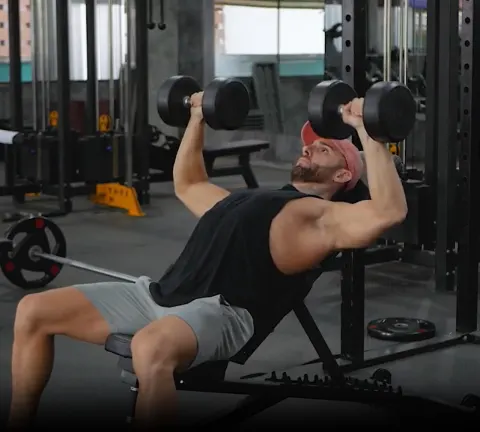
Chest, Front Delts · Dumbbell
- Sets
- 2
- Reps
- 12–15
- Rest
- 60s
- Effort
- RPE 7
-
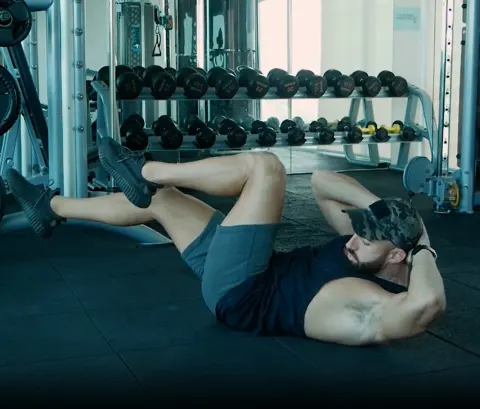
Obliques, Core · Bodyweight
- Sets
- 2
- Reps
- 12–15 / side
- Rest
- 45s
- Effort
- controlled
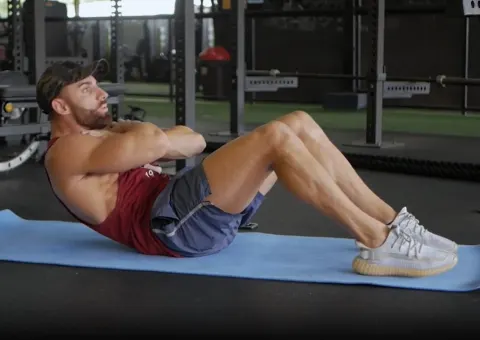
swap: Crunch, Russian Twist, Dead Bug
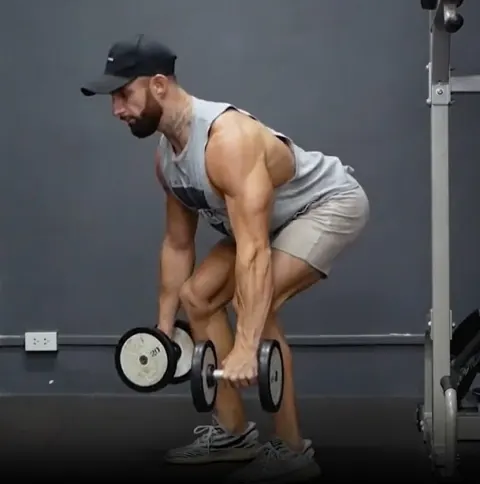
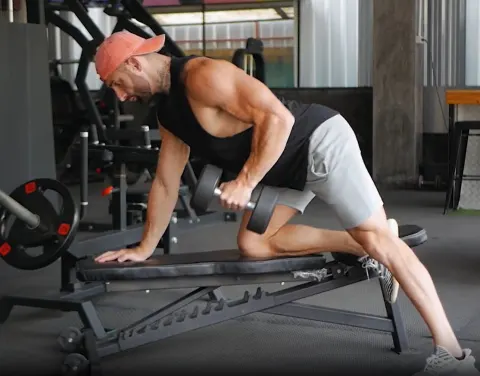
Day 3
Full Body C
Single-leg + chest + back
-
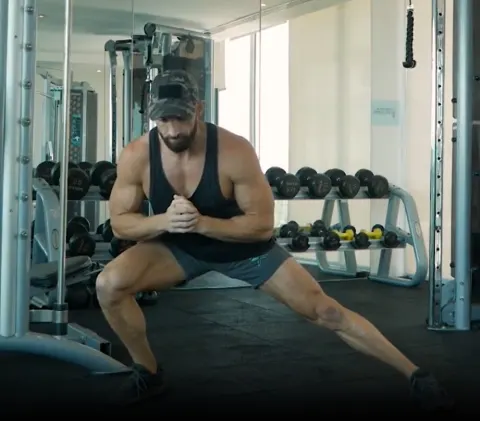
Glutes, Adductors, Quads · Bodyweight
- Sets
- 2
- Reps
- 8–10 / side
- Rest
- 90s
- Effort
- RPE 7
swap: Sumo Squat, Forward Lunge, Reverse Lunge
-
Chest, Triceps · Dumbbell
- Sets
- 2
- Reps
- 8–10
- Rest
- 90s
- Effort
- RPE 7
-
Upper Back, Lats · Bodyweight
- Sets
- 2
- Reps
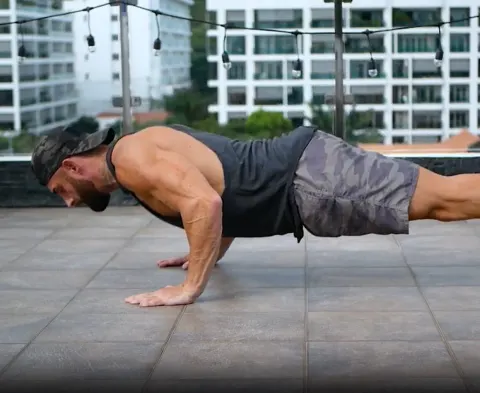
- 8–10
- Rest
- 90s
- Effort
- RPE 7
-
Core · Bodyweight
- Sets
- 2
- Reps
- 12–15
- Rest
- 45s
- Effort
- controlled
swap: Reverse Crunch, Bicycle Crunch, Dead Bug
8-week progression: what to change each week
Same exercises for the whole block. Weeks move the reps, then the load; the last week is a deload.
| Week | Load | Reps | Effort | What to watch |
|---|---|---|---|---|
| 1 | Light: learn the movements | bottom of range (8) | RPE 6–7 | Stop every set 3 reps before failure; film one set per exercise to check form. |
| 2 | Same weight | +1 rep per set (9) | RPE 8 | Same exercises, same order; only the reps move. |
| 3 | Same weight | top of range (10) | RPE 8 | All sets at the top of the range → add load next week. Missed a set? Repeat the week. |
| 4 | next dumbbell / harder variation | bottom of range (8) | RPE 8 | New weight feels hard at low reps; that is the plan working. |
| 5 | Same weight | +1 rep per set (9) | RPE 8 | Keep rest periods the same. |
| 6 | Same weight | top of range (10) | RPE 8–9 | Second time at the top: take the last set of each main lift to 1 rep in reserve. |
| 7 | next dumbbell / harder variation | bottom of range (8) | RPE 8 | Bodyweight moves: slow the lowering phase to 3 s or move to the harder variation. |
| 8 | Deload: 60 % | bottom of range | RPE 5–6 | Half the sets, then regenerate a variation or change the split for the next block. |
How to progress
- First 2 weeks: focus on form with light weights, stop each set 3 reps before failure.
- Double progression: hit the top of the rep range on every set, then add weight (2.5–5 %) and start from the bottom of the range.
- Bodyweight moves: add reps, then slow the tempo (3 sec down), then move to a harder variation.
- Deload every 6–8 weeks: same exercises, half the sets.
Notes for this plan
- Home setup: if a weight gets too light, slow the lowering phase to 3–4 seconds or add a pause at the hardest point.
- Sessions can move between days; keep at least one rest day between hard sessions for the same muscles.
Not everyone trains for a bigger chest or a smaller waist. If what you want is to feel good, move well, have energy left at 4 pm and still be capable at 70, you need a plan that covers strength, heart and joints without taking over your week. About four hours does it, and most of that is walking.
What general fitness means in practice
It means meeting ordinary physical demands with room to spare. Useful markers:
- Carry two heavy shopping bags up three flights of stairs without stopping.
- Get down to the floor and back up without pushing off with your hands.
- Walk briskly for 30 minutes while holding a conversation.
- Lift a suitcase into an overhead locker.
- Squat to tie a shoe and stand up without thinking about it.
A plan aimed at these builds some muscle, some endurance and some mobility at once. It develops none of them as fast as a specialised plan would, and for health that is the right trade.
The minimum effective dose
Public health guidelines agree on two things: strength work for all major muscle groups at least twice a week, and around 150 minutes of moderate activity. One week that covers both:
| Day | Session | Time |
|---|---|---|
| Monday | Full-body strength A | 30 min |
| Tuesday | Brisk walk | 30 min |
| Wednesday | Full-body strength B | 30 min |
| Thursday | Brisk walk or easy bike ride | 30 min |
| Friday | Full-body strength C | 30 min |
| Saturday | Longer walk, hike, swim or a sport | 60 min |
| Sunday | Easy walk | 30 min |
That adds up to 150 minutes of moderate movement and three strength sessions. If three is too many right now, two still deliver most of the benefit. The 2-day beginner dumbbell plan runs Monday and Thursday, and the 2-day workout plan page shows how to get the most out of that schedule.
Why the example week stops short of hard
The example week above is three full-body dumbbell sessions. Each has a lower-body lift, a push, a pull and core work, with different exercises on days A, B and C, so across the week you squat, hinge, lunge, press overhead and row.
Every exercise gets just 2 sets. Main lifts sit at 8–10 reps with 90 seconds of rest at RPE 7, which means ending each set knowing about 3 more reps were there. Lighter work runs to 12–15 reps with about a minute of rest. A whole session takes roughly 30 minutes, warm-up included.
The restraint is deliberate. Sets at RPE 7 are hard enough to keep you getting stronger for a long time, and easy enough that you are not sore for a Saturday hike, drained at work or dreading Wednesday. When the aim is to train for decades, the session you can repeat beats the session that flattens you.
One thing worth having somewhere in your week is a loaded carry. A farmer’s carry for 3 trips of 30 m trains grip, trunk and posture, and nothing transfers more directly to hauling things around in daily life.
The cardio half: mostly walking
Moderate means you can talk but not sing. Brisk walking qualifies for most people, as do cycling, swimming and dancing. If you wear a watch, the heart rate zones calculator gives the matching pulse range, usually zone 2.
Three practical points:
- Bouts can be short. Three 10-minute walks count the same as one of 30.
- Vigorous work counts double. About 75 minutes a week of running or hard cycling meets the same target.
- Keep hard cardio away from leg day. An easy walk after lifting is fine; tough intervals the evening before squats are not.
Five minutes of mobility
You do not need a separate stretching day. Fold mobility into the warm-up. After 3–5 minutes of easy movement, do one round of:
- World’s greatest stretch, 5 per side, for hips and upper back.
- Deep squat hold, 30 seconds, for ankles and hips.
- Wall angels, 8 slow reps, for shoulders that spend the day at a desk.
Then lift through a full range. A goblet squat taken to full depth and a dumbbell press lowered all the way down are mobility work with a load attached.
Progress without chasing numbers
Fitness that is not progressing is slowly declining, so the plan still applies progressive overload, only gently.
Take a dumbbell press listed for 8–10 reps. Begin with 8 kg for 8 reps per set. Add a rep when it feels smooth. Once every set reaches 10, move to the next pair and go back to 8 reps. If that pair is too big a jump, spend a couple of weeks lowering each rep for 3 seconds first.
Expect to add reps or load most weeks for the first 2–3 months. Every eighth week, drop to about 60 % of your usual loads and one set per exercise. You will come back fresher.
Staying consistent for years
- Anchor sessions to fixed days and times. Decisions made in advance survive busy weeks.
- Keep a 15-minute version. The three main lifts for 2 sets each still count, and they keep the habit alive.
- Never miss twice. One missed workout is life. Two in a row is how quitting starts.
- Plan for travel. The 3-day no-equipment plan works in a hotel room.
- Log something. Weights, steps, or ticks on a calendar.
Eating needs no special rules here: maintenance calories, protein with each meal (1.6 g per kg of body weight a day is a solid floor) and at least 7 hours of sleep.
Common mistakes
- Only cardio. Walking does not preserve muscle or bone the way lifting does.
- Only lifting. Strong legs with no stamina miss half the point.
- Too hard, too soon. Soreness that lasts three days means you overdid it.
- Never adding load. The same 5 kg dumbbells for a year is activity, not training.
When to pick a sharper goal
Stay here as long as it serves you; nobody is obliged to specialise. The 3-day dumbbell plan for general fitness can run for a year with heavier dumbbells.
Switch when a specific want appears. To look more muscular, the muscle building workout plan raises volume and takes sets closer to failure. To lose fat, the weight loss workout plan adds a calorie deficit and finishers. If you simply enjoy lifting heavier, try the strength training program. The guide on how many days a week to work out helps you size whichever you choose.
General Fitness Workout Plan: all 107 plans
- 2-Day Bodyweight Workout Plan for General Fitness (Women)
- 2-Day Bodyweight Workout Plan for General Fitness (Men)
- 2-Day Bodyweight Workout Plan for General Fitness (Over 50)
- 2-Day Dumbbell Workout Plan for General Fitness
- 2-Day Dumbbell Workout Plan for General Fitness (Beginners)
- 2-Day Dumbbell Workout Plan for General Fitness (Women)
- 2-Day Dumbbell Workout Plan for General Fitness (Men)
- 2-Day Dumbbell Workout Plan for General Fitness (Over 50)
- 2-Day Gym Workout Plan for General Fitness
- 2-Day Gym Workout Plan for General Fitness (Beginners)
- 2-Day Gym Workout Plan for General Fitness (Women)
- 2-Day Gym Workout Plan for General Fitness (Men)
- 2-Day Gym Workout Plan for General Fitness (Over 50)
- 2-Day Kettlebell Workout Plan for General Fitness
- 2-Day Kettlebell Workout Plan for General Fitness (Beginners)
- 2-Day Kettlebell Workout Plan for General Fitness (Women)
- 2-Day Kettlebell Workout Plan for General Fitness (Men)
- 2-Day Kettlebell Workout Plan for General Fitness (Over 50)
- 2-Day Resistance Band Workout Plan for General Fitness
- 2-Day Resistance Band Workout Plan for General Fitness (Beginners)
- 2-Day Resistance Band Workout Plan for General Fitness (Women)
- 2-Day Resistance Band Workout Plan for General Fitness (Men)
- 2-Day Resistance Band Workout Plan for General Fitness (Over 50)
- 2-Day Calisthenics Workout Plan for General Fitness
- 2-Day Calisthenics Workout Plan for General Fitness (Beginners)
- 2-Day Calisthenics Workout Plan for General Fitness (Men)
- 3-Day Bodyweight Workout Plan for General Fitness (Women)
- 3-Day Bodyweight Workout Plan for General Fitness (Men)
- 3-Day Bodyweight Workout Plan for General Fitness (Over 50)
- 3-Day Dumbbell Workout Plan for General Fitness
- 3-Day Dumbbell Workout Plan for General Fitness (Beginners)
- 3-Day Dumbbell Workout Plan for General Fitness (Women)
- 3-Day Dumbbell Workout Plan for General Fitness (Men)
- 3-Day Dumbbell Workout Plan for General Fitness (Over 50)
- 3-Day Gym Workout Plan for General Fitness
- 3-Day Gym Workout Plan for General Fitness (Beginners)
- 3-Day Gym Workout Plan for General Fitness (Women)
- 3-Day Gym Workout Plan for General Fitness (Men)
- 3-Day Gym Workout Plan for General Fitness (Over 50)
- 3-Day Kettlebell Workout Plan for General Fitness
- 3-Day Kettlebell Workout Plan for General Fitness (Beginners)
- 3-Day Kettlebell Workout Plan for General Fitness (Women)
- 3-Day Kettlebell Workout Plan for General Fitness (Men)
- 3-Day Kettlebell Workout Plan for General Fitness (Over 50)
- 3-Day Resistance Band Workout Plan for General Fitness
- 3-Day Resistance Band Workout Plan for General Fitness (Beginners)
- 3-Day Resistance Band Workout Plan for General Fitness (Women)
- 3-Day Resistance Band Workout Plan for General Fitness (Men)
- 3-Day Resistance Band Workout Plan for General Fitness (Over 50)
- 3-Day Calisthenics Workout Plan for General Fitness
- 3-Day Calisthenics Workout Plan for General Fitness (Beginners)
- 3-Day Calisthenics Workout Plan for General Fitness (Men)
- 4-Day Bodyweight Workout Plan for General Fitness (Women)
- 4-Day Bodyweight Workout Plan for General Fitness (Men)
- 4-Day Bodyweight Workout Plan for General Fitness (Over 50)
- 4-Day Dumbbell Workout Plan for General Fitness
- 4-Day Dumbbell Workout Plan for General Fitness (Beginners)
- 4-Day Dumbbell Workout Plan for General Fitness (Women)
- 4-Day Dumbbell Workout Plan for General Fitness (Men)
- 4-Day Dumbbell Workout Plan for General Fitness (Over 50)
- 4-Day Gym Workout Plan for General Fitness
- 4-Day Gym Workout Plan for General Fitness (Beginners)
- 4-Day Gym Workout Plan for General Fitness (Women)
- 4-Day Gym Workout Plan for General Fitness (Men)
- 4-Day Gym Workout Plan for General Fitness (Over 50)
- 4-Day Kettlebell Workout Plan for General Fitness
- 4-Day Kettlebell Workout Plan for General Fitness (Beginners)
- 4-Day Kettlebell Workout Plan for General Fitness (Women)
- 4-Day Kettlebell Workout Plan for General Fitness (Men)
- 4-Day Kettlebell Workout Plan for General Fitness (Over 50)
- 4-Day Resistance Band Workout Plan for General Fitness
- 4-Day Resistance Band Workout Plan for General Fitness (Beginners)
- 4-Day Resistance Band Workout Plan for General Fitness (Women)
- 4-Day Resistance Band Workout Plan for General Fitness (Men)
- 4-Day Resistance Band Workout Plan for General Fitness (Over 50)
- 4-Day Calisthenics Workout Plan for General Fitness
- 4-Day Calisthenics Workout Plan for General Fitness (Beginners)
- 4-Day Calisthenics Workout Plan for General Fitness (Men)
- 5-Day Bodyweight Workout Plan for General Fitness (Men)
- 5-Day Dumbbell Workout Plan for General Fitness
- 5-Day Dumbbell Workout Plan for General Fitness (Women)
- 5-Day Dumbbell Workout Plan for General Fitness (Men)
- 5-Day Gym Workout Plan for General Fitness
- 5-Day Gym Workout Plan for General Fitness (Women)
- 5-Day Gym Workout Plan for General Fitness (Men)
- 5-Day Kettlebell Workout Plan for General Fitness
- 5-Day Kettlebell Workout Plan for General Fitness (Women)
- 5-Day Kettlebell Workout Plan for General Fitness (Men)
- 5-Day Calisthenics Workout Plan for General Fitness
- 5-Day Calisthenics Workout Plan for General Fitness (Men)
- 6-Day Bodyweight Workout Plan for General Fitness (Women)
- 6-Day Bodyweight Workout Plan for General Fitness (Men)
- 6-Day Dumbbell Workout Plan for General Fitness
- 6-Day Dumbbell Workout Plan for General Fitness (Women)
- 6-Day Dumbbell Workout Plan for General Fitness (Men)
- 6-Day Gym Workout Plan for General Fitness
- 6-Day Gym Workout Plan for General Fitness (Women)
- 6-Day Gym Workout Plan for General Fitness (Men)
Related programs
Frequently asked questions
How many days a week should I work out for general fitness?
Two or three strength sessions plus about 150 minutes of moderate activity such as brisk walking each week. Three full-body sessions of about 30 minutes cover every muscle group with a rest day between them. Two days is a sound minimum when life is busy.
What is the best workout routine for overall health?
A mix: full-body strength training two or three times a week, moderate cardio on most days, and a few minutes of mobility in each warm-up. Strength protects muscle and bone, cardio protects heart and lungs, and mobility keeps joints usable. No single type of exercise covers all three.
Is 30 minutes of exercise a day enough to stay fit?
Yes, if those 210 weekly minutes include two or three strength sessions and not only cardio. Thirty minutes of brisk walking five days a week already reaches the 150-minute activity target. Add resistance training on two or three of those days and the basics are covered.
Should I do cardio or weights for general fitness?
Both, and at these doses they do not compete. Lift two or three times a week at a moderate effort of about RPE 7, and walk, cycle or swim on the other days. If a busy week forces a choice, keep the strength sessions and walk whenever you can.
How long does it take to get fit?
Most people feel better within 2 to 3 weeks: stairs are easier and energy is steadier. Measurable strength changes come within a month, and visible changes after 8 to 12 weeks of training three times a week. From there the aim is to hold and slowly raise that level for years.