Calisthenics for Beginners: Moves, Progressions, Routine
Calisthenics for beginners: the six basic bodyweight moves, how to progress each one, a 3-day weekly routine, the equipment you need and mistakes to avoid.
Calisthenics is strength training that uses your body weight as the load. As a beginner, learn six basic moves (push-up, row, pull-up, dip, squat and a core hold), train them three days a week, and make each one harder over time by moving to a tougher variation. You need a floor, something to hang from, and about 40 minutes per session.
The six basic moves
Every beginner routine is built from the same movement patterns. Pick the starting version you can do for at least five clean reps.
| Pattern | Starting version | Standard version | Main muscles |
|---|---|---|---|
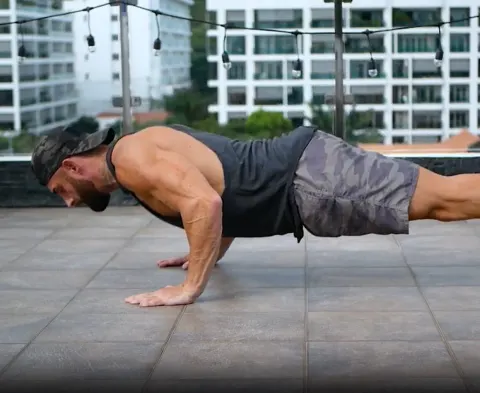
| Horizontal push | Incline push-up | Push-up | Chest, shoulders, triceps |
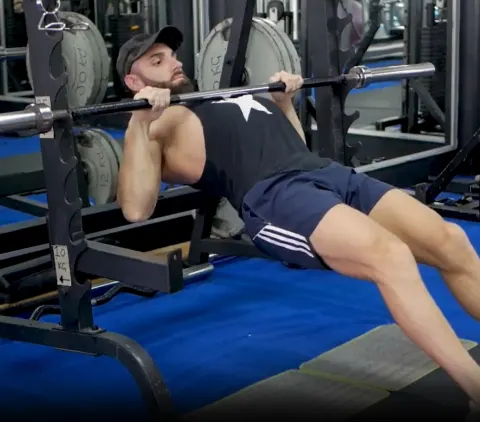
| Horizontal pull | High-bar or table row | Inverted row | Mid back, lats, biceps |
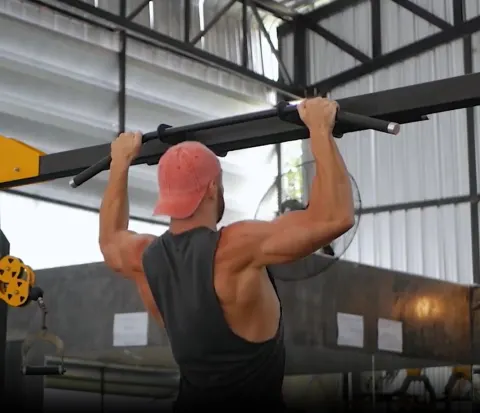
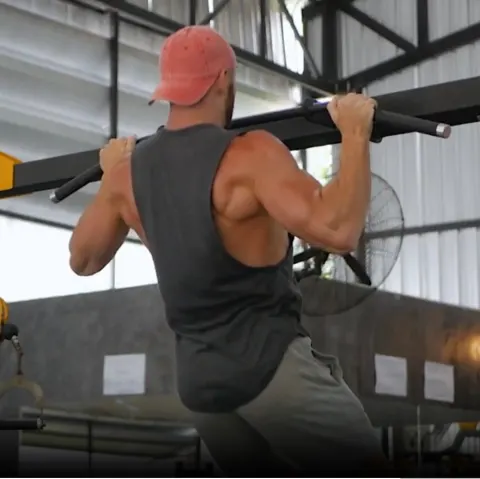
| Vertical pull | Dead hang, negatives | Pull-up | Lats, biceps, grip |
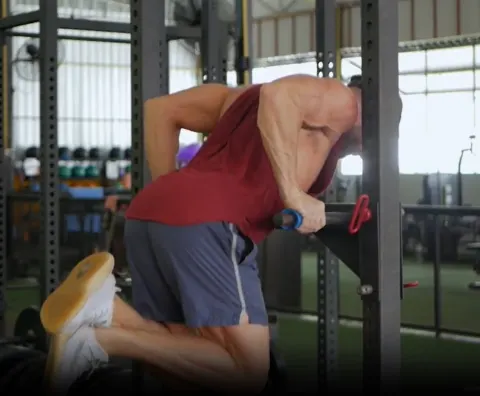
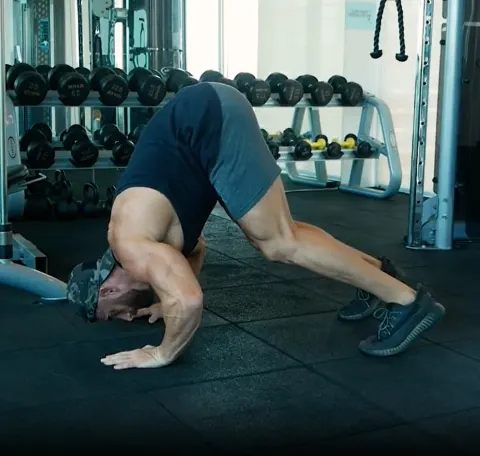
| Vertical push | Pike push-up | Dip | Shoulders, chest, triceps |
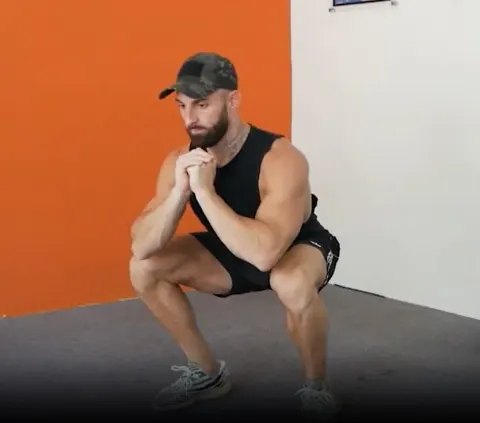
| Legs | Bodyweight squat | Split squat, then single-leg work | Quads, glutes, hamstrings |
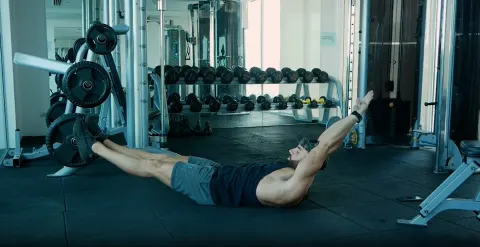
| Core | Plank | Hollow hold, hanging knee raise | Abs, hip flexors |
Notice there are two pulls. Most beginners do far more pushing than pulling because push-ups need no equipment. Match every set of pushing with a set of pulling and your shoulders will thank you.
How progression works without weights
With a barbell you add plates. In calisthenics you change the exercise so that more of your body weight, or a longer lever, works against you. This is still progressive overload, only the method differs.
Ways to make a move harder, in the order to try them:
- More reps in the same variation, up to about 12–15.
- Slower tempo. Three seconds down, a one-second pause at the bottom.
- Harder leverage. Lower the hands for push-ups, lower the bar for rows, raise the feet.
- Less support. Two limbs to one: split squat to single-leg squat, row to archer row.
- Added load. A backpack or a weight belt, once the bodyweight versions are easy.
A simple rule: when you can do 3 sets of 10–12 with good form, move to the next variation and expect to drop back to 4–6 reps.
Progression ladders
| Move | Step 1 | Step 2 | Step 3 | Step 4 |
|---|---|---|---|---|
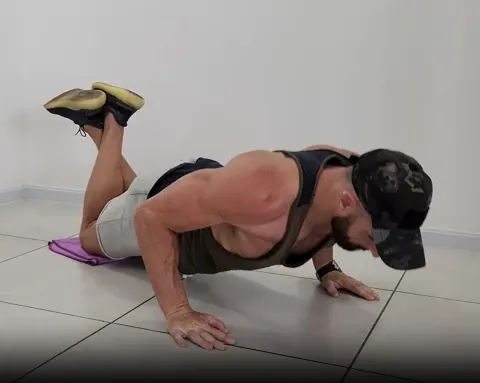
| Push-up | Incline | Knee or low incline | Full | Decline or diamond |
| Row | Body at 45° | Body near horizontal | Feet raised | Archer or one-arm assisted |
| Pull-up | Hang, scapular pulls | Negatives | Band-assisted | Full, then weighted |
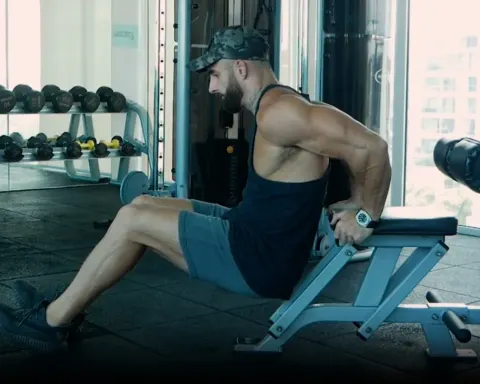
| Dip | Bench dip | Negative on bars | Band-assisted | Full dip |
| Squat | Bodyweight squat | Split squat | Bulgarian split squat | Assisted pistol squat |
| Core | Plank | Hollow hold (tucked) | Hollow hold (straight) | Hanging leg raise |
Two of these have their own guides: how to do your first pull-up and how to do more push-ups.
A beginner weekly structure
Three full-body sessions a week with a rest day between works best at the start. Each movement gets practised often, which is what skill-heavy exercises need. The full-body vs split guide explains why this beats a body-part split for the first months.
| Exercise | Sets × reps | Rest |
|---|---|---|
| Pull-up progression | 3 × 4–8 (or 3–5 slow negatives) | 2 min |
| Push-up progression | 3 × 6–12 | 90 s |
| Inverted row | 3 × 6–12 | 90 s |
| Pike push-up or dip progression | 3 × 5–10 | 90 s |
| Squat progression | 3 × 8–15 per leg where single-leg | 90 s |
| Glute bridge or hamstring slide | 2–3 × 10–15 | 60 s |
| Hollow hold or plank | 3 × 20–40 s | 60 s |
Do it on Monday, Wednesday and Friday, or any three non-consecutive days. Start each session with five minutes of arm circles, hangs, easy squats and a few light push-ups.
Leave one or two reps in reserve on most sets. Training to failure on every set of a skill movement makes technique worse, not better.
If you want this built out week by week, use the 3-day calisthenics plan for beginners or browse the calisthenics workout plan page for other schedules.
Equipment: what you need and what can wait
- Essential: a pull-up bar. A doorway bar, a wall-mounted bar or the one at a local park. Without it, your back and biceps are hard to train properly.
- Very useful: somewhere to row. A low bar, a sturdy table, or rings.
- Optional: gymnastic rings. They hang from a bar or beam, adjust to any height, and cover rows, dips, push-ups and assisted pull-ups. Probably the best-value extra.
- Optional: resistance bands. For assisted pull-ups and dips.
- Optional: parallettes or dip bars. Kinder on the wrists and needed for full dips.
Chalk, gloves and a weighted vest can all wait. For bar-free days, the full-body workout at home uses nothing but the floor.
Do not neglect your legs
Legs are the weak point of bodyweight training. Your legs already carry you all day, so two-legged squats get easy quickly. Fix that with single-leg work:
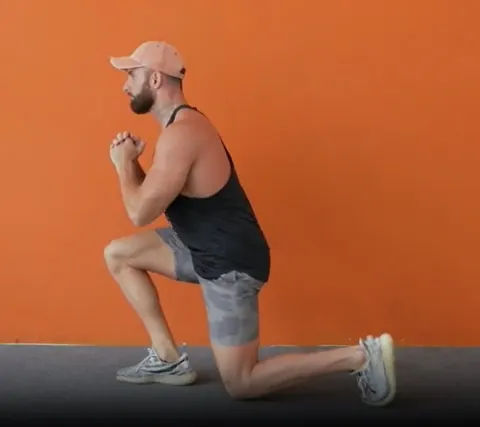
- Split squats, then Bulgarian split squats with the rear foot raised.
- Step-ups onto a high box or bench.
- Single-leg glute bridges and sliding hamstring curls for the back of the leg.
- Calf raises on one leg, off a step.
Slow the lowering phase and pause at the bottom. A backpack with books adds load when you run out of variations.
Common beginner mistakes
- Chasing skills too early. Muscle-ups, levers and handstands look good, but they depend on basic strength. Earn 8 pull-ups, 20 push-ups and 10 dips first.
- Half reps. Chin over the bar, chest to the floor, full lockout. Partial range inflates numbers and stalls progress.
- All push, no pull. Leads to rounded shoulders and sore elbows.
- Changing variation every session. Stay with one version until you own it.
- Training every day at full effort. Tendons adapt more slowly than muscles. Wrists and elbows need rest days.
- Ignoring food. Building muscle needs 1.6–2.2 g of protein per kg of body weight and enough total calories.
What to expect
- Weeks 1–4: quick gains in reps as coordination improves.
- Weeks 4–8: you move up a variation on most exercises.
- Weeks 8–12: first pull-ups and dips for many people, and visible change in the shoulders and back.
Progress in calisthenics is easy to see because it shows up as things you could not do before: a lower incline, a longer hang, a first full rep. Keep a short log of the variation, sets and reps for each move so that those steps are written down.
If you like a single focused target alongside the routine, the 30-day pull-up challenge is a good fit.
Calisthenics is easy on equipment but demanding on wrists, elbows and shoulders. Build up gradually, and if you have an existing joint injury or a medical condition, check with a doctor or physiotherapist before you start.
Ready plans for this guide
Exercises mentioned
video
beginner
video
beginner
 video
intermediate
 video
intermediate
video
beginner
 video
beginner
 video
intermediate
Frequently asked questions
Can you build muscle with calisthenics?
Yes. Muscle grows when sets are hard and get harder over time, and bodyweight exercises can provide that through tougher variations, slower tempo and added reps. The upper body responds especially well. Legs are the harder part, since they are strong relative to body weight, so single-leg work becomes essential fairly early.
How many days a week should a beginner do calisthenics?
Three full-body sessions on non-consecutive days is the standard starting point. It gives each movement enough practice to improve quickly while leaving a recovery day between sessions. After three to six months you can move to four days with an upper and lower split if you want more volume.
Do I need equipment to start calisthenics?
You can begin with a floor and a sturdy table for rows. Within a few weeks a pull-up bar becomes the most useful purchase, because pulling movements are difficult to load without something to hang from. Gymnastic rings, parallettes and resistance bands are helpful extras later, not requirements.
Is calisthenics better than lifting weights?
Neither is better overall. Calisthenics is cheap, portable and builds excellent control of your own body. Weights are easier to load in small steps, particularly for legs. Both build muscle and strength when you train hard and progress. Plenty of people combine them, and the best choice is the one you will keep doing.
How long does it take to see results from calisthenics?
Strength and control improve within the first two to four weeks, often as extra reps or a harder variation. Visible changes in the shoulders, arms and back usually appear after eight to twelve weeks of consistent training and adequate protein. Skills such as a first pull-up commonly take two to three months.