Calisthenics Workout Plan for Beginners: Bar and Bodyweight Basics
A calisthenics workout plan for beginners using a pull-up bar and your bodyweight: three full-body days, a ladder to your first pull-up and clear progressions.
Example week
3-Day Calisthenics Workout Plan for Muscle Gain
A complete week you can start today: exercises, sets, reps and rest for every session, with swaps for each exercise. Open this plan on its own page (PDF) →
Split
Full Body
Sessions / week
3
Avg. session
45 min
Schedule
Mon · Wed · Fri
Warm-up (every session, ~6 min)
- 3–5 min easy cardio: brisk walk, bike, jump rope or marching in place.
- Dynamic mobility: 10 leg swings each way, 10 hip circles, 10 arm circles, 8 cat-cows.
- Ramp-up sets on the first exercise: 1–2 light sets of 8 before your working sets.
Day 1
Full Body A
Squat + push + pull
-
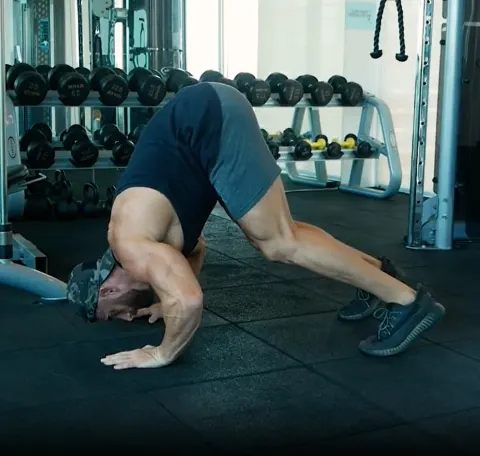
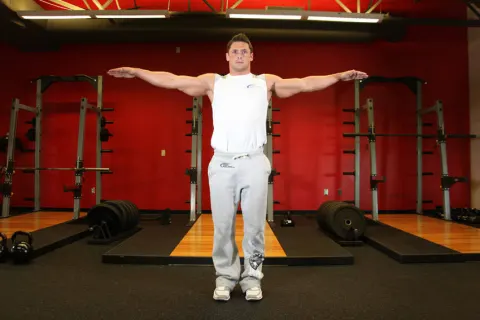
Upper Back, Lats · Bodyweight
- Sets
- 3
- Reps
- 6–10
- Rest
- 120s
- Effort
- RPE 8
swap: Doorway Row, Reverse Snow Angel
-
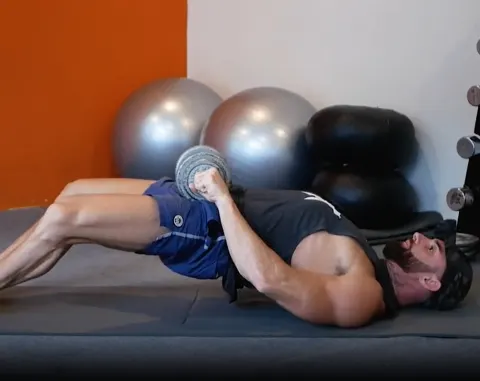
Hamstrings, Glutes · Bodyweight
- Sets
- 2
- Reps
- 8–12
- Rest
- 90s
- Effort
- RPE 8
swap: Glute Bridge, Bodyweight Good Morning, Single-Leg Hip Hinge
-
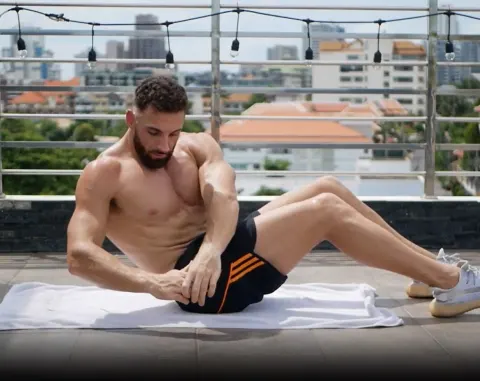
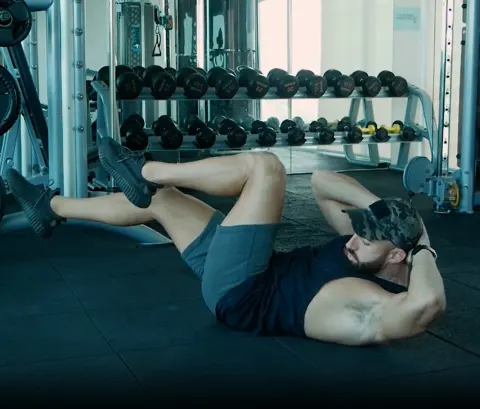
Obliques, Core · Bodyweight
- Sets
- 3
- Reps
- 12–15
- Rest
- 60s
- Effort
- controlled
Day 2
Full Body B
Hinge + vertical push/pull
-
Hamstrings, Glutes · Bodyweight
- Sets
- 3
- Reps
- 6–10
- Rest
- 120s
- Effort
- RPE 8
-
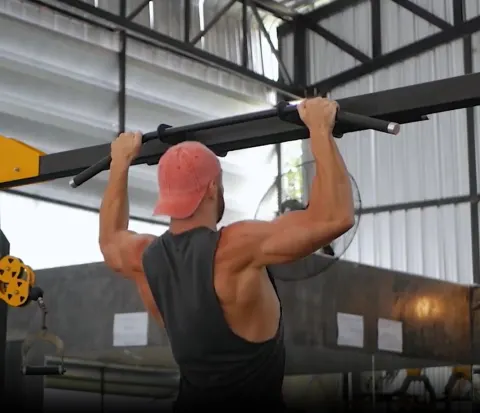
Lats, Upper Back · Pull-Up Bar
- Sets
- 3
- Reps
- 6–10
- Rest
- 120s
- Effort
- RPE 8
swap: Negative Pull-Up, Scapular Pull-Up
-
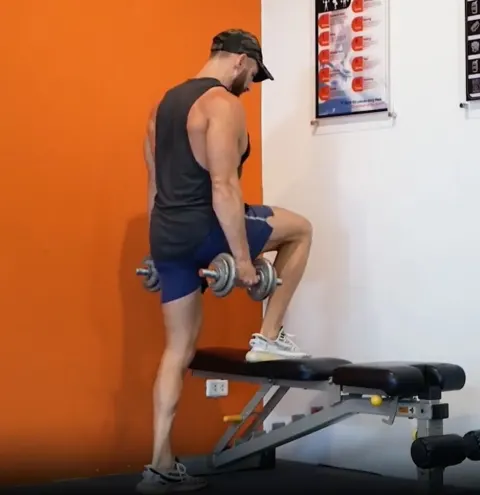
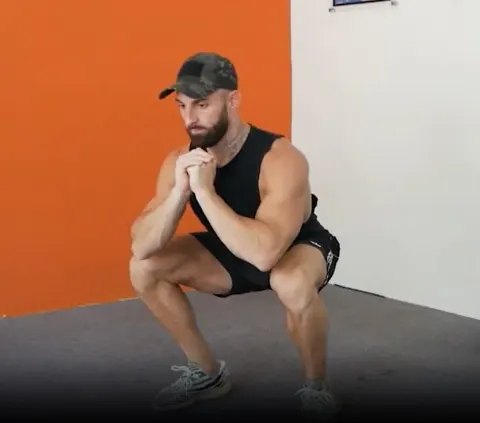
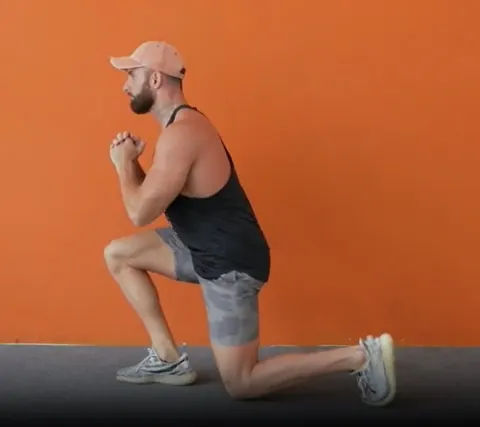
Quads, Glutes · Bodyweight
- Sets
- 2
- Reps
- 8–12 / side
- Rest
- 90s
- Effort
- RPE 8
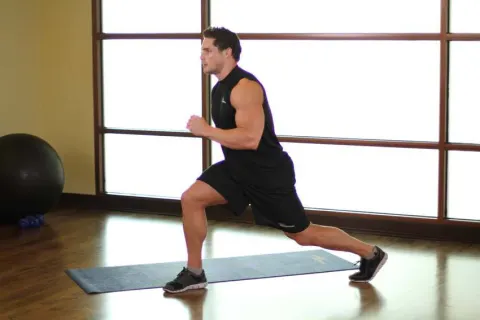
swap: Reverse Lunge, Split Squat, Walking Lunge
-
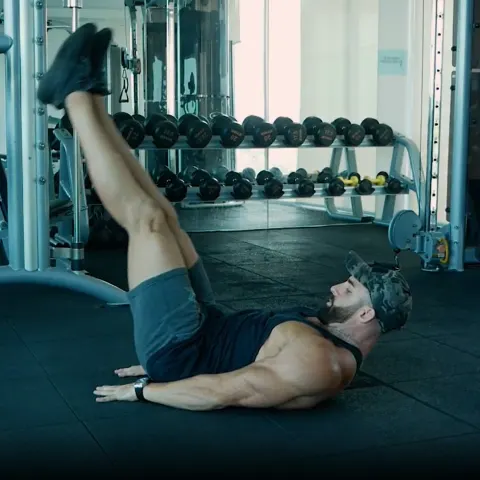
Core, Hip Flexors · Bodyweight
- Sets
- 3
- Reps
- 12–15
- Rest
- 60s
- Effort
- controlled
swap: Reverse Crunch, Dead Bug, Flutter Kick
Day 3
Full Body C
Single-leg + chest + back
-
Quads, Glutes · Bodyweight
- Sets
- 3
- Reps
- 6–10 / side
- Rest
- 120s
- Effort
- RPE 8
swap: Reverse Lunge, Forward Lunge, Step-Up
-
Triceps · Bodyweight
- Sets
- 3
- Reps
- 6–10
- Rest
- 120s
- Effort
- RPE 8
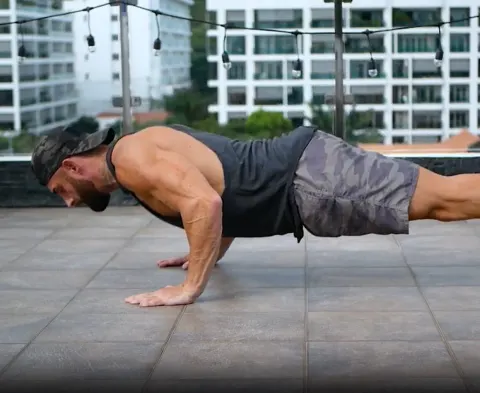
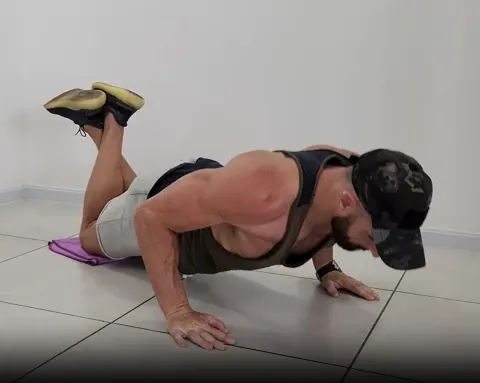
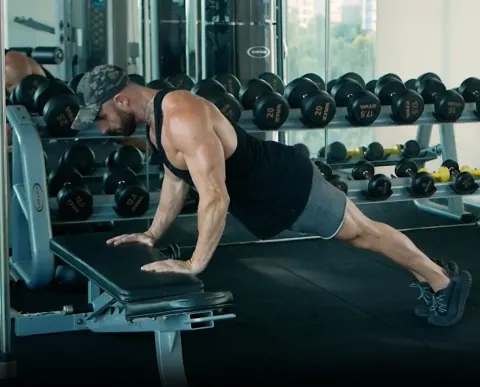
swap: Incline Push-Up, Knee Push-Up, Push-Up
-
Upper Back, Lats · Bodyweight
- Sets
- 3
- Reps
- 6–10
- Rest
- 120s
- Effort
- RPE 8
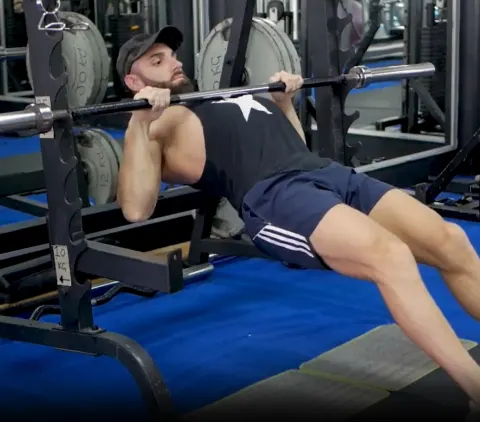
swap: Inverted Row, Reverse Snow Angel
-
Obliques, Core · Bodyweight
- Sets
- 3
- Reps
- 12–15 / side
- Rest
- 60s
- Effort
- controlled
swap: Crunch, Russian Twist, Dead Bug
8-week progression: what to change each week
Same exercises for the whole block. Weeks move the reps, then the load; the last week is a deload.
| Week | Load | Reps | Effort | What to watch |
|---|---|---|---|---|
| 1 | Light: learn the movements | bottom of range (6–8) | RPE 6–7 | Stop every set 3 reps before failure; film one set per exercise to check form. |
| 2 | Same weight | +1 rep per set (8–9) | RPE 8 | Same exercises, same order; only the reps move. |
| 3 | Same weight | top of range (9–10) | RPE 8 | All sets at the top of the range → add load next week. Missed a set? Repeat the week. |
| 4 | next dumbbell / harder variation | bottom of range (6–8) | RPE 8 | New weight feels hard at low reps; that is the plan working. |
| 5 | Same weight | +1 rep per set (8–9) | RPE 8 | Keep rest periods the same. |
| 6 | Same weight | top of range (9–10) | RPE 8–9 | Second time at the top: take the last set of each main lift to 1 rep in reserve. |
| 7 | next dumbbell / harder variation | bottom of range (6–8) | RPE 8 | Bodyweight moves: slow the lowering phase to 3 s or move to the harder variation. |
| 8 | Deload: 60 % | bottom of range | RPE 5–6 | Half the sets, then regenerate a variation or change the split for the next block. |
How to progress
- First 2 weeks: focus on form with light weights, stop each set 3 reps before failure.
- Double progression: hit the top of the rep range on every set, then add weight (2.5–5 %) and start from the bottom of the range.
- Bodyweight moves: add reps, then slow the tempo (3 sec down), then move to a harder variation.
- Deload every 6–8 weeks: same exercises, half the sets.
Notes for this plan
- Home setup: if a weight gets too light, slow the lowering phase to 3–4 seconds or add a pause at the hardest point.
- Sessions can move between days; keep at least one rest day between hard sessions for the same muscles.
Calisthenics is strength training in which your body is the load and a bar is the only hardware. The bar matters more than it looks: it adds hanging and vertical pulling, the one thing floor-only training cannot give you. This page explains how the week is put together, how to earn a first pull-up and how to keep every movement difficult without a single plate.
The kit: one bar and something to step on
- A bar you can hang from. A doorway bar, a wall-mounted bar or the frame in a park all work. Street workout grew up outdoors for a reason: the equipment is free.
- A low edge for rows. A bar at hip height, a sturdy table or playground rails.
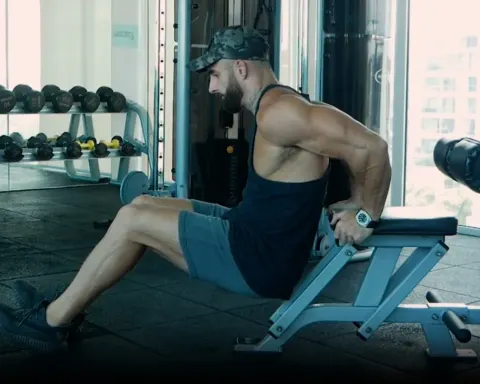
- A chair, bench or step for bench dips, step-ups and split squats.
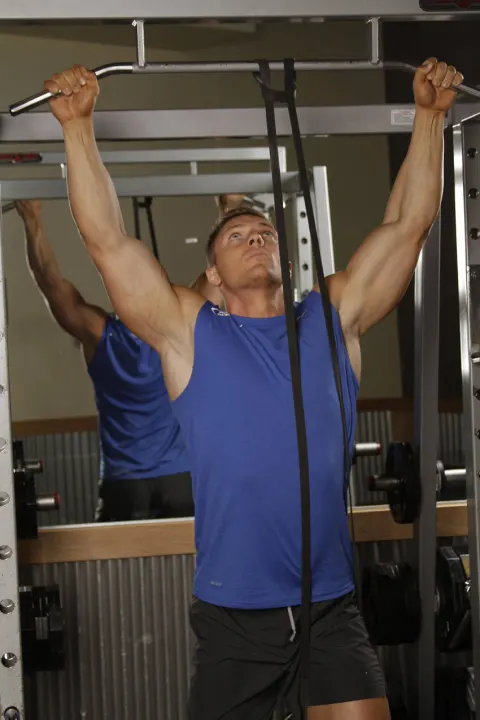
- Optional: a long loop band. Hung from the bar with a foot or knee in it, it takes roughly 10–30 kg off a pull-up.
The pull-up bar exercises page shows what the bar adds. Before the first session, hang from yours for 20 seconds and check that nothing shifts.
How the example week is built
The example week above is three full-body sessions on Monday, Wednesday and Friday, about 45 minutes each. Every session opens with three main movements, one for the legs, one push and one pull, for 3 sets of 6–10 reps with 2 minutes of rest. A second lower-body exercise, a lighter push or shoulder drill and a core exercise follow with shorter rests.
Two details are worth noticing:
- Pulling rotates. Two days use rows with your feet on the floor, and one day goes up to the bar for a vertical pull. That mix builds the back while your pull-up strength catches up.
- Pushing covers three angles. A horizontal press, an overhead-style press with the hips high, and a dip pattern from a bench.
Across the week that comes to roughly 9–15 hard sets per muscle group, which is plenty in a first year. The same week, with alternatives listed under every exercise, is the 3-day calisthenics plan for muscle gain.
A range of 6–10 only means something when the variation is hard enough. If you could do 20, swap to a harder alternative. If you cannot reach 6 clean reps, take an easier one and build up.
From zero to your first pull-up
Most beginners cannot do one pull-up, and the plan does not expect it. Work through these steps on the vertical-pull day, and use step 1 in every warm-up.
| Step | Exercise | Move on when you can do |
|---|---|---|
| 1 | Dead hang, then scapular pull-up | A 30-second hang and 3 × 8 shrugs with straight arms |
| 2 | Inverted row | 3 × 10 with straight legs, chest to the bar |
| 3 | Assisted pull-up with a band or one foot on a chair | 3 × 8 with only light help |
| 4 | Negative pull-up | 3 × 5, each lowered for 5 seconds |
| 5 | Full pull-up or chin-up | 1 clean rep, then build towards 3 × 5 |
Chin-ups, with the palms facing you, usually arrive first because the biceps contribute more. Take whichever grip gives you the first rep, then train the chin-up and the overhand version on alternate weeks.
Steps overlap. Rows stay in the plan for good, and negatives can start as soon as you can control a 3-second descent.
Making the other basics harder
There is no plate to add, so progress comes in three stages: more reps, then a slower lowering phase, then a harder variation. It is double progression with leverage standing in for load.
- Push: incline push-up, push-up, feet-elevated or diamond push-up, then dips on parallel bars.
- Overhead push: pike push-up with feet on the floor, then with feet on a chair.
- Legs: chair squat, free squat, split squat, step-up, then split squats with the rear foot raised.
- Core: lying leg raise, hanging knee raise, hanging leg raise.
A worked case: the plan lists push-ups for 3 × 6–10 and you start at 7, 6, 6. Three weeks later you reach 10, 10, 10. Now each rep goes down for 3 seconds and the numbers fall back to 8, 7, 7. When those are tens again, your feet go on a chair. For training with no bar at all, the bodyweight workout plan page has the longer ladders.
How hard each set should feel
For the first two weeks, stop every set about 3 reps before failure and treat the sessions as practice. After that, main movements end with 1–3 reps in reserve, which is RPE 7–9.
Hanging work is the exception. End pull-up sets while the reps are still clean, because elbows and shoulders adapt more slowly than muscle does.
Take the full 2 minutes between main sets. Calisthenics rushed as a breathless circuit trains conditioning. With real rests it builds strength and size.
Two to five days: which version to pick
- 2–3 days: full body every session, the right place to start.
- 4 days: upper/lower, as in the 4-day calisthenics plan for general fitness, where sessions stay under 30 minutes.
- 5 days: push/pull/legs plus an upper and a lower day. There is no beginner build at 5 days and no 6-day calisthenics plan.
- Fat loss: the 3-day calisthenics plan for weight loss uses 8–15 reps, shorter rests and a 6-round interval finisher.
There is no calisthenics plan for pure strength. Sets of 4–6 with small weekly load jumps do not work when the next step up is a whole new exercise.
Skills: muscle-ups, levers and handstands
Street workout is famous for its skills. They are worth learning, but they are practice, not the engine of the plan.
- Give skills 10 minutes after the warm-up, twice a week, and stay far from failure.
- Leave muscle-up practice until you own 8–10 strict pull-ups and 10 dips on parallel bars.
- Low-risk first skills: a wall handstand hold, a tucked L-sit hang, a hollow body hold.
Mistakes that slow beginners down
- Half reps and kipping. A rep starts from straight arms and ends with the chin over the bar. Swinging reps do not count.
- Pull-ups every day. Elbow tendons complain long before the muscles do. Keep 48 hours between pulling sessions.
- Skipping legs. Bar athletes with thin legs are a cliché for a reason. Do the squats and split squats as written.
- Dropping rows once pull-ups arrive. Rows train the mid-back and keep the shoulders balanced against all the pushing.
- Camping on one variation. If a set passes 15 reps, it is time for the next rung.
When bodyweight stops being enough
Three markers: 10 strict pull-ups, 20 push-ups and 12 slow split squats per leg. From there, a backpack with 5–10 kg restarts progress on pull-ups and push-ups, and legs benefit most from real load.
The dumbbell workout plan keeps you training at home, and a gym membership opens up barbells and machines. For a one-off session that targets pulling, try the back workout at home.
Calisthenics Workout Plan for Beginners: all 33 plans
- 2-Day Calisthenics Workout Plan for Muscle Gain
- 2-Day Calisthenics Workout Plan for Muscle Gain (Beginners)
- 2-Day Calisthenics Workout Plan for Muscle Gain (Men)
- 2-Day Calisthenics Workout Plan for General Fitness
- 2-Day Calisthenics Workout Plan for General Fitness (Beginners)
- 2-Day Calisthenics Workout Plan for General Fitness (Men)
- 3-Day Calisthenics Workout Plan for Weight Loss (Men)
- 3-Day Calisthenics Workout Plan for Muscle Gain
- 3-Day Calisthenics Workout Plan for Muscle Gain (Beginners)
- 3-Day Calisthenics Workout Plan for Muscle Gain (Men)
- 3-Day Calisthenics Workout Plan for General Fitness
- 3-Day Calisthenics Workout Plan for General Fitness (Beginners)
- 3-Day Calisthenics Workout Plan for General Fitness (Men)
- 4-Day Calisthenics Workout Plan for Weight Loss (Men)
- 4-Day Calisthenics Workout Plan for Muscle Gain
- 4-Day Calisthenics Workout Plan for Muscle Gain (Beginners)
- 4-Day Calisthenics Workout Plan for Muscle Gain (Men)
- 4-Day Calisthenics Workout Plan for General Fitness
- 4-Day Calisthenics Workout Plan for General Fitness (Beginners)
- 4-Day Calisthenics Workout Plan for General Fitness (Men)
- 5-Day Calisthenics Workout Plan for Muscle Gain
- 5-Day Calisthenics Workout Plan for Muscle Gain (Men)
- 5-Day Calisthenics Workout Plan for General Fitness
- 5-Day Calisthenics Workout Plan for General Fitness (Men)
Related programs
Frequently asked questions
Can I start calisthenics if I can't do a single pull-up?
Yes, and most beginners are in exactly that position. Start with dead hangs, scapular pull-ups and inverted rows, then add band-assisted reps and slow negatives. Those steps train the same muscles as the full movement, so the first strict pull-up usually arrives within 6 to 12 weeks.
Is 3 days a week enough for calisthenics?
Three full-body sessions are enough for a beginner to build muscle and learn the basics, because every muscle is trained three times a week with about 48 hours to recover. Four or five days mainly spread the same work over shorter sessions. Add days only when three no longer feel challenging.
Can you build muscle with only a pull-up bar and your bodyweight?
Yes. Pull-ups, chin-ups, rows, push-up variations and dips load the back, chest, shoulders and arms heavily enough to grow, provided each set ends within 1 to 3 reps of failure somewhere between 6 and 15 reps. Legs are harder to load, so they rely on single-leg variations and slow lowering.
How long does it take to get your first pull-up?
Most people who practise two or three times a week need 6 to 12 weeks. Lighter people with some sporting background can do it in 4. Heavier beginners may need several months, and losing body fat helps as much as training, because every kilogram lost is a kilogram less to lift.
What equipment do I need for calisthenics at home?
A bar you can hang from is the only essential: a doorway bar costs little and needs no drilling. A sturdy chair or step covers dips, step-ups and split squats, and a table edge or low bar covers rows. A long loop band is a useful extra for assisted pull-ups.