Body Recomposition Workout Plan: Lose Fat and Build Muscle
A body recomposition workout plan for losing fat while building muscle: four upper/lower days, calories near maintenance, high protein and honest timelines.
Example week
4-Day Dumbbell Workout Plan for Muscle Gain
A complete week you can start today: exercises, sets, reps and rest for every session, with swaps for each exercise. Open this plan on its own page (PDF) →
Split
Upper / Lower
Sessions / week
4
Avg. session
40 min
Schedule
Mon · Tue · Thu · Fri
Warm-up (every session, ~6 min)
- 3–5 min easy cardio: brisk walk, bike, jump rope or marching in place.
- Dynamic mobility: 10 leg swings each way, 10 hip circles, 10 arm circles, 8 cat-cows.
- Ramp-up sets on the first exercise: 1–2 light sets of 8 before your working sets.
Day 1
Upper A
Chest + back, strength bias
-
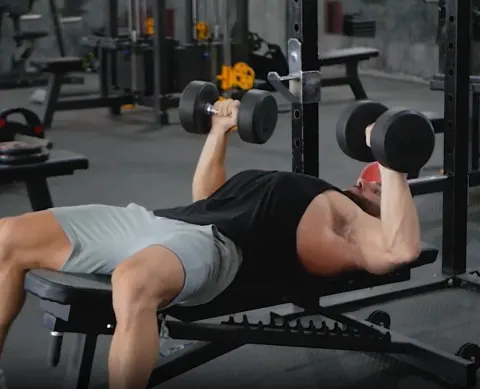
Chest, Triceps · Dumbbell
- Sets
- 3
- Reps
- 6–10
- Rest
- 120s
- Effort
- RPE 8
-
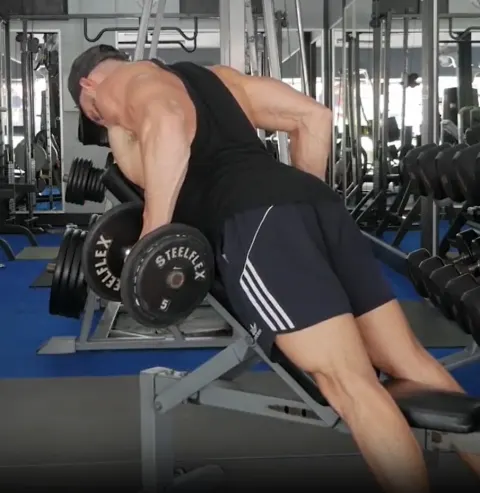
Upper Back, Lats · Dumbbell
- Sets
- 3
- Reps
- 6–10
- Rest
- 120s
- Effort
- RPE 8
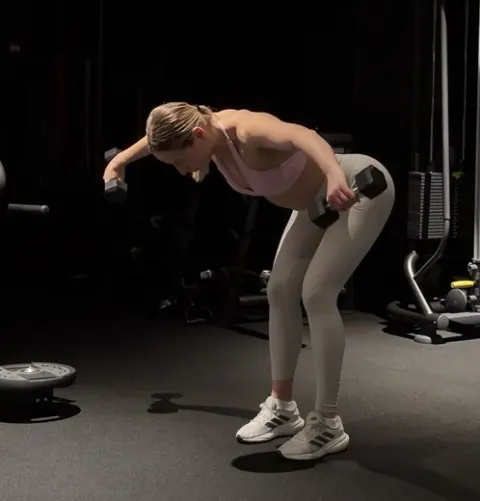
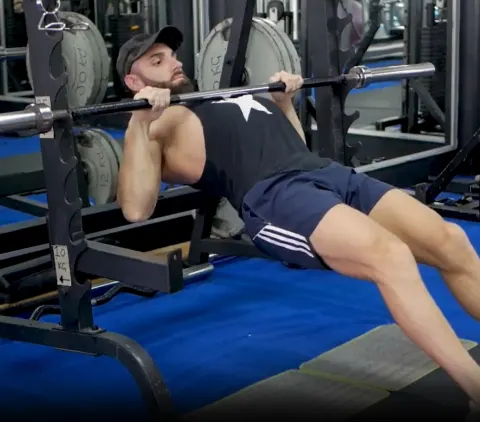
swap: Dumbbell Row, Inverted Row, Rear Delt Fly
-
Front Delts, Side Delts · Dumbbell
- Sets
- 2
- Reps
- 8–12
- Rest
- 90s
- Effort
- RPE 8
-
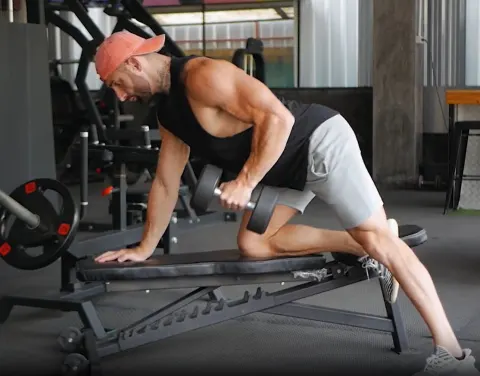
Lats, Upper Back · Dumbbell
- Sets
- 2
- Reps
- 8–12 / side
- Rest
- 90s
- Effort
- RPE 8
-
Biceps · Dumbbell
- Sets
- 3
- Reps
- 10–15
- Rest
- 60s
- Effort
- RPE 8–9
-
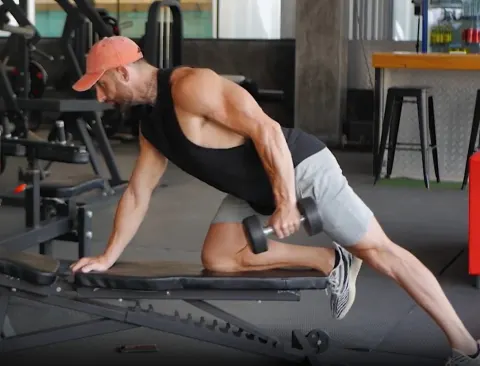
Triceps · Dumbbell
- Sets
- 3
- Reps
- 10–15 / side
- Rest
- 60s
- Effort
- RPE 8–9
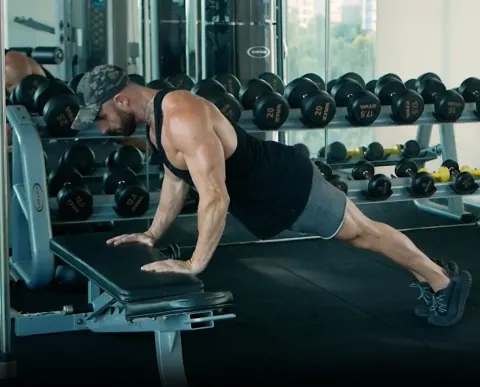
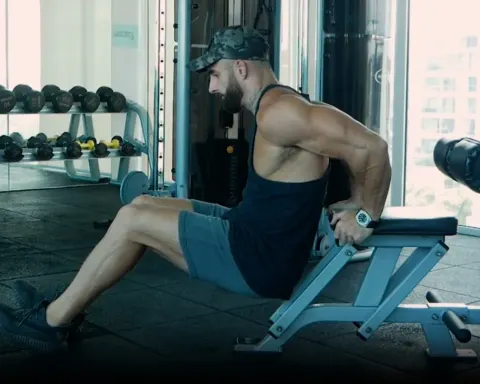
swap: Overhead Triceps Extension, Bench Dip, Bodyweight Triceps Extension


Day 2
Lower A
Squat focus
-
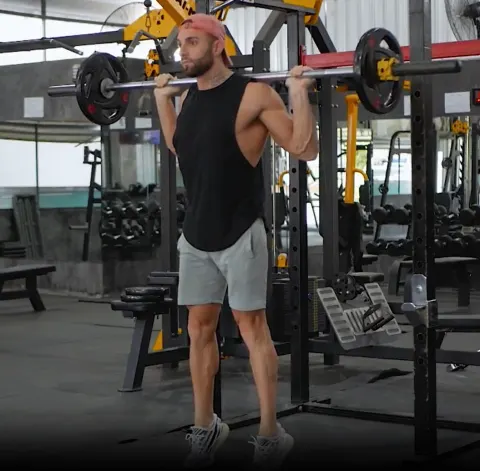
Glutes, Adductors, Quads · Dumbbell
- Sets
- 3
- Reps
- 6–10
- Rest
- 120s
- Effort
- RPE 8
-
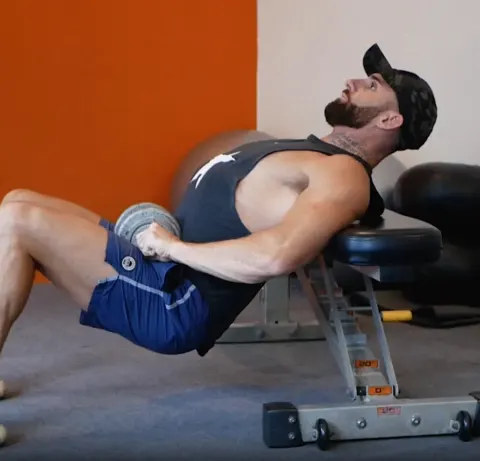
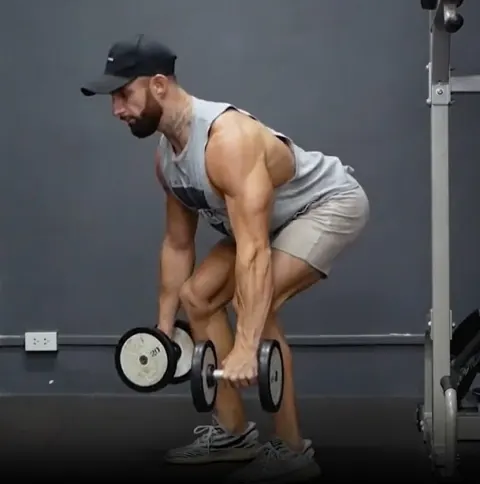
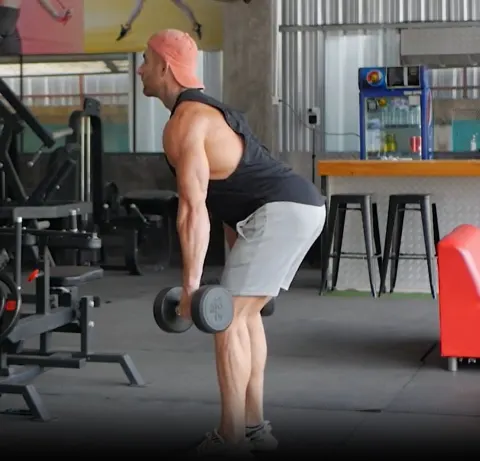
Hamstrings, Glutes · Dumbbell
- Sets
- 2
- Reps
- 8–12
- Rest
- 90s
- Effort
- RPE 8
swap: Bodyweight Hip Hinge, Dumbbell Deadlift, Bodyweight Good Morning
-
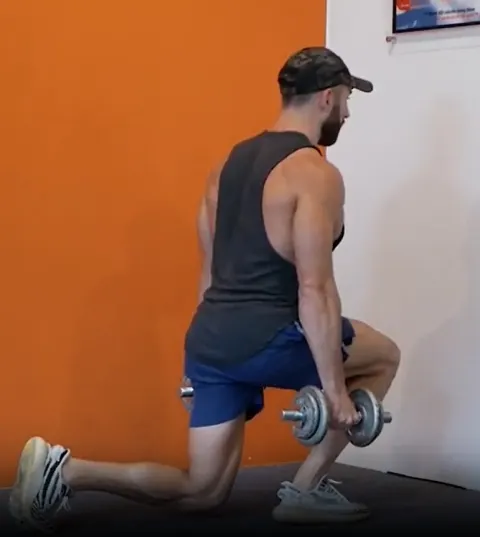
Quads, Glutes · Dumbbell
- Sets
- 2
- Reps
- 8–12 / side
- Rest
- 90s
- Effort
- RPE 8
swap: Reverse Lunge, Split Squat, Step-Up
-
Core · Bodyweight
- Sets
- 3
- Reps
- 30–60 sec
- Rest
- 60s
- Effort
- controlled
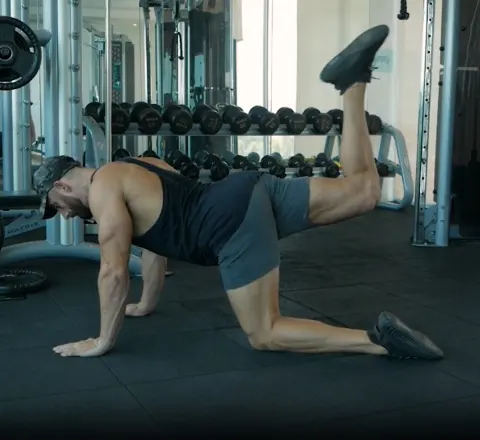
swap: Dead Bug, Plank Shoulder Tap, Bird Dog


Day 3
Upper B
Shoulders + back, volume bias
-
Upper Back, Lats · Bodyweight
- Sets
- 3
- Reps
- 6–10
- Rest
- 120s
- Effort
- RPE 8
-
Front Delts, Side Delts · Dumbbell
- Sets
- 3
- Reps
- 6–10
- Rest
- 120s
- Effort
- RPE 8
-
Chest, Front Delts · Dumbbell
- Sets
- 2
- Reps
- 8–12
- Rest
- 90s
- Effort
- RPE 8
-
Rear Delts, Upper Back · Dumbbell
- Sets
- 2
- Reps
- 8–12
- Rest
- 90s
- Effort
- RPE 8
-
Triceps · Dumbbell
- Sets
- 3
- Reps
- 10–15
- Rest
- 60s
- Effort
- RPE 8–9
swap: Bench Dip, Dumbbell Kickback, Bodyweight Triceps Extension



Day 4
Lower B
Hinge focus
-
Hamstrings, Glutes · Dumbbell
- Sets
- 3
- Reps
- 6–10
- Rest
- 120s
- Effort
- RPE 8
-
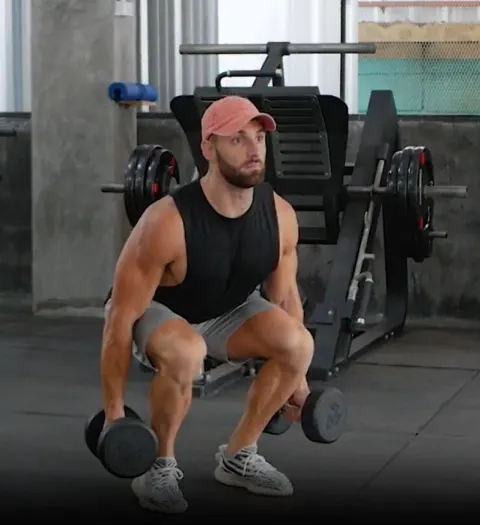
Quads, Glutes · Dumbbell
- Sets
- 2
- Reps
- 8–12
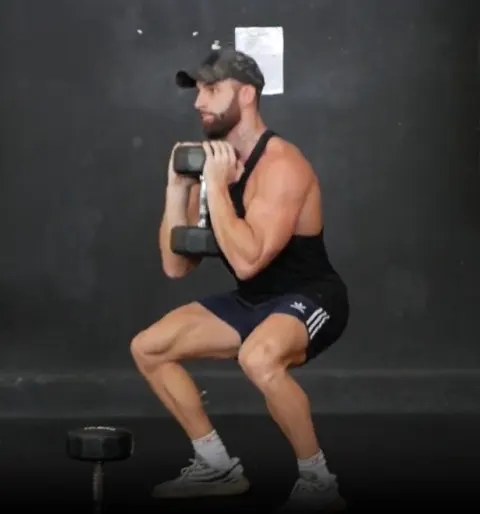
- Rest
- 90s
- Effort
- RPE 8
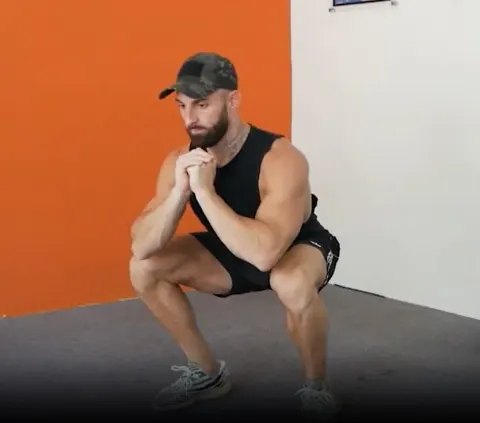
swap: Goblet Squat, Bodyweight Squat, Sumo Squat
-
Glutes · Bodyweight
- Sets
- 2
- Reps
- 8–12 / side
- Rest
- 90s
- Effort
- RPE 8
swap: Bird Dog, Glute Bridge, Clamshell
-
Hamstrings, Glutes · Bodyweight
- Sets
- 3
- Reps
- 10–15
- Rest
- 60s
- Effort
- RPE 8–9
swap: Glute Bridge, Standing Calf Raise
-
Calves · Bodyweight
- Sets
- 3
- Reps
- 10–15
- Rest
- 60s
- Effort
- RPE 8–9
-
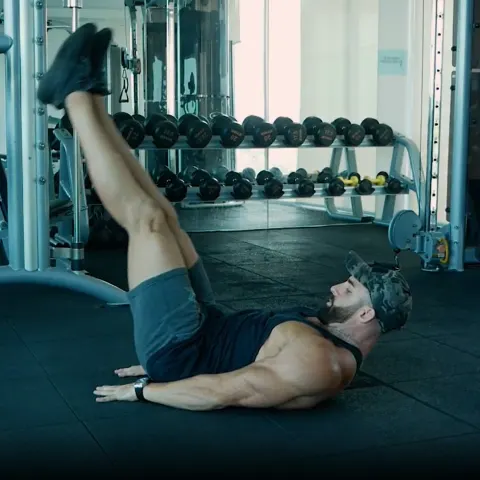
Core, Hip Flexors · Bodyweight
- Sets
- 3
- Reps
- 12–15
- Rest
- 60s
- Effort
- controlled
swap: Reverse Crunch, Dead Bug, Flutter Kick
8-week progression: what to change each week
Same exercises for the whole block. Weeks move the reps, then the load; the last week is a deload.
| Week | Load | Reps | Effort | What to watch |
|---|---|---|---|---|
| 1 | Light: learn the movements | bottom of range (6–8) | RPE 6–7 | Stop every set 3 reps before failure; film one set per exercise to check form. |
| 2 | Same weight | +1 rep per set (8–9) | RPE 8 | Same exercises, same order; only the reps move. |
| 3 | Same weight | top of range (9–10) | RPE 8 | All sets at the top of the range → add load next week. Missed a set? Repeat the week. |
| 4 | next dumbbell / harder variation | bottom of range (6–8) | RPE 8 | New weight feels hard at low reps; that is the plan working. |
| 5 | Same weight | +1 rep per set (8–9) | RPE 8 | Keep rest periods the same. |
| 6 | Same weight | top of range (9–10) | RPE 8–9 | Second time at the top: take the last set of each main lift to 1 rep in reserve. |
| 7 | next dumbbell / harder variation | bottom of range (6–8) | RPE 8 | Bodyweight moves: slow the lowering phase to 3 s or move to the harder variation. |
| 8 | Deload: 60 % | bottom of range | RPE 5–6 | Half the sets, then regenerate a variation or change the split for the next block. |
How to progress
- First 2 weeks: focus on form with light weights, stop each set 3 reps before failure.
- Double progression: hit the top of the rep range on every set, then add weight (2.5–5 %) and start from the bottom of the range.
- Bodyweight moves: add reps, then slow the tempo (3 sec down), then move to a harder variation.
- Deload every 6–8 weeks: same exercises, half the sets.
Notes for this plan
- Home setup: if a weight gets too light, slow the lowering phase to 3–4 seconds or add a pause at the hardest point.
- Sessions can move between days; keep at least one rest day between hard sessions for the same muscles.
Body recomposition means losing fat and gaining muscle over the same period, so your shape changes more than your weight does. It is slower than a dedicated cut or bulk, but for the right person it is the most efficient route. The method is simple: train as if you were building muscle and eat as if you were maintaining.
Who recomposition works for
| Starting point | Does recomp work? | Calorie target |
|---|---|---|
| New to lifting, first year | Very well | Maintenance |
| Returning after months or years off | Well, regained muscle comes back fast | Maintenance |
| Skinny fat: normal weight, little muscle | Well, though the scale barely moves | Maintenance |
| Clearly overweight | Yes, alongside steady fat loss | 300–500 kcal below maintenance |
| Lean with 2+ years of serious training | Barely | Separate gain and cut phases |
If you sit in the first three rows, read on. If you are in row four, the training below still applies, but pair it with the deficit described on the weight loss workout plan page.
Why the example week is a muscle-building plan
The example week above is a 4-day upper/lower split with dumbbells: Monday and Tuesday, a rest day, then Thursday and Friday, about 40 minutes per session. It is written for muscle gain on purpose.
In a recomp, training has one job: to tell the body that muscle is needed. Fat loss comes from the food side. Light circuits and daily intervals send a weak muscle signal, and that is how people end up smaller but just as soft.
What the week provides:
- Every muscle twice. Two upper and two lower sessions, with 2–3 days between repeats.
- Real loading. Main lifts for 3 sets of 6–10 with 2 minutes of rest, secondary lifts for 8–12, accessories for 10–15.
- Enough volume. About 10 hard sets a week for the back, 15 or more for the lower body and a little less for chest and arms. In a first year that is enough to grow.
The complete version is the 4-day dumbbell plan for muscle gain. In a gym, use the 4-day beginner gym plan and apply the same rules.
Calories and protein: the numbers
- Find maintenance. Use the TDEE calculator, eat that amount for two weeks and watch the scale. A stable weekly average confirms the number.
- Set the target. Maintenance if you are skinny fat or new. Up to 10–15 % below, roughly 200–300 kcal, if you carry more fat.
- Fix protein. 1.6–2.2 g per kg of body weight, towards the upper end when calories are below maintenance. A 75 kg person needs about 120–165 g. The protein intake calculator does the sum.
- Spread it. Three or four meals with 25–40 g of protein each.
- Sleep 7–9 hours. Studies of dieters link short nights to losing more muscle and less fat.
Calorie cycling, with more food on training days and less on rest days, is optional. The weekly total matters far more than how it is distributed.
How to track progress when the scale stays flat
A successful recomp can show the same body weight for months. Fat goes down, muscle goes up and the two cancel out on the scale. Use these four measures instead:
- Waist. Tape at navel height, first thing in the morning, once a week. A waist 2–4 cm smaller at the same body weight after 12 weeks is a strong result.
- Photos. Front, side and back in identical light, every 4 weeks.
- Logbook. Reps and loads rising while body weight holds steady is the clearest sign that the process works.
- Body fat estimate. The body fat calculator uses tape measurements. Trust the trend, not the single reading.
Check weight only as a weekly average. If it falls by more than 0.5 kg a week, you are cutting, not recomposing, so add 100–150 kcal.
Progression is non-negotiable
Without heavier or longer sets over time, a body near maintenance has no reason to add muscle. The rule is double progression: reps first, load second.
Take the dumbbell Romanian deadlift, listed as 2 × 8–12, with a pair of 14 kg dumbbells:
- Week 1: 8, 8. Week 2: 10, 9. Week 3: 12, 12.
- Week 4: the 16 kg pair, back to 8, 8.
At home the next pair is sometimes too big a jump. Then keep the weight, lower it for 3–4 seconds and pause at the bottom until the heavier pair is within reach.
One warning sign is specific to recomp. If reps fall on most lifts for two weeks in a row, the deficit is too deep. Return to maintenance before changing anything in the training.
Mistakes that keep people skinny fat
- Dieting first. Cutting calories hard with little muscle to protect leaves you lighter and softer.
- Cardio as the main tool. Running burns energy but gives the muscles of the upper body no reason to grow.
- Light weights “to tone”. Tone is muscle plus low enough body fat. Muscle needs sets that end 1–3 reps from failure.
- Reacting to daily weigh-ins. Water swings of 1 kg hide weeks of real change.
- Expecting a transformation in 8 weeks. Recomposition is measured in quarters.
When to stop recomping and pick a direction
Recomposition slows as you gain experience. Review after 12 weeks:
- Waist down and lifts up: keep going unchanged.
- Nothing has moved: audit food logging first. Untracked snacks and weekend meals are the usual cause.
- Still carrying a lot of fat: switch to a deliberate deficit. The calorie deficit calculator sets a target of 0.3–0.5 kg a week.
- Lean but small: move to a surplus of 250–300 kcal and follow the muscle building workout plan.
Past the first year or two, alternating phases works better: 3–4 months in a small surplus, then 6–10 weeks in a modest deficit. The training barely changes between them. For the reasoning behind the four-day layout, see the upper/lower split guide.
Body Recomposition Workout Plan: all 28 plans



- 4-Day Dumbbell Workout Plan for Muscle Gain (Over 50)
- 4-Day Gym Workout Plan for Muscle Gain
- 4-Day Gym Workout Plan for Muscle Gain (Beginners)
- 4-Day Gym Workout Plan for Muscle Gain (Women)
- 4-Day Gym Workout Plan for Muscle Gain (Men)
- 4-Day Gym Workout Plan for Muscle Gain (Over 50)
- 4-Day Kettlebell Workout Plan for Muscle Gain
- 4-Day Kettlebell Workout Plan for Muscle Gain (Beginners)
- 4-Day Kettlebell Workout Plan for Muscle Gain (Women)
- 4-Day Kettlebell Workout Plan for Muscle Gain (Men)
- 4-Day Kettlebell Workout Plan for Muscle Gain (Over 50)
- 4-Day Resistance Band Workout Plan for Muscle Gain
- 4-Day Resistance Band Workout Plan for Muscle Gain (Beginners)
- 4-Day Resistance Band Workout Plan for Muscle Gain (Women)
- 4-Day Resistance Band Workout Plan for Muscle Gain (Men)
- 4-Day Resistance Band Workout Plan for Muscle Gain (Over 50)
- 4-Day Calisthenics Workout Plan for Muscle Gain
- 4-Day Calisthenics Workout Plan for Muscle Gain (Beginners)
- 4-Day Calisthenics Workout Plan for Muscle Gain (Men)
Related programs
Frequently asked questions
Can you really lose fat and build muscle at the same time?
Yes, under three conditions: you lift with progression, eat 1.6 to 2.2 g of protein per kg and keep calories at or slightly below maintenance. It works best for beginners, people returning after a break and anyone carrying extra body fat. Lean, experienced lifters gain very little this way.
How many calories should I eat for body recomposition?
Eat at maintenance, or up to 10 to 15 percent below it if you carry more fat than you would like. For most people that is a gap of 0 to 300 kcal a day. A larger deficit speeds up fat loss but removes the energy that muscle growth depends on.
How long does body recomposition take?
Plan for 3 to 6 months. The first signs, a slightly smaller waist and heavier weights in the logbook, tend to show after 8 to 12 weeks. Body weight may hardly change during that time, so judge progress by waist measurement, monthly photos and training numbers.
What is skinny fat and how do you fix it?
Skinny fat means a normal body weight with little muscle and soft fat around the waist. The fix is to build muscle, not to diet harder: lift 3 or 4 days a week, add reps or weight regularly, eat enough protein and hold calories around maintenance while your shape changes.
Should I do cardio during a recomp?
A moderate amount helps. Walk 7,000 to 10,000 steps a day and add one or two easy 20 to 30 minute sessions if you enjoy them. Keep lifting as the priority, because several hard interval workouts a week eat into the recovery your muscles need.