12-Week Workout Plan: Three 4-Week Blocks That Keep You Progressing
A 12-week workout plan split into three 4-week blocks: when to add load, when to deload, when to change exercises and what three months can really build.
Example week
4-Day Gym Workout Plan for Muscle Gain
A complete week you can start today: exercises, sets, reps and rest for every session, with swaps for each exercise. Open this plan on its own page (PDF) →
Split
Upper / Lower
Sessions / week
4
Avg. session
46 min
Schedule
Mon · Tue · Thu · Fri
Warm-up (every session, ~6 min)
- 3–5 min easy cardio: brisk walk, bike, jump rope or marching in place.
- Dynamic mobility: 10 leg swings each way, 10 hip circles, 10 arm circles, 8 cat-cows.
- Ramp-up sets on the first exercise: 1–2 light sets of 8 before your working sets.
Day 1
Upper A
Chest + back, strength bias
-
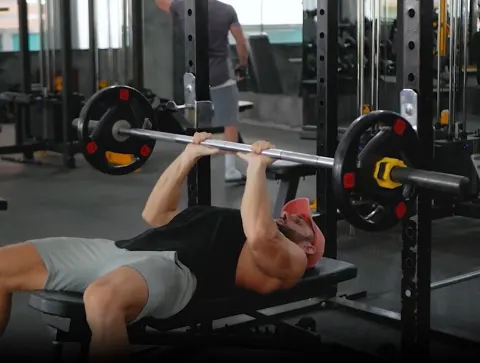
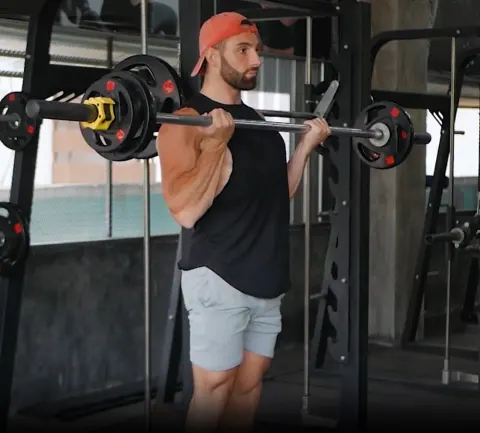
Triceps, Chest · Barbell
- Sets
- 4
- Reps
- 6–10
- Rest
- 120s
- Effort
- RPE 8
-
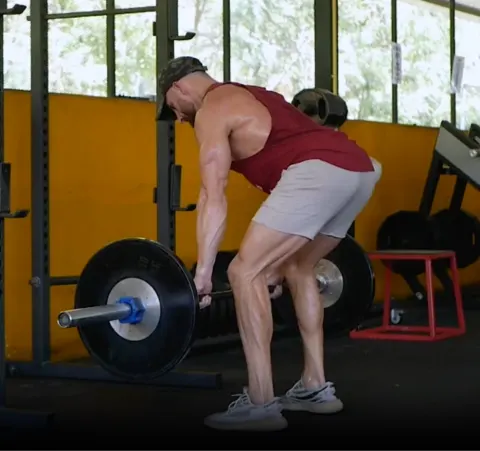
Upper Back, Lats · Barbell
- Sets
- 4
- Reps
- 6–10
- Rest
- 120s
- Effort
- RPE 8
-
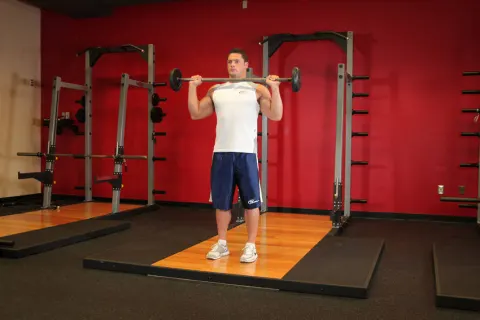
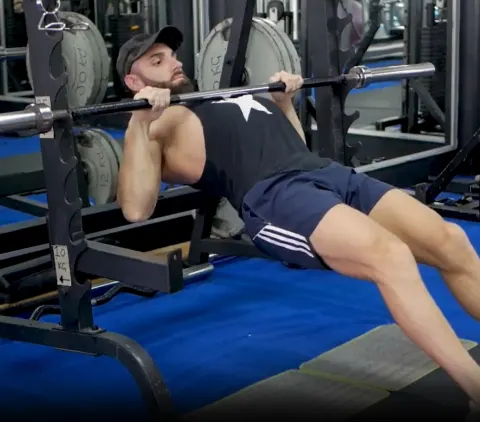
Front Delts, Triceps · Barbell
- Sets
- 3
- Reps
- 8–12
- Rest
- 90s
- Effort
- RPE 8
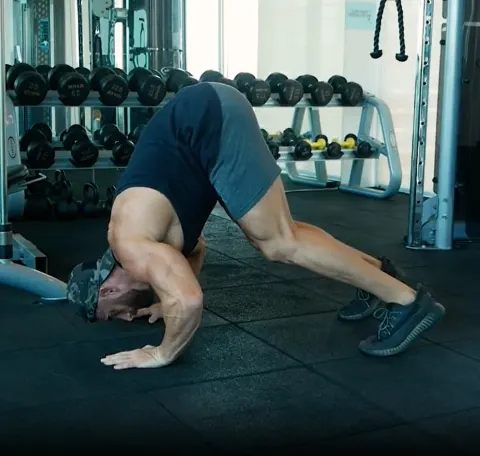
swap: Dumbbell Shoulder Press, Machine Shoulder Press, Pike Push-Up
-
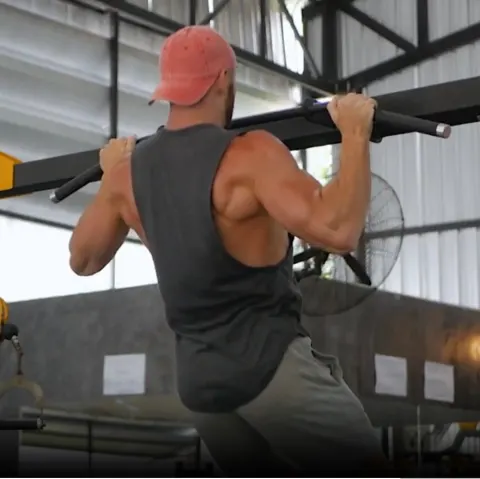
Lats, Upper Back · Pull-Up Bar
- Sets
- 3
- Reps
- 8–12
- Rest
- 90s
- Effort
- RPE 8
Day 2
Lower A
Squat focus
-
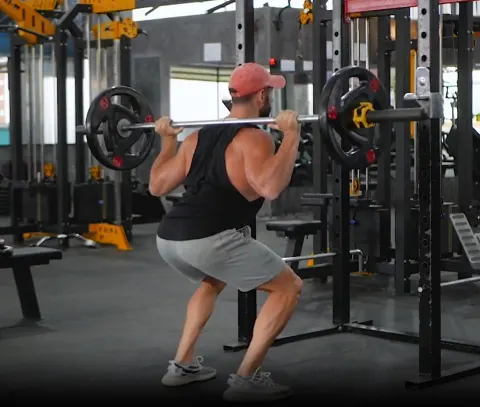
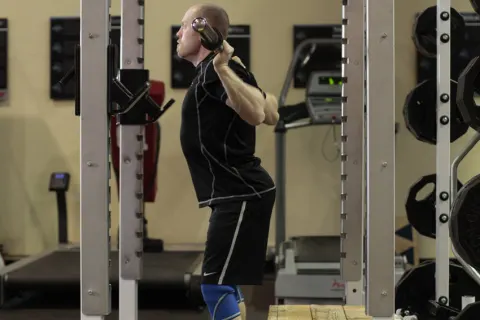
Quads, Glutes · Barbell
- Sets
- 4
- Reps
- 6–10
- Rest
- 120s
- Effort
- RPE 8
swap: Goblet Squat, Leg Press, Barbell Front Squat
-
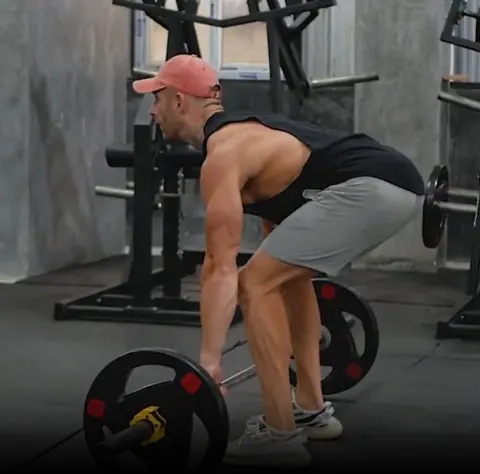
Glutes, Hamstrings, Lower Back · Barbell
- Sets
- 3
- Reps
- 8–12
- Rest
- 90s
- Effort
- RPE 8
swap: Trap Bar Deadlift, Kettlebell Deadlift, Barbell Romanian Deadlift
-
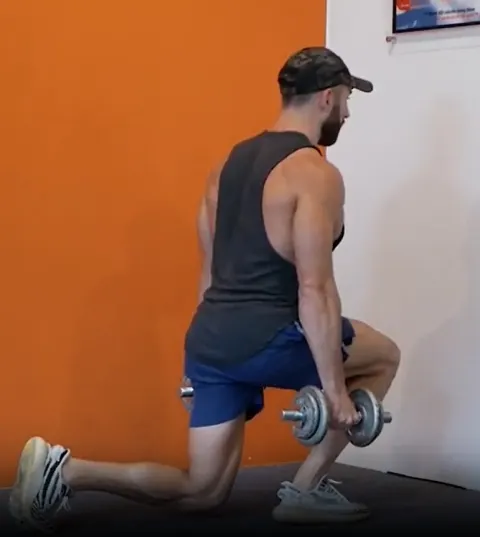
Quads, Glutes · Dumbbell
- Sets
- 3
- Reps
- 8–12 / side
- Rest
- 90s
- Effort
- RPE 8
-
Glutes · Barbell
- Sets
- 3
- Reps
- 10–15
- Rest
- 60s
- Effort
- RPE 8–9
-
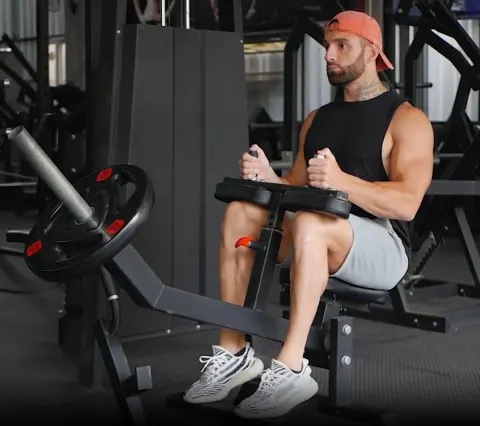
Calves · Machine
- Sets
- 3
- Reps
- 10–15
- Rest
- 60s
- Effort
- RPE 8–9
swap: Standing Calf Raise, Dumbbell Calf Raise, Single-Leg Calf Raise
-
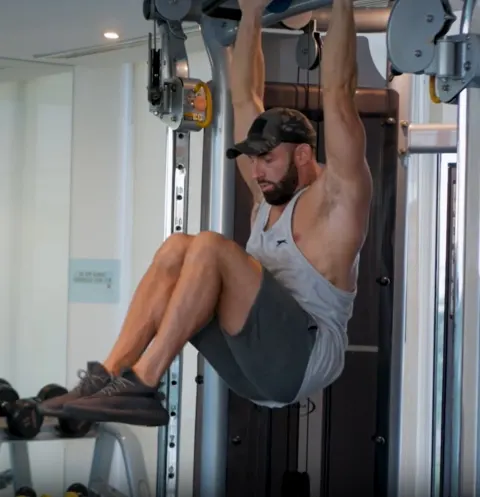
Core, Hip Flexors · Pull-Up Bar
- Sets
- 3
- Reps
- 12–15
- Rest
- 60s
- Effort
- controlled
swap: Reverse Crunch, Lying Leg Raise, Dead Bug

Day 3
Upper B
Shoulders + back, volume bias
-
Lats, Upper Back · Cable
- Sets
- 4
- Reps
- 6–10
- Rest
- 120s
- Effort
- RPE 8
swap: Pull-Up, Assisted Pull-Up, Band Lat Pulldown
-
Front Delts, Chest · Barbell
- Sets
- 4
- Reps
- 6–10 / side
- Rest
- 120s
- Effort
- RPE 8
swap: Dumbbell Shoulder Press, Kettlebell Press, Overhead Press
-
Chest, Front Delts · Barbell
- Sets
- 3
- Reps
- 8–12
- Rest
- 90s
- Effort
- RPE 8
swap: Incline Dumbbell Press, Decline Push-Up, Machine Chest Press
-
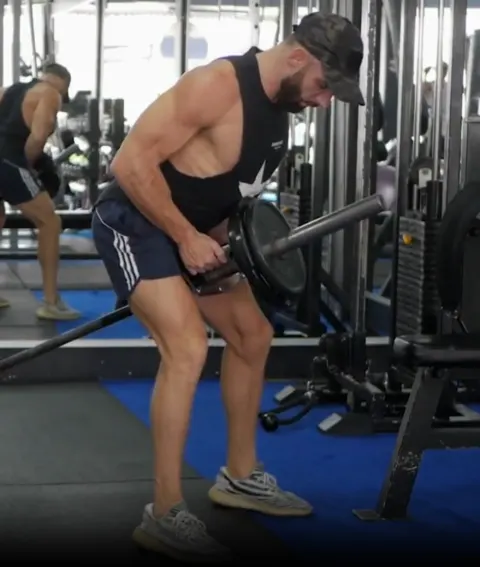
Upper Back, Lats · Barbell
- Sets
- 3
- Reps
- 8–12
- Rest
- 90s
- Effort
- RPE 8




Day 4
Lower B
Hinge focus
-
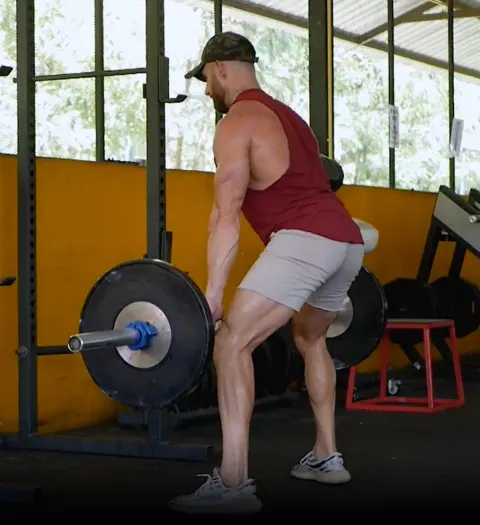
Glutes, Quads, Adductors · Barbell
- Sets
- 4
- Reps
- 6–10
- Rest
- 120s
- Effort
- RPE 8
-
Glutes, Quads · Barbell
- Sets
- 3
- Reps
- 8–12
- Rest
- 90s
- Effort
- RPE 8
-
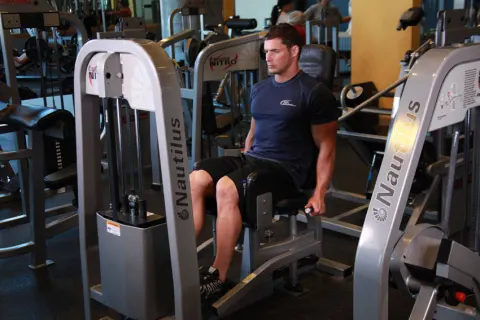
Glutes · Machine
- Sets
- 3
- Reps
- 8–12
- Rest
- 90s
- Effort
- RPE 8
-
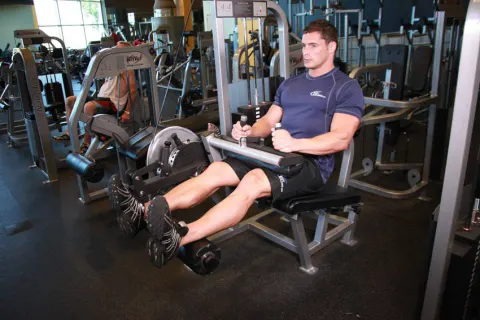
Hamstrings · Machine
- Sets
- 3
- Reps
- 10–15
- Rest
- 60s
- Effort
- RPE 8–9
swap: Lying Leg Curl, Banded Hamstring Curl, Barbell Romanian Deadlift
-
Calves · Dumbbell
- Sets
- 3
- Reps
- 10–15
- Rest
- 60s
- Effort
- RPE 8–9
swap: Standing Calf Raise, Single-Leg Calf Raise, Seated Calf Raise
-
Core · Cable
- Sets
- 3
- Reps
- 12–15
- Rest
- 60s
- Effort
- controlled
swap: Crunch, Reverse Crunch, Hanging Knee Raise


8-week progression: what to change each week
Same exercises for the whole block. Weeks move the reps, then the load; the last week is a deload.
| Week | Load | Reps | Effort | What to watch |
|---|---|---|---|---|
| 1 | Starting weight | bottom of range (6–8) | RPE 7 | Pick a weight you could do 3 more reps with. |
| 2 | Same weight | +1 rep per set (8–9) | RPE 8 | Same exercises, same order; only the reps move. |
| 3 | Same weight | top of range (9–10) | RPE 8 | All sets at the top of the range → add load next week. Missed a set? Repeat the week. |
| 4 | +2.5 kg (5 lb) | bottom of range (6–8) | RPE 8 | New weight feels hard at low reps; that is the plan working. |
| 5 | Same weight | +1 rep per set (8–9) | RPE 8 | Keep rest periods the same. |
| 6 | Same weight | top of range (9–10) | RPE 8–9 | Second time at the top: take the last set of each main lift to 1 rep in reserve. |
| 7 | +2.5 kg (5 lb) | bottom of range (6–8) | RPE 8 | Bodyweight moves: slow the lowering phase to 3 s or move to the harder variation. |
| 8 | Deload: 60 % | bottom of range | RPE 5–6 | Half the sets, then regenerate a variation or change the split for the next block. |
How to progress
- Double progression: hit the top of the rep range on every set, then add weight (2.5–5 %) and start from the bottom of the range.
- Bodyweight moves: add reps, then slow the tempo (3 sec down), then move to a harder variation.
- Deload every 6–8 weeks: same exercises, half the sets.
Notes for this plan
- Sessions can move between days; keep at least one rest day between hard sessions for the same muscles.
Twelve weeks is the classic length for a training programme: long enough for visible change, short enough to plan in one go. The common mistake is to treat it as twelve identical weeks and grind until progress stops somewhere around week 6. A 12-week plan works when it is cut into three 4-week blocks, each with its own job.
The 12-week map
| Block | Weeks | Job | What changes |
|---|---|---|---|
| 1. Base | 1–4 | Settle technique, find true working weights | Reps climb for 3 weeks, load goes up in week 4 |
| 2. Build | 5–8 | Second climb at heavier weights | Load goes up again in week 7, deload in week 8 |
| 3. Push | 9–12 | Highest loads of the plan | New accessories, third climb, benchmark sets in week 12 |
Each plan page shows an 8-week progression table. Blocks 1 and 2 are that table exactly as written. Block 3 runs its first four rows again from the weights you reached in week 7.
Block by block, with a squat as the example
Take a back squat written as 4 × 6–10 and a lifter who starts at 80 kg.
Weeks 1–4: base
- Week 1: 80 kg for sets of 6–7, about 3 reps in reserve.
- Week 2: sets of 8. Week 3: sets of 9–10.
- Week 4: 82.5 kg, back to sets of 6–8.
The first block should feel slightly too easy at the start. A week 1 that already grinds leaves nowhere to go by week 5.
Weeks 5–8: build
- Weeks 5–6: climb to sets of 9–10 at 82.5 kg. On the last set of week 6, stop one rep short of failure.
- Week 7: 85 kg for sets of 6–8.
- Week 8: deload. About 50 kg for 2 sets instead of 4.
Weeks 9–12: push
- Week 9: 85 kg again. After the deload it moves faster than it did in week 7.
- Weeks 10–11: climb the range once more.
- Week 12: 87.5 kg. On the final set of each main lift, do as many clean reps as you can while keeping one in reserve, and write the number down.
That is 7.5 kg more for the same reps in three months, a realistic pace for an intermediate lifter. Beginners usually move two or three times as fast. If a week falls short of its rep target, repeat it. The map stretches to 13 or 14 weeks without harm.
When to change exercises
Changing everything every month feels productive and usually is not. The rule depends on the type of lift.
- Main lifts stay for all 12 weeks. Squat, hinge, press, row and vertical pull are skills. Loads on them only mean something when the movement stays the same.
- Accessories can change at week 9. A new curl, raise or leg curl variation gives joints a different angle and keeps the last block interesting.
- Change earlier only for a reason: pain in a joint, three weeks without an added rep, or equipment you can no longer get to.
Swap like for like: a row for a row, a hinge for a hinge. The exercise substitutes tool lists movements of the same pattern, and every exercise in a plan comes with its own alternatives. Never swap in the middle of a block, because you lose the comparison with last week.
Deloads across 12 weeks
One planned deload sits in week 8: the same sessions at about 60 % of the load with half the sets. A second easy week follows week 12, before the next plan begins.
Some lifters need a light week sooner:
- Training 5–6 days a week, or mostly heavy low-rep work: every 4–6 weeks.
- Eating in a calorie deficit: every 4–6 weeks.
- Over 40, or coming back from an injury: every 4–6 weeks.
In those cases, make week 4 a light week as well and add load in week 5 instead. The deload week guide lists the warning signs, such as stalled lifts, aching joints and poor sleep arriving together.
Why the example week suits a 12-week run
The example week above is a 4-day upper/lower split at intermediate level: Monday and Tuesday, a rest day, then Thursday and Friday, about 45 minutes a session. Barbell lifts lead each day for 4 sets of 6–10 with 2 minutes of rest. Secondary lifts use 8–12 reps and accessories 10–15.
Three features make it hold up for three months:
- Each muscle is trained twice a week, so every half of the body gets 24 sessions to practise and progress.
- Three rest days keep recovery ahead of fatigue between deloads.
- Stable main lifts give you clean numbers to compare from block to block.
In your first year, run the 4-day beginner gym plan instead. It uses dumbbells, machines and a trap bar in the lead slots and one set fewer. At home, the 4-day dumbbell plan for muscle gain fits the same map. Three days a week works too: the blocks are identical on the 3-day workout plan.
What 12 weeks can realistically build
- Muscle, beginner: about 1.5–2 kg with a surplus of 250–300 kcal and 1.6–2.2 g of protein per kg.
- Muscle, intermediate: 0.75–1.5 kg.
- Strength, intermediate: 5–10 % on main lifts for the same reps.
- Fat loss, if that is the goal: 4–6 kg at 0.3–0.5 kg a week.
Measure at weeks 0, 6 and 12: photos in the same light, body weight as a weekly average and an estimated max from the one-rep max calculator. The strength standards show where those numbers place you.
Mistakes that derail a 12-week plan
- Starting too heavy. A hard week 1 means a stall by week 5.
- Skipping week 8 because you feel fine. The deload is for the fatigue you cannot feel yet.
- Switching programmes at week 4. Boredom is not a reason. Block 3 has a built-in refresh.
- Pretending a missed week did not happen. After one week off, repeat your last completed week. After two or more, take 10 % off the loads and rebuild.
- Keeping no log. Without numbers, three months of training cannot be compared with anything.
After week 12
Take the easy week, then decide. More volume? The 5-day workout plan adds a session without lengthening the others. Want the details of the weekly wave itself? They are on the 8-week workout plan page. And for the principles behind every number here, read the muscle building workout plan.
12-Week Workout Plan: all 28 plans











- 4-Day Dumbbell Workout Plan for Muscle Gain (Over 50)
- 4-Day Gym Workout Plan for Muscle Gain
- 4-Day Gym Workout Plan for Muscle Gain (Beginners)
- 4-Day Gym Workout Plan for Muscle Gain (Women)
- 4-Day Gym Workout Plan for Muscle Gain (Men)
- 4-Day Gym Workout Plan for Muscle Gain (Over 50)
- 4-Day Kettlebell Workout Plan for Muscle Gain
- 4-Day Kettlebell Workout Plan for Muscle Gain (Beginners)
- 4-Day Kettlebell Workout Plan for Muscle Gain (Women)
- 4-Day Kettlebell Workout Plan for Muscle Gain (Men)
- 4-Day Kettlebell Workout Plan for Muscle Gain (Over 50)
- 4-Day Resistance Band Workout Plan for Muscle Gain
- 4-Day Resistance Band Workout Plan for Muscle Gain (Beginners)
- 4-Day Resistance Band Workout Plan for Muscle Gain (Women)
- 4-Day Resistance Band Workout Plan for Muscle Gain (Men)
- 4-Day Resistance Band Workout Plan for Muscle Gain (Over 50)
- 4-Day Calisthenics Workout Plan for Muscle Gain
- 4-Day Calisthenics Workout Plan for Muscle Gain (Beginners)
- 4-Day Calisthenics Workout Plan for Muscle Gain (Men)
Related programs
Frequently asked questions
Is 12 weeks enough to transform your body?
It is enough for a change other people notice, not for a complete transformation. In 12 weeks a beginner can gain 1.5 to 2 kg of muscle or lose 4 to 6 kg of fat and get far stronger. Compare photos from week 0 and week 12 to see it clearly.
Should I change exercises during a 12-week program?
Keep the main lifts for all 12 weeks, because progress on them is how you measure the plan. Accessories can change once, at the start of week 9, or earlier if one irritates a joint or has not improved for three weeks. Replace it with a movement of the same pattern.
How often should I deload in a 12-week plan?
Schedule one deload in week 8 and an easy week after week 12 before the next plan begins. Lifters who train 5 or 6 days, eat in a deficit or are over 40 often do better with a light week every 4 to 6 weeks.
How much muscle can you gain in 12 weeks?
A beginner eating in a small surplus can expect roughly 1.5 to 2 kg of new muscle in 12 weeks. With a year or more of training behind you, 0.75 to 1.5 kg is realistic. If the scale rises much faster than that, the extra is mostly fat and water.
What should I do after finishing a 12-week workout plan?
Take one light week, then set a direction for the next block. Repeat the split with fresh accessories and heavier starting weights, add a fifth training day if recovery was easy, or switch goal, for example to a short fat-loss phase after three months of gaining.