Bulking Workout Plan: Add Muscle With a Lean, Measured Surplus
A bulking workout plan for lifters past the beginner stage: a 4-day upper/lower week, planned volume increases, a 250–500 kcal surplus and clear end points.
Example week
4-Day Gym Workout Plan for Muscle Gain
A complete week you can start today: exercises, sets, reps and rest for every session, with swaps for each exercise. Open this plan on its own page (PDF) →
Split
Upper / Lower
Sessions / week
4
Avg. session
47 min
Schedule
Mon · Tue · Thu · Fri
Warm-up (every session, ~6 min)
- 3–5 min easy cardio: brisk walk, bike, jump rope or marching in place.
- Dynamic mobility: 10 leg swings each way, 10 hip circles, 10 arm circles, 8 cat-cows.
- Ramp-up sets on the first exercise: 1–2 light sets of 8 before your working sets.
Day 1
Upper A
Chest + back, strength bias
-
Chest, Triceps · Barbell
- Sets
- 5
- Reps
- 6–10
- Rest
- 120s
- Effort
- RPE 8
-
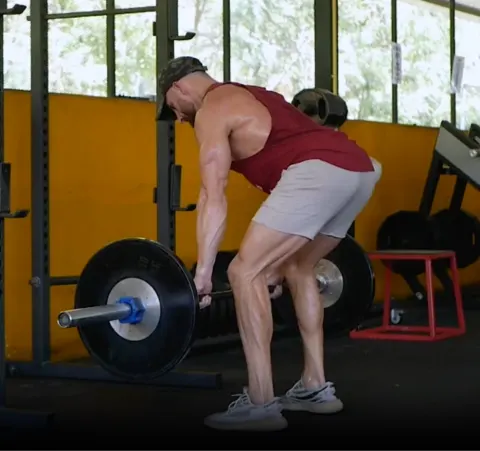
Upper Back, Lats · Barbell
- Sets
- 5
- Reps
- 6–10
- Rest
- 120s
- Effort
- RPE 8
-
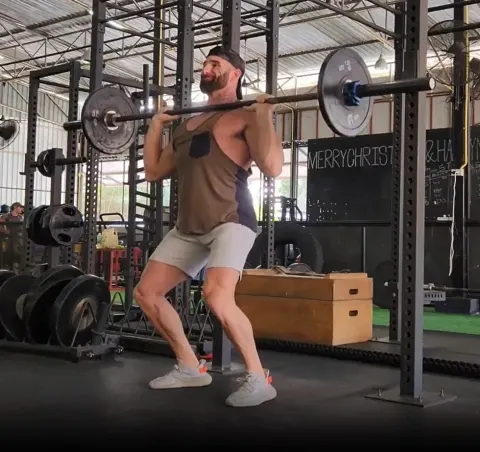
Front Delts, Triceps · Barbell
- Sets
- 3
- Reps
- 8–12
- Rest
- 90s
- Effort
- RPE 8
-
Lats, Upper Back · Pull-Up Bar
- Sets
- 3
- Reps
- 8–12
- Rest
- 90s
- Effort
- RPE 8


Day 2
Lower A
Squat focus
-
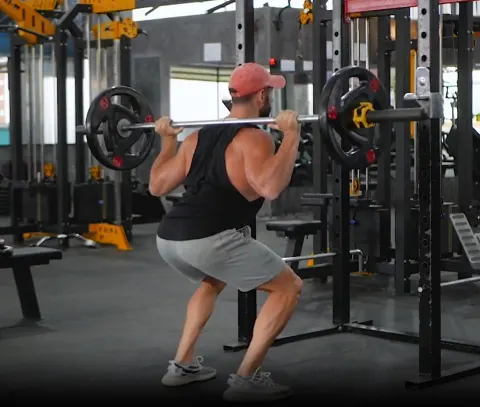
Quads, Glutes · Barbell
- Sets
- 5
- Reps
- 6–10
- Rest
- 120s
- Effort
- RPE 8
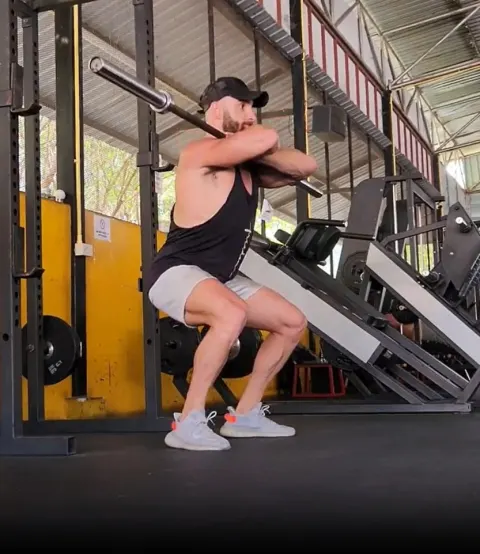
swap: Goblet Squat, Leg Press, Barbell Front Squat
-
Glutes, Quads, Adductors · Barbell
- Sets
- 3
- Reps
- 8–12
- Rest
- 90s
- Effort
- RPE 8
-
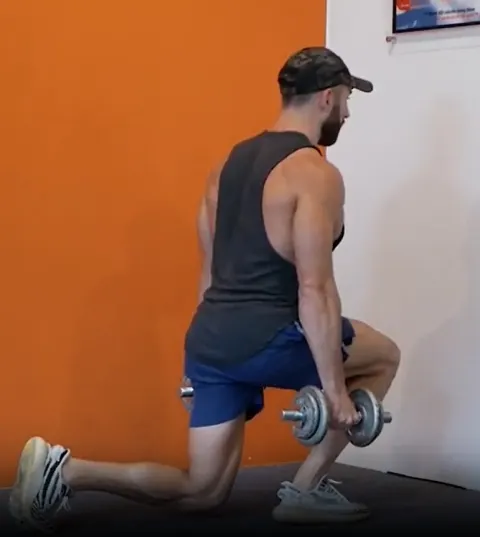
Quads, Glutes · Dumbbell
- Sets
- 3
- Reps
- 8–12 / side
- Rest
- 90s
- Effort
- RPE 8
-
Glutes · Barbell
- Sets
- 3
- Reps
- 10–15
- Rest
- 60s
- Effort
- RPE 8–9
-
Calves · Machine
- Sets
- 3
- Reps
- 10–15
- Rest
- 60s
- Effort
- RPE 8–9
swap: Standing Calf Raise, Dumbbell Calf Raise, Single-Leg Calf Raise
-
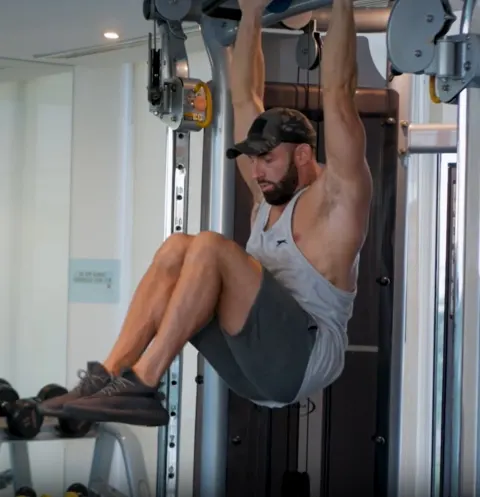
Core, Hip Flexors · Pull-Up Bar
- Sets
- 3
- Reps
- 12–15
- Rest
- 60s
- Effort
- controlled


Day 3
Upper B
Shoulders + back, volume bias
-
Lats, Upper Back · Pull-Up Bar
- Sets
- 5
- Reps
- 6–10
- Rest
- 120s
- Effort
- RPE 8
-
Front Delts, Chest · Barbell
- Sets
- 5
- Reps
- 6–10 / side
- Rest
- 120s
- Effort
- RPE 8
swap: Dumbbell Shoulder Press, Kettlebell Press, Overhead Press
-
Chest, Front Delts · Barbell
- Sets
- 3
- Reps
- 8–12
- Rest
- 90s
- Effort
- RPE 8
swap: Incline Dumbbell Press, Decline Push-Up, Machine Chest Press
-
Upper Back, Lats · Barbell
- Sets
- 3
- Reps
- 8–12
- Rest
- 90s
- Effort
- RPE 8



Day 4
Lower B
Hinge focus
-
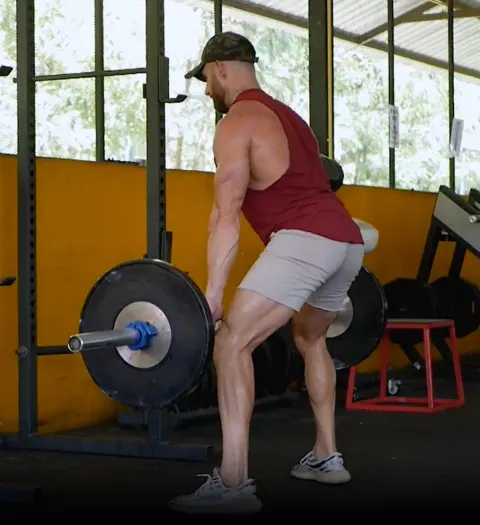
Hamstrings, Glutes, Lower Back · Barbell
- Sets
- 5
- Reps
- 6–10
- Rest
- 120s
- Effort
- RPE 8
swap: Banded Good Morning, Barbell Romanian Deadlift, Bodyweight Hip Hinge
-
Quads, Glutes · Barbell
- Sets
- 3
- Reps
- 8–12
- Rest
- 90s
- Effort
- RPE 8
-
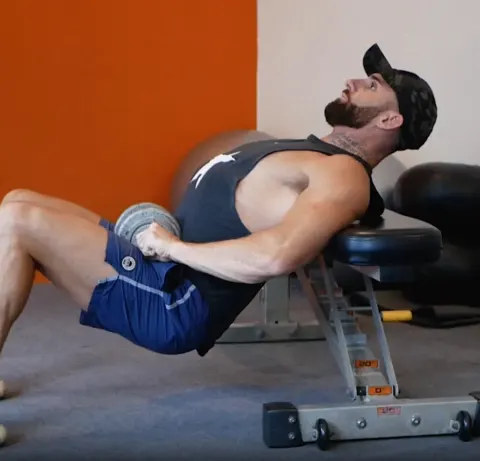
Glutes · Dumbbell
- Sets
- 3
- Reps
- 8–12
- Rest
- 90s
- Effort
- RPE 8
swap: Hip Thrust, Barbell Hip Thrust, Glute Bridge
-
Hamstrings · Machine
- Sets
- 3
- Reps
- 10–15
- Rest
- 60s
- Effort
- RPE 8–9
swap: Seated Leg Curl, Banded Hamstring Curl, Nordic Hamstring Curl
-
Calves · Dumbbell
- Sets
- 3
- Reps
- 10–15
- Rest
- 60s
- Effort
- RPE 8–9
swap: Standing Calf Raise, Single-Leg Calf Raise, Seated Calf Raise
-
Core · Cable
- Sets
- 3
- Reps
- 12–15
- Rest
- 60s
- Effort
- controlled
swap: Crunch, Reverse Crunch, Ab Wheel Rollout




8-week progression: what to change each week
Same exercises for the whole block. Weeks move the reps, then the load; the last week is a deload.
| Week | Load | Reps | Effort | What to watch |
|---|---|---|---|---|
| 1 | Starting weight | bottom of range (6–8) | RPE 7 | Pick a weight you could do 3 more reps with. |
| 2 | Same weight | +1 rep per set (8–9) | RPE 8 | Same exercises, same order; only the reps move. |
| 3 | Same weight | top of range (9–10) | RPE 8 | All sets at the top of the range → add load next week. Missed a set? Repeat the week. |
| 4 | +2.5 kg (5 lb) | bottom of range (6–8) | RPE 8 | New weight feels hard at low reps; that is the plan working. |
| 5 | Same weight | +1 rep per set (8–9) | RPE 8 | Keep rest periods the same. |
| 6 | Same weight | top of range (9–10) | RPE 8–9 | Second time at the top: take the last set of each main lift to 1 rep in reserve. |
| 7 | +2.5 kg (5 lb) | bottom of range (6–8) | RPE 8 | Bodyweight moves: slow the lowering phase to 3 s or move to the harder variation. |
| 8 | Deload: 60 % | bottom of range | RPE 5–6 | Half the sets, then regenerate a variation or change the split for the next block. |
How to progress
- Double progression: hit the top of the rep range on every set, then add weight (2.5–5 %) and start from the bottom of the range.
- Bodyweight moves: add reps, then slow the tempo (3 sec down), then move to a harder variation.
- Deload every 6–8 weeks: same exercises, half the sets.
Notes for this plan
- Sessions can move between days; keep at least one rest day between hard sessions for the same muscles.
A bulk is a planned gaining phase: you eat 250–500 kcal above maintenance, raise your training volume in steps over several months, and accept a slow climb on the scale so that as much of the gain as possible is muscle. The training matters as much as the food. A surplus without rising workloads is only an efficient way of getting fatter.
Who should bulk, and who should wait
The broader muscle building workout plan explains how growth works and is the right page for your first year in the gym, when muscle arrives at maintenance and a dedicated gaining phase is unnecessary.
A bulk makes sense when all three of these are true:
- You have at least a year of consistent training behind you, and your lifts no longer rise every week.
- You are lean enough that a few extra kilos will not bother you. If not, run the cutting workout plan first.
- You can train four or more days a week for several months without long gaps.
Naturally thin and struggling to eat enough? The workout plan for skinny guys deals with that problem specifically.
How the example week is built
The example week above is written at advanced level as an upper/lower split over four days: Monday, Tuesday, Thursday and Friday, 46–48 minutes a session. Its defining feature is concentration. An experienced lifter needs more hard sets on fewer lifts, not a longer exercise list.
- Upper days hold only four lifts. Two main lifts get 5 sets of 6–10, resting 2 minutes between them, then two secondary lifts get 3 sets of 8–12 with 90 seconds. One upper day leads with the bench press and a barbell row. The other leads with a vertical pull and a single-arm press, followed by an incline press and a second row.
- Lower days hold six. One main lift for 5 sets of 6–10, two secondary lifts for 3 sets of 8–12, then a glute or hamstring accessory, a calf raise and a core exercise for 3 sets each. One day is led by the back squat, the other by a hip hinge.
That comes to 16 sets on an upper day, 20 on a lower day and 72 across the week.
One thing the week does not contain is direct arm work. Biceps and triceps are trained through 16 weekly sets of pulling and 16 of pressing, which is enough for many people. If your arms lag, add 2–3 sets of curls and pushdowns at the end of each upper day. The gym arm workout has options.
Volume progression across the bulk
Extra food raises the amount of work you can recover from. A bulk is the time to use that, in steps and not all at once.
| Block | Weeks | What changes | Pulling or pressing sets per week |
|---|---|---|---|
| 1 | 1–8 | Run the week as written; add reps, then load | 16 |
| 2 | 9–16 | Add one set to each secondary lift | 18 |
| 3 | 17–24 | Add another set to the secondary lifts, or direct arm work | Up to 20 |
Inside a block, progressive overload comes from reps and load. Start each lift at the bottom of its range. When every set reaches the top, add 2.5 kg and begin again. Never add sets and load to the same lift in the same week, or you will not know which one stalled you.
Each eight-week block ends with a deload: one week with the loads cut to roughly 60 % and the set count halved. The deload week guide explains why this helps a hard gaining phase last.
Stop adding sets at around 20 per muscle. Beyond that, most lifters collect fatigue faster than muscle, for reasons laid out in how many sets per muscle group per week.
How big the surplus should be
- Size: 250–500 kcal above maintenance. Estimate maintenance with the TDEE calculator, then check it against two weeks of real scale data before you add anything.
- Protein: 1.6–2.2 g for every kilo of body weight, which the protein intake calculator turns into a daily figure.
- The rest: mostly carbohydrate, which fuels the higher training volume, with a moderate amount of fat.
- Rate of gain: 0.25–0.5 % of body weight a week. At 80 kg that is 0.2–0.4 kg. The more years you have trained, the closer to the bottom of the range you belong.
Judge by trends. Weigh most mornings, average the week, and compare three weeks at a time. Under target: add 100–150 kcal. Over target: remove the same amount. Single readings mean nothing after a salty dinner.
Lean bulk or dirty bulk
| Lean bulk | Dirty bulk | |
|---|---|---|
| Surplus | 250–500 kcal, tracked | Whatever fits, untracked |
| Weekly gain | 0.25–0.5 % of body weight | Often 1 % or more |
| What the gain is made of | A high share of muscle | Similar muscle, far more fat |
| The cut afterwards | Short, often 6–10 weeks | Long, often several months |
| Training quality | Stable | Good early, sluggish later |
The body can only build so much muscle in a month, and food cannot raise that ceiling. Once the ceiling is covered, every further calorie is stored as fat. A dirty bulk looks faster on the scale and is slower over a year, because so much of that year is then spent dieting.
When to stop
Decide the exit before you start. End the bulk when any of these is true:
- The planned length is up. Four to eight months is a typical span.
- Your waist is outrunning your lifts. Several centimetres on the tape while the logbook stands still means the surplus is feeding fat.
- You have reached your personal ceiling for body fat. Many lifters set it at the point where the outline of the upper abs disappears.
- Eating has become a chore. Weeks of poor appetite, digestion or sleep are a signal, not a test of character.
Then spend two to four weeks at maintenance before any cut. Training continues unchanged through all of it.
Mistakes that turn a bulk into fat gain
- Bulking in your first year. Beginners grow without a surplus, and a large one only adds fat.
- Eating more but training the same. If the logbook is not moving, the extra calories have nowhere useful to go.
- Adding sets, exercises and days together. Change one thing per block.
- Dropping all conditioning. Two easy cardio sessions and a daily walk keep your work capacity and your appetite regular.
- Tracking only body weight. Measure your waist monthly and follow two or three key lifts. The one rep max calculator lets you compare sets done at different rep counts.
Four, five or six days
- 4 days: the 4-day gym plan for muscle gain keeps this split and is written for a less experienced lifter.
- 5 days: the 5-day gym plan for muscle gain spreads the week over one more session, which helps once the set count climbs in blocks two and three.
- 6 days: the 6-day gym plan for muscle gain runs push/pull/legs twice a week. It has the most room for volume and the highest recovery cost.
These catalog plans are built at beginner level. For a week like the example, open the generator and set your level to advanced.
Bulking Workout Plan: all 21 plans












- 2-Day Gym Workout Plan for Muscle Gain (Women)
- 2-Day Gym Workout Plan for Muscle Gain (Men)
- 2-Day Gym Workout Plan for Muscle Gain (Over 50)
- 3-Day Gym Workout Plan for Muscle Gain (Women)
- 3-Day Gym Workout Plan for Muscle Gain (Men)
- 3-Day Gym Workout Plan for Muscle Gain (Over 50)
- 4-Day Gym Workout Plan for Muscle Gain (Women)
- 4-Day Gym Workout Plan for Muscle Gain (Men)
- 4-Day Gym Workout Plan for Muscle Gain (Over 50)
- 5-Day Gym Workout Plan for Muscle Gain (Men)
- 6-Day Gym Workout Plan for Muscle Gain (Women)
- 6-Day Gym Workout Plan for Muscle Gain (Men)
Related programs
Frequently asked questions
How many calories over maintenance should I eat on a bulk?
About 250 to 500 kcal a day. The smaller figure suits lifters with several years of training, who build muscle slowly and gain fat easily. The larger one suits newer or very lean lifters. Start in the middle, watch your weekly average weight for three weeks, and adjust by 100 to 150 kcal if the trend is too fast or too slow.
How fast should I gain weight when bulking?
Aim for 0.25 to 0.5 percent of your body weight a week. For an 80 kg lifter that is 0.2 to 0.4 kg, or roughly 1 to 1.5 kg a month. Experienced lifters should sit at the bottom of that range. Gaining faster does not speed up muscle growth. It mostly adds fat that has to be dieted off later.
What is the difference between a lean bulk and a dirty bulk?
A lean bulk uses a small, tracked surplus and accepts slow scale gains. A dirty bulk means eating as much as possible with no ceiling. Both supply enough energy to build muscle, but muscle growth has a speed limit, so the extra food in a dirty bulk is stored as fat and makes the following cut longer.
How long should a bulk last?
Long enough for slow tissue to accumulate, which usually means four to eight months. Shorter phases leave too little time for measurable growth once you are past the beginner stage. End it earlier if your waist is growing faster than your lifts, or if you are no longer comfortable with the amount of fat you have gained.
Do I need to do cardio while bulking?
It is worth keeping a little. Two easy sessions of 20 to 30 minutes a week, plus 7,000 to 8,000 daily steps, maintain your fitness and work capacity without getting in the way of growth. Simply eat enough to cover them. Dropping all activity makes the later cut harder and makes long lifting sessions feel worse.