Kettlebell Workout Plan: One Bell, Whole Body, Three Days a Week
A kettlebell workout plan for fat loss with one bell: how the three-day week is built, the squat, press, row and hinge that matter, and which size to buy.
Example week
3-Day Kettlebell Workout Plan for Weight Loss
A complete week you can start today: exercises, sets, reps and rest for every session, with swaps for each exercise. Open this plan on its own page (PDF) →
Split
Full Body
Sessions / week
3
Avg. session
39 min
Schedule
Mon · Wed · Fri
Warm-up (every session, ~6 min)
- 3–5 min easy cardio: brisk walk, bike, jump rope or marching in place.
- Dynamic mobility: 10 leg swings each way, 10 hip circles, 10 arm circles, 8 cat-cows.
- Ramp-up sets on the first exercise: 1–2 light sets of 8 before your working sets.
Day 1
Full Body A
Squat + push + pull
-
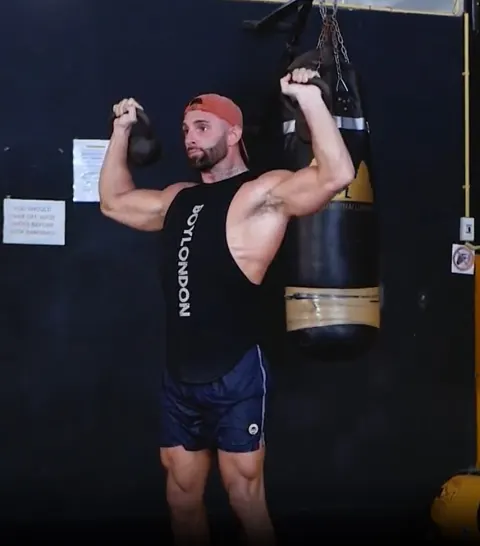
Chest, Triceps · Kettlebell
- Sets
- 2
- Reps
- 8–12 / side
- Rest
- 75s
- Effort
- RPE 7–8
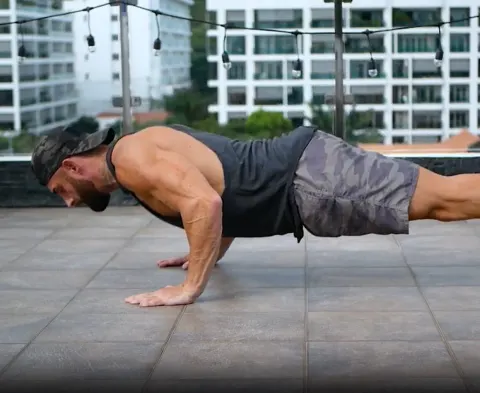
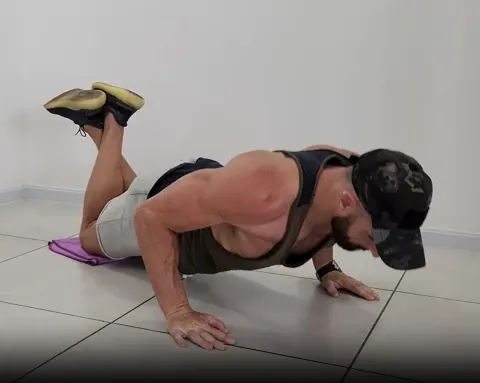
swap: Push-Up, Kettlebell Press, Incline Push-Up
-
Lats, Upper Back · Kettlebell
- Sets
- 2
- Reps
- 8–12 / side
- Rest
- 75s
- Effort
- RPE 7–8
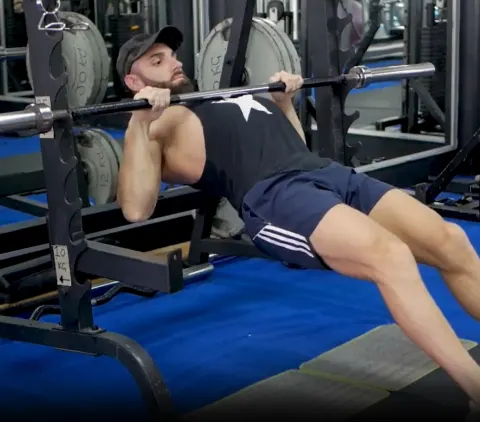
swap: Doorway Row, Inverted Row
-
Core, Hip Flexors · Bodyweight
- Sets
- 3
- Reps
- 30–60 sec
- Rest
- 45s
- Effort
- controlled
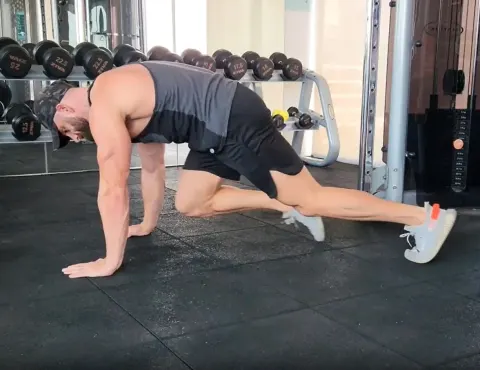
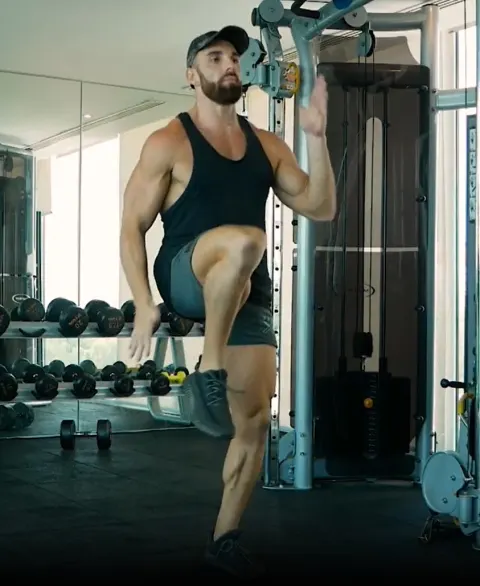
swap: Plank Shoulder Tap, High Knees, Bear Crawl
-
Hip Flexors, Quads · Bodyweight
- Sets
- 6
- Reps
- 30 sec on / 30 sec off
- Rest
- 30s
- Effort
- hard but steady
swap: Jumping Jack, Mountain Climber, Jump Rope
Day 2
Full Body B
Hinge + vertical push/pull
-
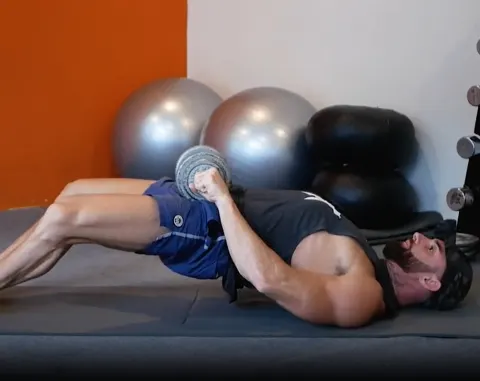
Hamstrings, Glutes · Bodyweight
- Sets
- 2
- Reps
- 8–12
- Rest
- 75s
- Effort
- RPE 7–8
swap: Bodyweight Hip Hinge, Single-Leg Hip Hinge, Kettlebell Deadlift
-
Upper Back, Lats · Bodyweight
- Sets
- 2
- Reps
- 8–12
- Rest
- 75s
- Effort
- RPE 7–8
swap: Doorway Row, Reverse Snow Angel
-
Quads, Glutes · Bodyweight
- Sets
- 2
- Reps
- 10–15 / side
- Rest
- 60s
- Effort
- RPE 7–8
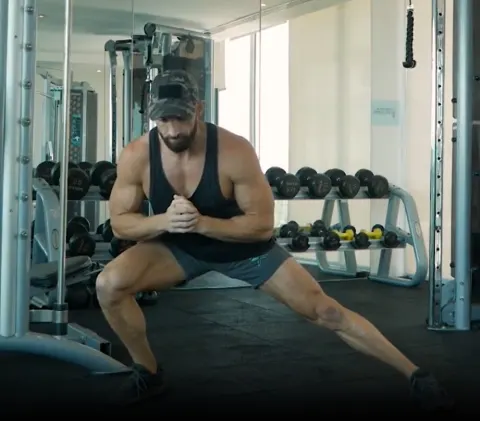
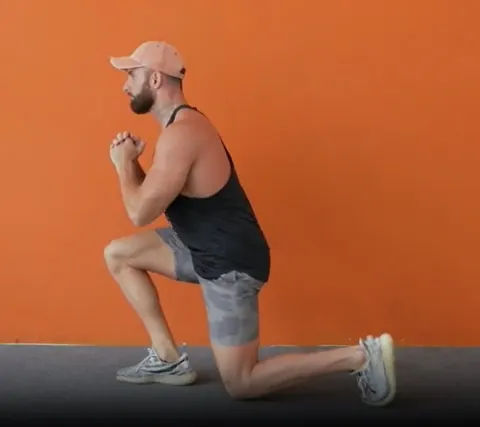
swap: Reverse Lunge, Forward Lunge, Split Squat
-
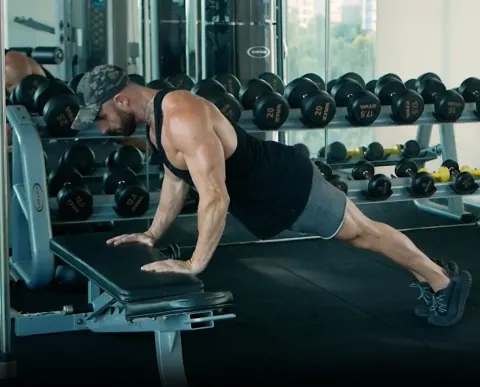
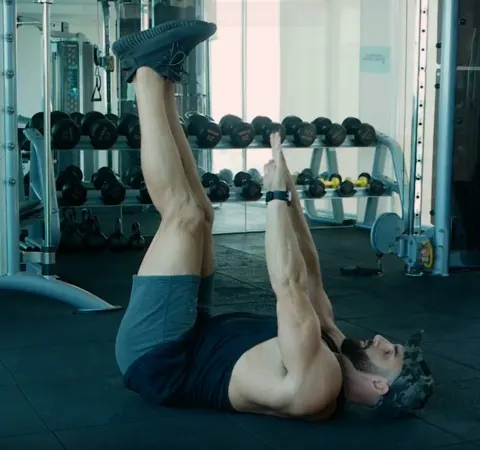
Core · Bodyweight
- Sets
- 3
- Reps
- 15–20
- Rest
- 45s
- Effort
- controlled
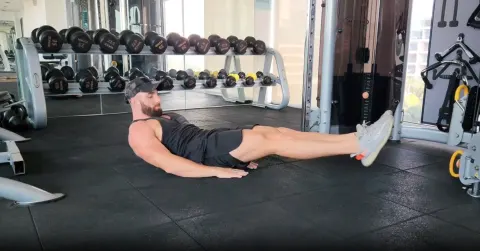
swap: Crunch, Reverse Crunch, Lying Leg Raise
-
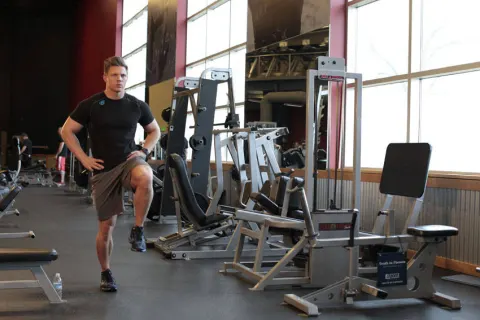
Hip Flexors, Quads · Bodyweight
- Sets
- 6
- Reps
- 30 sec on / 30 sec off
- Rest
- 30s
- Effort
- hard but steady
swap: Jumping Jack, Mountain Climber, Jump Rope
Day 3
Full Body C
Single-leg + chest + back
-
Glutes, Adductors, Quads · Bodyweight
- Sets
- 2
- Reps
- 8–12 / side
- Rest
- 75s
- Effort
- RPE 7–8
swap: Forward Lunge, Reverse Lunge, Split Squat
-
Upper Back, Lats · Bodyweight
- Sets
- 2
- Reps
- 8–12
- Rest
- 75s
- Effort
- RPE 7–8
swap: Inverted Row, Reverse Snow Angel
-
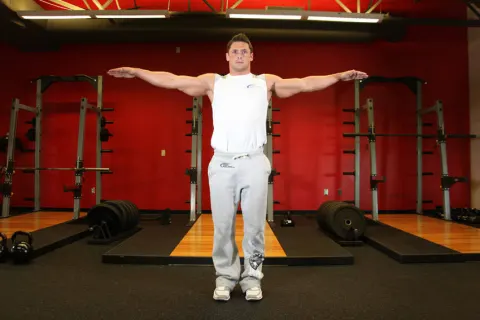
Side Delts · Bodyweight
- Sets
- 3
- Reps
- 30–60 sec
- Rest
- 45s
- Effort
- RPE 8
-
Core, Hip Flexors · Bodyweight
- Sets
- 3
- Reps
- 30–60 sec
- Rest
- 45s
- Effort
- controlled
swap: Lying Leg Raise, Dead Bug, Bicycle Crunch
-
Hip Flexors, Quads · Bodyweight
- Sets
- 6
- Reps
- 30 sec on / 30 sec off
- Rest
- 30s
- Effort
- hard but steady
swap: Jumping Jack, Mountain Climber, Jump Rope
8-week progression: what to change each week
Same exercises for the whole block. Weeks move the reps, then the load; the last week is a deload.
| Week | Load | Reps | Effort | What to watch |
|---|---|---|---|---|
| 1 | Light: learn the movements | bottom of range (8) | RPE 6–7 | Stop every set 3 reps before failure; film one set per exercise to check form. |
| 2 | Same weight | +1 rep per set (10) | RPE 7–8 | Same exercises, same order; only the reps move. |
| 3 | Same weight | top of range (12) | RPE 8 | All sets at the top of the range → add load next week. Missed a set? Repeat the week. |
| 4 | next dumbbell / harder variation | bottom of range (8) | RPE 7–8 | New weight feels hard at low reps; that is the plan working. |
| 5 | Same weight | +1 rep per set (10) | RPE 8 | Shave 10 s off every rest period. |
| 6 | Same weight | top of range (12) | RPE 8 | Second time at the top: take the last set of each main lift to 1 rep in reserve. |
| 7 | next dumbbell / harder variation | bottom of range (8) | RPE 8 | Bodyweight moves: slow the lowering phase to 3 s or move to the harder variation. |
| 8 | Deload: 60 % | bottom of range | RPE 5–6 | Half the sets, then regenerate a variation or change the split for the next block. |
How to progress
- First 2 weeks: focus on form with light weights, stop each set 3 reps before failure.
- Rest less, not lift less: shave 10 seconds off rest periods every two weeks until you hit the targets above.
- When all sets reach the top of the range, add weight or reps, never both at once.
- Daily steps matter more than any finisher: aim for 8 000–10 000 on non-training days.
Notes for this plan
- Home setup: if a weight gets too light, slow the lowering phase to 3–4 seconds or add a pause at the hardest point.
- Sessions can move between days; keep at least one rest day between hard sessions for the same muscles.
One kettlebell can cover a full week of training: a deadlift and later a swing for the hips, a goblet squat for the legs, a press, a row and a carry. That is five movements, about 2 × 2 m of floor and roughly 40 minutes, three times a week. The example plan is aimed at fat loss, which is where the kettlebell is at its best.
Why the example week is built for fat loss
The example week above runs full body on Monday, Wednesday and Friday, about 40 minutes a session. The strength work uses 8–15 reps with short rests of 45–75 seconds, and each session closes with a conditioning finisher: 6 rounds of 30 seconds of work and 30 seconds of rest.
Look closely and you will see that only the first day is kettlebell from start to finish: squat, floor press, row, deadlift and press. At beginner level the generator fills the other two days mostly with bodyweight hinges, lunges, push-up variations and rows under a table or in a doorway. That gives grip and lower back two easier days while the hinge is still new. There are no swings yet, and the finisher is a bodyweight drill.
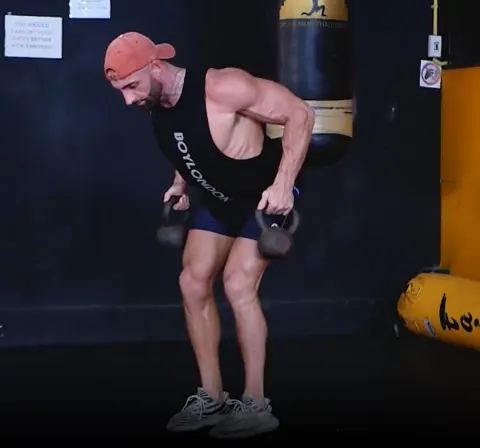
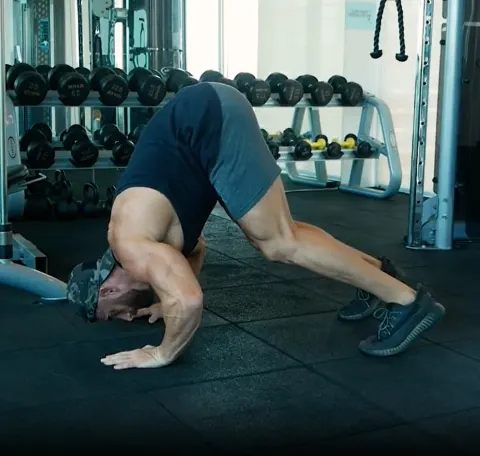
If you want the bell in your hands every session, swap like for like within the same movement pattern: a kettlebell deadlift for a bodyweight hinge, a floor press for a push-up variation, a kettlebell row for a doorway row, a kettlebell press for a pike push-up. Hold the bell at your chest for lunges. Sets, reps and rests stay as written.
During a diet the lifting has one job: giving your body a reason to keep its muscle while calories are low. The finisher and the short rests add some energy expenditure, but they are not the engine. A 45-minute session burns about 200–350 kcal. The deficit itself comes from eating 300–500 kcal under maintenance, which the calorie deficit calculator will size for you, and from 8,000–10,000 steps on the days you do not train.
Kettlebells fit this well for a plain reason: there are no plates to change. Moving from squats to rows takes 5 seconds, so short rests are realistic and the session stays dense without turning sloppy.
Five movements, one bell
| Movement | Pattern | What it trains | How one bell fits |
|---|---|---|---|
| Deadlift first, swing later | Hinge | Glutes, hamstrings, grip, conditioning | Your strongest pattern; choose the bell for this |
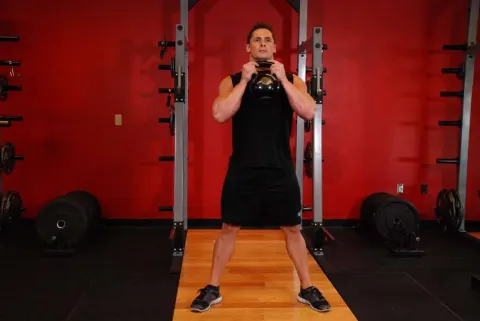
| Goblet squat | Squat | Quads, glutes, upper back | Bell at the chest; pause at the bottom when it gets light |
| Press | Vertical push | Shoulders, triceps, trunk | One arm at a time; fewer reps if the bell is heavy |
| Row | Horizontal pull | Lats, upper back, biceps | One arm, free hand on a chair or knee |
| Carry | Loaded walk | Grip, trunk, posture | Suitcase-style in one hand, 20–30 m per side |
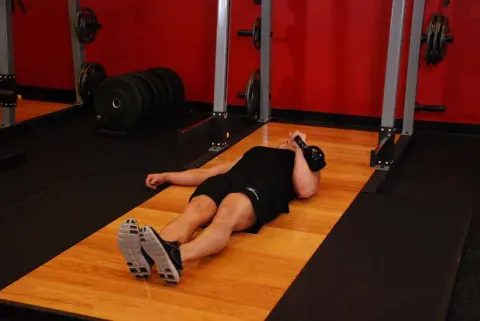
The floor press covers horizontal pushing on kettlebell days, and push-ups do that job on the others. The beginner week contains the first four rows of this table; the swing and the carry are what you add once the basics are solid. If a session has to be cut short, keep the hinge, the squat and the press.
Which bell to start with
Buy one bell and buy it for the lower body.
- Men new to training: 12–16 kg
- Women new to training: 8–12 kg
- With some lifting history: 16–20 kg for men, 12–16 kg for women
Pressing usually needs one size lighter than squatting and deadlifting, and the plan lists the press for fairly high reps. With a single bell, handle that by pressing with both hands, or by doing as many clean reps per arm as you can with 2–3 in reserve until you grow into the listed range. Sizes and the learning order for each lift are covered in our kettlebell training guide for beginners.
The hinge is the skill that matters
The deadlift, the swing and the bent-over position of the row all depend on the same action: hips travel back, shins stay close to vertical, the spine keeps its shape. Get that right and swings are safe and productive. Get it wrong and you are doing a tiring front raise with your lower back.
That is why the beginner week trains the kettlebell deadlift and bodyweight hinges and leaves the swing out. Two checks tell you the hinge is ready for more:
- You can do 15 deadlifts and feel them in the hamstrings and glutes, not in the lower back.
- Standing a foot-length from a wall, you can tap it with your hips without your knees drifting forward.
Then learn the swing in sets of 10, to chest height, with relaxed arms, stopping each set while the last rep still snaps as crisply as the first. Once it is solid, swings can take over the finisher: the same 30 seconds on, 30 seconds off, with a bell instead of fast feet. That swap also makes the session quieter, which matters in a flat.
Getting past the 4 kg jump
Most bells come in 4 kg steps. From 12 kg to 16 kg that is a 33 % increase, far more than the 2.5–5 % a normal progression adds. Weight-loss plans already follow a strict rule here: add weight or reps, never both at once. With kettlebells, stretch the reps stage out:
- Work every set to the top of its rep range.
- Shave 10 seconds off the rest periods every two weeks until you reach the plan’s targets.
- Add a 3–4 second lowering phase or a 2-second pause at the bottom of squats and presses.
- Buy the next bell. Use it first for deadlifts and squats, the patterns with the most strength in hand, and keep the old one for presses.
Expect to spend 8–12 weeks on a bell before the next one is justified. That is normal, not slow.
Food, steps and recovery
- Protein: 1.6–2.2 g per kg of body weight per day, to hold muscle in a deficit.
- Rate of loss: 0.3–0.5 kg per week. Faster usually costs strength.
- Steps: a daily walk does more for the weekly total than a longer finisher. The walking calorie calculator shows your numbers.
- Sleep: 7–9 hours. Grip and hinge quality drop quickly when you are short of it.
- Deload: every 6–8 weeks, halve the sets for one week.
What kettlebell plans cannot do
Kettlebell plans in the catalog cover weight loss, muscle gain and general fitness on 2–5 days a week. There are no 6-day versions and no dedicated strength plans, because heavy sets of 4–6 reps need load added in small steps and a single bell cannot provide that. For that goal, see the strength training program.
Muscle gain is possible but needs more than one size: the 4-day kettlebell plan for muscle gain works best with a lighter bell for presses and a heavier one for the lower body.
Common kettlebell plan mistakes
- Turning every session into a circuit. Take the 45–75 seconds listed. Strength sets done breathless become poor cardio.
- Swinging with a squat. If the bell drops below your knees, your hips are not going back far enough.
- A bell bought for the press. It will be too light for everything else within a month.
- Counting the finisher as the workout. Six minutes of intervals do not replace the strength work before them.
- Skipping the bodyweight days. They are part of the plan, not filler. Swap in bell versions if you like, but do the sessions.
Where to go from here
Run the 3-day kettlebell plan for weight loss, which is the example week in full, for 8 weeks before changing its structure. If fat loss is the main goal and you are still choosing equipment, the weight loss workout plan page compares the options. When one bell stops being enough, a second bell or a pair of dumbbells is the next step, and the dumbbell workout plan shows how the week changes.
Kettlebell Workout Plan: all 54 plans
- 2-Day Kettlebell Workout Plan for Weight Loss (Men)
- 2-Day Kettlebell Workout Plan for Weight Loss (Over 50)
- 2-Day Kettlebell Workout Plan for Muscle Gain
- 2-Day Kettlebell Workout Plan for Muscle Gain (Beginners)
- 2-Day Kettlebell Workout Plan for Muscle Gain (Women)
- 2-Day Kettlebell Workout Plan for Muscle Gain (Men)
- 2-Day Kettlebell Workout Plan for Muscle Gain (Over 50)
- 2-Day Kettlebell Workout Plan for General Fitness
- 2-Day Kettlebell Workout Plan for General Fitness (Beginners)
- 2-Day Kettlebell Workout Plan for General Fitness (Women)
- 2-Day Kettlebell Workout Plan for General Fitness (Men)
- 2-Day Kettlebell Workout Plan for General Fitness (Over 50)
- 3-Day Kettlebell Workout Plan for Weight Loss (Women)
- 3-Day Kettlebell Workout Plan for Weight Loss (Men)
- 3-Day Kettlebell Workout Plan for Weight Loss (Over 50)
- 3-Day Kettlebell Workout Plan for Muscle Gain
- 3-Day Kettlebell Workout Plan for Muscle Gain (Beginners)
- 3-Day Kettlebell Workout Plan for Muscle Gain (Women)
- 3-Day Kettlebell Workout Plan for Muscle Gain (Men)
- 3-Day Kettlebell Workout Plan for Muscle Gain (Over 50)
- 3-Day Kettlebell Workout Plan for General Fitness
- 3-Day Kettlebell Workout Plan for General Fitness (Beginners)
- 3-Day Kettlebell Workout Plan for General Fitness (Women)
- 3-Day Kettlebell Workout Plan for General Fitness (Men)
- 3-Day Kettlebell Workout Plan for General Fitness (Over 50)
- 4-Day Kettlebell Workout Plan for Weight Loss (Women)
- 4-Day Kettlebell Workout Plan for Weight Loss (Men)
- 4-Day Kettlebell Workout Plan for Weight Loss (Over 50)
- 4-Day Kettlebell Workout Plan for Muscle Gain
- 4-Day Kettlebell Workout Plan for Muscle Gain (Beginners)
- 4-Day Kettlebell Workout Plan for Muscle Gain (Women)
- 4-Day Kettlebell Workout Plan for Muscle Gain (Men)
- 4-Day Kettlebell Workout Plan for Muscle Gain (Over 50)
- 4-Day Kettlebell Workout Plan for General Fitness
- 4-Day Kettlebell Workout Plan for General Fitness (Beginners)
- 4-Day Kettlebell Workout Plan for General Fitness (Women)
- 4-Day Kettlebell Workout Plan for General Fitness (Men)
- 4-Day Kettlebell Workout Plan for General Fitness (Over 50)
- 5-Day Kettlebell Workout Plan for Weight Loss (Men)
- 5-Day Kettlebell Workout Plan for Muscle Gain
- 5-Day Kettlebell Workout Plan for Muscle Gain (Women)
- 5-Day Kettlebell Workout Plan for Muscle Gain (Men)
- 5-Day Kettlebell Workout Plan for General Fitness
- 5-Day Kettlebell Workout Plan for General Fitness (Women)
- 5-Day Kettlebell Workout Plan for General Fitness (Men)
Related programs
Frequently asked questions
Can you lose weight with just a kettlebell?
A kettlebell handles the training side: three sessions a week keep your muscle and burn roughly 200–350 kcal each. The weight itself comes off through a deficit of 300–500 kcal a day, which is mostly food and daily steps. Expect about 0.3–0.5 kg per week when both are in place.
What size kettlebell should I buy for a workout plan?
For a first bell, most men new to training do well with 12–16 kg and most women with 8–12 kg. Choose by the swing and squat, not the press. If the bell feels heavy overhead, press it with two hands or for fewer reps until your shoulders catch up.
Is a 20-minute kettlebell workout enough?
It is enough to maintain fitness and far better than nothing. For steady progress, plan on about 40 minutes three times a week: a warm-up, six strength and core movements and a 6-minute finisher. On a short day, do the hinge, the squat and the press, then stop.
How many times a week should I train with kettlebells?
Three non-consecutive days is the standard, for example Monday, Wednesday and Friday. Two days work for maintenance, four allow an upper/lower split, and five is the most the plans go to. Grip and lower back work in nearly every kettlebell movement, so they need the days off.
Are kettlebell swings enough on their own?
No. Swings train the hips, hamstrings and grip and raise your heart rate, but they miss pushing, pulling and most quad work. A complete week adds a goblet squat, a press, a row and a carry. Treat the swing as one of five movements, not as the whole plan.