Workout Plan for Seniors: Strength and Balance in Two Days a Week
A workout plan for seniors: two bodyweight sessions a week, easier swaps such as sit-to-stands and wall push-ups, and balance drills to do beside a chair.
Example week
2-day example plan
A complete week you can start today: exercises, sets, reps and rest for every session, with swaps for each exercise.
Split
Full Body
Sessions / week
2
Avg. session
35 min
Schedule
Mon · Thu (or any two non-consecutive days)
Warm-up (every session, ~6 min)
- 3–5 min easy cardio: brisk walk, bike, jump rope or marching in place.
- Dynamic mobility: 10 leg swings each way, 10 hip circles, 10 arm circles, 8 cat-cows.
- Ramp-up sets on the first exercise: 1–2 light sets of 8 before your working sets.
- Add 2 extra minutes of walking and one slow set of each main movement: joints warm up more slowly after 50.
Day 1
Full Body A
Squat + push + pull
-
Triceps · Bodyweight
- Sets
- 2
- Reps
- 8–10
- Rest
- 120s
- Effort
- RPE 7
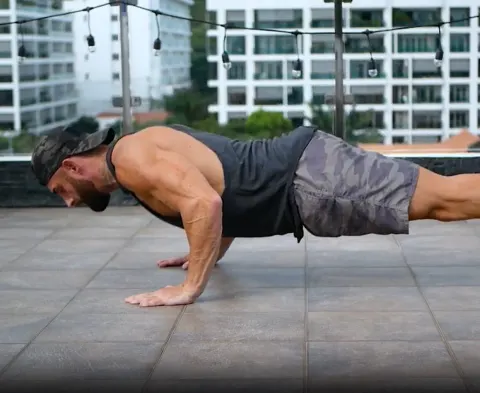
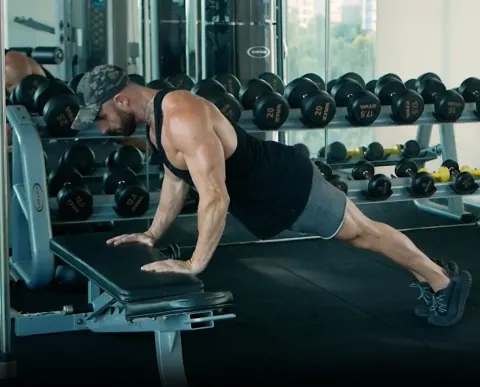
swap: Incline Push-Up, Knee Push-Up, Push-Up
-
Upper Back, Lats · Bodyweight
- Sets
- 2
- Reps
- 8–10
- Rest
- 120s
- Effort
- RPE 7
swap: Doorway Row, Reverse Snow Angel
-
Hamstrings, Glutes · Bodyweight
- Sets
- 2
- Reps
- 8–12
- Rest
- 105s
- Effort
- RPE 7
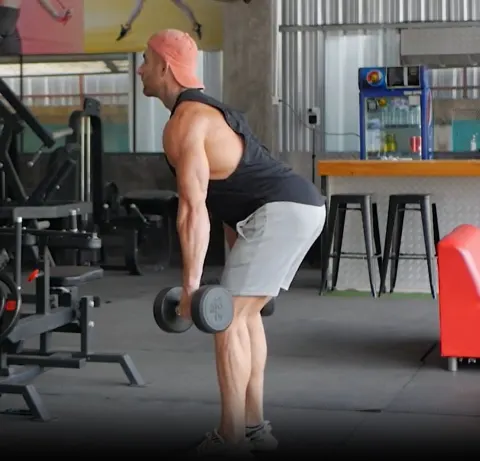
swap: Glute Bridge, Bodyweight Good Morning, Single-Leg Hip Hinge
Day 2
Full Body B
Hinge + vertical push/pull
-
Hamstrings, Glutes · Bodyweight
- Sets
- 2
- Reps
- 8–10
- Rest
- 120s
- Effort
- RPE 7
-
Upper Back, Lats · Bodyweight
- Sets
- 2
- Reps
- 8–10
- Rest
- 120s
- Effort
- RPE 7
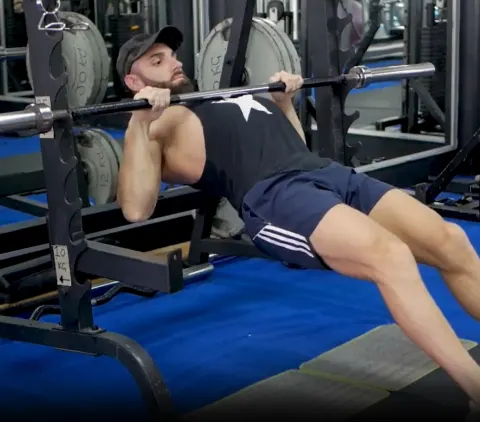
swap: Inverted Row, Reverse Snow Angel
-
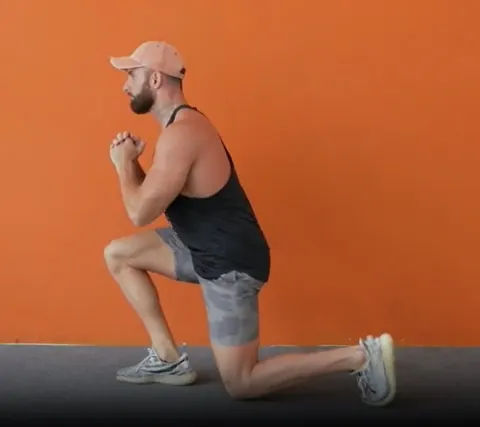
Quads, Glutes · Bodyweight
- Sets
- 2
- Reps
- 8–12 / side
- Rest
- 105s
- Effort
- RPE 7
swap: Split Squat, Step-Up, Forward Lunge
-
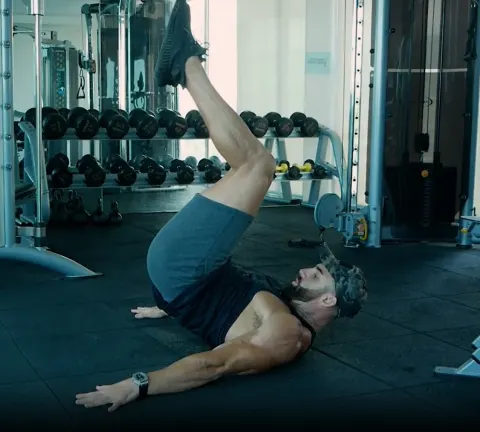
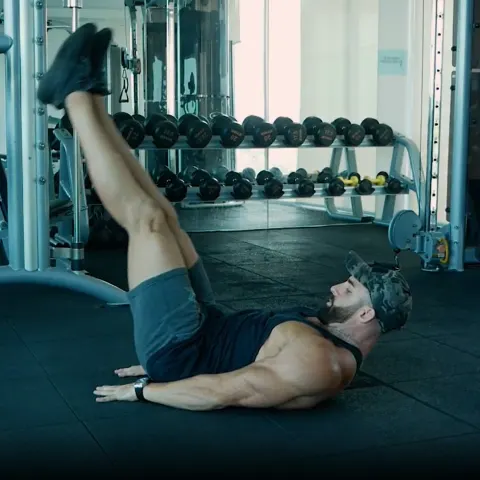
Core, Hip Flexors · Bodyweight
- Sets
- 2
- Reps
- 12–15
- Rest
- 75s
- Effort
- controlled
swap: Reverse Crunch, Dead Bug, Flutter Kick
8-week progression: what to change each week
Same exercises for the whole block. Weeks move the reps, then the load; the last week is a deload.
| Week | Load | Reps | Effort | What to watch |
|---|---|---|---|---|
| 1 | Light: learn the movements | bottom of range (8) | RPE 6–7 | Stop every set 3 reps before failure; film one set per exercise to check form. |
| 2 | Same weight | +1 rep per set (9) | RPE 8 | Same exercises, same order; only the reps move. |
| 3 | Same weight | top of range (10) | RPE 8 | All sets at the top of the range → add load next week. Missed a set? Repeat the week. |
| 4 | next dumbbell / harder variation | bottom of range (8) | RPE 8 | New weight feels hard at low reps; that is the plan working. |
| 5 | Same weight | +1 rep per set (9) | RPE 8 | Keep rest periods the same. |
| 6 | Same weight | top of range (10) | RPE 8–9 | Second time at the top: take the last set of each main lift to 1 rep in reserve. |
| 7 | next dumbbell / harder variation | bottom of range (8) | RPE 8 | Bodyweight moves: slow the lowering phase to 3 s or move to the harder variation. |
| 8 | Deload: 60 % | bottom of range | RPE 5–6 | Half the sets, then regenerate a variation or change the split for the next block. |
How to progress
- First 2 weeks: focus on form with light weights, stop each set 3 reps before failure.
- Double progression: hit the top of the rep range on every set, then add weight (2.5–5 %) and start from the bottom of the range.
- Bodyweight moves: add reps, then slow the tempo (3 sec down), then move to a harder variation.
- Deload every 6–8 weeks: same exercises, half the sets.
Notes for this plan
- Low-impact selection: no jumping, no high knee-stress movements. Swap anything that hurts for one of the listed alternatives.
- Home setup: if a weight gets too light, slow the lowering phase to 3–4 seconds or add a pause at the hardest point.
- Sessions can move between days; keep at least one rest day between hard sessions for the same muscles.
For people in their 60s, 70s and beyond, two short strength sessions a week are enough to make stairs, chairs and shopping bags noticeably easier within a couple of months. The example week above needs no equipment: a Monday and a Thursday session of about 35 minutes each. Some of its exercise picks are demanding for this age group, so this page also shows which easier versions to swap in.
Before you start: a word with your doctor
Get medical clearance first if you have heart disease, high or unstable blood pressure, osteoporosis, diabetes, a joint replacement, frequent dizziness or a history of falls. Take the plan with you. Your doctor may suggest small adjustments.
During any session, stop and seek advice if you feel chest pain, dizziness, sudden breathlessness or sharp joint pain. Tired muscles and mild stiffness the next day are normal and expected.
Why two days, and why no equipment
The over-60 plans on this site are always beginner level, with low-impact movements, two sets per exercise and rests about 30 seconds longer than usual. Two sessions with two or three days between them give joints and tendons time to settle, and twice a week is enough to build strength when you are starting out.
Body weight is the right starting load. Standing up from a chair moves most of your own mass through the thighs and hips, which is real resistance for unconditioned legs. There is nothing to buy, and nothing to drop.
The week has two different sessions. Day A centres on a squat, a push and a pull. Day B centres on a hip hinge, a second pull, a pressing movement at a different angle and a step or lunge. Both end with core work on the floor. This layout is a 2-day full-body split.
The week above: what to keep and what to swap
The generator picks from the whole beginner bodyweight library, and a few of its choices ask too much of many people over 60. Every exercise lists alternatives with the same movement pattern. Where the easier option below is not on that list, do it anyway: the slot matters more than the label.
| In the week above | Keep or swap | Easier option | Everyday task it trains |
|---|---|---|---|
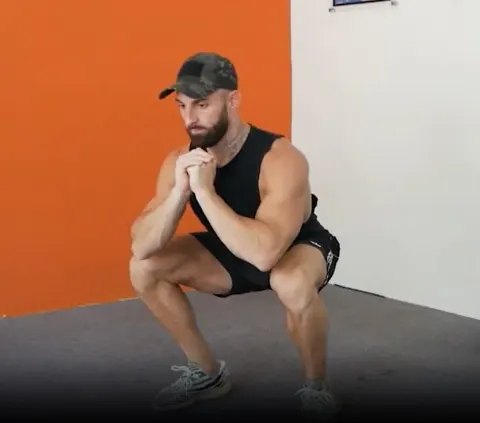
| Sit-to-stand (chair squat) | Keep | Higher seat, hands on thighs | Getting up from chairs, the toilet, the car |
| Hip hinge, good morning | Keep | Small range, hands sliding down the thighs | Picking things up |
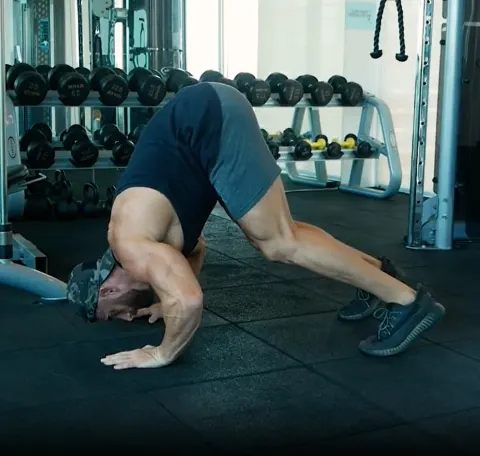
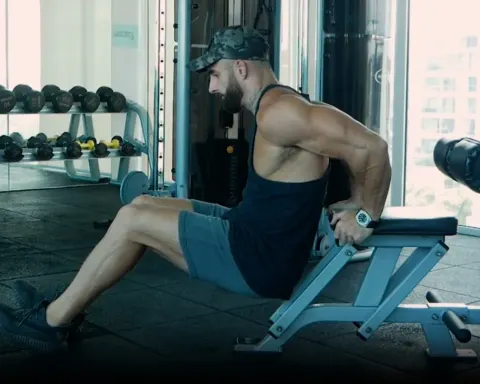
| Bench dip, pike push-up, push-up | Swap | Wall push-up, later an incline push-up at a kitchen counter | Pushing up from a bed, heavy doors |
| Inverted row | Swap unless you are confident on the floor | The doorway row from the other session | Posture, pulling doors open |
| Reverse lunge | Swap if balance is shaky | Step-up on the bottom stair, hand on the rail | Stairs, kerbs, bus steps |
| Reverse crunch, leg raise | Swap if getting down to the floor is hard | Seated knee lifts on a chair | A steadier trunk, getting out of bed |
Pike push-ups put the head below the hips and bench dips strain the front of the shoulder, which is why both go first. Carrying is not part of a no-equipment week, so practise it with your shopping: one bag in each hand, shoulders level, a short walk.
Balance and fall prevention
Balance drills are not part of the generated week either. Weak legs are a leading reason people fall, so the sit-to-stands and step-ups already help. Add three minutes of direct practice on most days, always within reach of a counter:
- One-leg stand. Lift one foot a few centimetres and hold for 10 seconds per side. Build to 30.
- Heel-to-toe walk. Ten steps along the counter, placing the heel directly in front of the other foot’s toes.
- Bird dog. On hands and knees, reach one arm and the opposite leg out and hold for 3 seconds. If kneeling is uncomfortable, do the same reach standing with hands on the counter.
Make it harder only by reducing support: two hands, one hand, fingertips, then a hand hovering.
Set up the room for safety
- Push the chair back against a wall. Use one with a firm seat and no wheels.
- Wear flat, closed shoes with grip. No slippers, no socks alone.
- Move loose rugs and cables out of the way.
- Keep water and a phone within reach.
- Train when you feel most awake, which for many people is mid-morning.
Begin each session with 5–7 minutes of easy walking around the house or on the spot, some shoulder rolls and ankle circles, and one slow practice set of the first movement.
Progress slowly, and write it down
Start at the low end: two sets of 8, finishing each set feeling you could do three or four more. Rest 90 seconds to 2 minutes, sitting down if you like.
Then change one thing at a time:
- Add a rep. One more per set each week, from 8 up to 12.
- Slow the lowering. Take 3 seconds to sit down into the chair.
- Reduce the help. Hands off the thighs, then arms crossed over the chest.
- Change the angle or height. A lower chair, a lower surface for push-ups, a higher step.
A sit-to-stand that goes from 8 reps with hands on the thighs to 12 reps with arms crossed and a 3-second descent has become a much harder exercise, without any added weight. That journey commonly takes 6–10 weeks. A paper log on the fridge works well.
The other five days
Walk. Start with 10–15 minutes at a pace that still lets you talk, and build towards 30 minutes on most days. Split it into two shorter walks if that suits your joints or the weather. The walking calorie calculator shows what each walk adds up to. Gardening, swimming and cycling count too.
Eat protein at every meal: eggs, yoghurt, fish, chicken, beans or cottage cheese, about a palm-sized portion each time. Appetite often falls with age, and muscle cannot be rebuilt without it.
When to add a third day or some equipment
Consider the next step after 8–12 weeks if all of these are true: you finish both sessions without lasting fatigue, any stiffness is gone within 48 hours, and you reach 12 reps on most exercises.
- A third day: the 3-day no-equipment plan for over 50s adds a Wednesday session.
- A band: the 2-day resistance band plan for over 50s makes rows and presses easier to load.
- Light dumbbells, 2–5 kg to begin: the 2-day dumbbell plan for over 50s.
Add a day or add load, not both in the same month.
Common mistakes
- Dropping into the chair. The slow sit is half the exercise.
- Holding your breath. Breathe out as you stand, push or step up.
- Skipping a session because you feel stiff. Gentle movement usually eases stiffness. Pain is different: rest and ask.
- Doing only the exercises you like. The step-up you avoid is probably the one you need.
- Rushing to weights. Master the supported versions first.
Related plans
The 2-day no-equipment plan for general fitness over 50 is the closest catalog match to the example above. Fitter readers in their 50s and early 60s should look at the workout plan for over 50, which uses three dumbbell days. The 2-day workout plan page explains how to get the most from two sessions at any age, and our guide to training with a bad back helps if your spine is the limiting factor.
Workout Plan for Seniors: all 17 plans
- 2-Day Gym Workout Plan for Strength (Over 50)
- 2-Day Gym Workout Plan for General Fitness (Over 50)
- 2-Day Kettlebell Workout Plan for Weight Loss (Over 50)
- 2-Day Kettlebell Workout Plan for Muscle Gain (Over 50)
- 2-Day Kettlebell Workout Plan for General Fitness (Over 50)
- 2-Day Resistance Band Workout Plan for Weight Loss (Over 50)
- 2-Day Resistance Band Workout Plan for Muscle Gain (Over 50)
- 2-Day Resistance Band Workout Plan for General Fitness (Over 50)
Related programs
Frequently asked questions
What is the best exercise for seniors?
The sit-to-stand: rising from a chair and sitting back down under control. It strengthens the thighs and hips used for stairs, toilets and car seats, needs no equipment and can be made harder with a lower seat. Two sets of 8 to 12, twice a week, is a solid start.
How often should seniors do strength training?
Twice a week on non-consecutive days, such as Monday and Thursday, with sessions of about 35 minutes. That is enough to gain strength and balance at any age. A third day can be added after two or three months if you feel recovered within 48 hours.
Is it safe to start exercising at 70?
For most people, yes, provided you start gently and get medical clearance if you have heart disease, high blood pressure, osteoporosis, dizziness or a joint replacement. Begin with supported bodyweight movements beside a chair or counter and add repetitions slowly over several weeks.
How can seniors improve their balance?
Strengthen the legs with sit-to-stands and step-ups, and practise balance directly for two or three minutes a day. Stand on one foot beside a kitchen counter for up to 30 seconds per side, and walk heel-to-toe along the counter. Keep a hand hovering over the support until you are steady.
Should seniors use weights or just body weight?
Start with body weight for the first 8 to 12 weeks, because it teaches control and is plenty for unconditioned muscles. After that, light dumbbells of 2 to 5 kg or a resistance band keep the exercises challenging. Added load is what continues to build strength and support bone.