Workout Plan for Men: Pick the Right Goal, Days and Split
The right workout plan for men depends on where you start: lean, carrying fat or in between. Pick the goal first, then the days, then a balanced split.
Example week
4-Day Gym Workout Plan for Muscle Gain (Men)
A complete week you can start today: exercises, sets, reps and rest for every session, with swaps for each exercise. Open this plan on its own page (PDF) →
Split
Upper / Lower
Sessions / week
4
Avg. session
40 min
Schedule
Mon · Tue · Thu · Fri
Warm-up (every session, ~6 min)
- 3–5 min easy cardio: brisk walk, bike, jump rope or marching in place.
- Dynamic mobility: 10 leg swings each way, 10 hip circles, 10 arm circles, 8 cat-cows.
- Ramp-up sets on the first exercise: 1–2 light sets of 8 before your working sets.
Day 1
Upper A
Chest + back, strength bias
-
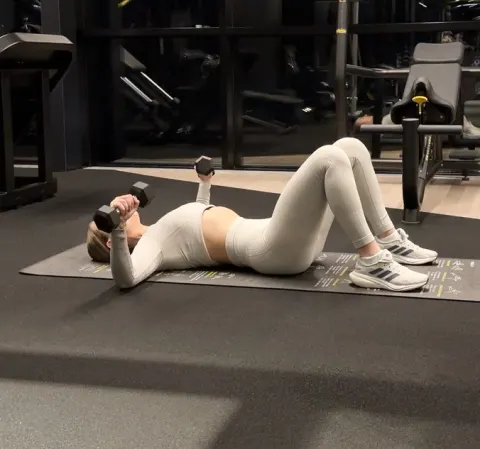
Chest, Triceps · Dumbbell
- Sets
- 3
- Reps
- 6–10
- Rest
- 120s
- Effort
- RPE 8
-
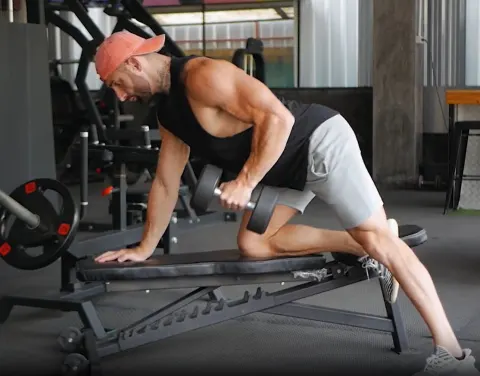
Lats, Upper Back · Dumbbell
- Sets
- 3
- Reps
- 6–10 / side
- Rest
- 120s
- Effort
- RPE 8
-
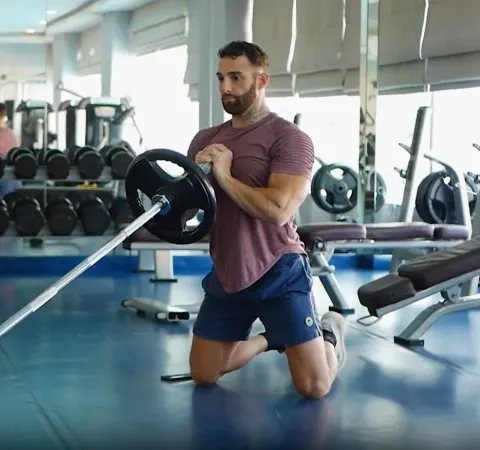
Front Delts, Chest · Barbell
- Sets
- 2
- Reps
- 8–12 / side
- Rest
- 90s
- Effort
- RPE 8
swap: Dumbbell Shoulder Press, Kettlebell Press, Incline Dumbbell Press
-
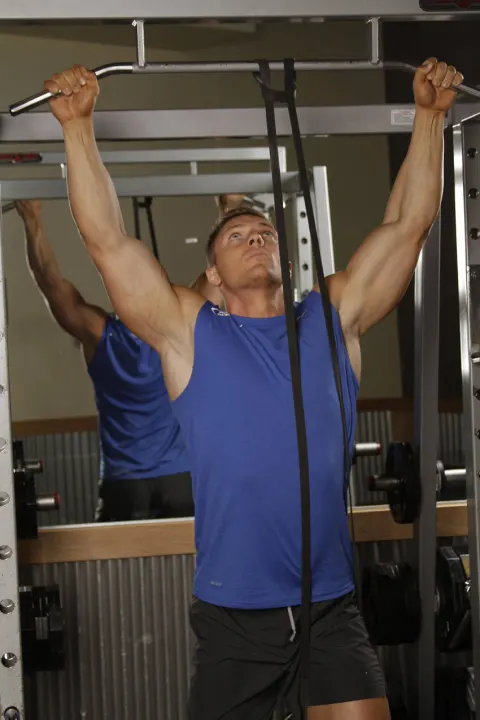
Lats, Upper Back · Pull-Up Bar
- Sets
- 2
- Reps
- 8–12
- Rest
- 90s
- Effort
- RPE 8
-
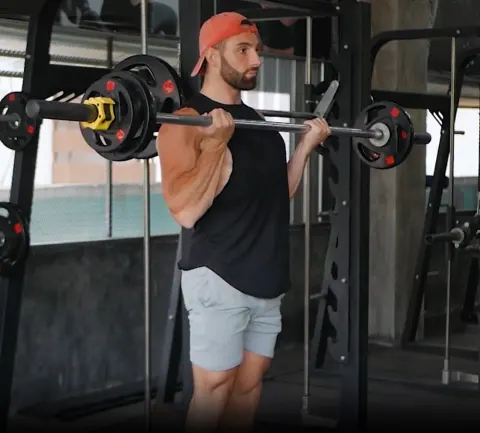
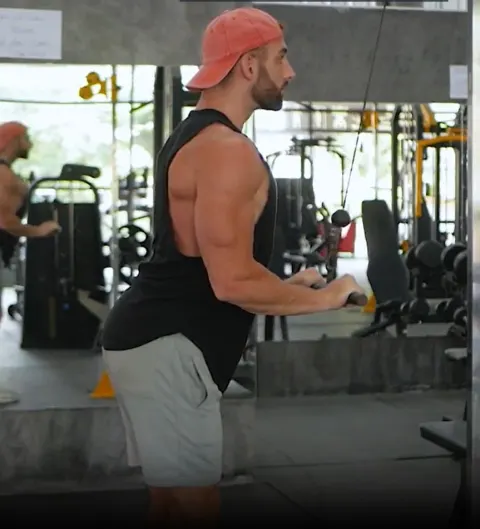
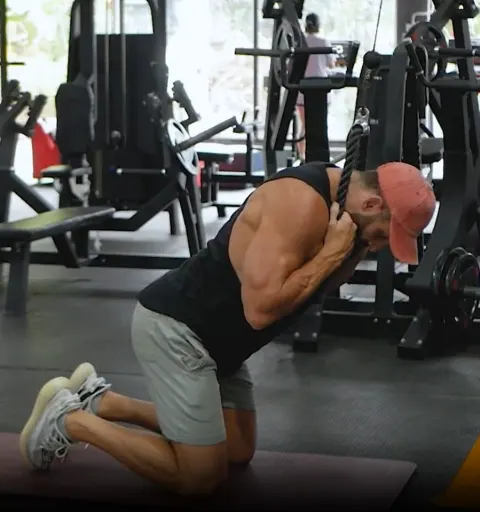
Triceps · Cable
- Sets
- 3
- Reps
- 10–15
- Rest
- 60s
- Effort
- RPE 8–9
swap: Triceps Pushdown, Band Triceps Extension, Overhead Triceps Extension
Day 2
Lower A
Squat focus
-
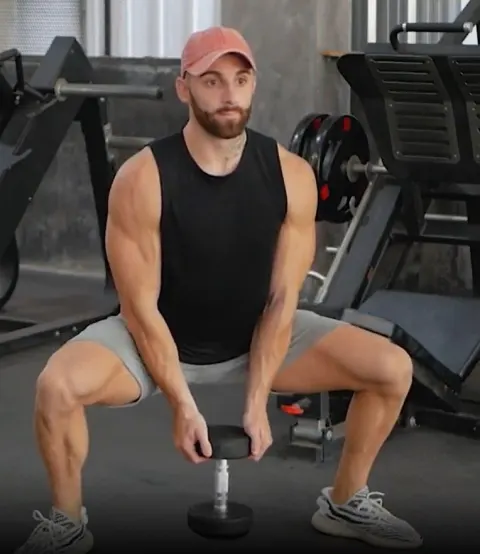
Glutes, Adductors, Quads · Dumbbell
- Sets
- 3
- Reps
- 6–10
- Rest
- 120s
- Effort
- RPE 8
-
Glutes, Quads, Hamstrings · Barbell
- Sets
- 2
- Reps
- 8–12
- Rest
- 90s
- Effort
- RPE 8
swap: Kettlebell Deadlift, Goblet Squat, Banded Good Morning
-
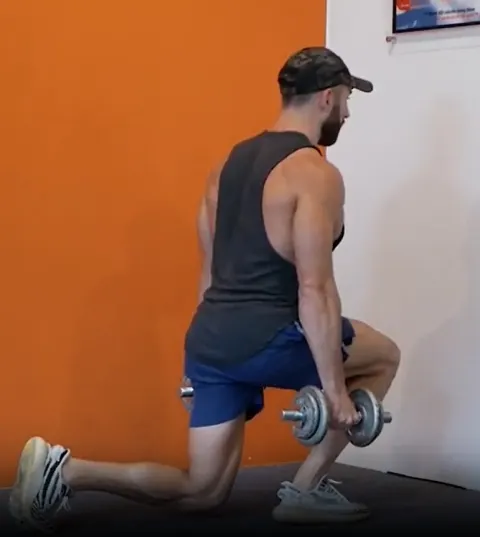
Quads, Glutes · Dumbbell
- Sets
- 2
- Reps
- 8–12 / side
- Rest
- 90s
- Effort
- RPE 8
swap: Reverse Lunge, Split Squat, Step-Up
-
Glutes · Cable
- Sets
- 3
- Reps
- 10–15 / side
- Rest
- 60s
- Effort
- RPE 8–9
swap: Donkey Kick, Hip Thrust, Banded Lateral Walk
-
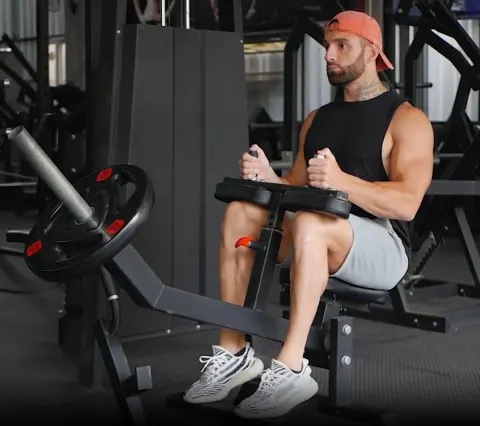
Calves · Machine
- Sets
- 3
- Reps
- 10–15
- Rest
- 60s
- Effort
- RPE 8–9
-
Obliques, Core · Cable
- Sets
- 3
- Reps
- 12–15 / side
- Rest
- 60s
- Effort
- controlled
swap: Side Plank, Suitcase Carry, Russian Twist


Day 3
Upper B
Shoulders + back, volume bias
-
Lats, Upper Back · Cable
- Sets
- 3
- Reps
- 6–10
- Rest
- 120s
- Effort
- RPE 8
swap: Assisted Pull-Up, Band Lat Pulldown, Straight-Arm Pulldown
-
Front Delts, Side Delts · Dumbbell
- Sets
- 3
- Reps
- 6–10
- Rest
- 120s
- Effort
- RPE 8
swap: Dumbbell Shoulder Press, Machine Shoulder Press, Band Shoulder Press
-
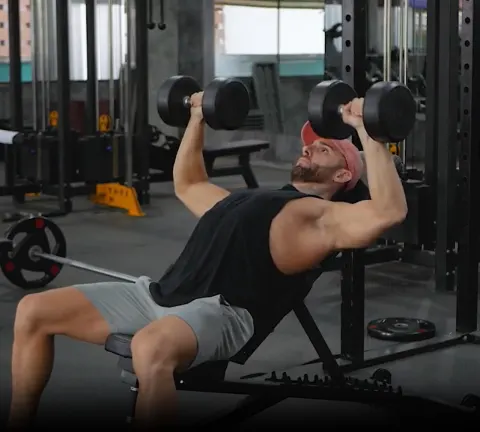
Chest, Front Delts · Dumbbell
- Sets
- 2
- Reps
- 8–12
- Rest
- 90s
- Effort
- RPE 8
swap: Machine Chest Press, Dumbbell Bench Press, Dumbbell Floor Press
-
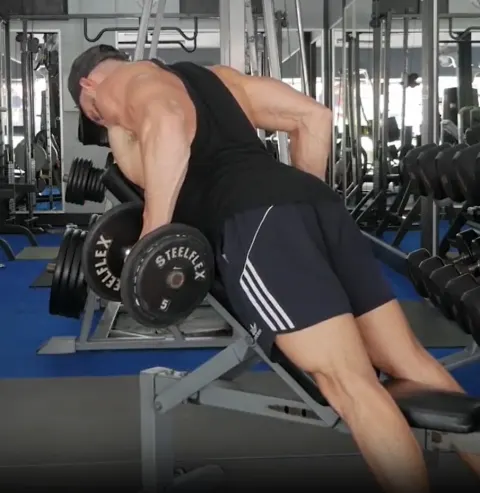
Upper Back, Lats · Dumbbell
- Sets
- 2
- Reps
- 8–12
- Rest
- 90s
- Effort
- RPE 8
swap: Dumbbell Row, Machine Row, Seated Cable Row
-
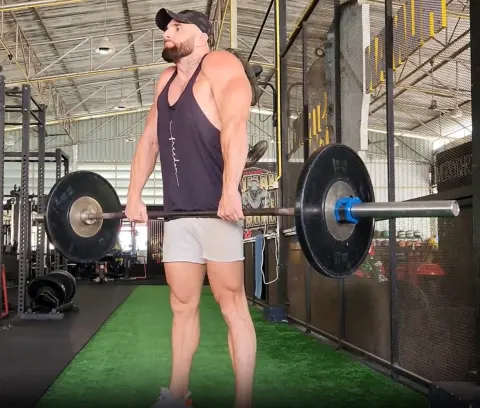
Traps · Barbell
- Sets
- 3
- Reps
- 10–15
- Rest
- 60s
- Effort
- RPE 8–9
swap: Dumbbell Shrug, Face Pull, Band Upright Row
-
Triceps · Dumbbell
- Sets
- 3
- Reps
- 10–15
- Rest
- 60s
- Effort
- RPE 8–9



Day 4
Lower B
Hinge focus
-
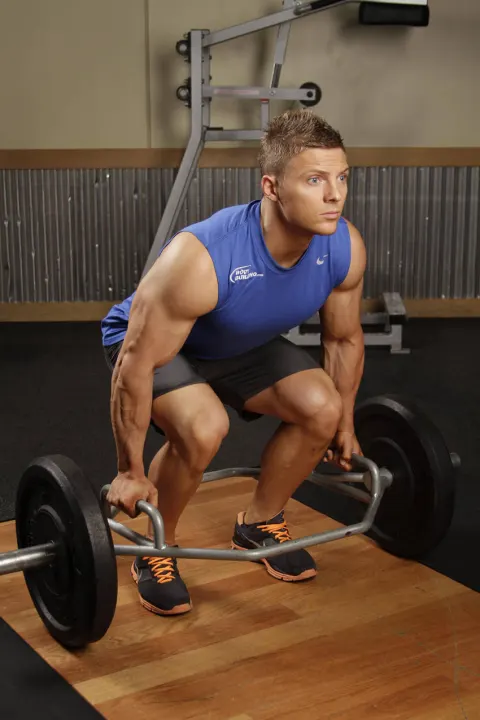
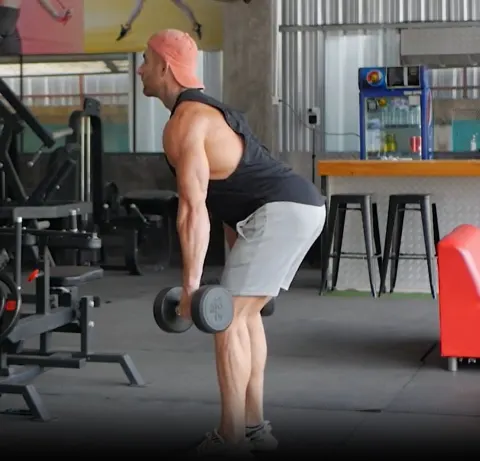
Hamstrings, Glutes · Dumbbell
- Sets
- 3
- Reps
- 6–10
- Rest
- 120s
- Effort
- RPE 8
swap: Kettlebell Deadlift, Bodyweight Hip Hinge, Dumbbell Deadlift
-
Quads, Glutes · Machine
- Sets
- 2
- Reps
- 8–12
- Rest
- 90s
- Effort
- RPE 8
swap: Leg Press, Goblet Squat, Banded Squat
-
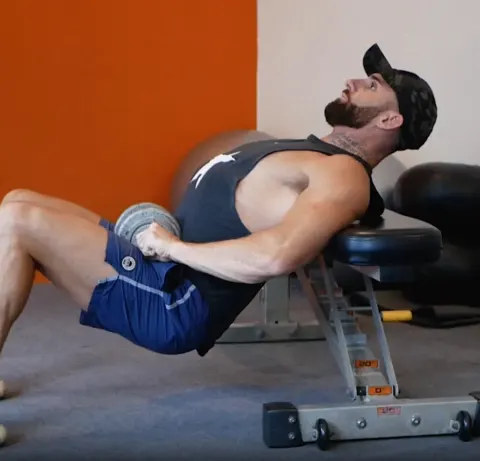
Glutes · Dumbbell
- Sets
- 2
- Reps
- 8–12
- Rest
- 90s
- Effort
- RPE 8
-
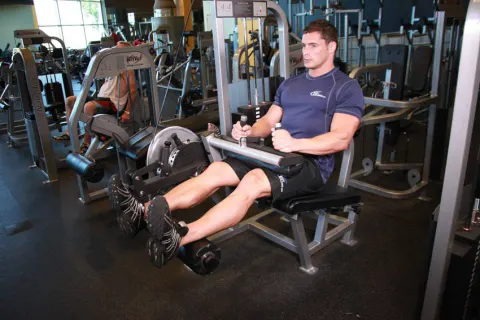
Hamstrings · Machine
- Sets
- 3
- Reps
- 10–15
- Rest
- 60s
- Effort
- RPE 8–9
swap: Lying Leg Curl, Banded Hamstring Curl, Sliding Leg Curl
-
Calves · Dumbbell
- Sets
- 3
- Reps
- 10–15
- Rest
- 60s
- Effort
- RPE 8–9

8-week progression: what to change each week
Same exercises for the whole block. Weeks move the reps, then the load; the last week is a deload.
| Week | Load | Reps | Effort | What to watch |
|---|---|---|---|---|
| 1 | Light: learn the movements | bottom of range (6–8) | RPE 6–7 | Stop every set 3 reps before failure; film one set per exercise to check form. |
| 2 | Same weight | +1 rep per set (8–9) | RPE 8 | Same exercises, same order; only the reps move. |
| 3 | Same weight | top of range (9–10) | RPE 8 | All sets at the top of the range → add load next week. Missed a set? Repeat the week. |
| 4 | +2.5 kg (5 lb) | bottom of range (6–8) | RPE 8 | New weight feels hard at low reps; that is the plan working. |
| 5 | Same weight | +1 rep per set (8–9) | RPE 8 | Keep rest periods the same. |
| 6 | Same weight | top of range (9–10) | RPE 8–9 | Second time at the top: take the last set of each main lift to 1 rep in reserve. |
| 7 | +2.5 kg (5 lb) | bottom of range (6–8) | RPE 8 | Bodyweight moves: slow the lowering phase to 3 s or move to the harder variation. |
| 8 | Deload: 60 % | bottom of range | RPE 5–6 | Half the sets, then regenerate a variation or change the split for the next block. |
How to progress
- First 2 weeks: focus on form with light weights, stop each set 3 reps before failure.
- Double progression: hit the top of the rep range on every set, then add weight (2.5–5 %) and start from the bottom of the range.
- Bodyweight moves: add reps, then slow the tempo (3 sec down), then move to a harder variation.
- Deload every 6–8 weeks: same exercises, half the sets.
Notes for this plan
- Sessions can move between days; keep at least one rest day between hard sessions for the same muscles.
Before you pick exercises, pick a direction. A man with a 100 cm waist and a man who cannot fill a medium T-shirt need different plans, even if they train in the same gym on the same days. Settle three things in order: the goal, the number of days, the equipment. The split and the exercise list follow from those.
Step 1: let your starting point choose the goal
Most men tick “build muscle” by default and then eat for a different outcome. Be honest about where you are today. A tape measure around the waist at navel height is enough, and the body fat calculator gives a rough percentage if you want one.
| Where you start | Rough sign | Goal | Eating target | Realistic 12 weeks |
|---|---|---|---|---|
| Lean, little muscle | Waist well under half your height | Muscle gain | 250–300 kcal above maintenance | 1–2 kg heavier, every lift up |
| Carrying fat | Waist over half your height | Weight loss | 300–500 kcal below maintenance | 4–6 kg lighter, strength held |
| In between | Soft middle, average arms and shoulders | Recomposition | Maintenance, protein 1.6–2.2 g per kg | Same scale weight, smaller waist |
Lean and under-muscled. There is nothing to cut. Run a muscle-gain plan, eat slightly more than you burn and judge progress by the logbook and a monthly weigh-in.
Carrying fat. Lose it first. Lifting through a deficit protects the muscle you already own, so what comes off is mostly fat. Weight-loss plans use 8–15 reps, shorter rests and a short conditioning finisher, as in the 3-day gym plan for weight loss for men. The weight loss workout plan page shows how the deficit, the lifting and daily steps fit together.
In between. Recomposition, losing fat and gaining muscle at a stable body weight, works best in the first year of proper training. Follow a muscle-gain plan, eat at the maintenance figure from the TDEE calculator and keep protein high. If your waist has not shrunk after 12 weeks, switch to a clear deficit.
Step 2: count the days you will actually keep
The number of days decides the split. These are the defaults every plan here follows:
- 2 days: full body A/B on Monday and Thursday. Slow but real progress, ideal for busy stretches.
- 3 days: full body A/B/C on Monday, Wednesday and Friday. The best start for the first six months. Intermediates chasing muscle or strength get push/pull/legs instead.
- 4 days: upper/lower on Monday, Tuesday, Thursday and Friday.
- 5 days: push/pull/legs plus one upper and one lower day.
- 6 days: push/pull/legs twice, Sunday off.
Five- and six-day plans do not come in beginner versions, for good reason: extra sessions only help once you can recover from them. Choose the number you would still hit in your worst week of the month, not your best. The guide on how many days a week to work out walks through the trade-offs.
Why the example week above uses four days
The example week above is the most common fit: muscle gain, four gym sessions, an upper/lower split. Every muscle gets two visits a week, sessions take about 40 minutes, and Wednesday plus the weekend are free.
The four days are not copies of each other. Upper A is the chest-and-back day, led by a horizontal press and a row. Upper B opens with a vertical pull and an overhead press, then adds an incline press. Lower A squats first, Lower B hinges first. Main lifts sit at 6–10 reps with 2 minutes of rest, accessories at 10–15 reps with 60 seconds.
The week is written at beginner level: 3 sets on main lifts, 2 on secondary lifts. Choosing Intermediate in the generator adds a set to each and swaps in the classic barbell lifts.
You can open the same layout as the 4-day gym plan for muscle gain for men, download it as a PDF or track the sets in the Fitbe app.
Step 3: match the plan to your equipment
A full gym gives the widest choice. Beginner weeks like the one above lean on dumbbells, machines, cables and the trap bar, and intermediate plans move the bench press, back squat and deadlift into the main slots. If that is your setting, the gym workout plan for men covers benchmarks, warm-up sets and session order.
Dumbbells at home run the same splits with a dumbbell version of each pattern. The home workout plan for men deals with the kit and with keeping legs heavy enough.
No equipment, a kettlebell or bands work well for fat loss, general fitness and the first phase of muscle gain. None of the three has a dedicated strength plan, because there is not enough load to keep adding.
Train the whole frame, not the mirror
Plans for men on this site carry a slight chest and lat emphasis. It is small and deliberate, and it sits on top of a balanced week, not in place of one.
Check any plan with two counts:
- Pull versus push. Sets of rows and pulldowns should match or beat sets of presses. A heavy barbell row builds the upper back that keeps shoulders healthy under a bench press, and lats are what make a torso look wide.
- Lower versus upper. Two of the four days belong to legs. A squat, in time the back squat, and a hinge move more muscle than anything on an upper day, and skipping them leaves half of your potential size unused.
Arms grow from presses, rows and chin-ups first. The one or two direct arm exercises already on each upper day are enough until you are well past the first year.
Ego lifting and four other ways men stall
- Ego lifting. The bar is loaded past what you control, so squats get shallow and the bench bounces. Test it: pause for one second at the bottom of each rep. If you lose more than two reps, the weight is too heavy. Progressive overload only counts when the range of motion stays the same.
- Eating against the goal. Training for size while dieting hard, or “bulking” with a waist that is already growing.
- Program hopping. Give a plan 8 weeks before you judge it.
- Testing instead of training. A weekly one-rep max teaches little. Stop sets 1–3 reps short of failure and add a rep next time.
- Never backing off. Take a lighter week every 6–8 weeks: about 60 % of the load and half the sets.
Progress, then change the plan on purpose
Use double progression on every lift. Say your lat pulldown is 55 kg for sets of 6. Add a rep per set each week. When every set reaches 10, move to 57.5 kg and start again at 6. Beginners add reps or load almost every week for two to three months, and visible changes take 8–12 weeks.
Change plans when the situation changes, not when you are bored. Once the fat is off, move from a weight-loss plan to muscle gain. After a year or more on four days, with sleep and food in order, the five-day muscle building workout plan for men adds volume. For any other mix of goal, days and equipment, the plan generator builds the week in about a minute.
Workout Plan for Men: all 88 plans

- 2-Day Bodyweight Workout Plan for General Fitness (Men)
- 2-Day Dumbbell Workout Plan for Weight Loss (Men)
- 2-Day Dumbbell Workout Plan for Muscle Gain (Men)
- 2-Day Dumbbell Workout Plan for Strength (Men)
- 2-Day Dumbbell Workout Plan for General Fitness (Men)
- 2-Day Gym Workout Plan for Weight Loss (Men)
- 2-Day Gym Workout Plan for Muscle Gain (Men)
- 2-Day Gym Workout Plan for Strength (Men)
- 2-Day Gym Workout Plan for General Fitness (Men)
- 2-Day Kettlebell Workout Plan for Weight Loss (Men)
- 2-Day Kettlebell Workout Plan for Muscle Gain (Men)
- 2-Day Kettlebell Workout Plan for General Fitness (Men)
- 2-Day Resistance Band Workout Plan for Weight Loss (Men)
- 2-Day Resistance Band Workout Plan for Muscle Gain (Men)
- 2-Day Resistance Band Workout Plan for General Fitness (Men)
- 2-Day Calisthenics Workout Plan for Weight Loss (Men)
- 2-Day Calisthenics Workout Plan for Muscle Gain (Men)
- 2-Day Calisthenics Workout Plan for General Fitness (Men)
- 3-Day Bodyweight Workout Plan for General Fitness (Men)
- 3-Day Dumbbell Workout Plan for Weight Loss (Men)
- 3-Day Dumbbell Workout Plan for Muscle Gain (Men)
- 3-Day Dumbbell Workout Plan for Strength (Men)
- 3-Day Dumbbell Workout Plan for General Fitness (Men)
- 3-Day Gym Workout Plan for Weight Loss (Men)
- 3-Day Gym Workout Plan for Muscle Gain (Men)
- 3-Day Gym Workout Plan for Strength (Men)
- 3-Day Gym Workout Plan for General Fitness (Men)
- 3-Day Kettlebell Workout Plan for Weight Loss (Men)
- 3-Day Kettlebell Workout Plan for Muscle Gain (Men)
- 3-Day Kettlebell Workout Plan for General Fitness (Men)
- 3-Day Resistance Band Workout Plan for Weight Loss (Men)
- 3-Day Resistance Band Workout Plan for Muscle Gain (Men)
- 3-Day Resistance Band Workout Plan for General Fitness (Men)
- 3-Day Calisthenics Workout Plan for Weight Loss (Men)
- 3-Day Calisthenics Workout Plan for Muscle Gain (Men)
- 3-Day Calisthenics Workout Plan for General Fitness (Men)
- 4-Day Bodyweight Workout Plan for General Fitness (Men)
- 4-Day Dumbbell Workout Plan for Weight Loss (Men)
- 4-Day Dumbbell Workout Plan for Muscle Gain (Men)
- 4-Day Dumbbell Workout Plan for Strength (Men)
- 4-Day Dumbbell Workout Plan for General Fitness (Men)
- 4-Day Gym Workout Plan for Weight Loss (Men)
- 4-Day Gym Workout Plan for Muscle Gain (Men)
- 4-Day Gym Workout Plan for Strength (Men)
- 4-Day Gym Workout Plan for General Fitness (Men)
- 4-Day Kettlebell Workout Plan for Weight Loss (Men)
- 4-Day Kettlebell Workout Plan for Muscle Gain (Men)
- 4-Day Kettlebell Workout Plan for General Fitness (Men)
- 4-Day Resistance Band Workout Plan for Weight Loss (Men)
- 4-Day Resistance Band Workout Plan for Muscle Gain (Men)
- 4-Day Resistance Band Workout Plan for General Fitness (Men)
- 4-Day Calisthenics Workout Plan for Weight Loss (Men)
- 4-Day Calisthenics Workout Plan for Muscle Gain (Men)
- 4-Day Calisthenics Workout Plan for General Fitness (Men)
- 5-Day Bodyweight Workout Plan for General Fitness (Men)
- 5-Day Dumbbell Workout Plan for Weight Loss (Men)
- 5-Day Dumbbell Workout Plan for Muscle Gain (Men)
- 5-Day Dumbbell Workout Plan for Strength (Men)
- 5-Day Dumbbell Workout Plan for General Fitness (Men)
- 5-Day Gym Workout Plan for Weight Loss (Men)
- 5-Day Gym Workout Plan for Muscle Gain (Men)
- 5-Day Gym Workout Plan for Strength (Men)
- 5-Day Gym Workout Plan for General Fitness (Men)
- 5-Day Kettlebell Workout Plan for Weight Loss (Men)
- 5-Day Kettlebell Workout Plan for Muscle Gain (Men)
- 5-Day Kettlebell Workout Plan for General Fitness (Men)
- 5-Day Calisthenics Workout Plan for Weight Loss (Men)
- 5-Day Calisthenics Workout Plan for Muscle Gain (Men)
- 5-Day Calisthenics Workout Plan for General Fitness (Men)
- 6-Day Bodyweight Workout Plan for Muscle Gain (Men)
- 6-Day Bodyweight Workout Plan for General Fitness (Men)
- 6-Day Dumbbell Workout Plan for Weight Loss (Men)
- 6-Day Dumbbell Workout Plan for Muscle Gain (Men)
- 6-Day Dumbbell Workout Plan for Strength (Men)
- 6-Day Dumbbell Workout Plan for General Fitness (Men)
- 6-Day Gym Workout Plan for Weight Loss (Men)
- 6-Day Gym Workout Plan for Muscle Gain (Men)
- 6-Day Gym Workout Plan for Strength (Men)
- 6-Day Gym Workout Plan for General Fitness (Men)
Related programs
Frequently asked questions
What is the best workout plan for men?
The one that fits your starting point and your week. For most men that means three or four sessions built on squats, hinges, presses, rows and pulldowns, each muscle trained about twice a week, 6–12 reps per set, with weight or reps added whenever every set reaches the top of its range.
Should a man bulk or cut first?
Let your waist decide. If it measures more than half your height, lose fat first on a 300–500 kcal deficit while lifting. If you are lean with little muscle, eat about 250–300 kcal above maintenance. In between, eat at maintenance with high protein and train as if building muscle.
How many days a week should a man work out?
Three or four days suits most men. Three full-body sessions are plenty for a beginner, four days as an upper/lower split fits anyone past the first six months, and five or six days only pay off after a year or more of consistent training with at least seven hours of sleep.
Is a 4-day upper/lower split enough to build muscle?
Yes. Two upper and two lower sessions give every muscle two visits a week. The beginner version lands at or just under 10 hard sets per muscle, which is enough to grow in the first year, and the intermediate version adds a set to the main and secondary lifts. Sessions take about 40–45 minutes.
Do men need to train differently from women?
No. Rep ranges, rest times, effort and progression rules are identical. The plans for men on this site only shift the emphasis slightly, with a little more chest and lat work, while the plans for women lean towards glutes. Everything else, leg training included, stays the same.